Quick Verdict: The 2026 Tesla Model Y at a Glance
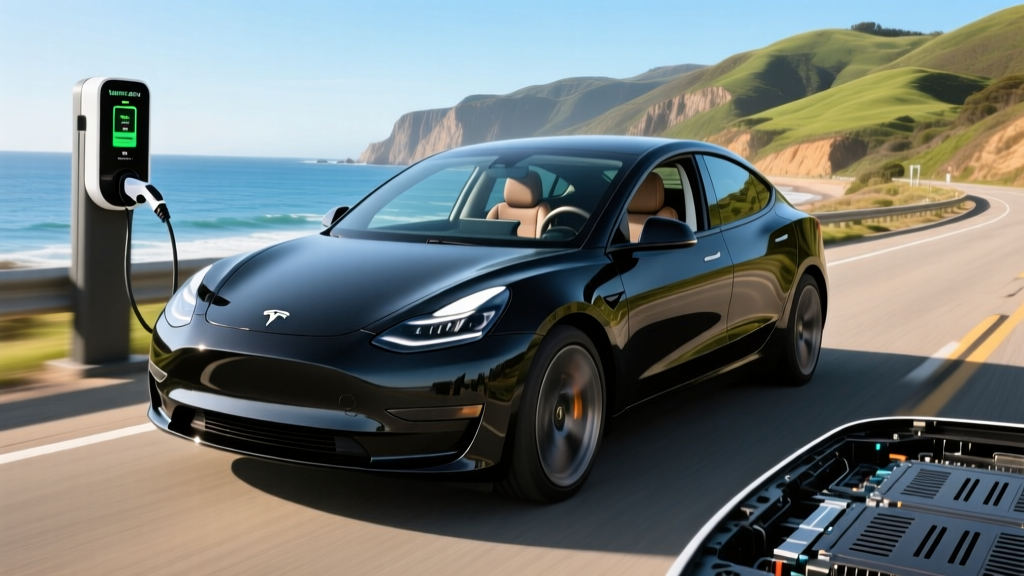
The 2026 Tesla Model Y remains the best-selling electric vehicle in the United States for good reason: it delivers a compelling blend of range, charging speed, cargo versatility, and access to the Supercharger network — all at a price point that undercuts many competitors. The refreshed Juniper update brought a quieter cabin, updated interior materials, and improved ride quality. But for Florida-based buyers, a critical ownership question looms beyond the spec sheet: is Tesla Insurance available in Florida? The short answer is yes — Tesla Insurance launched in Florida and is available to Model Y owners in the state, though premiums vary significantly by driver profile, zip code, and coverage selection. This review breaks down every number that matters, from real-world range to the true cost of ownership in the Sunshine State.
| Spec | Long Range AWD | Performance |
|---|---|---|
| EPA Range | 320 miles | 295 miles |
| Battery (usable) | ~75 kWh (NMC) | ~75 kWh (NMC) |
| Drivetrain | Dual-Motor AWD | Dual-Motor AWD |
| Horsepower | 384 hp | 456 hp |
| 0–60 mph | 4.8 sec | 3.5 sec |
| Peak DC Fast Charge | 250 kW | 250 kW |
| 10–80% DC Charge | ~25 min | ~25 min |
| Level 2 Charge Rate | 11.5 kW (~44 mi/hr) | 11.5 kW (~44 mi/hr) |
| MPGe (combined) | 122 MPGe | 111 MPGe |
| Efficiency | 28 kWh/100 mi | 30 kWh/100 mi |
| Cargo (rear seats up) | 34.3 cu ft | 34.3 cu ft |
| Cargo (rear seats folded) | 72.1 cu ft | 72.1 cu ft |
| Base MSRP | $44,990 | $51,490 |
| Battery Warranty | 8 yr / 120,000 mi | 8 yr / 120,000 mi |
Range and Efficiency: EPA Numbers vs. Real-World Florida Driving
The 2026 Model Y Long Range AWD carries an EPA-estimated 320 miles of range, while the Performance trim drops to 295 miles due to stickier tires and more aggressive tuning. But EPA numbers are generated under controlled conditions, and real-world results depend on your driving environment.
- EPA Sticker: 320 miles (Long Range AWD)
- Florida highway driving (75 mph, A/C on): Expect ~265–285 miles. Florida heat forces continuous cabin cooling, which draws 1–3 kW continuously.
- City / stop-and-go commuting: ~295–310 miles thanks to regenerative braking recapturing energy.
- Cold-weather note: Florida owners rarely face this, but northern travelers should know that at 30°F, range can drop 15–25% without preconditioning.
Efficiency lands at 28 kWh per 100 miles for the Long Range, which is competitive with the Hyundai Ioniq 5 (30 kWh/100 mi) and slightly less efficient than the smaller Tesla Model 3. The heat pump comes standard, which helps minimize HVAC energy draw — particularly relevant in Florida where cabin cooling runs nearly year-round.
Charging Speed: DC Fast Charging and Home Level 2
Charging speed is where the Model Y's access to the Tesla Supercharger network becomes a genuine ownership advantage. The 2026 Model Y peaks at 250 kW on DC fast charging via its NACS connector (now the industry standard, adopted by Ford, GM, Rivian, and others).
| Charging Level | Power | Speed (approx.) | Use Case |
|---|---|---|---|
| Level 1 (120V outlet) | ~1.4 kW | ~5 miles/hour | Emergency / overnight trickle |
| Level 2 (240V, 48A) | 11.5 kW | ~44 miles/hour | Home daily charging |
| DC Fast (Supercharger V3) | Peak 250 kW | 10–80% in ~25 min | Road trips |
| DC Fast (Supercharger V4) | Peak 250 kW* | 10–80% in ~25 min | Newer stations |
*Model Y is limited to 250 kW peak acceptance; V4 posts can deliver more to compatible future vehicles.
A critical nuance: the 250 kW peak is not sustained across the entire charge session. The Model Y's charge curve tapers significantly above 60% State of Charge (SoC). In practice, you'll see 250 kW from roughly 10–30% SoC, dropping to ~150 kW by 50%, and falling below 60 kW past 80%. This is why Tesla and the EPA quote 10–80% times — charging past 80% is painfully slow on any lithium-ion pack and is best reserved for overnight Level 2 sessions.
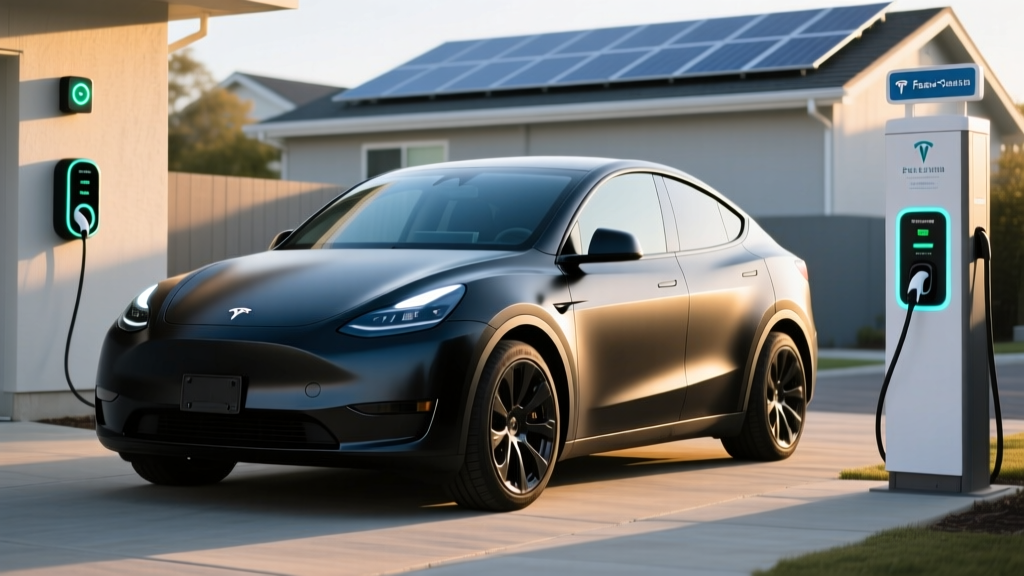
For home charging, the Model Y's onboard charger accepts up to 11.5 kW (48 amps on a 60-amp circuit). A full charge from 10% to 100% takes roughly 6.5 hours. Most Florida owners installing a Tesla Wall Connector or equivalent Level 2 unit on a 240V/60A circuit can expect installation costs between $500–$2,000 depending on panel proximity and whether a panel upgrade (to 200A service) is needed.
Performance and Driving Dynamics
The Long Range AWD's dual-motor setup produces 384 horsepower and hits 0–60 mph in 4.8 seconds. That's genuinely quick for a crossover and makes highway merging effortless. The Performance trim bumps output to 456 hp with a 3.5-second sprint, though the trade-off is 25 fewer miles of range and a firmer ride.
Ride quality improved noticeably with the Juniper refresh. The previous generation's harshness over rough pavement has been dialed back with revised damping and improved sound deadening. It's not luxury-car quiet — the Hyundai Ioniq 5 and Kia EV6 still edge it out on ride comfort — but it's a meaningful step up.
Regenerative braking remains strong and predictable. Tesla's one-pedal driving mode allows most commuters to rarely touch the brake pedal in daily driving. The brake-by-wire system feels natural after a brief adaptation period.
Interior, Cargo, and Technology
The 2026 Model Y interior reflects the Juniper update: a ventilated front seat row (critical for Florida), ambient lighting, a rear-seat touchscreen for passengers, and improved material quality across touchpoints. The minimalist approach remains polarizing — no physical buttons, no traditional instrument cluster — but the 15.4-inch center touchscreen handles everything from navigation to climate to media with responsive performance.
Cargo capacity is where the Model Y shines against sedan alternatives:
- Behind rear seats: 34.3 cu ft (more than most compact SUVs)
- Rear seats folded: 72.1 cu ft (approaching midsize SUV territory)
- Front trunk (frunk): ~4.1 cu ft — useful for charging cables or a small bag
- Rear legroom: 41.6 inches — generous for adults on longer trips
Driver Assistance: The Model Y ships with Basic Autopilot (lane centering + adaptive cruise). Enhanced Autopilot ($6,000) adds auto lane change, navigate on Autopilot, and smart summon. Full Self-Driving (Supervised) at $8,000 adds traffic light/stop sign recognition and city street autosteer.
Despite the "Full Self-Driving" name, Tesla's FSD (Supervised) is an SAE Level 2 driver-assistance system. The driver must remain fully engaged, hands on or near the wheel, and eyes on the road at all times. It is not autonomous driving. Level 4 robotaxi services like Waymo operate without driver supervision in geofenced areas — Tesla does not currently offer this capability.
Pricing, Tax Credits, and Is Tesla Insurance Available in Florida?
The 2026 Tesla Model Y Long Range AWD starts at $44,990 (including destination). The Performance trim starts at $51,490. Adding FSD (Supervised), a premium color, or 20-inch wheels pushes a Long Range build past $55,000 quickly.
| Trim | Base MSRP | §30D Credit Eligibility | Effective Price (if eligible) |
|---|---|---|---|
| Long Range AWD | $44,990 | Up to $7,500* | ~$37,490* |
| Performance | $51,490 | Up to $7,500* | ~$43,990* |
*Federal §30D tax credit eligibility depends on buyer income caps ($150K single / $300K joint AGI), vehicle MSRP caps ($80K for SUVs — Model Y qualifies), and battery critical-mineral/battery-component sourcing rules that change annually. The credit can now be transferred to the dealer as a point-of-sale discount. Verify current eligibility at IRS.gov or with a tax professional before purchasing.
Tesla Insurance in Florida: What You Need to Know
Yes, Tesla Insurance is available in Florida. Tesla launched its branded insurance product in Florida, and Model Y owners in the state can purchase it directly through the Tesla app or website. Tesla Insurance uses real-time driving behavior (via the vehicle's Safety Score) to calculate monthly premiums — a usage-based model that rewards safe driving habits.
Here's what Florida buyers should understand:
- Availability: Tesla Insurance is offered in Florida as of 2026. You can get a quote through your Tesla account.
- Cost variability: Florida has some of the highest auto insurance rates in the country due to weather risk, litigation environment, and uninsured motorist rates. Expect Tesla Insurance premiums to reflect this — a clean-record driver in a suburban zip code might pay $140–$220/month, while urban Miami-Dade drivers could see $250–$400+/month.
- Safety Score impact: Tesla's Insurance product adjusts premiums monthly based on driving data (hard braking, aggressive turning, forced Autopilot disengagements, forward collision warnings). Safe drivers can see meaningful discounts.
- Compare before committing: Tesla Insurance is not always the cheapest option. Get quotes from Geico, Progressive, State Farm, and USAA (if eligible) for comparison. In some Florida zip codes, traditional carriers undercut Tesla's usage-based rate.
- Coverage: Tesla Insurance in Florida offers liability, comprehensive, collision, and uninsured motorist coverage — meeting state minimums and beyond.
Pros and Cons
- 320-mile EPA range is practical for most road trips
- Supercharger network remains the most reliable DC fast-charging ecosystem
- Class-leading cargo volume (72.1 cu ft)
- 250 kW peak DC charging with 10–80% in ~25 minutes
- Over-the-air updates continuously add features
- Tesla Insurance available in Florida with usage-based pricing
- Heat pump standard — efficient cabin cooling in hot climates
- Strong resale value relative to most EVs
- Florida insurance premiums are high regardless of carrier
- Minimalist interior lacks physical buttons (climate, volume)
- No Apple CarPlay or Android Auto
- FSD (Supervised) is expensive and still Level 2 — not autonomous
- Ride quality improved but still trails Ioniq 5 / EV6 on comfort
- 250 kW peak charge rate is no longer class-leading (Hyundai/Kia at 350 kW)
- Tax credit eligibility rules are complex and subject to annual change
Who Should Buy the 2026 Tesla Model Y?
The Model Y is best suited for:
- Daily commuters who can charge at home and want minimal public-charging dependency
- Small families needing versatile cargo space without stepping up to a three-row SUV
- Road trippers who value Supercharger network reliability over peak charge speed
- Florida residents who benefit from the heat pump, ventilated seats, and now have access to Tesla Insurance
It's less ideal for buyers who prioritize ride comfort over tech, need Apple CarPlay, or want the absolute fastest DC charging available (look at Hyundai/Kia's 800V architecture for 350 kW capability).
Frequently Asked Questions
Is Tesla Insurance available in Florida for all Tesla models?
Yes. Tesla Insurance is available in Florida for Model Y, Model 3, Model S, and Model X owners. Premiums are calculated using Tesla's Safety Score algorithm, which monitors real-time driving behavior. Availability and pricing can vary by zip code within the state.
What is the real-world range of the 2026 Tesla Model Y in Florida?
The EPA rates the Long Range AWD at 320 miles. In Florida highway driving at 75 mph with continuous A/C, expect roughly 265–285 miles. City driving with regenerative braking can yield 295–310 miles. Florida's warm climate is actually favorable for battery efficiency compared to cold northern states.
How fast does the Model Y charge at home and on road trips?
On a Level 2 home charger (240V/48A), the Model Y charges at 11.5 kW, adding roughly 44 miles of range per hour — a full overnight session replenishes the battery. On a V3 or V4 Supercharger, it peaks at 250 kW and charges from 10–80% in approximately 25 minutes, with significant taper above 80%.
Does the 2026 Model Y qualify for the $7,500 federal tax credit?
It can, but eligibility is not automatic. Under IRS §30D rules, you must meet income caps ($150,000 single / $300,000 joint modified AGI), the vehicle MSRP must be under $80,000 (the Model Y qualifies as an SUV), and the battery must meet critical-mineral and battery-component sourcing requirements that are updated annually. The credit can be applied as a point-of-sale price reduction at the dealer. Always verify current-year rules at IRS.gov before purchasing.
How does the Model Y compare to the Hyundai Ioniq 5 and Ford Mustang Mach-E?
The Model Y leads in cargo space (72.1 vs. 59.3 cu ft for Ioniq 5) and Supercharger network access. The Ioniq 5 charges faster (350 kW peak, 10–80% in ~18 min) and offers a more comfortable ride. The Mach-E provides a more traditional interior layout with physical controls. All three are strong choices — the decision often comes down to charging ecosystem preference and interior ergonomics.
What is the battery warranty on the 2026 Model Y?
Tesla covers the Model Y's battery and drive unit for 8 years or 120,000 miles, whichever comes first, with a minimum 70% capacity retention threshold. This is competitive with the industry standard (Hyundai offers 10yr/100K mi). Real-world data from older Tesla packs shows most retaining 85–92% capacity at 100,000 miles, though individual results depend on charging habits and climate exposure.