Quick Verdict: The Tesla Model Y in 2026
The Tesla Model Y remains the best-selling electric vehicle in the United States for good reason: it delivers competitive range, access to the largest fast-charging network, and over-the-air updates that keep the platform fresh. For 2026, the refreshed Model Y (internally dubbed "Juniper") brings a revised interior, improved ride quality, and updated efficiency numbers that matter if you're calculating total ownership cost — including whether an EV like the Model Y helps you sidestep the growing number of urban congestion fees in cities like New York, London, and beyond.
This review covers the 2026 Tesla Model Y Long Range AWD and Performance trims with exact EPA data, real-world range expectations, charging speeds, pricing after federal tax credits, and a direct look at how owning a Tesla interacts with congestion pricing zones.
Range, Efficiency, and Real-World Expectations
The 2026 Tesla Model Y Long Range AWD carries an EPA-estimated range of 320 miles on its updated battery pack. The Performance trim drops slightly to 295 miles EPA due to sportier tuning and wider tires. Both trims use a 78 kWh usable battery with NMC (nickel-manganese-cobalt) chemistry, which offers higher energy density than LFP at the cost of slightly faster long-term degradation if routinely charged to 100%.
EPA Range vs. Real-World:
- Long Range AWD: EPA 320 mi — expect ~270-290 mi on highway road trips at 70-75 mph; ~220-250 mi in sustained sub-30°F winter conditions.
- Performance: EPA 295 mi — expect ~250-270 mi highway; ~200-230 mi in cold weather.
- City driving with regenerative braking can match or slightly exceed EPA estimates in mild weather.
Efficiency is rated at 122 MPGe combined (Long Range AWD), translating to roughly 27 kWh per 100 miles in mixed driving. That efficiency figure matters directly when calculating whether you qualify for congestion fee exemptions in cities that base discounts on emissions or vehicle type.
| Spec | Long Range AWD | Performance |
|---|---|---|
| EPA Range | 320 miles | 295 miles |
| Battery (usable) | 78 kWh, NMC | 78 kWh, NMC |
| Efficiency | 122 MPGe / 27 kWh/100mi | 111 MPGe / 30 kWh/100mi |
| 0-60 mph | 4.8 seconds | 3.5 seconds |
| Horsepower | 384 hp (dual motor) | 456 hp (dual motor) |
| Drivetrain | AWD (dual motor) | AWD (dual motor) |
| Max DC Fast Charge | 250 kW | 250 kW |
| 10-80% DC Time | ~25 minutes | ~25 minutes |
| Level 2 Home Charge | 11.5 kW (~44 mi/hr) | 11.5 kW (~44 mi/hr) |
| Cargo Volume | 30.2 cu ft (rear up) / 72.1 cu ft (rear folded) | 30.2 / 72.1 cu ft |
| Rear Legroom | 41.6 inches | 41.6 inches |
| Battery Warranty | 8 yr / 120,000 mi | 8 yr / 120,000 mi |
| Base MSRP | $48,990 | $53,990 |
Charging Speed: DC Fast and Home Level 2
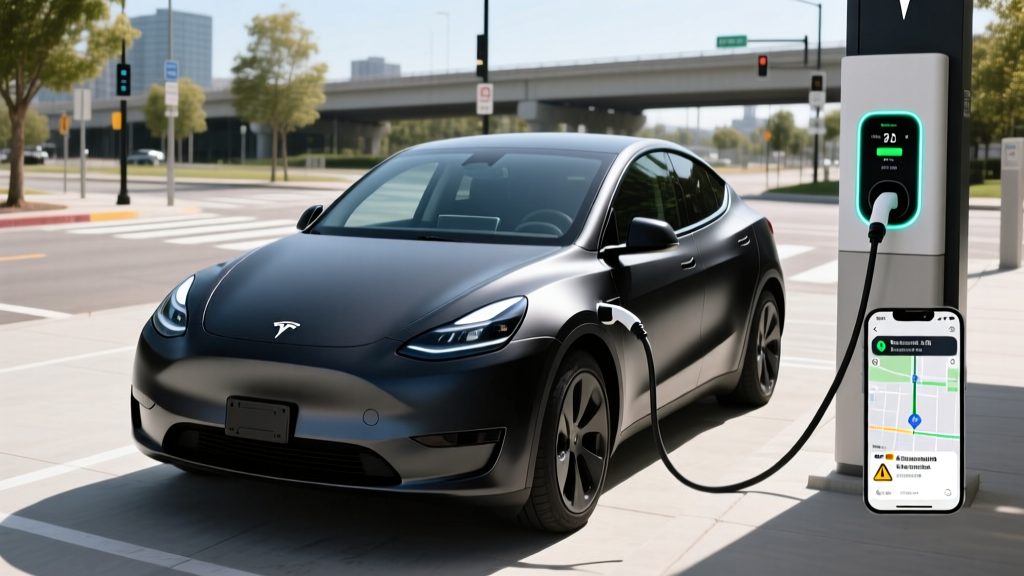
The 2026 Model Y peaks at 250 kW on a V3 or V4 Tesla Supercharger. In practice, the charging curve holds above 200 kW from roughly 10% to 35% state of charge, then tapers progressively. A 10-80% session takes approximately 25 minutes under ideal battery preconditioning — but expect 30-35 minutes in cold weather if the battery hasn't been adequately warmed via navigation-routed preconditioning.
| Charging Level | Power | Miles Added Per Hour | Typical Use Case |
|---|---|---|---|
| Level 1 (120V) | ~1.4 kW | ~5 mi/hr | Emergency / overnight trickle |
| Level 2 (240V, 48A) | 11.5 kW | ~44 mi/hr | Home daily charging (Wall Connector) |
| DC Fast (Supercharger V3/V4) | Up to 250 kW | ~1,000 mi/hr at peak | Road trips, 10-80% in ~25 min |
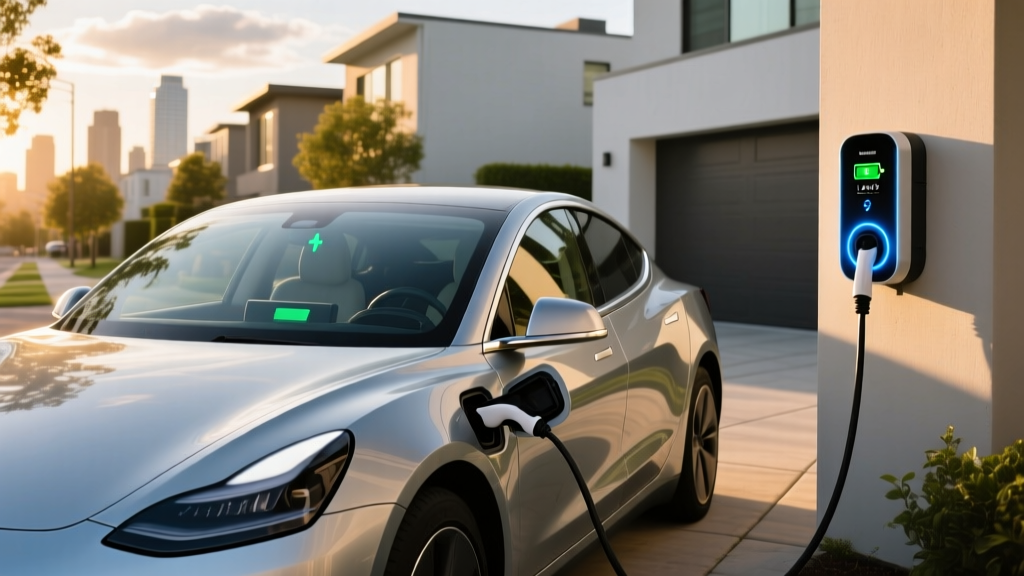
At home, Tesla's Wall Connector on a 60-amp circuit delivers 11.5 kW, adding roughly 44 miles of range per hour of charging. Most owners charging overnight from 20% to 80% will fully replenish in under 5 hours. Installation of a 240V/60A circuit typically costs $800-$2,000 depending on panel proximity and whether your home's electrical panel needs an upgrade to 200 amps.
Tesla's Supercharger network now includes over 6,500 V3/V4 stalls in North America, and the NACS connector has been adopted by Ford, GM, Rivian, and others — meaning Superchargers are increasingly shared. However, Tesla owners still benefit from seamless plug-and-charge integration with no adapter needed.
Pricing, Tax Credits, and the Congestion Fee Advantage
The 2026 Tesla Model Y Long Range AWD starts at $48,990 (including destination). The Performance trim starts at $53,990. Both trims fall under the IRS §30D MSRP cap of $80,000 for SUVs, making them potentially eligible for the full $7,500 federal tax credit — but eligibility depends on multiple factors.
IRS §30D Federal Tax Credit Requirements (2026):
- MSRP cap: Vehicle must be under $80,000 (SUV/truck/van) — both Model Y trims qualify.
- Buyer income cap: AGI must not exceed $150,000 (single), $225,000 (head of household), or $300,000 (joint).
- Battery sourcing: Critical minerals and battery components must meet phased-in domestic-content thresholds per IRS guidelines. Tesla's shifting supply chain means eligibility can change — always verify at purchase.
- Point-of-sale transfer: You can transfer the credit to the dealer for an immediate price reduction rather than claiming it on your tax return.
| Trim | Base MSRP | Est. After $7,500 Credit | As-Tested (w/ FSD, Wheels) |
|---|---|---|---|
| Long Range AWD | $48,990 | ~$41,490* | ~$51,490 (w/ FSD + 20" wheels) |
| Performance | $53,990 | ~$46,490* | ~$55,990 (w/ FSD) |
*Assumes full §30D eligibility. Verify sourcing requirements at time of purchase. State and local incentives vary — check fueleconomy.gov for details.
How the Model Y Handles Congestion Fees
This is where the keyword "congestion fees Tesla" becomes practical. Urban congestion pricing — like New York City's Central Business District tolling program and London's ULEZ/Congestion Charge — generally exempts or discounts zero-emission vehicles. Here's how a Tesla Model Y interacts with these systems:
- New York City: As of 2025, NYC's congestion pricing charges passenger vehicles $9 during peak hours to enter Manhattan below 60th Street. Battery-electric vehicles like the Model Y are not automatically exempt but may qualify for certain discount programs. Check the MTA's latest toll structure for BEV-specific provisions.
- London: The Congestion Charge (£15/day) and ULEZ (£12.50/day) both fully exempt zero-emission vehicles. A Tesla Model Y pays £0 in both zones — saving regular commuters up to £6,900/year versus a gasoline car.
- Other global cities: Stockholm, Singapore, and Milan all offer BEV discounts or exemptions in congestion zones. If you commute into a priced zone daily, the Model Y's zero-emission status can save $1,500-$7,000 annually depending on the city.
Bottom line: the congestion fee savings alone can offset 15-30% of a Model Y's annual ownership cost for daily urban commuters in priced zones.
Performance, Tech, and Interior
The 2026 Model Y Long Range AWD hits 0-60 mph in 4.8 seconds with 384 hp from its dual-motor setup. The Performance trim drops that to 3.5 seconds with 456 hp. Both deliver confident all-wheel-drive traction in rain and light snow, though the Performance's stiffer suspension trade-off is noticeable on rough pavement.
The refreshed "Juniper" interior addresses the most common complaints about pre-2025 Model Ys:
- Ventilated front seats — finally standard across all trims.
- Ambient lighting and acoustic glass — significantly reduces road noise at highway speeds.
- 15.4-inch center touchscreen with faster processor and improved navigation.
- Rear-seat entertainment screen (8-inch) for passengers.
- Power-folding second row for easier cargo access.
Tesla's Autopilot remains standard (SAE Level 2 — driver must remain fully engaged). Full Self-Driving (Supervised) is a $8,000 add-on or $99/month subscription, also Level 2 despite the name. It handles highway lane changes, on-ramp to off-ramp navigation, and city street turns impressively but requires constant driver attention and hands-on-wheel confirmation.
ADAS Limitation Warning: Tesla Autopilot and FSD (Supervised) are SAE Level 2 driver-assistance systems. They do NOT make the vehicle autonomous. You must keep your hands on the wheel, eyes on the road, and be prepared to take over instantly. Misuse of these systems has resulted in NHTSA investigations and fatal crashes.
Who Should Buy the 2026 Model Y — and Who Shouldn't
Pros
- Best-in-class Supercharger network access (250 kW, 6,500+ stalls)
- Strong efficiency (122 MPGe) keeps per-mile charging cost low
- Spacious cargo area (72.1 cu ft) rivals midsize SUVs
- Over-the-air updates add features post-purchase
- Zero-emission status exempts from many congestion fees globally
- Competitive 0-60 times across all trims
Cons
- No Apple CarPlay or Android Auto — Tesla-only infotainment
- FSD is expensive ($8,000) and still Level 2, not autonomous
- Insurance costs run 20-35% higher than comparable gas SUVs
- Single-screen control of climate/mirrors frustrates some drivers
- Rear visibility is limited; relies heavily on cameras
- NMC battery requires 20-80% daily charging discipline for longevity
Choose the Model Y if:
- You commute into a congestion-priced zone and need a zero-emission vehicle to avoid daily tolls.
- You road-trip regularly and value Supercharger reliability over CHAdeMO/CCS networks.
- You want a family EV with strong cargo space and can charge at home nightly.
Look elsewhere if:
- You need Apple CarPlay/Android Auto for your daily workflow.
- You want an LFP battery for 100% daily charging without degradation concerns (consider the base RWD Model Y, which uses CATL LFP cells with ~260 mi range).
- You need a third row — the Hyundai Ioniq 9 or Kia EV9 offer three-row electric SUV alternatives.
Competitor Comparison: Model Y vs. the Field
At ~$41,490 after the federal credit, the Model Y Long Range competes directly with the Hyundai Ioniq 5 ($41,500 after credit, 310 mi EPA), Ford Mustang Mach-E ($42,995 after credit, 312 mi EPA), and the Chevrolet Equinox EV ($33,000 after credit, 319 mi EPA). The Model Y's edge remains Supercharger access and cargo versatility. The Ioniq 5 charges faster on 800V architecture (10-80% in ~18 minutes at 350 kW). The Equinox EV undercuts on price dramatically but lacks DC fast-charge speeds above 150 kW.
Battery Warranty and Long-Term Ownership
Tesla covers the Model Y battery and drive unit for 8 years or 120,000 miles, whichever comes first, with a minimum 70% capacity retention guarantee. Based on data from Tesla's impact reports and third-party fleet analyses, NMC packs in the Model Y typically show 10-12% degradation at 100,000 miles when charged between 20-80% daily. Out-of-warranty battery replacement currently runs $12,000-$16,000 at Tesla service centers, though this cost is expected to decline as battery manufacturing scales.
For a full breakdown of NMC degradation curves and care tips, see our battery technology guide and the EPA's clean vehicle credit resource page.
Frequently Asked Questions
What is the real-world range of the 2026 Tesla Model Y?
The Long Range AWD is EPA-rated at 320 miles, but expect 270-290 miles on highway road trips and 220-250 miles in sustained freezing temperatures. City driving with regen braking in mild weather can match or slightly exceed 320 miles.
How fast does the Model Y charge at home and on the road?
At home on a Level 2 Wall Connector (11.5 kW), it adds ~44 miles per hour — a full overnight charge from 20-80% takes about 4-5 hours. On a 250 kW Supercharger, 10-80% takes roughly 25 minutes with proper battery preconditioning.
How much does the 2026 Model Y cost after the federal tax credit?
The Long Range AWD starts at $48,990 and drops to approximately $41,490 with the full $7,500 §30D credit. The Performance starts at $53,990 (~$46,490 after credit). Eligibility depends on buyer income, battery sourcing rules, and MSRP caps — verify at purchase.
Does the Tesla Model Y qualify for the $7,500 federal EV tax credit?
Both trims fall under the $80,000 SUV MSRP cap. However, you must meet income limits ($150K single / $300K joint AGI) and the battery must meet current-year critical-mineral and component sourcing thresholds. These sourcing rules tighten annually — confirm with your dealer and a tax professional before relying on the credit.
Does owning a Tesla help avoid congestion fees?
Yes, in many cities. London fully exempts BEVs from both the Congestion Charge and ULEZ. NYC's program may offer BEV discounts (check MTA updates). In Stockholm, Singapore, and Milan, zero-emission vehicles receive significant toll reductions. For a daily commuter, these savings can total $1,500-$7,000 per year.
Is the 2026 Model Y worth buying over the Hyundai Ioniq 5 or Ford Mach-E?
The Model Y wins on Supercharger network access, cargo space, and OTA updates. The Ioniq 5 wins on DC fast-charge speed (800V/350 kW capability) and offers CarPlay. The Mach-E offers a more traditional interior layout. If you road-trip often and value charging infrastructure, the Model Y still holds the edge.
What are the biggest drawbacks of the Model Y?
No Apple CarPlay/Android Auto, higher-than-average insurance premiums, reliance on the touchscreen for climate and mirror adjustments, and an NMC battery that benefits from disciplined 20-80% daily charging to minimize long-term degradation.