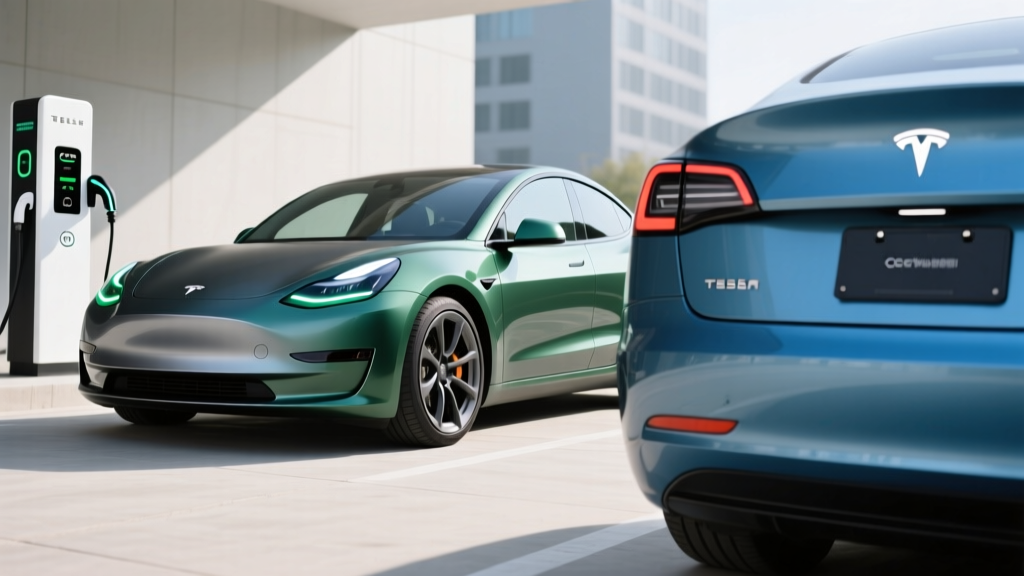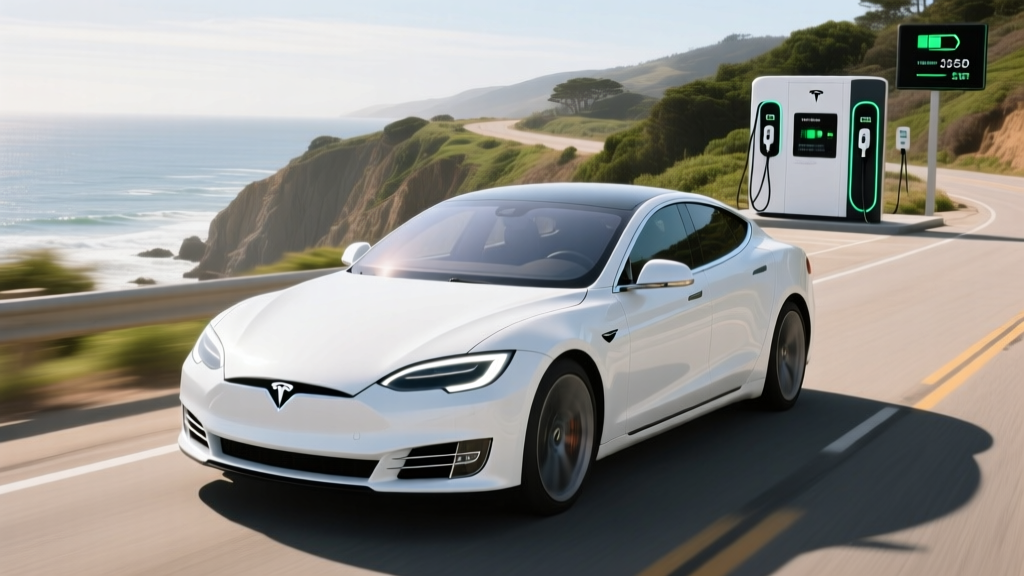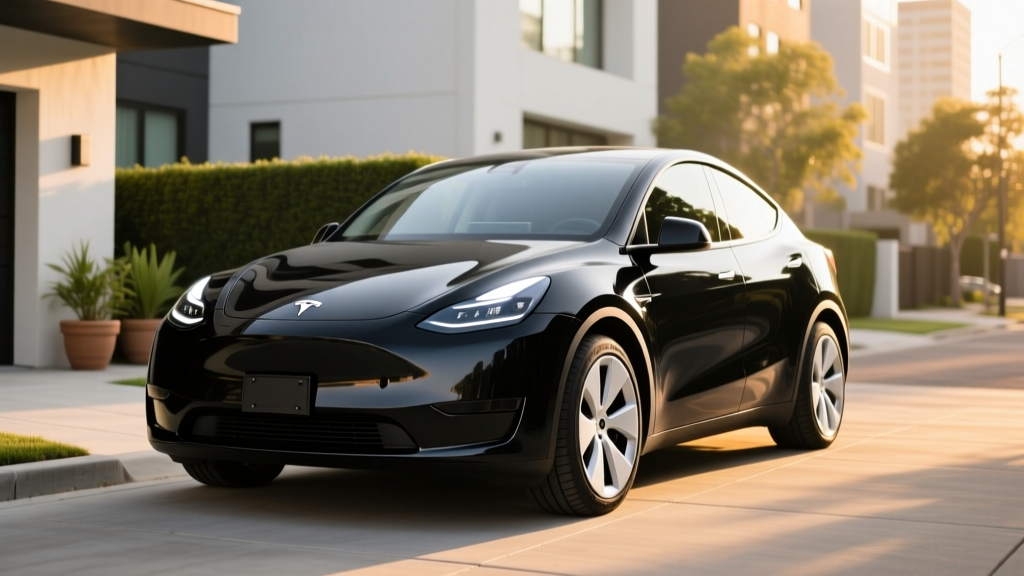
Tesla is offering new buyer incentives to boost sales of its best-selling vehicle, and if you've been watching from the sidelines, the 2026 Model Y might finally be worth a serious look. Between discounted financing rates, limited-time lease offers, and referral credits stacking on top of federal tax incentives, the effective price of America's most popular electric SUV has dropped meaningfully in early 2026.
But incentives only matter if the underlying product delivers. We've spent time with the refreshed Juniper-generation Model Y Long Range AWD to answer the question that matters: beyond the deals, is this the right EV for your driveway? Below you'll find exact range figures, charging speeds, real-world efficiency data, and a clear-eyed look at what Tesla gets right — and where competitors still have an edge.
2026 Tesla Model Y: Core Specs at a Glance
| Spec | Model Y Long Range AWD | Model Y Performance |
|---|---|---|
| EPA Range | 320 miles | 293 miles |
| Battery (usable) | ~78 kWh (NMC) | ~78 kWh (NMC) |
| Drivetrain | Dual-Motor AWD | Dual-Motor AWD |
| Horsepower | 384 hp | 456 hp |
| 0-60 mph | 4.8 sec | 3.5 sec |
| Peak DC Fast Charge | 250 kW | 250 kW |
| 10-80% DCFC Time | ~25 min | ~25 min |
| Level 2 Charge Rate | 11.5 kW (44 mi/hr) | 11.5 kW (44 mi/hr) |
| EPA Efficiency | 111 MPGe (30 kWh/100mi) | 105 MPGe (32 kWh/100mi) |
| Base MSRP | $48,380 | $53,880 |
| Battery Warranty | 8 yr / 120,000 mi | 8 yr / 120,000 mi |
The Standard Range RWD variant — previously offered with an LFP (lithium iron phosphate) battery at a lower entry price — has been consolidated for 2026 in the U.S. market, leaving the Long Range AWD as the volume trim. This simplifies the lineup but pushes the entry point above the $45,000 mark before incentives.
Real-World Range: What the EPA Sticker Doesn't Tell You
In mixed real-world driving at 65-75 mph in moderate temperatures (55-75°F), expect approximately 275-295 miles on a full charge. Sustained highway driving at 80+ mph drops that to roughly 250-265 miles. In cold weather (below 32°F), range can fall 20-30%, yielding 220-255 miles depending on cabin heat usage and whether you precondition the battery.
The Model Y's Juniper refresh brought modest aerodynamic improvements and a slightly revised thermal management system with a standard heat pump, which helps mitigate cold-weather losses compared to older models. However, physics is physics: any EV loses range when the battery is cold and the heater is running. If you live in the upper Midwest or Northeast, plan your winter road trips around 220-mile legs to maintain a comfortable buffer.
One practical advantage: Tesla's navigation system automatically factors in elevation, temperature, and wind when routing through Superchargers, and its range predictions are among the most accurate in the industry. According to fueleconomy.gov, the 2026 Model Y Long Range AWD achieves 111 MPGe combined, which translates to 30 kWh per 100 miles — competitive with the Hyundai Ioniq 5 (114 MPGe) and slightly behind the Ford Mustang Mach-E Extended Range (101 MPGe combined on certain trims).
Charging Speed and Network Access
Charging is where Tesla's ecosystem advantage remains tangible, even as competitors gain access to the Supercharger network via NACS adapters.
| Charging Level | Power | Speed | Use Case |
|---|---|---|---|
| Level 1 (120V) | ~1.4 kW | ~5 miles/hr | Emergency / overnight trickle |
| Level 2 (240V, 48A) | 11.5 kW | ~44 miles/hr | Home daily charging |
| DC Fast (Supercharger V3/V4) | 250 kW peak | 10-80% in ~25 min | Road trips |
At a V3 or V4 Supercharger, the Model Y's charge curve peaks near 250 kW between roughly 10-25% state of charge (SoC), then tapers progressively. You'll see ~170 kW around 40%, ~100 kW by 60%, and it drops below 50 kW past 85%. This is why Tesla recommends charging to 80% on road trips — the final 20% can take as long as the first 60%.
For home charging, a Wall Connector on a 60-amp circuit delivers the full 11.5 kW, adding about 44 miles per hour of charging. A typical overnight session (8 hours) replenishes roughly 350 miles — more than a full battery. Installation costs for a 240V/60A circuit typically run $800-$2,000 depending on panel proximity and local permitting, on top of the $450 Wall Connector unit. Always consult a licensed electrician to confirm your panel has capacity for a 60A breaker.
The broader charging landscape has shifted: non-Tesla EVs can now access many Supercharger stalls using the NACS connector or a CCS-to-NACS adapter. However, Tesla owners still enjoy the most seamless plug-and-charge experience — no adapter needed, no app fumbling, billing handled automatically. That friction reduction has real value on a rainy night at a charging plaza.
Performance, Ride, and Interior Quality
The Long Range AWD's 4.8-second 0-60 mph time is brisk for a family crossover and faster than most buyers will ever need. The dual-motor setup provides confident all-weather traction, and the low center of gravity (battery pack under the floor) keeps body roll well-controlled through corners. Steering is direct but light — more GT than sports car.
The Juniper refresh addressed one of the most persistent complaints about earlier Model Ys: ride quality. Tesla retuned the suspension with softer damping and added acoustic glass, resulting in a noticeably quieter, more compliant ride over rough pavement. It's not Lexus-smooth, but it's no longer the jarring experience of the 2020-2023 models.
Interior materials have also moved upmarket. The cabin now features ventilated front seats, ambient lighting, a rear-seat touchscreen for climate and entertainment, and improved soft-touch surfaces on the dashboard and door panels. It still follows Tesla's minimalist ethos — no physical buttons, everything routed through the 15.4-inch center display — which some buyers love and others find frustrating for simple tasks like adjusting mirrors or wipers.
Cargo and passenger space:
- Rear cargo (behind second row): 30.2 cu ft
- Cargo (second row folded): 72.1 cu ft
- Front trunk (frunk): 4.1 cu ft
- Rear legroom: 40.5 inches
- Front headroom: 40.8 inches
These numbers put the Model Y squarely in the compact-SUV class, comparable to the Ioniq 5 (27.2 cu ft rear cargo) and slightly less than the Mach-E (29.7 cu ft). The frunk is smaller than some competitors — the Rivian R1S offers a far more generous front trunk — but adequate for a charging cable bag or small groceries.
Pricing, Incentives, and Total Cost
Here's where the "Tesla is offering new buyer incentives to boost sales" headline becomes concrete. As of early 2026, Tesla has layered several promotions to move inventory:
| Cost Factor | Model Y Long Range AWD |
|---|---|
| Base MSRP | $48,380 |
| Destination Fee | $1,390 |
| Tesla Promotional Discount (Spring 2026) | -$2,000 |
| Federal §30D Tax Credit (if eligible) | -$7,500 |
| Estimated Effective Price | ~$40,270 |
Tesla has also been offering 0.99% APR financing for 36-60 months on select inventory and lease rates as low as $349/month in certain markets — both significantly below prevailing auto loan rates. These incentives are typically applied at point of sale or reflected in the online configurator, but availability varies by region and inventory. Always confirm current terms on Tesla's website before ordering.
Federal tax credit eligibility (§30D) requires meeting several criteria simultaneously:
- MSRP cap: Vehicle base price must be ≤ $80,000 for SUVs — the Model Y qualifies.
- Buyer income cap: Adjusted gross income ≤ $150,000 (single) or ≤ $300,000 (joint). Source: IRS §30D guidelines.
- Battery sourcing: A percentage of critical minerals and battery components must meet North American sourcing requirements. Tesla's U.S.-built Model Y has consistently met these thresholds, but verify current-year compliance on the IRS qualified vehicles list before purchasing.
- Point-of-sale transfer: As of 2024, eligible buyers can transfer the credit to the dealer at purchase, reducing the purchase price directly rather than waiting for a tax refund. Tesla participates in this program.
Consult a tax professional to confirm your personal eligibility — income phase-outs and sourcing rules are subject to annual updates.
Tech, Driver Assistance, and What's Missing
The Model Y's technology suite remains a core selling point. Standard features include:
- 15.4-inch center touchscreen with navigation, streaming, and gaming
- Over-the-air (OTA) software updates that regularly add features
- Tesla mobile app with remote climate, location tracking, and Sentry Mode
- Basic Autopilot (lane centering, adaptive cruise, auto emergency braking)
Full Self-Driving (Supervised) remains a $8,000 add-on (or $99/month subscription). It's critical to understand what FSD is and isn't:
Tesla's FSD (Supervised) and Autopilot are SAE Level 2 systems. The driver must remain fully engaged, hands near the wheel, eyes on the road at all times. The system handles lane changes, stoplights, and highway interchanges impressively well in favorable conditions, but it is not autonomous. Only Level 4 services like Waymo operate without a human driver. See NHTSA's guidance on automated vehicle safety for the full automation framework.
- Struggles in heavy rain, construction zones, and faded lane markings
- Phantom braking events still reported by owners on shadowed highways
- City street performance varies dramatically by geography and road complexity
- Driver monitoring camera will issue warnings and disengage if you look away
Notable drawbacks vs. competitors:
- No Apple CarPlay or Android Auto — Tesla's native infotainment only
- No head-up display (HUD), unlike Hyundai Ioniq 5 and Kia EV6
- No physical buttons for climate or volume — all screen-based
- Turn signal stalks removed in 2024 refresh; signals now on steering wheel buttons (polarizing)
- Insurance premiums tend to run 15-25% higher than comparable non-Tesla EVs due to repair costs
Who Should Buy the 2026 Model Y?
- You want the lowest-friction charging experience (Supercharger network, native NACS)
- You value OTA updates that genuinely improve the car over time
- You need AWD for snow/rain climates with 320 miles of range for commuting
- You can charge at home and want to minimize public charging dependency
- You qualify for the full §30D credit and Tesla's current financing incentives
- You want Apple CarPlay/Android Auto (Hyundai Ioniq 5, Ford Mach-E, Kia EV6)
- You prefer physical buttons, a HUD, or a more traditional interior layout
- You need 800V architecture for faster peak charging (Ioniq 5/EV6 charge 10-80% in ~18 min)
- You want a longer warranty — Hyundai offers 10yr/100,000mi battery coverage vs. Tesla's 8yr/120,000mi
- You're uncomfortable with Tesla's camera-only vision approach to driver assist (competitors use radar + cameras)
Pros and Cons
- 320-mile EPA range covers most commutes and road trips comfortably
- Supercharger network remains the most reliable public DCFC ecosystem
- Strong effective pricing with stacked incentives (~$40K after credit)
- Improved ride quality and cabin quietness post-Juniper refresh
- Spacious cargo area with flat floor and practical frunk
- OTA updates add real features over ownership lifecycle
- Low 30 kWh/100mi energy consumption reduces per-mile charging cost
- No Apple CarPlay/Android Auto — a dealbreaker for some buyers
- FSD is expensive ($8K) and still requires full driver attention
- Turn signal buttons on wheel are unintuitive for many drivers
- Insurance costs run higher than segment average
- 250 kW peak DC charge rate trails 800V competitors (Ioniq 5 at 240 kW but faster curve)
- Minimalist interior not for everyone — no physical controls
- Cold-weather range loss is significant without preconditioning discipline
Frequently Asked Questions
What is the real-world range of the 2026 Tesla Model Y?
The EPA rates the Long Range AWD at 320 miles. In real-world highway driving at 70-75 mph in moderate temperatures, expect 275-295 miles. In sub-freezing winter conditions, plan for 220-255 miles. Always precondition the battery before fast charging or hard driving in cold weather — this warms the pack and improves both range and charge acceptance.
How fast does the Model Y charge at home and on the road?
On a 240V Level 2 home charger (48A), the Model Y charges at 11.5 kW, adding roughly 44 miles per hour. A full overnight charge easily replenishes the battery. On a V3/V4 Supercharger at 250 kW peak, it charges 10-80% in approximately 25 minutes. The charge curve tapers significantly above 80%, so limit road-trip stops to 80% for optimal time efficiency.
How much does the Model Y cost after tax credits and incentives?
With the $48,380 base MSRP, Tesla's current ~$2,000 promotional discount, and the $7,500 federal §30D tax credit (if you meet income and sourcing requirements), the effective price drops to approximately $40,270 plus destination. Low-rate financing (0.99% APR) further reduces the cost of borrowing vs. prevailing 6-7% auto loan rates.
Does the 2026 Model Y qualify for the federal EV tax credit?
The Model Y has consistently qualified for the full $7,500 §30D credit due to its U.S. manufacturing and battery sourcing. However, eligibility depends on your personal income (≤ $300K joint / ≤ $150K single), the vehicle's MSRP (must be ≤ $80K for SUVs), and current-year critical mineral sourcing thresholds. Always verify on the IRS qualified vehicles list before ordering, as sourcing rules can shift mid-year.
Is the Model Y worth buying over the Hyundai Ioniq 5 or Ford Mach-E?
It depends on your priorities. The Model Y wins on Supercharger access, energy efficiency (30 kWh/100mi), and OTA longevity. The Ioniq 5 wins on 800V charging speed (10-80% in ~18 min), CarPlay/Android Auto, and a 10-year battery warranty. The Mach-E offers a more traditional interior with physical controls. If you road-trip frequently and want the simplest charging experience, the Model Y's ecosystem advantage is real. If you prioritize interior ergonomics and faster peak charging, cross-shop the Ioniq 5.
What are the biggest ownership costs beyond the purchase price?
Insurance is the main surprise — Model Y premiums average 15-25% above comparable EVs due to higher collision repair costs (aluminum body, camera/sensor density). Home charging installation runs $800-$2,000 for a 60A circuit. Tire replacement comes earlier than gas cars (EVs are heavier with instant torque) — budget $800-$1,200 for a set of EV-rated tires every 30,000-40,000 miles. On the savings side, electricity at $0.14/kWh yields ~$0.042/mile vs. $0.12-$0.15/mile for gas, saving roughly $1,000-$1,500/year for a 12,000-mile driver.
The 2026 Model Y isn't a revolution — it's a refinement of a proven platform with stacked incentives that make the math work for more buyers than it did 12 months ago. If you can charge at home, qualify for the §30D credit, and value the Supercharger network for road trips, the effective ~$40,000 price point is genuinely compelling. Just go in with eyes open about the minimalist interior, the insurance premium, and the fact that "Full Self-Driving" still requires a fully engaged driver behind the wheel.