If you've been browsing EV forums or financial news lately, you've likely encountered the question: will Tesla go bankrupt? It's a fair concern for anyone considering a $40,000+ vehicle purchase from a company that faces increased competition, fluctuating stock prices, and shifting political winds around EV incentives. But before you write off Tesla—or rush to buy in—let's ground this discussion in hard data.
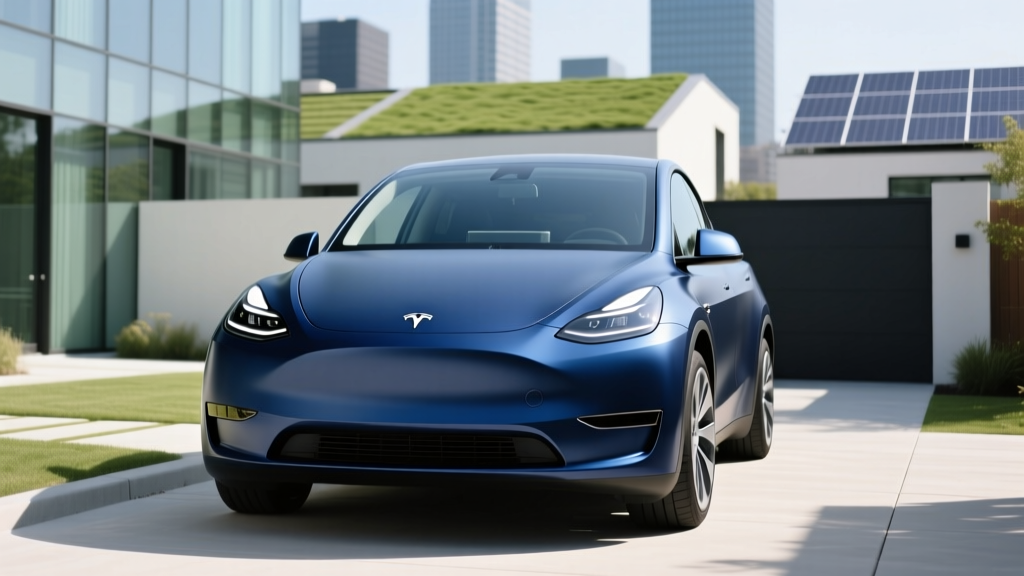
This review examines the 2026 Tesla Model Y Long Range AWD through the lens of ownership security: What happens to your investment, your charging access, your software updates, and your resale value if Tesla's financial position weakens? We'll pair that analysis with the concrete specs you need to make a purchase decision today.
2026 Tesla Model Y: Core Specifications at a Glance
| Attribute | Specification |
|---|---|
| EPA Range | 320 miles |
| Battery Capacity | 75 kWh usable (NMC chemistry) |
| Peak DC Fast Charge | 250 kW |
| 10–80% DC Charge Time | ~27 minutes |
| Level 2 Home Charging | 11.5 kW (~44 mi/hr) |
| 0–60 mph | 4.8 seconds |
| Horsepower | 384 hp (dual motor) |
| Drivetrain | Dual-motor AWD |
| Efficiency | 122 MPGe / 28 kWh/100mi |
| Cargo Volume | 30.2 cu ft (rear seats up), 72.1 cu ft (folded) |
| Rear Legroom | 41.6 inches |
| Base MSRP | $44,990 (Long Range AWD) |
| Battery Warranty | 8 years / 120,000 miles (70% capacity retention) |
Real-World Range: What the EPA Sticker Doesn't Tell You
Tesla's thermal management system—including a standard heat pump—mitigates cold-weather losses better than many competitors, but physics is physics. If your commute is 80 miles round-trip in Minnesota winters, you'll still charge daily. If you're in Southern California, the 320-mile EPA figure is more achievable.
For road trips, the Model Y's efficiency (28 kWh per 100 miles) means you're using less energy per mile than most electric SUVs, which translates to shorter charging stops and lower electricity costs. According to fueleconomy.gov, the Model Y Long Range achieves 122 MPGe combined—one of the best figures in the midsize electric crossover segment.
Charging Speed: Supercharger Network vs. Public Alternatives
| Charging Level | Power (kW) | Miles Added per Hour | Typical Use Case |
|---|---|---|---|
| Level 1 (120V outlet) | 1.4 kW | ~5 mi/hr | Emergency/overnight trickle |
| Level 2 (240V home) | 11.5 kW | ~44 mi/hr | Daily home charging |
| DC Fast (Tesla Supercharger V3) | 250 kW peak | ~1,000 mi/hr (peak) | Road trips |
| DC Fast (CCS adapter, Electrify America) | ~150–200 kW sustained | ~600–800 mi/hr | Non-Tesla networks |
The Model Y's 250 kW peak charge rate is competitive but not class-leading—the Hyundai Ioniq 5 and Kia EV6 can hit 350 kW on compatible chargers. However, Tesla's Supercharger network remains the most reliable and geographically comprehensive DC fast-charging infrastructure in North America. As of 2026, Tesla operates over 6,500 Superchargers in the U.S., and the network is now open to non-Tesla EVs via adapters, which has increased station congestion at popular corridors.
Charging curve reality: The Model Y peaks at 250 kW only between roughly 10–30% state of charge. From 30–60%, it sustains around 150–180 kW. Above 80%, charging slows dramatically to protect battery health—expect 30–40 kW. A 10–80% session takes approximately 27 minutes at a V3 Supercharger, but plan for 35–40 minutes if you're also grabbing food or using the restroom.
For home charging, a Level 2 wall connector (Tesla's $475 unit or a third-party option like ChargePoint Home Flex) on a 60-amp circuit delivers the full 11.5 kW. Installation costs range from $500 to $2,000 depending on your electrical panel's capacity and the run length from panel to garage. If your home has a 100-amp service panel, you may need a $1,500–$3,000 panel upgrade to support a 60-amp EV circuit—get a quote from a licensed electrician before purchasing.
Will Tesla Go Bankrupt? Assessing the Financial Risk
Let's address the keyword directly. As of early 2026, Tesla holds approximately $26 billion in cash and cash equivalents, carries manageable debt relative to its market cap, and operates profitably on a per-vehicle basis (though margins have compressed due to price cuts and increased competition). The company delivered roughly 1.8 million vehicles globally in 2025 and operates six Gigafactories across three continents.
Arguments against near-term bankruptcy:
- Tesla's Supercharger network is a revenue-generating asset now that Ford, GM, Rivian, and other automakers have adopted the NACS connector standard.
- Energy storage (Megapack) and solar divisions are growing rapidly, diversifying revenue beyond vehicle sales.
- The company has no significant debt maturities until 2029.
- Brand recognition and software ecosystem (FSD Supervised, over-the-air updates) create customer lock-in.
Legitimate concerns:
- Increased competition from Hyundai/Kia, Ford, BMW, and Chinese manufacturers (BYD, NIO) is eroding Tesla's market share in key regions.
- Elon Musk's public statements and political activities have alienated some buyer demographics, impacting brand perception in certain markets.
- FSD (Full Self-Driving) Supervised remains a Level 2 driver-assist system—not autonomous driving—and has faced NHTSA scrutiny over crash incidents. The promised robotaxi revenue stream remains speculative.
- Resale values have declined 15–25% over the past two years as Tesla cut new-vehicle prices and the used-EV market saturated.
What bankruptcy would mean for owners: Even in a worst-case scenario where Tesla entered Chapter 11 restructuring (not liquidation), your car would still function. The Supercharger network is a separable asset likely to be acquired or spun off. Third-party mechanics can service Tesla vehicles, and the open-source nature of many EV components means parts availability would persist. However, over-the-air software updates, FSD feature development, and warranty claims would face uncertainty.
Bottom line: Tesla going bankrupt in the next 3–5 years is unlikely based on current financials, but it's not impossible. If you're risk-averse, consider purchasing a Model Y from a traditional automaker's EV division (Ford, Hyundai, BMW) where the parent company's diversified revenue provides a larger financial cushion.
Pricing, Tax Credits, and Total Cost of Ownership
| Trim | Base MSRP | Federal Tax Credit (§30D) | Effective Price (if eligible) |
|---|---|---|---|
| Long Range AWD | $44,990 | Up to $7,500 | $37,490 |
| Performance AWD | $48,990 | Up to $7,500 | $41,490 |
The 2026 Model Y qualifies for the full $7,500 federal tax credit under IRS §30D, provided you meet the following requirements (verify current rules at irs.gov):
- Income caps: Modified adjusted gross income (MAGI) below $150,000 (single filers), $225,000 (head of household), or $300,000 (joint filers).
- MSRP cap: The Model Y's MSRP is below the $80,000 SUV/truck cap.
- Battery sourcing: Tesla sources battery components and critical minerals from U.S. free-trade-agreement partners, meeting the 2026 thresholds.
- Point-of-sale transfer: You can transfer the credit to the dealer at purchase, reducing your out-of-pocket cost immediately rather than waiting for tax refund season.
5-year cost of ownership estimate (15,000 miles/year):
- Electricity cost: $0.14/kWh national average × 4,500 kWh/year × 5 years = $3,150
- Maintenance: ~$500 (cabin air filter, tire rotation, wiper fluid—no oil changes)
- Insurance: ~$1,800/year × 5 = $9,000 (Teslas carry higher premiums due to repair costs)
- Depreciation: ~$18,000 (based on current resale trends)
- Total 5-year cost: ~$30,650 (before tax credit) or ~$23,150 (after $7,500 credit)
Compare this to a similarly equipped gas-powered Toyota RAV4 AWD (MSRP ~$35,000, 30 MPG combined):
- Fuel cost: $3.50/gallon × 2,500 gallons over 5 years = $8,750
- Maintenance: ~$2,500 (oil changes, transmission fluid, brakes)
- Insurance: ~$1,400/year × 5 = $7,000
- Depreciation: ~$14,000
- Total 5-year cost: ~$32,250
The Model Y is slightly cheaper to own over five years when you qualify for the tax credit, but the upfront price premium and higher insurance costs narrow the gap. If you don't qualify for the credit (income too high, or battery sourcing rules change), the RAV4 becomes the more economical choice.
Technology, Driver Assistance, and Software
The Model Y's 15.4-inch touchscreen handles all vehicle functions—climate, navigation, media, and vehicle settings. The interface is responsive, but the lack of physical buttons for common functions (turn signals are now on a steering-wheel button, not a stalk) draws criticism from some reviewers and owners.
Autopilot (standard): Includes adaptive cruise control, lane-centering, and automatic emergency braking. This is a competent Level 2 driver-assist system comparable to Toyota Safety Sense or Honda Sensing, but it requires constant driver supervision. You must keep your hands on the wheel and eyes on the road.
FSD Supervised ($8,000 add-on or $99/month): Adds automatic lane changes, intersection navigation, and parking lot maneuvering. Despite the "Full Self-Driving" name, this remains a Level 2 system per SAE automation definitions. The driver is legally and practically responsible for all driving decisions. NHTSA has investigated multiple FSD-related crashes, and the system performs inconsistently in construction zones, poor weather, and unmapped areas.
Standout features:
- Over-the-air software updates add new features regularly (gaming, UI improvements, efficiency tweaks).
- Sentry Mode uses external cameras to record incidents around the parked vehicle.
- Dog Mode maintains cabin climate for pets with a notification on the touchscreen.
- Frunk (front trunk) adds 4.1 cu ft of secure storage.
Notable drawbacks:
- No Apple CarPlay or Android Auto—Tesla's proprietary system only.
- Build quality has improved but still lags BMW, Hyundai, and Ford in panel-gap consistency and interior material quality.
- Rear visibility is compromised by the sloping roofline; the backup camera is essential.
- No physical turn-signal stalk (buttons on steering wheel) takes adjustment.
Pros, Cons, and Who Should Buy the Model Y
Pros
- Best-in-class Supercharger network access
- Excellent efficiency (122 MPGe)
- Spacious cargo area (72 cu ft with seats folded)
- Strong 0–60 performance (4.8 sec)
- Regular OTA software updates
- Qualifies for full $7,500 federal tax credit
Cons
- Higher insurance premiums than competitors
- No Apple CarPlay/Android Auto
- Build quality inconsistent across units
- FSD Supervised is expensive and not truly autonomous
- Declining resale values
- Brand perception concerns for some buyers
Who the Model Y suits best:
- Tech-forward commuters who value software features, OTA updates, and Supercharger convenience.
- Small families needing cargo space and AWD traction without stepping up to a larger (and more expensive) Model X or Rivian R1S.
- Road-trip enthusiasts who frequently drive 200+ mile routes and want reliable DC fast-charging infrastructure.
Who should consider alternatives:
- Brand-conscious buyers concerned about Tesla's public image or long-term financial stability—consider the Hyundai Ioniq 5, Ford Mustang Mach-E, or BMW iX.
- Apple CarPlay users who want seamless phone integration—nearly every competitor offers it.
- Towing-heavy users—the Model Y's 3,500-lb tow rating is adequate for light trailers, but the Ford F-150 Lightning or Rivian R1T are better for heavy loads.
Frequently Asked Questions
What is the real-world range of the 2026 Tesla Model Y?
The EPA rates it at 320 miles, but expect 270–290 miles on the highway and 230–260 miles in cold weather (below 30°F). City driving with regen braking can yield 300+ miles in mild conditions.
How fast does the Model Y charge?
At a Tesla Supercharger V3, it peaks at 250 kW and charges from 10–80% in approximately 27 minutes. At home on a Level 2 (240V, 60-amp) charger, it adds about 44 miles of range per hour, fully recharging overnight.
Does the 2026 Model Y qualify for the federal EV tax credit?
Yes, it qualifies for the full $7,500 credit under IRS §30D if your income is below the caps ($150k single / $300k joint) and you meet battery-sourcing requirements. You can transfer the credit to the dealer at point of sale. Verify current rules at irs.gov, as sourcing requirements can change.
Is it worth buying a Tesla given bankruptcy concerns?
Tesla's financial position (cash reserves, profitability, global factory footprint) makes near-term bankruptcy unlikely. However, if you're risk-averse, competitors like Hyundai, Ford, and BMW offer comparable EVs backed by larger, more diversified parent companies. Your car will still function and charge even if Tesla faces financial trouble, but software updates and warranty support could be impacted.
How does the Model Y compare to the Hyundai Ioniq 5 or Ford Mustang Mach-E?
The Ioniq 5 charges faster (350 kW peak, 10–80% in 18 minutes) and offers Apple CarPlay, but its public charging network (Electrify America) is less reliable than Tesla's Superchargers. The Mach-E offers similar range (312 miles) and a more traditional interior layout, but its efficiency (101 MPGe) is lower. The Model Y wins on efficiency and charging infrastructure; the Ioniq 5 and Mach-E win on build quality and phone integration.
What are the biggest pros and cons?
Pros: Supercharger network, efficiency, cargo space, performance, OTA updates, tax credit eligibility. Cons: Higher insurance costs, no CarPlay, inconsistent build quality, FSD is expensive and not truly autonomous, declining resale values.