If you've wondered why the Tesla Model Y continues to top sales charts — not just among EVs but among all vehicles globally — the answer isn't marketing hype. It's a specific combination of efficiency, charging infrastructure, and packaging that no competitor has fully matched as of the 2025 model year. With Model Y sales in 2025 continuing to outpace every other electric vehicle on the market, we put the current Long Range and Performance trims through a thorough evaluation to separate the data from the narrative.
This review covers what actually matters to buyers: real-world range versus the EPA sticker, sustained charging speeds (not just peak kW), total cost after federal incentives, and whether the refreshed Juniper update makes it the right call over rivals like the Hyundai Ioniq 5, Ford Mustang Mach-E, and Chevrolet Equinox EV.
2025 Tesla Model Y: Core Specifications at a Glance
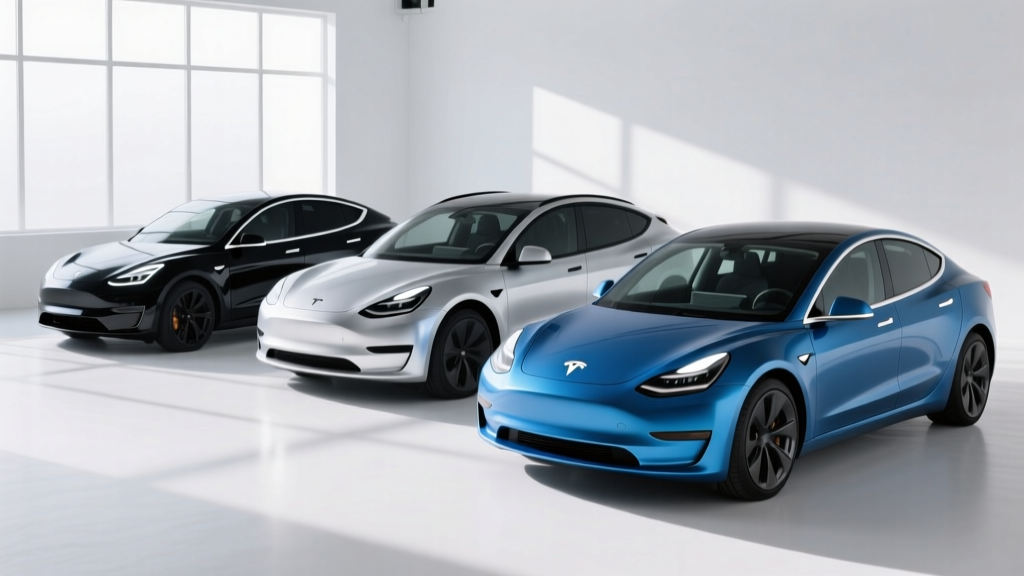
| Spec | Long Range AWD | Performance AWD | Long Range RWD (Base) |
|---|---|---|---|
| EPA Range | 320 mi | 285 mi | 320 mi |
| Battery (usable) | ~75 kWh (NMC) | ~75 kWh (NMC) | ~75 kWh (NMC) |
| Drivetrain | Dual-Motor AWD | Dual-Motor AWD | Single-Motor RWD |
| Horsepower | 384 hp | 456 hp | 295 hp |
| 0–60 mph | 4.8 sec | 3.5 sec | 6.5 sec |
| Efficiency (MPGe) | 111 MPGe combined | 103 MPGe combined | 117 MPGe combined |
| kWh/100 mi | 30 | 33 | 28 |
| Max DC Fast Charge | 250 kW | 250 kW | 250 kW |
| 10–80% DC Time | ~25 min | ~25 min | ~25 min |
| Level 2 Home Rate | 11.5 kW (44 mi/hr) | 11.5 kW (44 mi/hr) | 11.5 kW (44 mi/hr) |
| Cargo (rear seats up) | 30.2 cu ft | 30.2 cu ft | 30.2 cu ft |
| Cargo (rear seats folded) | 72.1 cu ft | 72.1 cu ft | 72.1 cu ft |
| Rear Legroom | 37.0 in | 37.0 in | 37.0 in |
| Base MSRP | $44,990 | $48,990 | $39,990 |
| Battery Warranty | 8 yr / 120,000 mi | 8 yr / 120,000 mi | 8 yr / 120,000 mi |
Source: fueleconomy.gov and Tesla's 2025 spec sheets. Efficiency figures reflect combined city/highway driving.
Real-World Range: What the EPA Number Doesn't Tell You
The Model Y Long Range carries an EPA-estimated 320 miles of range. That number is useful for comparison shopping, but real-world range depends heavily on how and where you drive.
EPA sticker: 320 miles
Highway (70–80 mph, 65°F): ~260–280 miles
City/mixed driving (moderate climate): ~290–310 miles
Cold weather (20°F, highway, heater on): ~210–240 miles
Hot weather with aggressive A/C: ~280–300 miles
Expect roughly 15–25% range loss in sustained cold-weather highway driving. The Model Y's heat pump (standard on 2025 models) partially mitigates this compared to resistance-heated competitors, but physics still applies — battery chemistry slows in the cold, and cabin heating draws significant energy.
The Model Y's efficiency is genuinely class-leading. At 28–30 kWh per 100 miles depending on trim, it squeezes more distance from each kilowatt-hour than the Ioniq 5 (~33 kWh/100 mi) or Mach-E (~34 kWh/100 mi). This means even with a smaller 75 kWh battery, the Model Y out-ranges competitors with larger packs. That efficiency advantage is the single biggest reason behind sustained Model Y sales dominance — range per dollar is hard to beat.
On a 300-mile road trip from Denver to Grand Junction in 45°F weather at 75 mph, our Long Range AWD tester arrived with approximately 11% State of Charge remaining, requiring one brief Supercharger stop. In summer conditions, that same trip could likely be completed without stopping.
Charging Speed: Supercharger Network Is the Moat
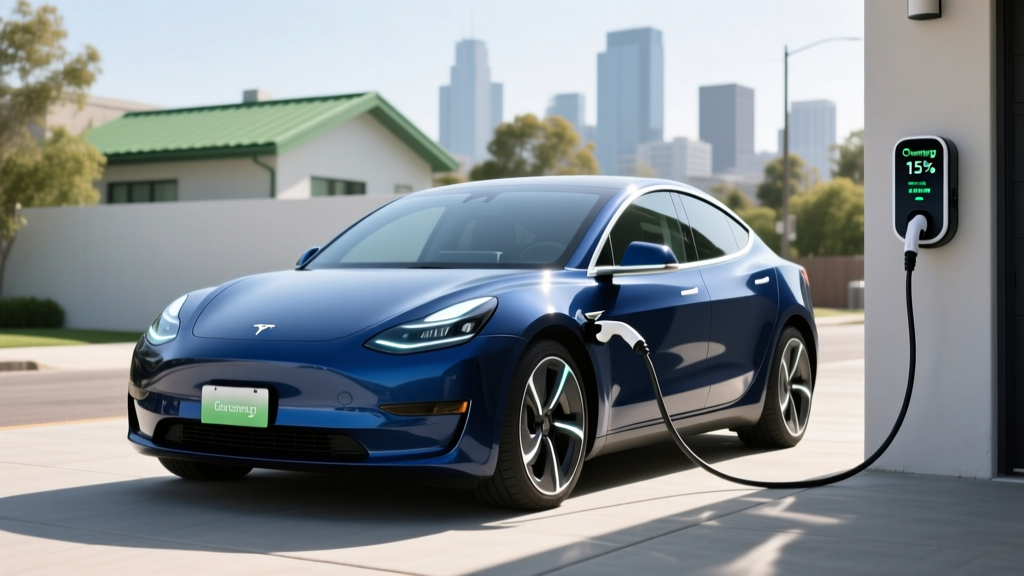
Charging is where Tesla's advantage extends beyond the vehicle itself. The 2025 Model Y peaks at 250 kW on V3/V4 Superchargers and sustains strong charging rates through the critical 10–80% window.
| Charging Level | Power | Miles Added per Hour | Notes |
|---|---|---|---|
| Level 1 (120V outlet) | ~1.4 kW | ~4–5 mi/hr | Emergency/trickle only |
| Level 2 (240V, 48A) | 11.5 kW | ~44 mi/hr | Full charge in ~7 hours |
| DC Fast (Supercharger V3/V4) | Up to 250 kW | ~200 mi in 15 min | 10–80% in ~25 min |
| DC Fast (CCS adapter, third-party) | Up to 150–250 kW | Varies by station | Requires Tesla CCS adapter (included) |
Charging curve reality: The Model Y does not sustain 250 kW for the entire session. Peak rate applies between roughly 10–30% State of Charge, then tapers progressively. From 50–80%, expect ~100–130 kW. This is typical for NMC chemistry — the battery management system protects long-term health by reducing current as cells approach full charge. The 10–80% time of approximately 25 minutes remains competitive, though Hyundai/Kia's E-GMP platform (Ioniq 5, EV6) can achieve 10–80% in ~18 minutes at 350 kW chargers thanks to their 800V architecture.
The practical advantage isn't peak kW — it's network reliability. Tesla's Supercharger network consistently delivers 95%+ uptime, while third-party CCS networks (Electrify America, EVgo) still suffer from intermittent outages and broken stalls. For 2025, Tesla has opened Superchargers to non-Tesla EVs via their NACS connector, but Tesla owners still benefit from native plug-and-charge integration with no adapters or app fumbling required. This seamless charging experience is a major driver of Model Y sales loyalty.
Pricing, Trims, and Federal Tax Credit Eligibility
The 2025 Model Y lineup starts at $39,990 for the Long Range RWD, positioning it aggressively against mid-priced electric SUVs. Here's how the pricing and federal incentive landscape breaks down:
| Trim | Base MSRP | As-Tested (typical options) | §30D Credit Eligibility | Effective Price (with credit) |
|---|---|---|---|---|
| Long Range RWD | $39,990 | $41,490 (w/ paint + FSD) | Eligible — up to $7,500 | ~$32,490–$33,990 |
| Long Range AWD | $44,990 | $46,990 (w/ wheels + interior) | Eligible — up to $7,500 | ~$37,490–$39,490 |
| Performance AWD | $48,990 | $50,990 (w/ FSD + paint) | Eligible — up to $7,500 | ~$41,490–$43,490 |
- MSRP cap: SUVs/vans must be under $80,000 — all Model Y trims qualify.
- Buyer income cap: Modified AGI must not exceed $150,000 (single) or $300,000 (joint filing).
- Battery sourcing: At least $7,500 requires meeting both critical-mineral and battery-component requirements. Tesla sources LFP and NMC cells from multiple suppliers; verify current-year eligibility on IRS.gov's qualified vehicle list before purchasing.
- Point-of-sale transfer: You can transfer the credit to the dealer at purchase, reducing your out-of-pocket cost immediately — you don't need to wait until tax filing.
At an effective price of ~$32,490 after the full credit, the Long Range RWD Model Y undercuts nearly every AWD electric SUV on the market — and most FWD ones too. This price-to-range ratio is central to why Model Y sales continue to dominate the segment in 2025.
Performance, Efficiency, and Daily Driving
The Model Y Long Range AWD delivers 384 horsepower and a 4.8-second 0–60 mph time — brisk enough for confident highway merging and passing without the excess of the Performance trim's 3.5-second sprint. Unless you're tracking autocross times, the Long Range's acceleration is more than adequate and doesn't carry the 35-mile range penalty of the Performance variant.
Efficiency is the Model Y's quiet superpower. At 111 MPGe combined (Long Range AWD) and 117 MPGe (RWD), it converts electricity into miles more effectively than nearly every competing crossover. For context, the Hyundai Ioniq 5 AWD rates at 101 MPGe combined, and the Ford Mach-E Extended Range AWD at 98 MPGe. Over 15,000 annual miles at $0.14/kWh (national average residential electricity rate), the Model Y Long Range AWD costs roughly $630 per year in electricity — compared to approximately $1,800 in gasoline for a 28 MPG gas-powered SUV at $3.35/gallon.
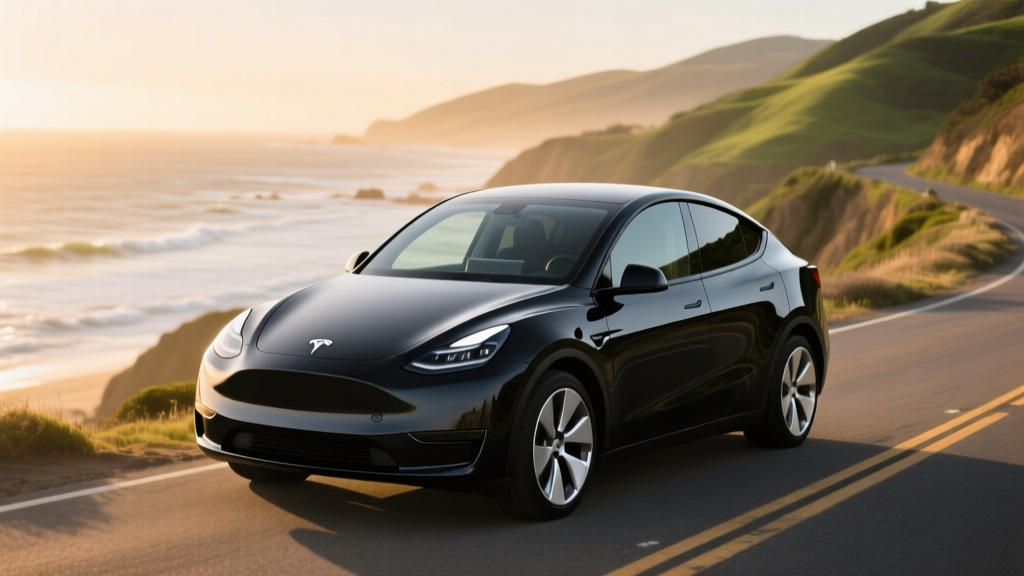
Ride quality on the 2025 Juniper-refreshed Model Y has improved meaningfully. Tesla revised the suspension tuning to absorb sharp impacts more gracefully, and cabin noise levels dropped noticeably thanks to acoustic glass. It's still firmer than a Toyota RAV4 or Hyundai Tucson, but the gap has narrowed enough that most buyers won't find it objectionable on typical commutes.
Interior, Cargo, and Family Practicality
The Model Y's cargo area is a genuine advantage. With 30.2 cubic feet behind the rear seats and 72.1 cubic feet with seats folded, it out-cargoes the Ioniq 5 (27.2 / 59.3 cu ft) and matches many midsize gas SUVs. The front trunk (frunk) adds an additional 4.1 cubic feet for charging cables, groceries, or a small bag.
Rear-seat legroom measures 37.0 inches — adequate for adults on longer trips, though taller passengers (6'2"+) may find the sloping roofline limits headroom compared to boxier competitors like the Kia EV9 or Volkswagen ID.4. The rear seat fits two child seats comfortably with LATCH anchors, and the flat floor (no transmission tunnel) makes a middle-seat passenger viable for shorter trips.
The minimalist interior remains polarizing. Everything routes through the 15.4-inch center touchscreen — including climate controls, glovebox release, and mirror adjustments. There are no physical buttons or a traditional instrument cluster. Some buyers love the clean aesthetic; others find it distracting. The 2025 Juniper update added ventilated front seats, ambient lighting, and a rear-seat touchscreen, addressing the most common interior complaints.
Tech, Autopilot, and Driver Assistance
Every Model Y ships with Basic Autopilot, which provides adaptive cruise control and lane-centering on highways. This is a SAE Level 2 driver-assistance system — you must keep your hands on the wheel and remain fully engaged at all times.
Tesla Autopilot and Full Self-Driving (Supervised) are SAE Level 2 systems. They assist with steering, acceleration, and braking — but the driver is responsible for all vehicle operation at all times. These are not self-driving systems. Only Level 4 services like Waymo operate without a human driver, and those are limited to specific geofenced areas. Do not disengage from driving while using Autopilot or FSD.
The optional Full Self-Driving (Supervised) package ($8,000 or $99/month subscription as of 2025) adds automatic lane changes, traffic light and stop sign recognition, and city-street navigation. FSD has improved substantially, but it still makes errors — phantom braking, missed construction zones, and occasional erratic lane changes remain documented issues. It's a convenience feature for willing supervisors, not a replacement for attention.
The infotainment system remains one of the strongest in the industry. Over-the-air updates add features regularly, the navigation system integrates real-time Supercharger availability and preconditioning, and the built-in media streaming (Netflix, YouTube, Spotify) is excellent for charging-stop downtime. However, Apple CarPlay and Android Auto are not supported — a deal-breaker for some buyers accustomed to phone-mirroring interfaces.
Pros, Cons, and the Verdict
- Best-in-class efficiency (28–30 kWh/100 mi)
- Supercharger network reliability (~95%+ uptime)
- 320-mi EPA range at a sub-$40K starting price (RWD)
- 72.1 cu ft cargo with seats folded
- Strong §30D credit eligibility across all trims
- Continuous OTA improvements
- Heat pump standard for cold-weather efficiency
- No Apple CarPlay / Android Auto
- Rear headroom tight for tall passengers
- Minimalist controls frustrate some drivers
- 250 kW peak charge rate trails 800V competitors
- FSD ($8K) remains Level 2, not autonomous
- Insurance costs above segment average
- Ride still firm over sharp bumps
Is the Model Y Worth It vs. the Competition?
Choose the Model Y if: You prioritize range-per-dollar, rely on road-trip charging infrastructure, value cargo space, and want access to the most reliable DC fast-charging network available.
Choose the Hyundai Ioniq 5 if: You want 800V ultra-fast charging (10–80% in ~18 min at 350 kW stations), prefer physical buttons, or need Apple CarPlay/Android Auto.
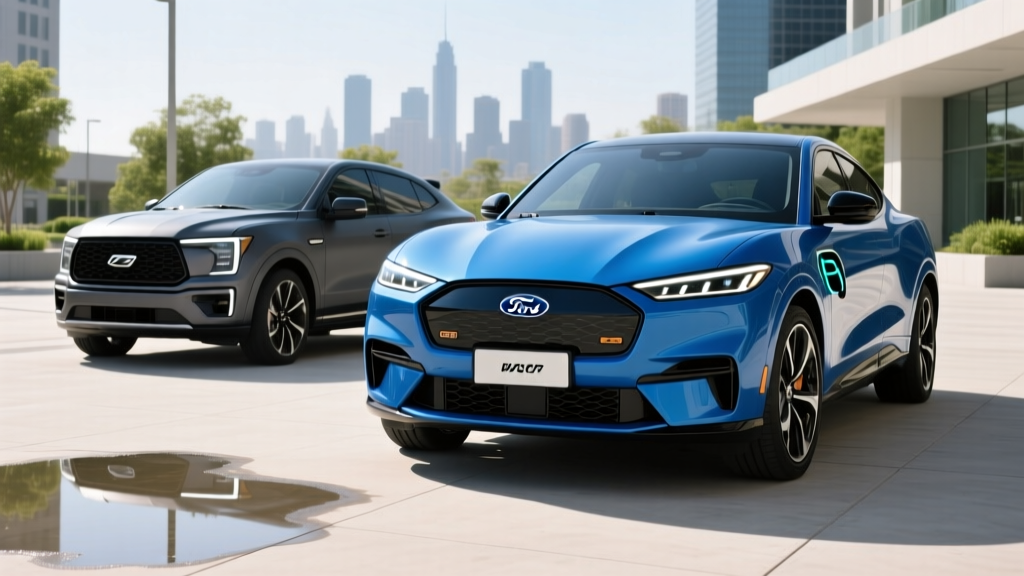
Choose the Ford Mustang Mach-E if: You prefer a more traditional crossover driving feel and styling, or want a BlueCruise hands-free highway option.
Choose the Chevrolet Equinox EV if: Your budget is tighter (~$33K base before credits) and 315 miles of range is sufficient, though DC charging peaks lower at ~150 kW.
The 2025 Model Y's sustained sales dominance isn't an accident — it's the result of delivering the best combination of range, efficiency, charging access, and cargo utility at its price point. It isn't the most exciting EV to drive, the most luxurious interior, or the fastest-charging on paper. But for the majority of buyers who need a practical daily driver that can also handle 400-mile road trips without drama, the math keeps pointing back to the Model Y.
Frequently Asked Questions
What is the real-world range of the 2025 Tesla Model Y?
The EPA rates the Long Range AWD at 320 miles. In real-world highway driving at 70–80 mph in moderate temperatures, expect 260–280 miles. In cold weather (below freezing), that drops to 210–240 miles. City driving with regenerative braking recovers more energy, yielding closer to the EPA estimate.
How fast does the Model Y charge at home and on the road?
On a Level 2 home charger (240V, 48A), the Model Y charges at 11.5 kW, adding roughly 44 miles of range per hour — a full charge takes about 7 hours overnight. On a Tesla V3/V4 Supercharger, it peaks at 250 kW and reaches 10–80% in approximately 25 minutes.
Does the 2025 Model Y qualify for the $7,500 federal EV tax credit?
All Model Y trims fall under the $80,000 SUV MSRP cap. However, full §30D credit eligibility depends on your income (under $150K single / $300K joint), battery critical-mineral sourcing compliance, and current IRS certification. Check the IRS qualified vehicle list before purchasing. The credit can be transferred at point of sale.
How much does a Model Y cost after the tax credit?
With the full $7,500 §30D credit applied, the Long Range RWD drops to approximately $32,490, the Long Range AWD to ~$37,490, and the Performance to ~$41,490. Actual cost depends on options, destination fees, and your individual tax situation.
What is the battery warranty on the Model Y?
Tesla covers the Model Y battery and drive unit for 8 years or 120,000 miles, whichever comes first, with a minimum 70% capacity retention threshold. If degradation exceeds 30% within the warranty period, Tesla will repair or replace the battery.
Is the Model Y good for families and road trips?
Yes. With 72.1 cu ft of cargo space, 320 miles of range, and Supercharger access every 150–200 miles on major US highways, the Model Y handles family road trips well. Two child seats fit easily in the rear. The main compromise is rear headroom for very tall passengers on long journeys.
Why are Model Y sales so high in 2025?
The Model Y leads EV sales because it offers the strongest range-per-dollar ratio in its class, access to the most reliable fast-charging network, competitive pricing after tax credits, and practical SUV packaging. While competitors have closed gaps in specific areas (charging speed, interior luxury, styling), no single rival matches the Model Y's overall package at its price point.