The 2025 Tesla Model Y — internally called the "Juniper" refresh — is the most consequential update to the world's best-selling EV since its 2020 launch. New sheet metal, a redesigned interior with ventilated front seats and a rear touchscreen, acoustic glass, and a retuned suspension change the ownership experience meaningfully. But underneath, the powertrain, battery pack, and 400-volt architecture carry over, which means charging speeds and efficiency remain familiar to existing owners. This Tesla Model Y review digs into what actually changed, what didn't, and whether the 2025 refresh justifies the premium over a growing field of midsize electric SUV competitors.
2025 Tesla Model Y: Quick Verdict
The Juniper Model Y is a quieter, more refined, and slightly more comfortable version of the segment benchmark. It remains the default answer for buyers who want a practical all-electric family crossover with access to the most reliable DC fast-charging network in North America. The trade-offs are familiar: a minimalist interior that still polarizes, the absence of Apple CarPlay or Android Auto, and a price that has climbed into the mid-$40,000s before incentives. For households that can charge at home and regularly use Superchargers on road trips, the 2025 Model Y Long Range AWD is still the vehicle to beat.
| Spec | Long Range AWD | Performance (if available) |
|---|---|---|
| EPA Range | 320 miles | ~285 miles (est.) |
| Battery (usable) | ~75 kWh, NMC | ~75 kWh, NMC |
| Drivetrain | Dual Motor AWD | Dual Motor AWD |
| Horsepower | 384 hp | ~456 hp (est.) |
| 0–60 mph | 4.8 seconds | 3.5 seconds |
| Peak DC Fast Charge | 250 kW | 250 kW |
| 10–80% DC Charge | ~25 minutes | ~25 minutes |
| Level 2 Home Charge | 11.5 kW (~44 mi/hr) | 11.5 kW (~44 mi/hr) |
| MPGe (combined) | 111 MPGe | ~103 MPGe (est.) |
| Base MSRP | $44,990 | ~$51,490 (est.) |
| Battery Warranty | 8 yr / 120,000 mi | 8 yr / 120,000 mi |
Sources: EPA / fueleconomy.gov, Tesla.com. Performance trim specs estimated based on prior model year; confirm at purchase.
Real-World Range: What the EPA Sticker Doesn't Tell You
The 2025 Model Y Long Range AWD carries an EPA-estimated 320 miles of range — a slight reduction from the prior year's 330-mile rating, attributable to the Juniper's marginally heavier body structure, revised aero, and larger wheel options. Tesla continues to use an NMC (nickel manganese cobalt) lithium-ion pack with roughly 75 kWh of usable capacity.
EPA sticker: 320 miles
Mixed driving (city + suburban): Expect 290–310 miles in mild weather
Highway (70–80 mph sustained): ~250–275 miles — EVs lose efficiency at high speed due to aero drag
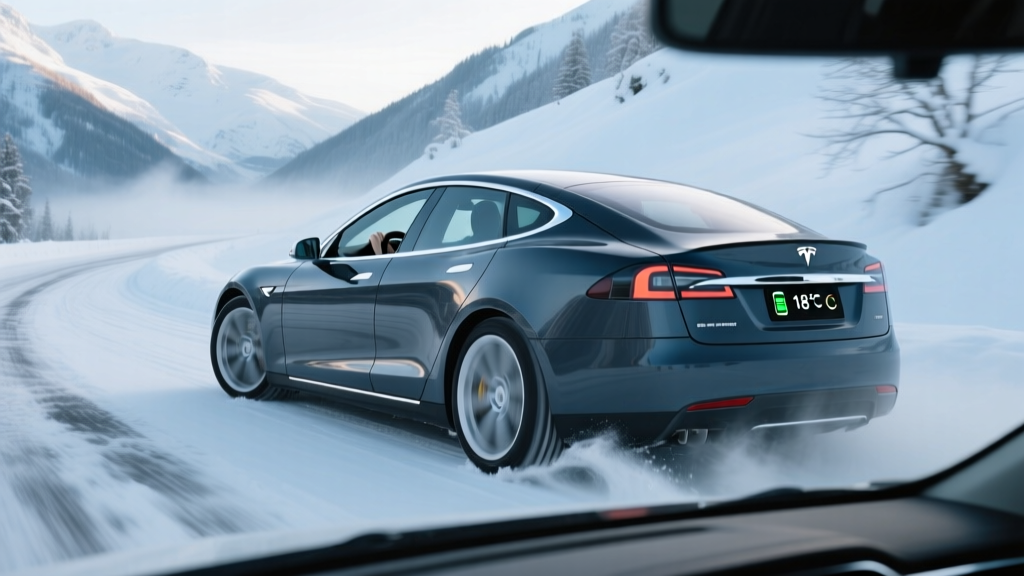
Cold weather (below 30°F): ~220–260 miles — battery chemistry and cabin heating reduce range 15–30%
19" Gemini wheels deliver the best efficiency; 20" Helix or 21" wheels reduce range by 5–10%.
The Model Y's heat pump — standard since the 2021 refresh — continues to be one of the most effective in the segment, reducing cold-weather HVAC energy draw compared to resistive heaters. Preconditioning the battery while plugged in (via the Tesla app or scheduled departure) is critical: it warms the pack for optimal efficiency and unlocks full regenerative braking from the first mile.
Efficiency is rated at 111 MPGe combined, which translates to approximately 28 kWh per 100 miles. That's competitive with the Hyundai Ioniq 5 (114 MPGe combined, Long Range AWD) and slightly behind the Ford Mustang Mach-E Extended Range AWD (101 MPGe combined). In practice, expect 3.5–3.8 miles per kWh in mixed driving.
Charging Speed: DC Fast, Level 2, and the Supercharger Advantage
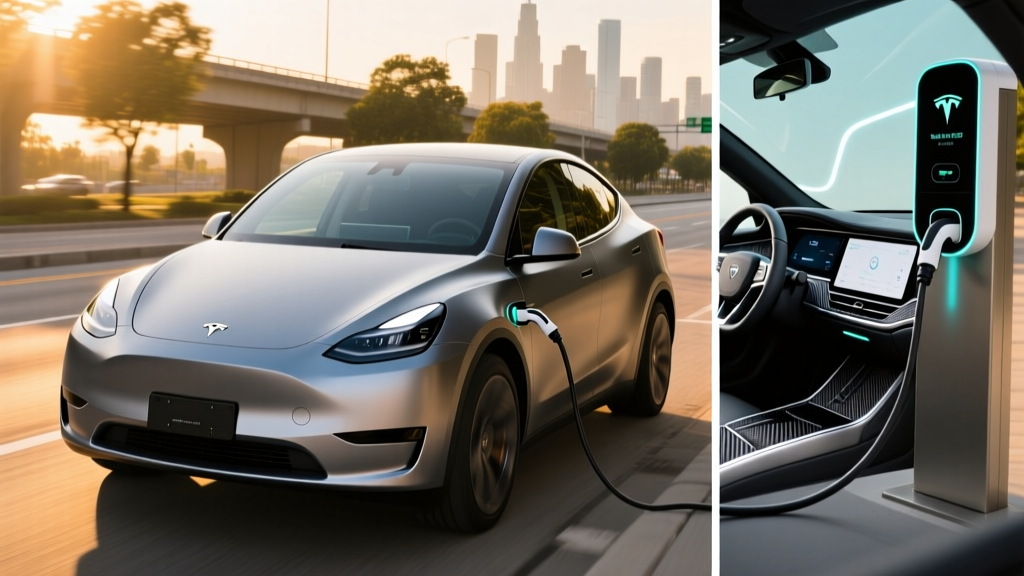
The 2025 Model Y retains Tesla's 400-volt architecture with a peak DC fast-charge rate of 250 kW at V3 Superchargers. That means a 10–80% session takes approximately 25 minutes under ideal conditions (warm battery, low state of charge at arrival). The charging curve tapers significantly above 80% — going from 80–100% can add another 20+ minutes, so Tesla's navigation system typically recommends charging to 80% on road trips unless you need the extra buffer.
| Charging Level | Power | Miles Added per Hour | Typical Use Case |
|---|---|---|---|
| Level 1 (120V outlet) | ~1.4 kW | ~3–5 mi/hr | Emergency / trickle top-off |
| Level 2 (240V, 48A Wall Connector) | 11.5 kW | ~44 mi/hr | Home overnight charging |
| Level 2 (240V, 32A Mobile Connector) | 7.7 kW | ~30 mi/hr | Home (NEMA 14-50 outlet) |
| DC Fast (Tesla V3 Supercharger) | 250 kW peak | ~175 mi in 15 min | Road trips |
| DC Fast (CCS adapter, Electrify America) | Up to 250 kW peak | Varies by station | Non-Tesla networks |
A critical ownership note: Tesla now includes a CCS adapter with new vehicles, and the Supercharger network has opened to non-Tesla EVs. This means Model Y owners can use Electrify America, EVgo, and other CCS networks when traveling through areas with sparse Supercharger coverage. However, the Supercharger network remains the most reliable and consistently functional DC fast-charging ecosystem in the U.S. — uptime and plug-and-charge simplicity are measurably better than third-party networks.
For home charging, the Tesla Wall Connector on a 60-amp circuit (48A continuous) delivers 11.5 kW, replenishing the full 75 kWh pack in roughly 7 hours. Most owners who drive 30–50 miles daily will only need to charge overnight every 4–5 days. Installation costs for a dedicated 60A circuit typically run $500–$1,500 depending on panel proximity; a full 200A panel upgrade (if your home has an older 100A service) can add $1,500–$3,000.
Performance and Driving Dynamics
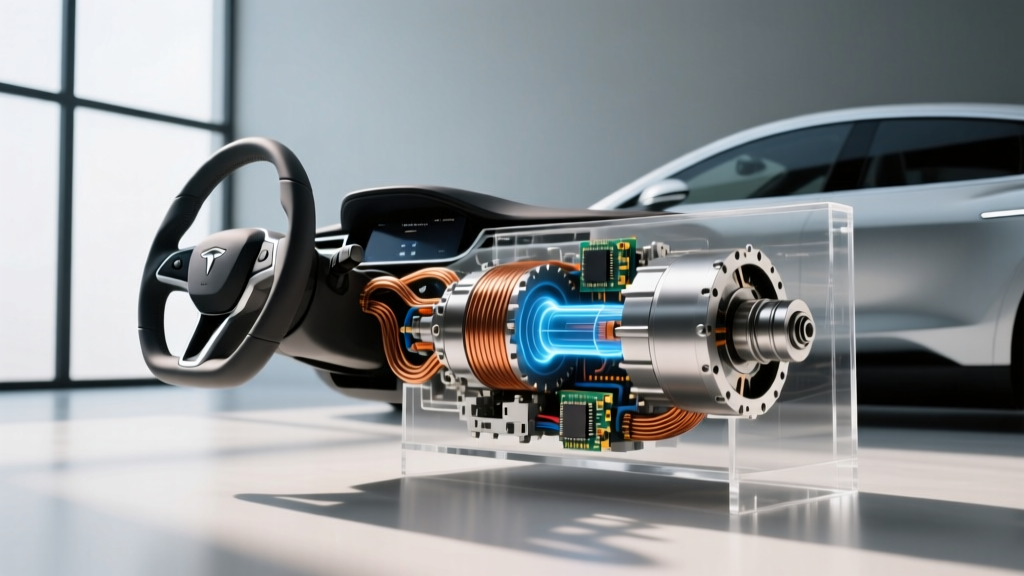
The Long Range AWD pairs dual permanent-magnet motors producing a combined 384 horsepower. The 0–60 mph sprint takes 4.8 seconds — brisk for a 4,400-pound crossover and more than adequate for highway merging and passing. Instant torque delivery means the Model Y feels quicker than the stopwatch suggests in everyday driving.
The Juniper refresh's most underappreciated improvement is the suspension and NVH (noise, vibration, harshness) tuning. Tesla added acoustic laminated glass all around, new bushings, and revised damper tuning. The result is a noticeably quieter cabin at highway speeds and better compliance over broken pavement. It still isn't as plush as a Genesis GV60 or BMW iX, but the gap has closed significantly.
Regenerative braking remains strong and consistent, enabling effective one-pedal driving in most conditions. Tesla removed the driver-selectable regen level several years ago, so the behavior is fixed — most owners adapt within a week.
Interior, Cargo, and Technology
The 2025 Model Y's interior is the biggest visual departure from the pre-refresh model. A lighted ambient strip runs across the dashboard, the center console has been reconfigured with ventilated front seats (finally), and rear passengers get their own 8-inch touchscreen for climate and entertainment control. Materials quality has improved — softer-touch surfaces, tighter stitching — though hard plastics remain on the lower door panels.
Cargo and passenger dimensions:
- Cargo volume (rear seats up): 30.2 cu ft
- Cargo volume (rear seats folded): 72.1 cu ft
- Front trunk (frunk): 4.1 cu ft
- Rear legroom: 41.6 inches
- Front headroom: 41.0 inches
- Seating: 5-passenger standard (7-seat option discontinued for Juniper)
The 15.4-inch center touchscreen controls everything — there are no physical buttons for climate, mirrors, or glovebox. This remains the Model Y's most polarizing trait. The infotainment system is fast and responsive, with native navigation, Spotify, Netflix/YouTube (while parked), and a robust app ecosystem. However, Apple CarPlay and Android Auto are not supported — a dealbreaker for some buyers accustomed to phone-mirroring.
Driver Assistance: Every Model Y ships with Tesla's Basic Autopilot (lane centering + adaptive cruise). Full Self-Driving (Supervised) remains an $8,000 option or $99/month subscription. FSD (Supervised) is an SAE Level 2 system — the driver must remain fully engaged, hands on or near the wheel, and eyes on the road at all times. It is not autonomous driving. The cabin camera monitors driver attention, and repeated warnings will disengage the system.
Pricing, Trims, and Federal Tax Credit Eligibility
The 2025 Model Y lineup is simpler than in prior years:
| Trim | Base MSRP | Est. After §30D Credit | Destination |
|---|---|---|---|
| Long Range AWD | $44,990 | ~$37,490* | $1,390 |
| Performance AWD | ~$51,490 | ~$43,990* | $1,390 |
*Assumes full $7,500 federal tax credit under IRS §30D. Eligibility depends on buyer income, battery sourcing, and MSRP caps. See details below.
Federal EV Tax Credit (§30D) — Key Rules for 2025:
- Maximum credit: $7,500, available as a point-of-sale rebate (transferred to the dealer) or claimed on your tax return.
- MSRP cap: SUVs must be priced at or below $80,000. Both Model Y trims qualify.
- Income cap: Adjusted gross income must not exceed $150,000 (single), $225,000 (head of household), or $300,000 (joint).
- Battery sourcing: A percentage of critical minerals and battery components must be sourced from the U.S. or free-trade-agreement countries. Tesla has historically met these thresholds for the Model Y, but requirements tighten annually. Verify current eligibility at fueleconomy.gov before purchasing.
- One-time use: The credit is per taxpayer, not per vehicle, with a 3-year lookback on prior credit claims.
Tesla's website includes a tax credit estimator at checkout. Consult a tax professional for your specific situation — rules are subject to change. See IRS.gov §30D guidance.
Ownership Costs: 5-Year Outlook
The Model Y's total cost of ownership (TCO) remains competitive with internal-combustion midsize SUVs when home charging is available. Key cost factors:
- Electricity vs. gas: At $0.14/kWh (national average) and 28 kWh/100mi, fuel cost is ~$0.039/mile. A comparable gas SUV at 25 MPG and $3.50/gallon costs ~$0.14/mile. Over 15,000 miles/year, that's ~$1,515 in savings annually.
- Maintenance: No oil changes, minimal brake wear (regen braking preserves pads), cabin air filter every 2 years, tire rotation every 6,250 miles. Annual maintenance: ~$200–$400.
- Insurance: Model Y premiums run 15–30% higher than comparable gas SUVs due to repair costs and parts pricing. Average: $1,800–$2,400/year depending on state and driving record.
- Depreciation: Tesla EVs have experienced higher-than-average depreciation in 2023–2025 due to price cuts and market saturation. Expect 45–55% value retention at 5 years / 60,000 miles.
- Battery warranty: 8 years / 120,000 miles, with a capacity retention threshold of 70%. Battery replacement out of warranty: $12,000–$16,000.
Tesla Model Y vs. Key Competitors
The midsize electric SUV segment has matured significantly. Here's how the 2025 Model Y stacks up against its primary rivals:
| Tesla Model Y LR AWD | Hyundai Ioniq 5 LR AWD | Ford Mach-E ER AWD | |
|---|---|---|---|
| EPA Range | 320 mi | 290 mi | 290 mi |
| Peak DC Charge | 250 kW | 240 kW (10–80% ~18 min) | 150 kW |
| 0–60 mph | 4.8 sec | 5.1 sec | 5.1 sec |
| Base MSRP | $44,990 | $50,600 | $48,995 |
| CarPlay / Android Auto | No | Yes | Yes |
| Charging Network | Supercharger (native) | CCS + NACS adapter avail. | CCS + NACS adapter avail. |
Choose the Model Y if: you prioritize maximum range, Supercharger reliability, over-the-air updates, and cargo space. Choose the Ioniq 5 if: you want faster 10–80% charging (800V architecture), CarPlay, and a more distinctive design. Choose the Mach-E if: you prefer a more traditional driving feel, physical controls, and Ford dealer service access.
- Class-leading 320-mile EPA range
- Access to Supercharger network (most reliable DC fast-charging in U.S.)
- Spacious cargo area (72.1 cu ft with seats folded)
- Juniper refresh: significantly quieter and more comfortable ride
- Strong OTA update cadence — features improve over time
- Ventilated front seats finally standard
- Excellent efficiency (111 MPGe combined)
- No Apple CarPlay or Android Auto
- Touchscreen-only controls still polarize
- 400V architecture limits peak charging vs 800V rivals
- FSD (Supervised) is expensive and not autonomous
- Higher insurance premiums than gas equivalents
- Depreciation steeper than some competitors
- 7-seat option no longer available
Frequently Asked Questions
What is the real-world range of the 2025 Tesla Model Y?
The EPA rates the 2025 Model Y Long Range AWD at 320 miles. In real-world mixed driving at moderate temperatures, expect 290–310 miles. Sustained highway driving at 75–80 mph drops that to approximately 250–275 miles. Cold weather (below 30°F) can reduce range to 220–260 miles due to battery chemistry limitations and cabin heating demand.
How fast does the Model Y charge at home and on the road?
At a Tesla V3 Supercharger (250 kW peak), a 10–80% session takes about 25 minutes. At home on a Level 2 Wall Connector (11.5 kW / 48A), the full battery replenishes in roughly 7 hours, adding about 44 miles of range per hour of charging.
Does the 2025 Model Y qualify for the $7,500 federal tax credit?
The Model Y is eligible for up to $7,500 under IRS §30D, provided the buyer meets income caps ($150K single / $300K joint), the vehicle MSRP is under $80,000 (both trims qualify), and battery critical-mineral and component sourcing thresholds are met. Tesla has historically satisfied these requirements for U.S.-built Model Y vehicles, but thresholds tighten each year. Verify at fueleconomy.gov before purchase.
Is the Model Y worth buying over the Hyundai Ioniq 5 or Ford Mach-E?
The Model Y wins on range (320 vs ~290 mi), cargo space, and charging-network reliability. The Ioniq 5 charges faster (800V architecture, 10–80% in ~18 min) and offers CarPlay. The Mach-E provides a more conventional driving experience. If Supercharger access and maximum range are priorities, the Model Y remains the strongest pick.
How long will the Model Y battery last?
Tesla warranties the battery for 8 years or 120,000 miles, whichever comes first, with a minimum 70% capacity retention guarantee. Real-world data from Tesla's impact reports and third-party fleet analyses show NMC packs typically retain 85–90% capacity at 100,000 miles. Full battery replacement out of warranty costs approximately $12,000–$16,000.
Is Tesla's Full Self-Driving actually self-driving?
No. FSD (Supervised) is an SAE Level 2 driver-assistance system. The driver must remain fully engaged — eyes on the road, hands available to take over — at all times. It does not make the vehicle autonomous. Think of it as an advanced version of adaptive cruise + lane centering, not a replacement for an attentive driver.
Who Should Buy the 2025 Tesla Model Y?
The 2025 Model Y is best suited for households with home charging access who want a practical, efficient electric SUV for daily commuting and regular road trips. Its combination of 320-mile range, Supercharger reliability, and generous cargo space makes it the most versatile all-around EV in its price class. Families, tech-forward commuters, and frequent road-trippers will get the most value. Buyers who prioritize CarPlay, physical controls, or a more traditional dealership service experience should test-drive the Ioniq 5 and Mach-E before committing.