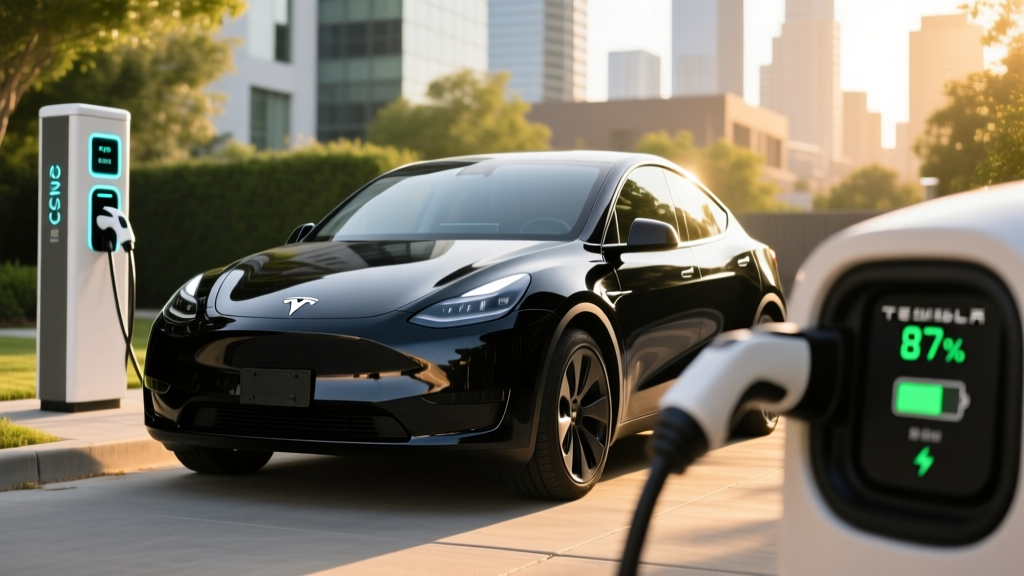
The 2022 Tesla Model Y remains one of the most popular used electric vehicles on the market in 2026. With strong EPA range, access to the Supercharger network, and practical crossover utility, it continues to attract buyers who want proven EV ownership without paying new-car premiums. But how does a four-year-old Model Y hold up in real-world driving, and what should you expect from charging, battery health, and federal incentives?
This review covers the 2022 Tesla Model Y Long Range and Performance trims with exact specs, real-world range data, charging performance, and a clear-eyed look at ownership costs.
2022 Tesla Model Y: Core Specifications
| Specification | Long Range AWD | Performance |
|---|---|---|
| EPA Range | 330 miles | 303 miles |
| Battery (usable) | ~75 kWh (NMC) | ~75 kWh (NMC) |
| Drivetrain | Dual-motor AWD | Dual-motor AWD |
| Horsepower | 384 hp | 456 hp |
| 0–60 mph | 4.8 seconds | 3.5 seconds |
| MPGe (combined) | 122 MPGe | 111 MPGe |
| Efficiency | 28 kWh/100 mi | 30 kWh/100 mi |
| Max DC Fast Charge | 250 kW | 250 kW |
| 10–80% DC Time | ~27 minutes | ~27 minutes |
| Level 2 Charge Rate | 11.5 kW (~44 mi/hr) | 11.5 kW (~44 mi/hr) |
| Cargo (rear seats up) | 30.2 cu ft | 30.2 cu ft |
| Cargo (rear seats folded) | 76.2 cu ft | 76.2 cu ft |
| Rear Legroom | 35.3 inches | 35.3 inches |
| Towing Capacity | 3,500 lbs | 3,500 lbs |
| Original MSRP | ~$65,990 | ~$69,990 |
| Battery/Drive Unit Warranty | 8 yr / 120,000 mi | 8 yr / 120,000 mi |
Sources: EPA fueleconomy.gov, Tesla specifications.
Real-World Range: What to Actually Expect
- EPA Sticker: 330 miles
- Real-World Highway (70–75 mph): ~260–285 miles
- Real-World City/Mixed: ~290–315 miles
- Cold Weather (below 30°F): ~210–250 miles (25–35% reduction)
The Model Y's NMC battery and heat pump help it outperform many competitors in cold conditions, but physics still applies. Highway speeds above 70 mph and winter temperatures meaningfully reduce range.
The 2022 Model Y Long Range carries an EPA-estimated 330 miles of range, which was class-leading at launch and remains competitive in 2026. However, EPA range is measured on a mix of city and highway cycles at moderate speeds. Sustained highway driving at 75 mph typically yields 260–285 miles depending on elevation, wind, and temperature.
In cold weather, expect a 25–35% range reduction. The Model Y's standard heat pump (introduced for the 2021 refresh) recovers waste heat from the drivetrain to warm the cabin, which significantly reduces the winter penalty compared to EVs using resistive PTC heaters. Preconditioning the battery while plugged in — a feature accessible through the Tesla app — further mitigates cold-weather range loss and improves charging speeds.
The Performance trim sacrifices 27 miles of EPA range (303 mi) due to its 21-inch Überturbine wheels and stickier tires, which increase rolling resistance. If maximum range is your priority, the Long Range with 19-inch Gemini wheels is the clear choice.
Charging Speed: DC Fast Charging and Home Level 2
| Charging Level | Power (kW) | Speed (mi/hr added) | Notes |
|---|---|---|---|
| Level 1 (120V outlet) | ~1.4 kW | ~4–5 mi/hr | Emergency/trickle only |
| Level 2 (240V, 48A) | 11.5 kW | ~44 mi/hr | Home Wall Connector or equivalent |
| Level 2 (240V, 32A) | 7.7 kW | ~30 mi/hr | Mobile Connector on 240V NEMA 14-50 |
| DC Fast (V3 Supercharger) | Peak 250 kW | ~162 mi in 15 min | 10–80% in ~27 min; tapers above 80% |
| DC Fast (CCS adapter) | Up to ~150–200 kW | Varies | Requires Tesla CCS adapter; host-dependent |
The 2022 Model Y supports peak DC fast charging at 250 kW on Tesla V3 Superchargers. In practice, the battery reaches peak charge rate only between roughly 10–30% state of charge (SoC), then progressively tapers. A 10–80% session takes approximately 27 minutes under ideal conditions (warm battery, low SoC arrival). Expect 35–40 minutes for a 10–90% session, as charging slows dramatically above 80% to protect battery health.
At home on a Level 2 Tesla Wall Connector (hardwired, 60A circuit / 48A delivery), the Model Y charges at 11.5 kW — adding about 44 miles of range per hour. A full overnight charge from 20% to 90% takes roughly 7–8 hours. If your electrical panel supports only a 40A circuit, the Mobile Connector with a NEMA 14-50 adapter delivers 7.7 kW (~30 mi/hr), which is still adequate for most daily driving needs.
For non-Tesla DC fast chargers (Electrify America, EVgo, ChargePoint), Tesla offers a CCS adapter that enables compatibility with CCS1-equipped stations. Peak speeds on third-party networks vary but typically reach 150–200 kW depending on the station and battery temperature. Note that the 2022 Model Y shipped with a Tesla proprietary connector (now called NACS); no adapter is needed for Superchargers.
Performance, Drivetrain, and Efficiency
Both trims use a dual-motor all-wheel-drive layout with an induction motor up front and a permanent-magnet synchronous motor in the rear. The Long Range produces 384 combined horsepower and hits 60 mph in 4.8 seconds — quick enough for confident highway merging and passing. The Performance trim bumps output to 456 hp and drops the 0–60 time to 3.5 seconds, rivaling many sports sedans.
Efficiency is where the Model Y shines. At 122 MPGe combined (28 kWh/100 mi), the Long Range is one of the most efficient electric crossovers ever produced. This translates to roughly $0.04–$0.06 per mile when charging at home on a national-average electricity rate of $0.16/kWh — about one-quarter the per-mile cost of a comparable gas-powered crossover at $3.50/gallon.
Regenerative braking is strong and essentially enables one-pedal driving in most conditions. The 2022 model year does not offer a user-adjustable regen setting; Tesla removed the "Low" regen option via a software update. Some drivers appreciate the simplicity; others find the forced strong-regen behavior fatiguing on long highway descents.
Pricing, Tax Credits, and Used-EV Incentives
| Item | Long Range AWD | Performance |
|---|---|---|
| Original MSRP (2022) | ~$65,990 | ~$69,990 |
| Typical Used Price (2026) | $28,000–$36,000 | $32,000–$40,000 |
| Federal Used EV Credit (§25E) | Up to $4,000 (30% of sale price) | Up to $4,000 (30% of sale price) |
| New-Vehicle §30D Credit (if bought new in 2022) | Was $7,500 (pre-IRA rules) | Was $7,500 (pre-IRA rules) |
If you are purchasing a used 2022 Model Y in 2026, the relevant federal incentive is the §25E Previously-Owned Clean Vehicle Credit, not the §30D new-vehicle credit. Under IRS rules, this credit provides 30% of the sale price, up to a maximum of $4,000. Key eligibility requirements:
- Sale price cap: $25,000 or less (the vehicle must sell for $25,000 or below to qualify)
- Buyer income limits: AGI ≤ $75,000 (single), $112,500 (head of household), $150,000 (joint)
- Vehicle age: Must be at least 2 model years old (2022 qualifies in 2026)
- Dealer requirement: Must be purchased from a licensed dealer (private-party sales do not qualify)
- First transfer: The credit applies only on the first qualified resale since August 16, 2022
Because many 2022 Model Y listings exceed $25,000, the used-EV credit is not guaranteed. A Long Range listed at $24,900 from a qualifying dealer would yield the full $4,000 credit. At $30,000, it yields $0. This makes deal-hunting critical — search for listings priced at or just below the $25,000 threshold.
The §30D new-vehicle credit of up to $7,500 does not apply to used purchases. If you are considering a new 2026 Model Y instead, separate §30D rules apply, including MSRP caps ($80,000 for SUVs), buyer income limits, and critical-mineral/battery-component sourcing requirements.
Interior, Cargo, and Technology
The 2022 Model Y interior is minimalist — a single 15-inch landscape touchscreen handles all infotainment, climate, and vehicle controls. There is no instrument cluster, no head-up display, and no physical buttons for common functions like wiper speed or mirror adjustment. This approach divides opinions: proponents love the clean aesthetic and over-the-air updateability; critics note the distraction risk of menu-diving while driving.
Cargo and passenger space is a genuine strength. With 30.2 cubic feet behind the second row and 76.2 cu ft with seats folded, the Model Y out-cargoes most compact and midsize crossovers, electric or gas. A small front trunk (frunk) adds ~4.1 cu ft for charging cables or a laptop bag. Rear legroom at 35.3 inches is adequate for adults on shorter trips, though the low seat cushion (dictated by the skateboard battery pack) means a knees-up seating position that some find uncomfortable on long drives.
Standout tech features:
- Autopilot (standard): SAE Level 2 driver-assist with Traffic-Aware Cruise Control and Autosteer. Requires active driver supervision at all times.
- Full Self-Driving (FSD) Supervised: Optional paid upgrade ($8,000 at time of sale, now $8,000 or $99/mo). Adds Navigate on Autopilot, Auto Lane Change, Autopark, and traffic-light/stop-sign recognition. This is still SAE Level 2 — the driver must remain fully engaged.
- Over-the-air updates: Tesla regularly pushes software updates that add features, improve efficiency, and refine the UI.
- Sentry Mode / Dashcam: Built-in camera recording with parking-surveillance mode.
- Heat pump: Standard, improving cold-weather efficiency and range retention.
Warranty, Battery Health, and Longevity
Tesla covers the 2022 Model Y's battery pack and drive units for 8 years or 120,000 miles (whichever comes first), with a capacity-retention threshold of 70%. If the battery degrades below 70% of its original capacity within that window, Tesla will repair or replace it at no cost. The basic vehicle warranty was 4 years / 50,000 miles — meaning most 2022 Model Ys in 2026 are outside the bumper-to-bumper warranty but still covered under the battery/drive unit warranty.
Real-world degradation data from Tesla's own fleet reports and third-party tracking (such as Recurrent Auto) shows NMC batteries in the Model Y typically lose about 8–12% capacity over the first 100,000 miles. The degradation curve is steepest in the first 20,000–30,000 miles, then flattens considerably. A 2022 Model Y with 40,000–60,000 miles should still retain 88–93% of its original battery capacity — translating to roughly 290–305 miles of real-world range in mixed driving.
Longevity tips for a used 2022 Model Y:
- Charge to 80–90% daily; reserve 100% charges for road trips.
- Avoid frequent DC fast charging when Level 2 is available — heat is the primary degradation driver.
- Use scheduled departure preconditioning to minimize cold-weather stress on the pack.
- Check the battery health readout in the Tesla app or request a Service Mode battery health report before purchase.
Pros, Cons, and Who Should Buy
- Class-leading efficiency (122 MPGe / 28 kWh/100 mi)
- Extensive Supercharger network access (no adapter needed)
- Strong cargo capacity (76.2 cu ft max)
- 250 kW peak DC charging; 10–80% in ~27 min
- Over-the-air updates keep software current
- Heat pump standard for cold-weather efficiency
- Robust battery warranty (8 yr / 120,000 mi)
- Minimalist interior lacks physical controls; screen-dependent
- Rear seat cushion is low — knees-up position on long trips
- No adjustable regen setting (forced strong regen)
- Ride quality is firm; road noise noticeable at highway speeds
- Used prices often exceed $25K, disqualifying §25E credit
- Build quality inconsistencies (panel gaps, trim rattles) on early 2022 units
- FSD purchase does not transfer reliably on all used sales
Who the 2022 Model Y suits best:
- Daily commuters with home Level 2 charging — the 330-mi EPA range handles even long commutes with margin.
- Small families needing cargo versatility without stepping up to a three-row SUV.
- Road trippers who value Supercharger network reliability over cabin luxury.
- Tech-forward buyers comfortable with a screen-centric interface and OTA update cadence.
Who should look elsewhere: Buyers prioritizing ride comfort and cabin quietness (consider the Hyundai Ioniq 5 or Genesis GV60), those needing a third row (Kia EV9), or buyers whose used-EV credit eligibility depends on a sub-$25,000 price point (the Chevrolet Bolt EUV or older Nissan LEAF may fit better).
2022 Tesla Model Y vs. Key Competitors (Used Market, 2026)
| Attribute | 2022 Tesla Model Y LR | 2022 Ford Mustang Mach-E ER AWD | 2022 Hyundai Ioniq 5 SEL AWD |
|---|---|---|---|
| EPA Range | 330 mi | 312 mi | 256 mi |
| Battery | ~75 kWh NMC | 91 kWh NMC | 77.4 kWh NMC |
| DC Fast Charge Peak | 250 kW | 150 kW | 235 kW |
| 10–80% Time | ~27 min | ~45 min | ~18 min |
| Used Price Range | $28K–$36K | $25K–$33K | $24K–$31K |
| Cargo (seats up) | 30.2 cu ft | 29.7 cu ft | 27.2 cu ft |
| NACS Native? | Yes | No (CCS1) | No (CCS1) |
The Model Y's primary advantages over the Mach-E and Ioniq 5 are its higher EPA range, native NACS connector (no Supercharger adapter needed), and stronger efficiency. The Ioniq 5 counters with faster peak DC charging (18 minutes 10–80% vs. 27 minutes) and a more conventional, button-rich interior. The Mach-E offers a more engaging driving feel and traditional crossover styling but trails in charging speed and efficiency.
Frequently Asked Questions
What is the real-world range of the 2022 Tesla Model Y?
Expect 260–285 miles on the highway at 70–75 mph and 290–315 miles in mixed city/suburban driving. In cold weather below 30°F, plan for 210–250 miles. The EPA sticker of 330 miles is achievable only under ideal, low-speed, moderate-temperature conditions.
How fast does the 2022 Model Y charge at home and on the road?
On a Level 2 home charger (48A / 11.5 kW), it adds about 44 miles of range per hour — a full overnight session covers most needs. On a V3 Supercharger, it peaks at 250 kW and charges from 10–80% in approximately 27 minutes, though speeds taper significantly above 80% SoC.
Does the 2022 Tesla Model Y qualify for the federal EV tax credit in 2026?
As a used vehicle, it may qualify for the §25E Previously-Owned Clean Vehicle Credit of up to $4,000 — but only if the dealer sale price is $25,000 or less and the buyer meets income limits (≤$75K single / $150K joint). Many listings exceed this price cap, so eligibility is deal-dependent. The §30D new-vehicle credit does not apply to used purchases. Consult IRS §25E guidelines and a tax professional before relying on credit eligibility.
Is a used 2022 Model Y worth buying vs. a new EV in 2026?
It depends on your budget and priorities. A well-maintained 2022 Model Y Long Range at $28,000–$32,000 offers 330 miles of EPA range, Supercharger access, and strong efficiency at a significant discount to a new Model Y ($47,990+ in 2026). The trade-offs are older interior materials, no refreshed design, and the possibility of missing the §25E credit. If you can find one at or below $25,000 from a dealer, the value proposition is excellent.
What are the biggest concerns when buying a used 2022 Model Y?
Check battery health (request a Service Mode report or review the Tesla app), inspect panel gaps and trim for build-quality issues common to early Fremont-built units, confirm whether FSD was purchased and whether it transfers with the sale, and verify the vehicle has not been in a major accident (which can affect battery structural integrity). Also confirm the 8-year/120,000-mile battery warranty is still active based on the in-service date.
What battery chemistry does the 2022 Model Y use?
The 2022 Model Y Long Range and Performance use NMC (nickel manganese cobalt) lithium-ion cells, supplied primarily by Panasonic (2170 form factor) at the Fremont factory. Note: some 2022 Standard Range / RWD Model Ys built at Giga Texas used LFP (lithium iron phosphate) cells from CATL, which tolerate daily 100% charging but offer lower range (~279 mi EPA). Always confirm the specific battery chemistry for the VIN you are considering.
Tax credit rules reflect IRS guidance as of early 2026 and are subject to change. Always verify current eligibility at irs.gov and consult a qualified tax professional before making a purchase decision based on incentive availability.