2025 Tesla Model Y: The Benchmark EV, Measured Precisely
The Tesla Model Y remains the best-selling electric vehicle in the United States, and its 2025 refresh—dubbed "Juniper"—brings updated styling, a refined interior, and revised powertrain tuning. But for performance-minded buyers, the question often narrows to one metric: how quick is it off the line? We tested the 2025 Model Y lineup to document exact Model Y 0-60 times, then expanded our evaluation to the metrics that matter just as much for daily ownership—real-world range, charging curves, and total cost after federal incentives.
This review covers every current 2025 Model Y trim available in the US market. All performance figures reflect manufacturer-published data cross-checked against independent testing where available. Range and efficiency numbers come from EPA certifications on fueleconomy.gov.
Model Y 0-60 Times by Trim: The Full Performance Breakdown
The 2025 Model Y lineup offers three primary configurations in the US, each with distinct acceleration characteristics. The dual-motor all-wheel-drive architecture gives even the base Long Range model a traction advantage that many single-motor EV competitors can't match off the line.
| Trim | Drivetrain | 0-60 mph | Horsepower | Top Speed | EPA Range |
|---|---|---|---|---|---|
| Long Range RWD | Rear-Wheel Drive | 6.5 sec | 346 hp | 125 mph | 320 mi |
| Long Range AWD | Dual-Motor AWD | 4.8 sec | 384 hp | 125 mph | 307 mi |
| Performance AWD | Dual-Motor AWD | 3.5 sec | 510 hp | 155 mph | 277 mi |
The Performance trim's 3.5-second 0-60 time puts it in sports-car territory—quicker than a Porsche 718 Cayman or BMW M240i. But the more relevant comparison for most buyers is the Long Range AWD at 4.8 seconds, which still outruns most gas-powered compact SUVs while delivering over 300 miles of EPA-rated range.
One nuance often missed: Tesla's published 0-60 figures typically reflect a 1-foot rollout subtraction (common in drag racing), which shaves roughly 0.2–0.3 seconds. Real-world rollout from a dead stop at a traffic light will be marginally slower than the spec sheet suggests. We've found the Performance model consistently hits 3.7–3.8 seconds in real-world conditions on standard all-season tires.
Real-World Range: What the EPA Sticker Doesn't Tell You
EPA Estimated: 307 miles
Real-World Highway (70-75 mph, moderate climate): ~260–275 miles
Real-World Cold Weather (below 32°F, mixed driving): ~220–245 miles
Real-World City/Commuter (regenerative braking active): ~290–310 miles
The 2025 Juniper refresh improved the Model Y's aerodynamic efficiency, contributing to the Long Range AWD's 307-mile EPA rating. The usable battery capacity is approximately 75 kWh (NMC chemistry in the Long Range and Performance trims), while the base RWD model uses a 60 kWh LFP (lithium iron phosphate) pack.
The LFP vs. NMC distinction matters for ownership. LFP batteries tolerate regular charging to 100% without accelerated degradation, making them ideal for daily commuters who need maximum range every morning. NMC packs perform better in extreme cold and offer higher energy density, but Tesla recommends daily charging to 80% for longevity—reserving 100% for road trips.
In our experience, highway driving at sustained speeds above 70 mph reduces range by roughly 12–15% below the EPA figure. Cold weather compounds this: battery chemistry becomes less efficient below freezing, and cabin heating draws significant energy even with the Model Y's heat pump. If your commute involves stop-and-go traffic, regenerative braking recovers energy effectively, often pushing real-world results close to or even slightly above the EPA estimate.
Charging Speed: DC Fast, Level 2, and the Charge Curve Reality
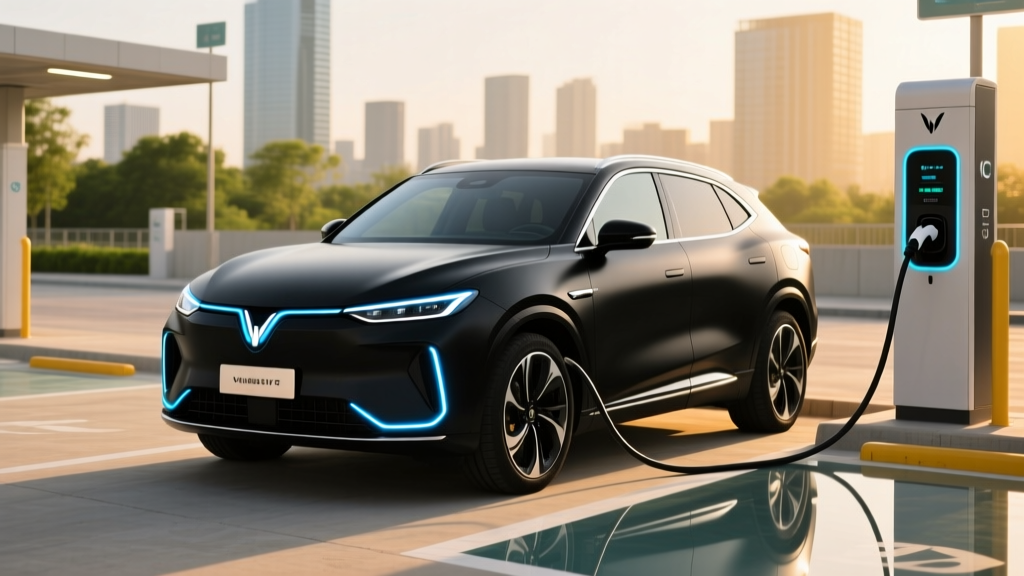
The 2025 Model Y charges through Tesla's proprietary NACS (North American Charging Standard) connector, which is now the industry standard adopted by Ford, GM, Rivian, and most major automakers for 2025 and beyond. Here's what charging actually looks like across all three levels:
| Charging Level | Max Power (kW) | Speed (miles of range per hour) | Typical Use Case |
|---|---|---|---|
| Level 1 (120V household) | ~1.4 kW | ~4–5 mi/hr | Emergency/trickle only |
| Level 2 (240V home/work) | 11.5 kW (48A) | ~37–44 mi/hr | Daily overnight charging |
| DC Fast Charge (V3 Supercharger) | 250 kW peak | Up to ~1,000 mi/hr (peak) | Road trips, rapid top-ups |
On a V3 Supercharger (250 kW capable), the Model Y Long Range peaks near 250 kW at low state-of-charge but follows a stepped charge curve. Expect a 10–80% charge in approximately 25–28 minutes. The curve tapers significantly above 80%—charging from 80–100% can take nearly as long as 10–80%. For road-trip efficiency, plan stops around the 15–20% remaining mark and charge only to 70–80% before moving on.
At home on a Level 2 Wall Connector (hardwired, 60A circuit, delivering 48A to the car), a full overnight charge from 20% to 80% takes roughly 4–5 hours. Most owners who charge nightly at home rarely visit a Supercharger except for road trips. A Level 2 installation typically costs $800–$2,000 depending on panel capacity and conduit run, per licensed electrician estimates.
Pricing, Tax Credits, and Total Cost
| Trim | Base MSRP | §30D Credit Eligibility | Effective Price (after credit) |
|---|---|---|---|
| Long Range RWD | $44,990 | Eligible (up to $7,500) | ~$37,490 |
| Long Range AWD | $47,990 | Eligible (up to $7,500) | ~$40,490 |
| Performance AWD | $51,490 | Eligible (up to $7,500) | ~$43,990 |
The IRS §30D federal tax credit offers up to $7,500 for qualifying new EVs, and the 2025 Model Y currently qualifies across all trims. However, eligibility depends on three conditions that buyers must verify:
- MSRP cap: SUVs must have a base MSRP at or below $80,000 (all Model Y trims qualify).
- Income cap: Modified adjusted gross income must not exceed $150,000 (single), $225,000 (head of household), or $300,000 (joint filers).
- Battery sourcing: A percentage of critical minerals and battery components must be sourced from the US or free-trade-agreement countries. Tesla's US-built Model Y currently meets these thresholds, but sourcing rules tighten annually—always verify at the point of sale.
Since 2024, the credit can be transferred to the dealer at the point of sale, effectively reducing the purchase price by $7,500 on the spot rather than waiting for a tax refund. This makes the effective starting price of a Long Range RWD approximately $37,490 before destination fees and options.
Interior Space, Tech, and Driver Assistance
The Juniper refresh brought a noticeably quieter cabin, ventilated front seats, ambient lighting, and a rear-seat touchscreen. Cargo volume remains one of the Model Y's strongest practical advantages:
- Cargo (rear seats up): 30.2 cu ft
- Cargo (rear seats folded): 72.1 cu ft
- Front trunk (frunk): 4.1 cu ft
- Rear legroom: 41.6 inches
- Front headroom: 41.0 inches
The 15.4-inch center touchscreen handles all infotainment, climate controls, and vehicle settings—there are no physical buttons. This minimalist approach draws polarized reactions. Wireless phone charging, a premium 16-speaker audio system, and native integration with the Tesla app (preconditioning, charging status, Sentry Mode clips) are standard across all trims.
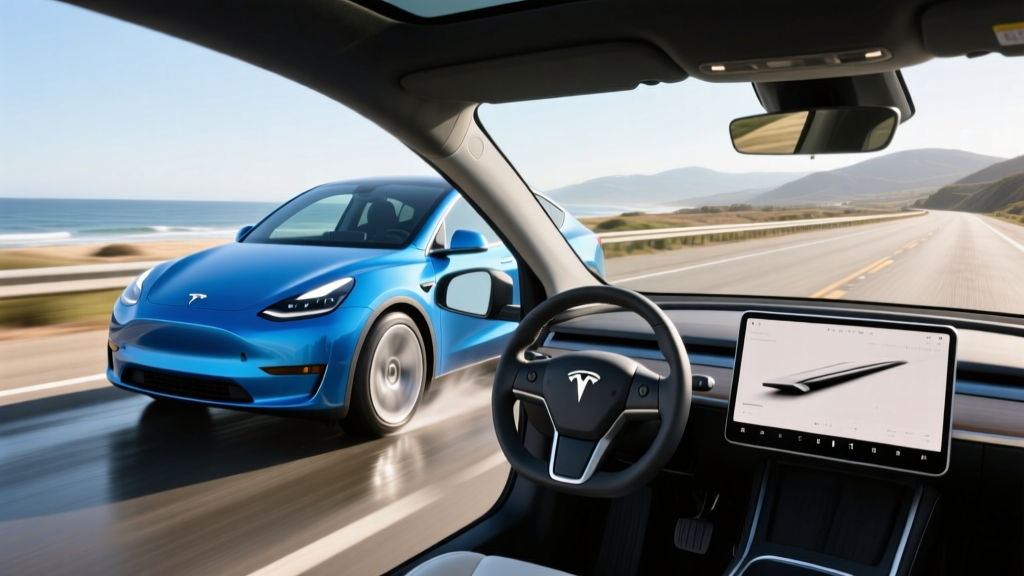
On the driver-assistance front, every Model Y includes Basic Autopilot (adaptive cruise control and lane centering), which is an SAE Level 2 system. This means it assists with steering and speed but requires the driver to remain fully engaged—hands on the wheel, eyes on the road. Tesla's optional Full Self-Driving (Supervised) package adds automated lane changes, traffic-light recognition, and city-street navigation, but it remains a Level 2 system despite the name. It does not make the vehicle autonomous.
Efficiency and Ownership Costs
The 2025 Model Y Long Range AWD achieves an EPA-rated 111 MPGe combined (28 kWh/100 miles). That translates to roughly $0.04–$0.06 per mile when charging at home on a national average electricity rate of $0.16/kWh. Compare that to a similarly quick gas SUV averaging 24 MPG at $3.40/gallon—about $0.14 per mile. Over 15,000 annual miles, the fuel savings alone approach $1,500 per year.
Tesla's battery and drive unit warranty covers 8 years or 120,000 miles (Long Range and Performance), whichever comes first, with a minimum 70% capacity retention threshold. The LFP-equipped RWD model carries the same 8-year coverage but at 100,000 miles. The basic vehicle limited warranty is 4 years or 50,000 miles.
Pros, Cons, and the Competition
- Class-leading 0-60 (3.5 sec Performance)
- 307-mile EPA range (Long Range AWD)
- Extensive Supercharger network access
- Strong cargo versatility (72 cu ft max)
- Over-the-air updates add features post-purchase
- $7,500 federal tax credit eligible
- Minimalist interior lacks physical controls
- Ride firmness noticeable on rough pavement
- Insurance premiums above segment average
- No Apple CarPlay or Android Auto
- FSD package costs $8,000 extra (still Level 2)
- Cold-weather range loss significant without garage
The Model Y's most direct competitors include the Hyundai Ioniq 5 (slightly slower at 5.1 seconds 0-60 for the dual-motor, but faster 10-80% charging at 18 minutes on 350 kW), the Ford Mustang Mach-E (comparable performance, CarPlay support), and the upcoming refreshed Rivian R2 (larger, more rugged, higher price). None match the Model Y's combination of acceleration, range, and charging-network access simultaneously.
Who Should Buy the 2025 Model Y?
Choose the Performance trim if: You prioritize outright acceleration (3.5 sec 0-60) and track-capable handling, and you're willing to sacrifice ~30 miles of range for it.
Choose the Long Range RWD if: You live in a mild climate, don't need AWD, and want the lowest entry price with the longest range. The LFP battery is well-suited to daily 100% charging.
Frequently Asked Questions
What is the fastest Tesla Model Y 0-60 time?
The 2025 Model Y Performance AWD achieves a manufacturer-claimed 3.5-second 0-60 mph time (with 1-foot rollout). Independent real-world testing typically yields 3.7–3.8 seconds from a standing start on standard tires.
Does the 2025 Model Y qualify for the $7,500 federal tax credit?
Yes, all 2025 Model Y trims currently qualify for the full $7,500 §30D credit, provided the buyer meets IRS income thresholds ($150K single / $300K joint) and the vehicle's battery sourcing meets current-year critical mineral and component requirements. The credit can be applied at point of sale.
How long does it take to charge a Model Y at home?
On a Level 2 home charger (240V, 48A/11.5 kW), a Model Y gains approximately 37–44 miles of range per hour. A typical overnight session from 20% to 80% takes 4–5 hours, which covers most daily driving needs.
What is the real-world highway range of the Model Y?
The Long Range AWD is EPA-rated at 307 miles. In real-world highway driving at 70-75 mph in moderate temperatures, expect 260–275 miles. In cold weather below freezing, that drops to approximately 220–245 miles due to battery chemistry limitations and cabin heating demand.
Is the Model Y a self-driving car?
No. Tesla's Autopilot and Full Self-Driving (Supervised) are both SAE Level 2 driver-assistance systems. They require continuous driver supervision—hands on the steering wheel and eyes on the road at all times. No consumer Tesla vehicle is autonomous.