Tesla Model Y 0 to 60 and Performance by Trim
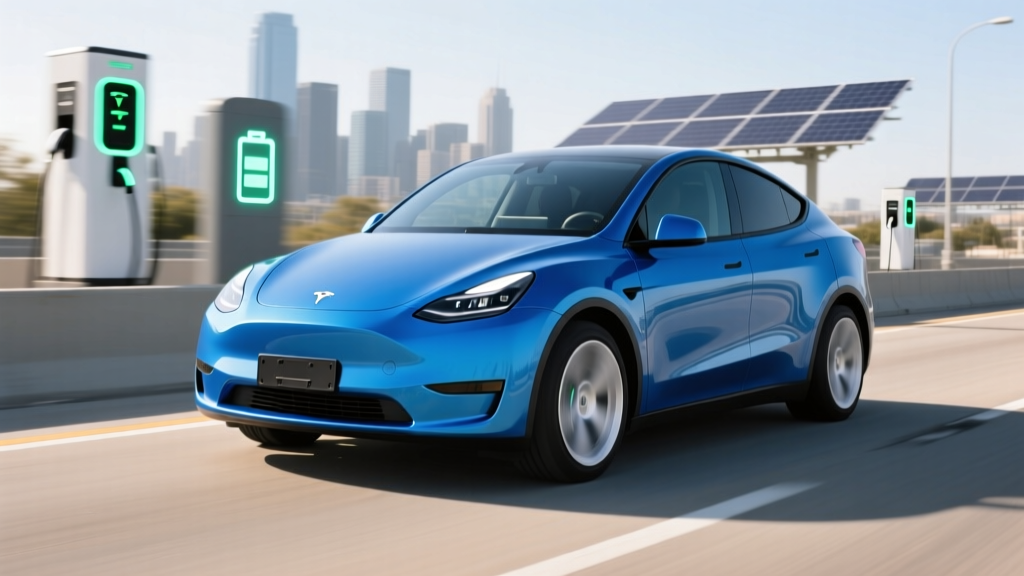
The 2026 Tesla Model Y remains the benchmark compact electric SUV for buyers who care about straight-line acceleration as much as cargo space. Tesla's latest refresh — internally called the Juniper update — brought revised styling, a quieter cabin, and marginal efficiency tweaks, but the core powertrain lineup carries forward with three distinct flavors. If you're searching for the Tesla Model Y 0 to 60 time, the answer depends entirely on which trim you choose.
| Trim | Drivetrain | 0-60 mph | Horsepower | Top Speed |
|---|---|---|---|---|
| Long Range RWD | Rear-Wheel Drive | 6.5 sec | ~346 hp | 125 mph |
| Long Range AWD | Dual-Motor AWD | 4.8 sec | ~384 hp | 125 mph |
| Performance AWD | Dual-Motor AWD | 3.5 sec | ~510 hp | 155 mph |
The Performance trim's 3.5-second 0-60 time puts it in sports-car territory and is the figure most enthusiasts cite. But the Long Range AWD's 4.8-second run is more than adequate for highway merging and daily driving, and it comes with the longest range in the lineup. The RWD variant trades acceleration for a lower entry price and slightly better efficiency around town.
All trims use a single-speed direct-drive transmission with regenerative braking adjustable through the Tesla app. The dual-motor AWD system can independently torque-vector between front and rear axles, giving the Model Y confident traction in rain and light snow without the mechanical complexity of a traditional AWD system.
Battery, Range, and Efficiency
The 2026 Model Y Long Range AWD packs an ~78.1 kWh usable lithium-ion battery. Tesla sources NMC (nickel manganese cobalt) cells for the Long Range and Performance trims to maximize energy density, while the RWD variant has historically used LFP (lithium iron phosphate) chemistry in a smaller ~60 kWh pack. LFP offers longer cycle life and can be charged to 100% daily without degradation concerns, but trades energy density for that durability.
- Long Range AWD: EPA 320 miles — expect ~270–290 mi on a 75 mph highway trip; ~230–250 mi in sub-30°F winter conditions.
- Performance AWD: EPA 285 miles — expect ~245–260 mi highway; ~200–220 mi in deep cold.
- Long Range RWD: EPA 320 miles — expect ~280–300 mi highway (slightly better efficiency without front-motor drag); ~240–260 mi in cold weather.
Tesla's heat pump (standard on all trims) recovers waste heat from the drivetrain and cabin to reduce winter range loss compared to resistive-heating EVs. You'll still see 15–25% range reduction in sustained freezing temperatures — that's physics, not a flaw.
Efficiency on the Long Range AWD is rated at 122 MPGe combined (28 kWh/100 mi), per EPA data on fueleconomy.gov. That's among the best in the compact electric SUV class, trailing only the Hyundai Ioniq 5 and matching the BMW iX3. The Performance trim dips to roughly 111 MPGe combined due to stickier tires and sportier tuning.
Charging Speeds: DC Fast and Home Level 2
Charging speed is where the Model Y's 400-volt architecture shows its age compared to 800-volt rivals like the Hyundai Ioniq 5 and Kia EV6. Still, Tesla's Supercharger network reliability more than compensates for the spec-sheet deficit.
| Charging Level | Max Rate | Miles Added per Hour | 10–80% Time |
|---|---|---|---|
| Level 1 (120V household) | ~1.4 kW | ~4 mi/hr | N/A (days for full charge) |
| Level 2 (240V home / destination) | 11.5 kW | ~37 mi/hr | ~7 hours (full charge) |
| DC Fast (Tesla Supercharger V3/V4) | 250 kW peak | ~162 mi in 15 min | ~25 min (10–80%) |
| DC Fast (CCS adapter, third-party) | ~170–200 kW (varies) | Varies by station | ~28–32 min (10–80%) |
The Model Y peaks at 250 kW only briefly — typically between 10–20% State of Charge — then tapers progressively. Expect an average sustained rate closer to 150–170 kW across the full 10–80% session. That translates to roughly 25 minutes at a V3 Supercharger, which is adequate for road-trip stops but 7–10 minutes slower than the Ioniq 5's 18-minute 10–80% sprint on a 350 kW charger.
At home, the onboard 11.5 kW AC charger replenishes the Long Range battery from empty in about 7 hours. Most owners install a Tesla Wall Connector on a 60-amp circuit. Budget $500–$1,500 for professional installation depending on your panel capacity and run length — a 200-amp panel upgrade can push that higher.
Pricing, Trims, and Federal Tax Credit
The 2026 Model Y lineup is straightforward. Here's what you'll pay before any incentives:
| Trim | Base MSRP | As-Tested (typical options) | §30D Credit Eligible? |
|---|---|---|---|
| Long Range RWD | $44,990 | $46,490 (w/ paint + wheels) | Up to $7,500 (see rules) |
| Long Range AWD | $47,990 | $49,490 | Up to $7,500 (see rules) |
| Performance AWD | $52,490 | $54,990 | Up to $7,500 (see rules) |
All three trims fall under the $80,000 MSRP cap for SUVs under IRS §30D. However, qualifying for the full $7,500 federal tax credit depends on several factors that change annually:
- Buyer income cap: Modified AGI must not exceed $150,000 (single), $225,000 (head of household), or $300,000 (joint filers).
- Battery sourcing: A percentage of critical minerals and battery components must be sourced from the U.S. or free-trade-agreement partners. Tesla's U.S. manufacturing helps, but exact eligibility shifts as Treasury updates guidance. Check the latest at IRS.gov.
- Point-of-sale transfer: As of 2024+, you can transfer the credit to the dealer at purchase, reducing your out-of-pocket cost immediately rather than waiting for tax filing.
- Lease loophole: Leasing may qualify for the full $7,500 commercial credit regardless of sourcing, though lease terms and money factors affect total savings.
If you qualify, a Long Range AWD at $47,990 effectively costs $40,490 — a compelling value for a 320-mile AWD electric SUV. Always confirm your specific eligibility with a tax professional before relying on the credit.
Interior, Cargo, and Technology
The Juniper refresh cleaned up the Model Y's interior with ambient lighting, ventilated front seats, a rear-seat touchscreen, and improved sound insulation. The minimalist cabin still polarizes — there are no physical buttons, no instrument cluster, and all controls route through the 15.4-inch center display. You'll either adapt in a week or never get comfortable.
Cargo and passenger space:
- Rear cargo (behind second row): 30.2 cu ft
- Total cargo (seats folded): 72.1 cu ft
- Front trunk (frunk): 4.1 cu ft
- Rear legroom: 41.6 inches
- Front headroom: 41.0 inches
That cargo volume beats the BMW iX3 and rivals the Hyundai Ioniq 5, making the Model Y a legitimate family hauler. The flat floor and wide opening make loading strollers and groceries effortless.
Tech highlights:
- Tesla's infotainment remains the fastest and most responsive in the industry, with native navigation, Spotify, Netflix (while parked), and over-the-air updates that add features post-purchase.
- Autopilot (standard) includes adaptive cruise, lane-centering, and automatic emergency braking — this is SAE Level 2 driver assistance, not autonomous driving. You must keep hands on the wheel and eyes on the road.
- Full Self-Driving (Supervised) adds automated lane changes, city-street navigation, and traffic-light recognition for an additional $8,000 or $99/month subscription. Despite the name, FSD is still Level 2 and requires constant supervision.
- Sentry Mode, Dog Mode, and the Tesla app's remote climate control remain class-leading quality-of-life features.
Tesla Autopilot and FSD (Supervised) are SAE Level 2 systems. The driver is legally and operationally responsible at all times. These systems struggle in construction zones, faded lane markings, heavy rain, and unprotected left turns. Do not treat them as self-driving — NHTSA continues to investigate Tesla's driver-monitoring compliance.
Warranty and Long-Term Ownership
Tesla's warranty is competitive but not class-leading:
- Basic vehicle: 4 years / 50,000 miles
- Battery & drive unit (Long Range/Performance): 8 years / 120,000 miles (whichever comes first), with a minimum 70% capacity retention guarantee over the warranty period
- Battery & drive unit (RWD, LFP): 8 years / 100,000 miles, 70% retention
Real-world degradation data from fleet studies suggests Model Y batteries lose roughly 8–12% capacity over the first 100,000 miles, with the steepest drop in the first 15,000 miles before leveling off. LFP batteries in the RWD trim tend to degrade more slowly but start with less total capacity. Out-of-warranty battery replacement runs $12,000–$16,000 at current pricing — rare, but a known cost for high-mileage owners.
Insurance premiums for the Model Y run 15–30% higher than comparable gas SUVs due to repair costs and parts pricing. Get a quote before purchasing; some insurers now offer EV-specific policies.
Pros, Cons, and Who Should Buy
Pros
- Performance trim: 3.5-sec 0-60 — sports-car acceleration in a family SUV
- Supercharger network: 20,000+ reliable DC fast chargers across North America, with NACS adoption expanding access
- Class-leading efficiency: 122 MPGe combined on Long Range AWD
- OTA updates: features improve after purchase (new UI, Sentry Mode enhancements, range optimizations)
- Cargo versatility: 72.1 cu ft with seats folded, plus frunk
- Low running costs: ~$0.04–0.06/mile on home Level 2 charging vs. $0.12–0.16/mile for gas
Cons
- 400V charging architecture: 250 kW peak is slower than 800V rivals (Ioniq 5, EV6, Lucid)
- Minimalist interior: no physical buttons, no head-up display, no Apple CarPlay/Android Auto
- Ride quality: firm, especially on Performance trim with 21-inch wheels
- FSD cost: $8,000 add-on for Level 2 system that still requires full driver attention
- Insurance premiums: 15–30% above gas-SUV averages
- Panel gaps and paint quality: improved but still inconsistent vs. legacy luxury brands
Who the 2026 Model Y Suits Best
- Choose the Long Range AWD if: You want the best balance of range (320 mi EPA), all-weather traction, and value. This is the default recommendation for most families and commuters.
- Choose the Performance if: You genuinely want a 3.5-second 0-60 time and sportier handling, and you can accept 35 fewer miles of range and a firmer ride.
- Choose the Long Range RWD if: You live in a mild climate, don't need AWD, and want the lowest entry price with the longest range.
- Look elsewhere if: You need physical buttons, want Apple CarPlay, or prioritize the fastest DC charging speeds (consider the Ioniq 5 or EV6 with 800V architecture).
Frequently Asked Questions
What is the real-world range of the 2026 Tesla Model Y?
The EPA rates the Long Range AWD at 320 miles, but expect 270–290 miles on sustained highway driving at 75 mph and 230–250 miles in freezing winter conditions. City driving with regenerative braking can exceed the EPA number. The Performance trim drops to 285 EPA / ~245–260 real-world highway miles.
How fast does the Model Y charge at home and on road trips?
At home on a 240V Level 2 charger (11.5 kW), you'll add ~37 miles per hour and fully charge in about 7 hours. On a Tesla Supercharger, peak rate is 250 kW with a 10–80% session taking approximately 25 minutes. Charging slows significantly above 80% to protect the battery.
Does the 2026 Tesla Model Y qualify for the $7,500 federal tax credit?
All trims fall under the $80,000 SUV MSRP cap, but full eligibility depends on your income (under $150K single / $300K joint), battery-critical-mineral sourcing requirements, and whether you purchase or lease. The credit can be transferred to the dealer at point of sale. Confirm current-year rules at IRS.gov and consult a tax professional.
Is the Tesla Model Y worth buying over the Hyundai Ioniq 5 or Ford Mustang Mach-E?
The Model Y wins on Supercharger network access, efficiency (MPGe), cargo space, and software. The Ioniq 5 charges faster (800V architecture, ~18 min 10–80%), offers Apple CarPlay, and has a more conventional interior. The Mach-E is a strong driver's SUV but trails on range and charging infrastructure. If Supercharger reliability matters to you, the Model Y remains the safest bet.
Is Tesla Autopilot or FSD actually self-driving?
No. Both Autopilot and Full Self-Driving (Supervised) are SAE Level 2 driver-assistance systems. You must remain engaged, keep hands on the wheel, and monitor the road at all times. True self-driving (Level 4) is currently available only in limited robotaxi services like Waymo in select cities. Tesla's naming has drawn regulatory scrutiny — treat these as advanced cruise control, not autonomy.
What does a Model Y battery replacement cost?
Out-of-warranty battery replacement runs approximately $12,000–$16,000 including labor. However, Tesla's 8-year/120,000-mile battery warranty (70% retention guarantee) covers most owners, and real-world data shows most Model Y batteries retain 88–92% capacity at 100,000 miles. Premature replacement is uncommon.