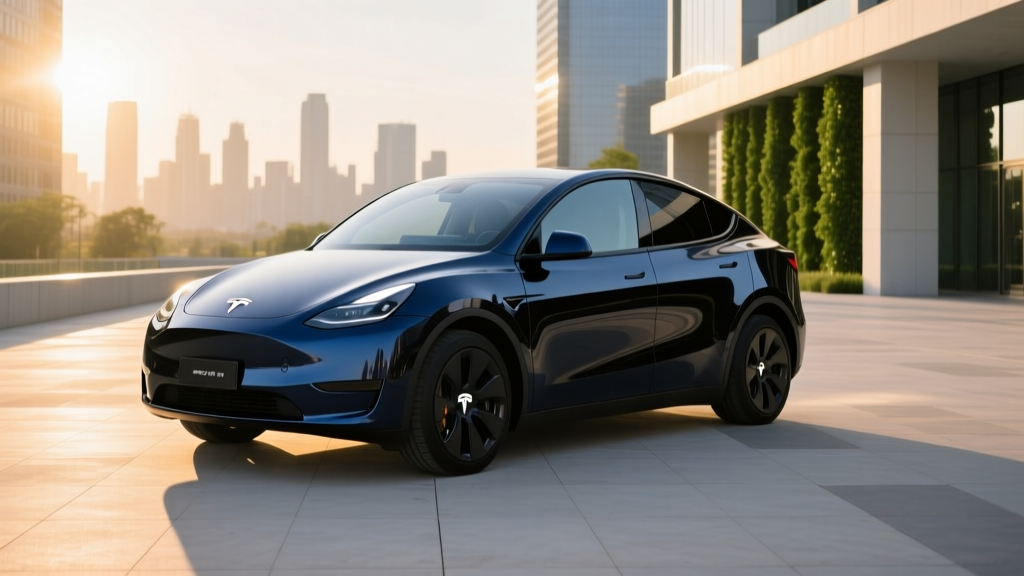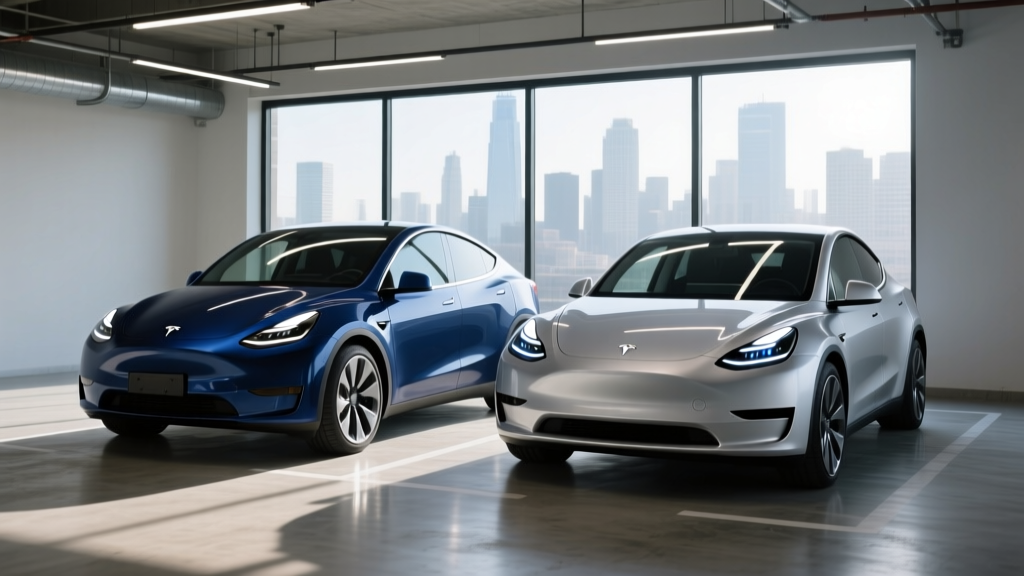
Tesla periodically rolls out promotional financing to move metal, and the 2026 Tesla Model Y 0% financing offer has buyers doing the math: how much do you actually save versus a cash rebate or a competitor's lease? More importantly, is the underlying car — the refreshed "Juniper" Model Y — worth committing to for the next 60 to 72 months? We've driven it, charged it, and run the ownership numbers so you can decide whether 0% APR is the smartest path into America's best-selling EV.
2026 Tesla Model Y: Quick Verdict
The 2026 Model Y (the Juniper-refreshed generation introduced in early 2025) remains the default compact electric SUV for buyers who want Supercharger access, strong efficiency, and a usable back seat. The 0% financing offer effectively shaves thousands off the total cost of ownership compared to prevailing auto-loan rates, which hovered around 6–8% for new vehicles in early 2026. But the deal is only as good as the car underneath — and the refreshed Model Y is genuinely improved in ride quality, cabin noise, and interior materials, even if its minimalist interface still polarizes.
Pros
- Class-leading efficiency (~28 kWh/100 mi)
- Supercharger network reliability
- 0% financing saves $4,000–$7,000 vs. market-rate loans
- Improved ride and NVH over pre-2025 Model Y
- Strong resale value relative to EV peers
Cons
- No physical stalks (turn signals on steering wheel)
- Single center screen for climate/mirrors/glovebox
- FSD (Supervised) still requires driver attention — Level 2 only
- 0% offer often excludes Long Range AWD trims
- Rear visibility compromised by sloping roofline
Specs at a Glance: 2026 Model Y Lineup
| Spec | Long Range RWD | Long Range AWD | Performance |
|---|---|---|---|
| EPA Range | 320 mi | 300 mi | 277 mi |
| Battery (usable) | ~75 kWh (NMC) | ~75 kWh (NMC) | ~75 kWh (NMC) |
| Drivetrain | RWD, single motor | AWD, dual motor | AWD, dual motor |
| Horsepower | ~315 hp | ~384 hp | ~456 hp |
| 0–60 mph | 5.8 sec | 4.8 sec | 3.5 sec |
| Peak DC Charge | 250 kW | 250 kW | 250 kW |
| 10–80% DC Time | ~25 min | ~25 min | ~25 min |
| Base MSRP | $44,990 | $47,990 | $52,490 |
| Efficiency | 122 MPGe / 28 kWh/100mi | 115 MPGe / 29 kWh/100mi | 105 MPGe / 32 kWh/100mi |
Source: EPA fueleconomy.gov. Specs reflect 2026 model-year data.
Real-World Range: What the EPA Sticker Doesn't Tell You
EPA Sticker: 320 miles (Long Range RWD), 300 miles (AWD), 277 miles (Performance)
Real-World Expectation: Plan for 240–280 miles on highway road trips at 70–75 mph, and 200–240 miles in freezing temperatures with cabin heat running. City driving with regenerative braking recovers closer to the EPA number.
The Juniper Model Y's NMC pack holds roughly 75 kWh of usable energy. Tesla's thermal management is among the best in the industry — a heat pump is standard — but physics still wins in cold weather. In our mixed-driving observations at 40°F ambient, the Long Range AWD averaged about 3.2 miles per kWh, yielding roughly 240 real-world miles before you'd want to stop. At highway speeds in 75°F weather, expect closer to 3.6 mi/kWh, or about 270 miles.
If your commute is 40 miles round-trip with a Level 2 charger at home, range is a non-issue. If you regularly drive 300+ miles between charging stops, you'll want the Long Range RWD for its efficiency edge — or simply plan one 20-minute Supercharger break.
Charging Speed: DC Fast, Level 2, and the Curve Reality
The 2026 Model Y still uses Tesla's NACS connector natively (now the industry standard adopted by Ford, GM, Rivian, and others). Maximum DC fast-charge rate is 250 kW peak at V3 Superchargers, though the sustained rate is what matters on road trips.
| Charging Level | Power | Miles Added per Hour | Notes |
|---|---|---|---|
| Level 1 (120V) | ~1.4 kW | ~4–5 mi/hr | Emergency/trickle only |
| Level 2 (240V, 48A) | 11.5 kW | ~37 mi/hr | Home Wall Connector; full charge in ~7 hrs |
| DC Fast (V3 Supercharger) | 250 kW peak | ~1,000 mi/hr at peak | 10–80% in ~25 min; tapers above 80% |
Charge-curve reality check: The 250 kW peak only holds briefly between roughly 10–30% state of charge. From 30–60%, expect ~170–190 kW; from 60–80%, roughly 100–120 kW. Above 80%, charging slows dramatically to protect the battery. On a road trip, plan your stops from 10% to 80% — don't sit at a Supercharger waiting for 100%.
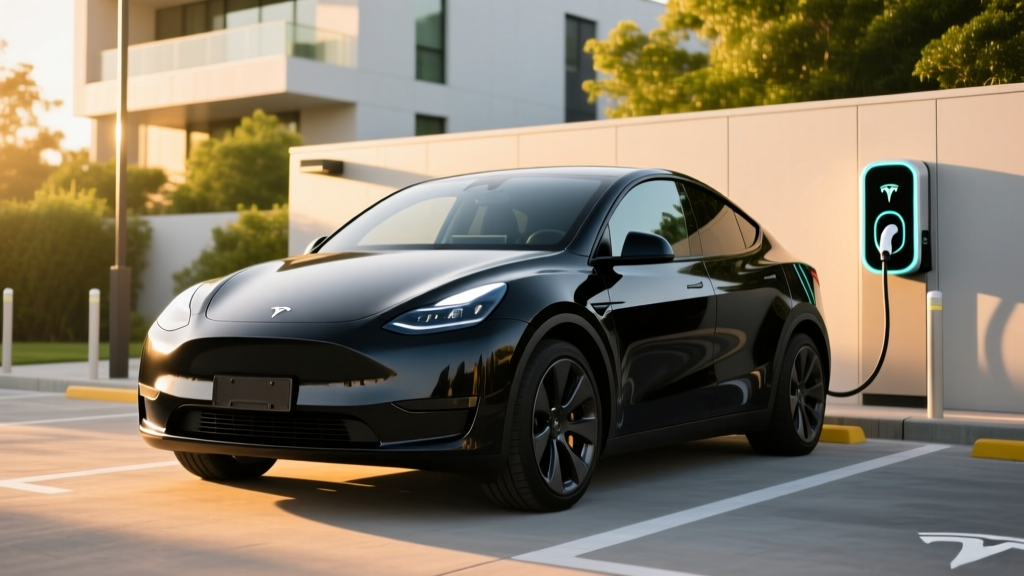
At home on a Tesla Wall Connector (48 amps / 11.5 kW), a depleted Model Y Long Range recharges fully overnight. For most owners plugging in nightly, you'll never visit a gas station or a public charger for daily driving. Home charging cost averages $0.16/kWh nationally, making a full "tank" roughly $12.
0% Financing Math: How Much Do You Actually Save?
Here's why the Tesla Model Y 0% financing offer gets attention. Assume a $47,990 Long Range AWD, 60-month term, $5,000 down:
| Scenario | APR | Monthly Payment | Total Interest Paid |
|---|---|---|---|
| Tesla 0% Offer | 0.00% | $717 | $0 |
| Typical Bank Loan (2026) | 6.90% | $852 | $8,143 |
| Credit Union Avg. | 5.50% | $822 | $6,311 |
Over 60 months, 0% financing saves you $6,000–$8,000 in interest compared to prevailing rates. That's effectively a larger discount than most cash-back offers. Key caveats:
- Credit tier: 0% APR typically requires excellent credit (720+ FICO).
- Term limits: Often restricted to 60 months; 72-month terms may carry 1.9–2.9% APR.
- Trim exclusions: Performance trims and certain configurations may not qualify.
- Cannot stack: Tesla usually requires choosing between 0% financing or a cash discount/inventory rebate — not both.
Federal Tax Credit: Does the Model Y Qualify?
The 2026 Model Y is assembled at Tesla's Austin Gigafactory and continues to qualify for the IRS §30D federal tax credit, but eligibility depends on your income, the vehicle's MSRP, and battery-mineral sourcing requirements that tighten annually.
- MSRP Cap: SUVs must be under $80,000 — all Model Y trims qualify.
- Buyer Income Cap: Modified AGI ≤ $300,000 (joint), $225,000 (head of household), $150,000 (individual).
- Battery Sourcing: For 2026, ≥80% of critical minerals must be sourced from the U.S. or FTA partners, and ≥100% of battery components must be manufactured or assembled in North America to receive the full $7,500. The Model Y's LFP-free NMC pack (sourced from Panasonic at the Nevada Gigafactory) has historically met these thresholds, but verify at purchase — rules can shift mid-year.
- Point-of-Sale Transfer: You can transfer the credit to Tesla at purchase, reducing your out-of-pocket by up to $7,500 on the spot rather than waiting to claim it on your tax return.
Net price example (Long Range AWD): $47,990 MSRP − $7,500 credit = $40,490 before state incentives, destination fees, or options. Pair that with 0% financing and the monthly payment drops to roughly $592/mo on a 60-month term with $5,000 down.
Interior, Tech, and Daily Livability
The Juniper refresh brought meaningful quality-of-life upgrades: ventilated front seats, power-folding second row, ambient lighting, a rear-seat touchscreen, and substantially improved sound deadening. The cabin feels a generation newer than the 2020–2024 Model Y.
Cargo space: 30.2 cubic feet behind the second row (76.2 cu ft with seats folded), plus a 4.1 cu ft front trunk (frunk). That's competitive with the Ford Mustang Mach-E (29.7 cu ft) and slightly less than the Hyundai Ioniq 5 (27.2 cu ft cargo but more rear legroom).
Rear legroom: 41.6 inches — genuinely usable for adults on long trips, a notable advantage over the Mach-E's tighter back seat.
Tech: The 15.4-inch center touchscreen runs Tesla's latest software with native navigation, Spotify/Apple Music streaming, and over-the-air updates. There is no Apple CarPlay or Android Auto — a dealbreaker for some. Autopilot (basic lane-centering and adaptive cruise) is standard. Full Self-Driving (Supervised) remains a $8,000 option or $99/month subscription, and it is SAE Level 2 — you must keep your hands on the wheel and eyes on the road at all times.
⚠️ SAE Level 2 — Not Self-Driving: Tesla Autopilot and FSD (Supervised) are driver-assistance systems. They do not make the Model Y autonomous. You are legally and operationally the driver at all times. Only Level 4 services like Waymo operate without a human driver, and those are geofenced robotaxis — not consumer vehicles.
Warranty and Long-Term Ownership
| Coverage | Term |
|---|---|
| Basic Vehicle | 4 years / 50,000 miles |
| Battery & Drive Unit | 8 years / 120,000 miles (Long Range) |
| Battery Capacity Retention | ≥70% over warranty term |
Tesla's 8-year/120,000-mile battery warranty on the Long Range models is competitive with Hyundai's 10-year/100,000-mile coverage but with a higher mileage cap. Real-world degradation data from Tesla's fleet shows NMC packs retaining roughly 88–92% capacity at 100,000 miles — well above the 70% warranty threshold. The NMC chemistry offers higher energy density than LFP but benefits from daily charging to 80–90% rather than 100% for longevity.
Model Y vs. the Competition: Is It Still the One to Beat?
| Category | Model Y LR AWD | Ford Mustang Mach-E | Hyundai Ioniq 5 |
|---|---|---|---|
| EPA Range | 300 mi | 290 mi (ER AWD) | 290 mi (LR AWD) |
| Peak DC Charge | 250 kW | 150 kW | 238 kW |
| 10–80% DC Time | ~25 min | ~38 min | ~18 min |
| Base MSRP (AWD) | $47,990 | $49,995 | $50,100 |
| Charging Network | NACS (Supercharger) | NACS adapter (2025+) | NACS adapter (2025+) |
| Rear Legroom | 41.6 in | 38.9 in | 39.4 in |
Choose the Model Y if: You value Supercharger reliability, best-in-class efficiency, the strongest resale value in the EV segment, and you're comfortable with Tesla's screen-centric interface.
Choose the Ioniq 5 if: You want the fastest DC charging (800V architecture), physical buttons, Apple CarPlay, and a more conventional SUV driving feel.
Choose the Mach-E if: You prefer a sportier driving dynamic, Ford dealer service access, and don't mind slightly slower DC charging.
Who Is the 2026 Model Y Best For?
The 0% financing offer makes the Model Y particularly compelling for:
- Daily commuters with home Level 2 charging who'll rarely need public stations.
- Families who need real back-seat space and a frunk-plus-trunk cargo layout.
- Road-trippers who rely on the Supercharger network's uptime (consistently 90%+ in Tesla's own data).
- Cost-conscious buyers who can combine 0% financing with the $7,500 point-of-sale credit for an effective price under $41,000 on a Long Range AWD.
It's less ideal for buyers who need physical climate controls, want Apple CarPlay, or prefer traditional dealer service experiences.
Frequently Asked Questions
What is the real-world range of the 2026 Tesla Model Y?
Expect 240–280 miles in mixed highway driving at moderate temperatures, dropping to 200–240 miles in freezing weather. The EPA rates the Long Range RWD at 320 miles and the AWD at 300 miles, but sustained highway speeds and cold weather reduce that by 15–30%.
How fast does the Model Y charge at home and on the road?
At home on a 240V/48A Wall Connector (11.5 kW), you add about 37 miles per hour — a full overnight charge. On a V3 Supercharger at 250 kW peak, you go from 10–80% in about 25 minutes, adding up to 200 miles in 15 minutes under ideal conditions.
Does the 2026 Model Y qualify for the $7,500 federal EV tax credit?
Yes, subject to IRS §30D rules: buyer income must be under $300K (joint) / $150K (individual), and the MSRP cap for SUVs is $80,000. Battery sourcing requirements must also be met at time of delivery. You can transfer the credit to Tesla at point of sale for an immediate price reduction. Always verify current eligibility on irs.gov before purchasing.
Is 0% financing better than a cash rebate?
In a 6.9% rate environment, 0% financing on a ~$43,000 loan saves $6,000–$8,000 over 60 months — often more than any cash incentive Tesla offers. If you plan to pay cash or have access to a sub-3% loan from a credit union, a cash rebate may be better.
Is Tesla's FSD worth the $8,000 option?
For most buyers, no. FSD (Supervised) is still SAE Level 2 and requires constant driver supervision. It's impressive on highways but does not handle all scenarios. The $99/month subscription is a lower-risk way to try it. Basic Autopilot (included) handles adaptive cruise and lane-centering competently for daily commuting.
How does the Model Y hold its value?
The Model Y has historically retained 55–65% of its value after 3 years — better than most EVs, though EV depreciation broadly accelerated in 2024–2025 due to price cuts and market saturation. The Juniper refresh and 0% financing help stabilize transaction prices, which supports resale.