The 0% APR Tesla Model Y Offer: What You're Actually Getting
Tesla periodically rolls out promotional financing — including 0% APR for qualified buyers — to move inventory without officially cutting MSRPs. For the 2026 Model Y, this financing deal can save thousands in interest compared to a conventional auto loan, but the headline number hides a more complex calculation involving federal tax credits, real-world range, and total cost of ownership. Below, we dissect exactly what the 0% APR Tesla Model Y promotion means for your wallet, and whether the vehicle itself justifies the commitment at today's pricing.
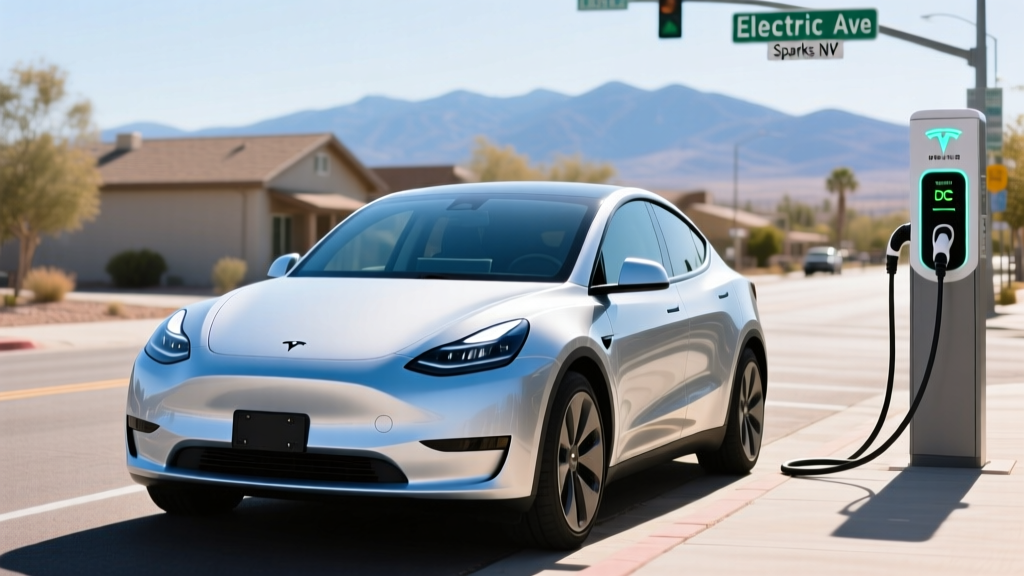
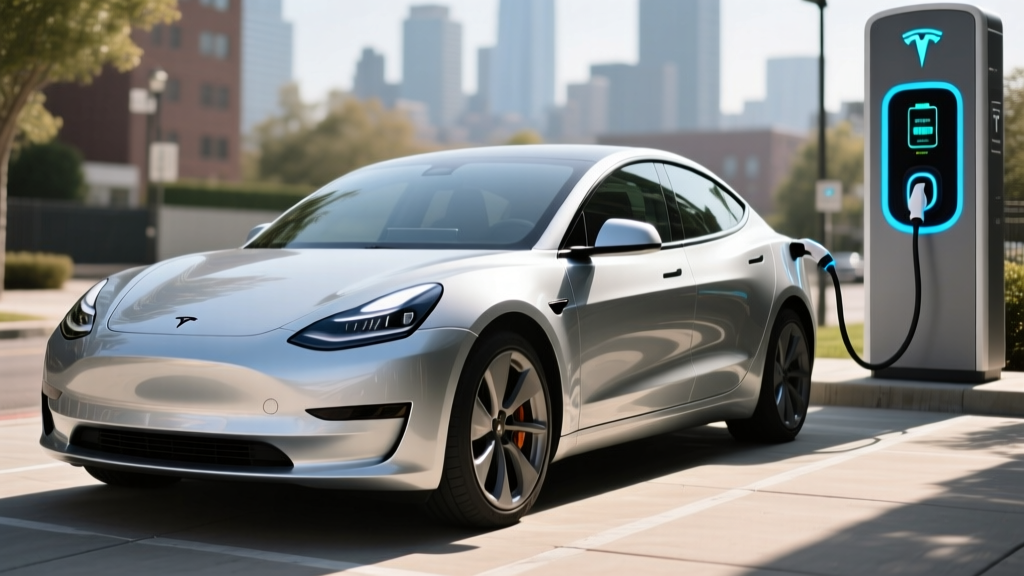
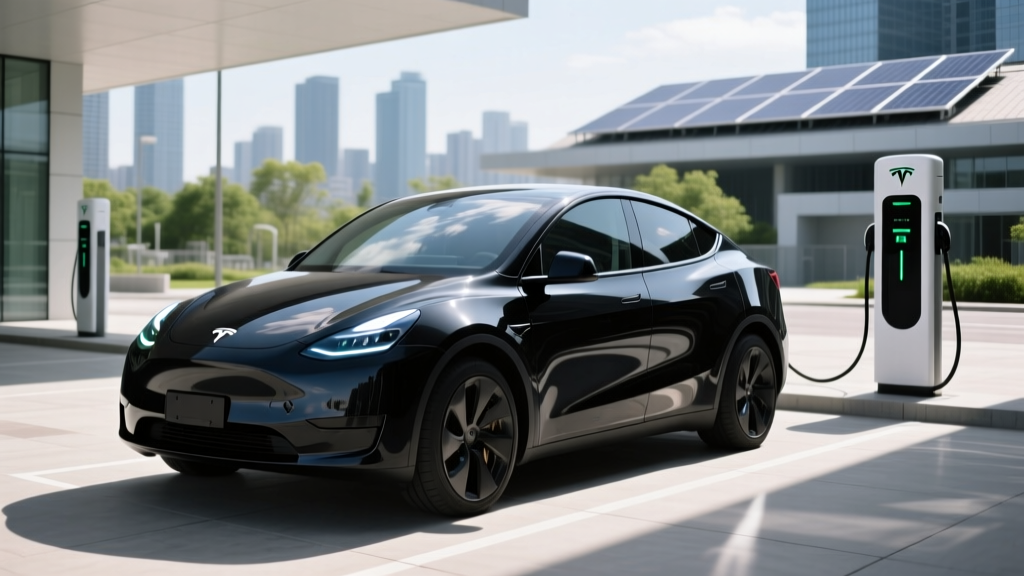
The 2026 Model Y continues to be Tesla's highest-volume vehicle globally, competing directly against the Hyundai Ioniq 5, Ford Mustang Mach-E, and Chevrolet Equinox EV. It remains a compact electric crossover with class-leading efficiency, access to the Supercharger network (now open to other brands but still the most reliable DC network in the U.S.), and over-the-air updates that add features post-purchase. But the Juniper refresh that debuted in early 2025 brought meaningful changes — a quieter cabin, ventilated front seats, a rear touchscreen, and revised suspension tuning — that shifted the value equation.
2026 Tesla Model Y: Full Spec Sheet at a Glance
| Spec | Value |
|---|---|
| EPA Range | 320 miles (Long Range AWD) |
| Battery Capacity | ~78.1 kWh usable (NMC chemistry) |
| Drivetrain | Dual-motor AWD |
| Horsepower | 384 hp combined |
| 0-60 mph | 4.8 seconds |
| Max DC Fast Charge | 250 kW peak |
| 10-80% DC Charge Time | ~25 minutes |
| Level 2 Home Charging | 11.5 kW (~44 miles/hr) |
| Efficiency | 122 MPGe combined / 28 kWh/100 mi |
| Cargo (behind 2nd row) | 30.2 cu ft |
| Cargo (seats folded) | 72.1 cu ft |
| Front Trunk (Frunk) | 4.1 cu ft |
| Rear Legroom | 41.6 inches |
| Battery Warranty | 8 years / 120,000 miles (70% retention) |
| Base MSRP (Long Range AWD) | $46,630 (before destination) |
Sources: EPA fueleconomy.gov, Tesla.com Model Y specs.
Real-World Range: EPA Sticker vs. What You'll Actually See
Real-World Expectation: ~260-290 miles on mixed highway driving; ~200-230 miles in sustained cold weather (below 30°F) at highway speeds.
The EPA's 320-mile rating for the Long Range AWD is among the highest in the compact EV crossover segment, but the real-world number depends heavily on your driving profile. Tesla's efficiency — roughly 28 kWh per 100 miles combined — is genuinely excellent for a dual-motor AWD vehicle of this size. On a 70-mph highway loop in moderate temperatures (65-75°F), expect to see 270-290 miles before hitting 10% State of Charge.
Cold weather is where the Model Y, like all EVs, loses ground. The heat pump (standard since 2021) helps cabin heating efficiency, but battery chemistry slows in the cold. In sustained sub-freezing conditions, plan on 20-30% range reduction. If your daily commute is under 60 miles round-trip, this won't matter — you'll charge at home nightly. But for road trips through mountain passes or winter drives, preconditioning the battery via the Tesla app before departing (or navigating to a Supercharger) is essential to recover both range and charging speed.
The base RWD model uses an LFP (lithium iron phosphate) battery, which offers slower degradation and can be charged to 100% daily without long-term harm — a real advantage for commuters who want maximum daily range without babying the battery. However, LFP has lower energy density, which is why the RWD model's EPA range is 277 miles despite a similar physical pack size.
Charging Speed: DC Fast, Level 2, and the Supercharger Advantage
| Charging Level | Power | Speed / Time |
|---|---|---|
| Level 1 (120V household) | ~1.4 kW | ~5 miles per hour |
| Level 2 (240V home / public) | 11.5 kW max | ~44 miles per hour |
| DC Fast (Supercharger V3/V4) | 250 kW peak | 10-80% in ~25 min |
| DC Fast (CCS adapter, 3rd-party) | Up to 250 kW (varies) | Depends on station output |
The Model Y's 250 kW peak DC fast-charging capability is competitive but no longer class-leading — the Hyundai Ioniq 5 and Kia EV6 can hit 350 kW on compatible chargers thanks to their 800V architectures. However, peak kW is only part of the story. Tesla's charge curve is well-managed: the Model Y sustains roughly 150-200 kW through the 20-60% SoC range before tapering. On a V3 Supercharger (250 kW stalls), you'll add approximately 200 miles of range in 15 minutes under ideal conditions (battery preconditioned, moderate ambient temperature).
The bigger practical advantage remains the Supercharger network itself. With over 6,500 V3/V4 stalls across the U.S. as of early 2026, Tesla owners still enjoy the most reliable plug-and-charge experience available. While the NACS connector is now the industry standard (adopted by Ford, GM, Rivian, and others), Tesla's own stalls remain reserved primarily for Tesla vehicles, meaning fewer broken chargers and less congestion than Electrify America or EVgo locations.
For home charging, the Model Y's onboard charger maxes at 11.5 kW (48 amps). On a Wall Connector or equivalent Level 2 station on a 60-amp circuit, you'll recover roughly 44 miles of range per hour — enough to fully replenish the Long Range battery from 20% to 100% in about 7-8 hours, i.e., overnight. Installation costs for a home Level 2 setup typically range from $500 to $2,000 depending on panel capacity and conduit runs; if your electrical panel is maxed out, a panel upgrade could add $1,500-$3,000.
Pricing, 0% APR Financing, and Federal Tax Credit Eligibility
Here's where the "0% APR Tesla Model Y" search intent gets specific. Tesla's promotional financing offers are typically structured as 36-, 48-, or 60-month loans at 0% APR through Tesla's financing partners for buyers with excellent credit (typically FICO 720+). These promotions come and go — they're inventory-management tools, not permanent offerings.
| Trim | MSRP | Destination | Total Before Credits |
|---|---|---|---|
| RWD (LFP battery) | $39,130 | $1,390 | $40,520 |
| Long Range AWD | $46,630 | $1,390 | $48,020 |
| Performance AWD | $51,130 | $1,390 | $52,520 |
Federal §30D Tax Credit Eligibility: The Model Y qualifies for up to $7,500 under the IRS §30D Clean Vehicle Credit, but eligibility depends on multiple factors that change regularly:
- MSRP Cap: SUVs/crossovers must be under $80,000 MSRP — all Model Y trims clear this easily.
- Buyer Income Cap: Modified AGI must not exceed $150,000 (single), $225,000 (head of household), or $300,000 (joint).
- Battery Sourcing: Critical minerals and battery components must meet escalating domestic-content thresholds. Tesla's U.S.-built Model Y has historically met these requirements, but the IRS updates the qualified-vehicle list periodically.
- Point-of-Sale Transfer: Since 2024, the credit can be applied as a down-payment reduction at purchase rather than waiting for tax filing. This effectively lowers the financed amount, amplifying the benefit of 0% APR financing.
Verify current eligibility at IRS.gov §30D page before purchasing. Rules and qualified-vehicle lists are subject to change.
MSRP + Destination: $48,020
Less §30D Credit (if eligible): -$7,500
Net before state incentives: ~$40,520
At 0% APR over 60 months: ~$675/month (no interest)
vs. 6.5% APR conventional loan: ~$795/month (~$7,200 more in interest over 5 years)
The combination of 0% APR financing and the full $7,500 tax credit is powerful. On a $48,020 Long Range AWD, applying the credit at point-of-sale drops the financed amount to ~$40,520. At 0% over 60 months, your payment is roughly $675/month with zero interest. Compared to a standard 6.5% loan, you save approximately $7,200 in interest alone — making the promotional financing worth nearly as much as the tax credit itself.
Performance, Tech, and Daily Livability
The Long Range AWD Model Y delivers 384 horsepower and a 4.8-second 0-60 mph time — brisk by any standard and quicker than most competing crossovers in this price range. The dual-motor setup provides confident all-weather traction, and Tesla's traction control software is among the best-calibrated in the industry for low-grip surfaces.
The Juniper refresh addressed the most common complaints about pre-2025 Model Ys: cabin noise, ride harshness, and rear-seat comfort. Acoustic glass, revised bushings, and retuned dampers make the 2026 model noticeably quieter at highway speeds. Ventilated front seats are now standard (previously unavailable), and the rear-seat entertainment screen gives passengers climate and media control — a welcome addition for family road trips.
The 15.4-inch center touchscreen runs Tesla's proprietary infotainment OS, which remains one of the most responsive systems in any vehicle. Navigation with real-time Supercharger routing, a built-in trip planner that accounts for elevation and temperature, and over-the-air updates are genuine differentiators. However, there is no Apple CarPlay or Android Auto — a dealbreaker for some buyers accustomed to phone-mirroring their apps.
On the driver-assistance front, Tesla's Autopilot (standard) provides competent lane-centering and adaptive cruise control. Full Self-Driving (Supervised), a $8,000 add-on or $99/month subscription, adds automated lane changes, traffic-light recognition, and city-street navigation. This is SAE Level 2 automation — the driver must remain fully engaged and hands on (or near) the wheel at all times. It is not self-driving, and NHTSA continues to scrutinize Tesla's Autopilot/FSD safety record.
Pros, Cons, and the Competition
Pros
- Class-leading efficiency (122 MPGe combined)
- Supercharger network reliability
- Spacious cargo area (72.1 cu ft max)
- Excellent OTA update cadence
- 0% APR promo + §30D credit = strong value
- LFP option on RWD allows daily 100% charging
Cons
- No Apple CarPlay / Android Auto
- DC charge speed (250 kW) trails 800V rivals
- FSD (Supervised) costs extra, remains Level 2
- Minimal physical buttons — everything is screen-based
- Insurance premiums tend to run 15-25% higher than segment average
- Rear visibility is limited; relies heavily on cameras
Key Competitors: The Hyundai Ioniq 5 (310 mi range, 350 kW charging, ~$47,000) charges faster and offers CarPlay but has less cargo space. The Ford Mustang Mach-E (320 mi Extended Range, ~$45,000) is sportier to drive but uses the older CCS connector (adapting to NACS). The Chevrolet Equinox EV (315 mi, ~$36,000) undercuts on price but is slower and less refined. None match the Model Y's combination of range, efficiency, charging network, and software maturity simultaneously.
Who Should Buy the 2026 Model Y?
The Model Y remains the default recommendation for buyers who want a do-everything electric crossover without compromise on range or road-trip capability. It's ideal for:
- Daily commuters who can charge at home and want 250+ real-world miles even in winter
- Families needing 30+ cu ft of cargo space with rear-facing car seats installed
- Road trippers who value Supercharger reliability over absolute fastest charge speed
- Tech-forward buyers who prefer OTA updates and integrated trip planning over traditional infotainment
It's less ideal for buyers who demand Apple CarPlay, want the fastest possible DC charging (look at Hyundai/Kia 800V platforms), or prefer physical controls for climate and media.
Frequently Asked Questions
Is the 0% APR Tesla Model Y deal always available?
No. Tesla's 0% APR promotions are periodic inventory tools, typically offered for 36-60 month terms to buyers with excellent credit (FICO 720+). They come and go throughout the year. Check Tesla.com's current offers page or contact a Tesla advisor directly for live promotional availability.
Does the Model Y qualify for the full $7,500 federal tax credit?
As of early 2026, the U.S.-built Model Y has qualified for the full §30D credit, but eligibility depends on your income (AGI caps apply), the vehicle's MSRP (under $80,000 for SUVs — all trims qualify), and current battery-sourcing rules. The IRS updates its qualified-vehicle list periodically. Always verify at IRS.gov before purchasing.
How long does the Model Y battery last?
Tesla warranties the Long Range battery for 8 years or 120,000 miles (whichever comes first) with at least 70% capacity retention. Real-world data from high-mileage Tesla owners suggests NMC packs typically retain 85-90% capacity at 100,000 miles. The LFP pack in the RWD model degrades even more slowly and can be charged to 100% daily without concern.
What does it cost to charge a Model Y at home vs. a Supercharger?
At the U.S. average residential electricity rate (~$0.16/kWh), a full 78 kWh charge costs roughly $12.50, or about $0.04 per mile. Supercharger pricing varies by location and time of day but averages $0.28-$0.35/kWh nationally — roughly $0.08-$0.10 per mile. Both remain significantly cheaper than gasoline at $3.50/gallon for a 25 MPG vehicle (~$0.14/mile).
Should I get the RWD or Long Range AWD?
If you live in a mild climate, commute under 100 miles daily, and want to minimize cost, the RWD ($40,520 after destination) with its LFP battery is an excellent choice — you can charge to 100% daily without degradation concerns. If you need AWD for snow, regularly take road trips over 250 miles, or want maximum resale value, the Long Range AWD justifies the ~$7,500 premium.