The Verdict: Financing the Model Y at 0% APR
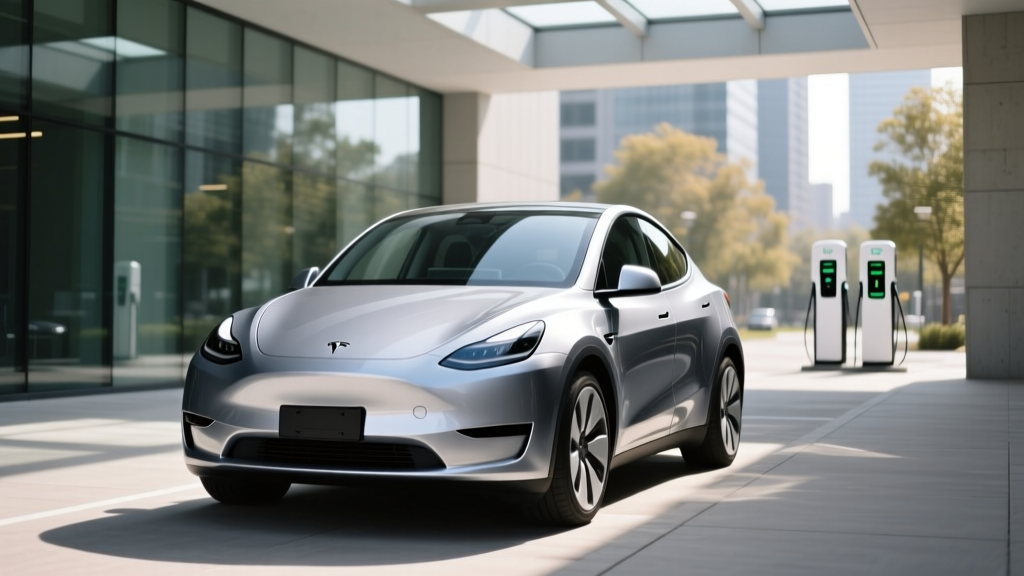
Tesla's periodic 0% APR financing offer on the Model Y is one of the most compelling purchase incentives in the EV market. For the 2026 model year, this promotion effectively eliminates the interest premium that typically adds $4,000–$8,000 to a 60-month auto loan. Combined with the Model Y's class-leading efficiency, Supercharger network access, and practical crossover packaging, a 0% APR deal fundamentally changes the total-cost-of-ownership math against rivals like the Hyundai Ioniq 5, Ford Mustang Mach-E, and Chevrolet Equinox EV.
But a cheap loan doesn't fix range limitations in cold weather, and the Model Y's minimalist interior and firm ride remain polarizing. Below is a data-driven profile of what you're actually buying when you finance a 2026 Model Y at zero interest — including the specs, real-world trade-offs, and federal tax credit nuances that determine whether this deal is genuinely the best path to EV ownership.
2026 Tesla Model Y: Core Specifications
| Spec | Long Range AWD | Performance |
|---|---|---|
| EPA Range | 310 miles | 285 miles |
| Battery (usable) | ~75 kWh, NMC | ~75 kWh, NMC |
| Drivetrain | Dual-Motor AWD | Dual-Motor AWD |
| Horsepower | 384 hp | 456 hp |
| 0–60 mph | 4.8 sec | 3.5 sec |
| Peak DC Fast Charge | 250 kW | 250 kW |
| 10–80% DC Time | ~27 min | ~27 min |
| Level 2 Rate (48A) | 11.5 kW / ~37 mi/hr | 11.5 kW / ~37 mi/hr |
| MPGe (combined) | 117 MPGe | 111 MPGe |
| Efficiency | 28 kWh/100 mi | 30 kWh/100 mi |
| Base MSRP | $46,630 | $51,630 |
| Battery Warranty | 8 yr / 120,000 mi | 8 yr / 120,000 mi |
Sources: fueleconomy.gov, Tesla.com specs (2026 MY). Pricing excludes destination.
Real-World Range: What the EPA Sticker Doesn't Tell You
EPA Estimate: 310 miles (Long Range AWD) / 285 miles (Performance)
Real-World Expectation: 260–285 miles at sustained 70–75 mph highway speeds in moderate weather. In cold conditions (below 32°F), expect a 20–30% reduction — roughly 215–250 miles usable range on a full charge.
The Model Y Long Range AWD's 310-mile EPA figure is among the highest in the compact electric SUV segment, but EPA testing uses low average speeds and includes significant city driving where regenerative braking recovers energy. On a 75-mph interstate run in 70°F weather, independent testing consistently shows 270–285 miles before hitting a 10% state of charge.
Cold weather is the larger variable. Lithium-ion NMC chemistry suffers reduced efficiency and higher cabin-heating loads in winter. Without preconditioning the battery (which the Tesla app does automatically when a Supercharger is set as your navigation destination), you'll also see slower DC fast-charge speeds in cold weather. Plan for ~220 miles of practical winter highway range in northern states and size your road-trip charging stops accordingly.
Charging Speed: DC Fast, Level 2, and the Supercharger Advantage
The 2026 Model Y retains the NACS (North American Charging Standard) connector natively — no adapter needed at Tesla Superchargers. With the 2025 industry-wide NACS adoption, Model Y owners also gain access to Electrify America, EVgo, and other networks using their native cable, dramatically expanding public charging options.
| Charging Level | Power | Miles Added / Hour |
|---|---|---|
| Level 1 (120V household) | ~1.4 kW | ~4–5 mi/hr |
| Level 2 (240V / 48A Wall Connector) | 11.5 kW | ~37 mi/hr |
| DC Fast (V3 Supercharger) | Peak 250 kW | ~162 mi in 15 min |
| DC Fast (V4 Supercharger) | Peak 250 kW (Y-limited) | ~162 mi in 15 min |
The 250 kW peak rate is not sustained across the entire charging session. Like all EVs, the Model Y follows a charging curve: peak power holds roughly from 10% to 45% state of charge, then tapers progressively. The 10–80% time of approximately 27 minutes is competitive but no longer class-leading — the Hyundai Ioniq 5 and Kia EV6, with 800V architectures, achieve 10–80% in roughly 18 minutes at 350 kW chargers.
For home charging, Tesla's Wall Connector at 48 amps on a 60-amp circuit is the practical sweet spot, adding roughly 37 miles of range per hour. Most owners wake to a full battery every morning, making public charging relevant only for road trips.
Performance, Efficiency, and Daily Drivability
The dual-motor AWD powertrain in the Long Range trim delivers 384 hp and a 4.8-second 0–60 time — genuinely quick for a family crossover. The Performance trim's 456 hp and 3.5-second sprint puts it in sports-car territory, though the 25-mile range penalty and firmer suspension are trade-offs most commuters won't justify.
Efficiency is where Tesla still leads the industry. At 117 MPGe combined (28 kWh/100 miles), the Model Y Long Range extracts more miles per kilowatt-hour than any comparable electric SUV. That efficiency translates directly to lower electricity costs: at the U.S. average of $0.17/kWh, a full charge costs roughly $12.75 — equivalent to about $1.70 per gallon of gasoline in a 30-MPG ICE vehicle.
One-pedal driving via regenerative braking is smooth and predictable, though Tesla removed the driver-adjustable regen setting several years ago, which frustrates some buyers transitioning from other EVs. The heat pump, standard on all 2026 trims, significantly reduces winter range loss compared to resistive cabin heaters used in older EVs.
Pricing, 0% APR Math, and Federal Tax Credit Eligibility
The 0% APR promotion is typically offered on 36- or 48-month terms through Tesla's captive financing. Here's the monthly-payment impact compared to a typical 6.5% APR loan:
| Scenario | Long Range AWD ($46,630) |
|---|---|
| 60 months @ 0% APR | $777 / mo |
| 60 months @ 6.5% APR | $912 / mo |
| Interest saved | ~$8,100 |
That $8,100 savings effectively offsets a full year of insurance and electricity combined for most owners.
Federal §30D Tax Credit: Current 2026 Rules
The Model Y qualifies for the federal EV tax credit, but eligibility is layered. Under current IRS §30D rules:
- MSRP cap: SUVs must be under $80,000 — all Model Y trims qualify.
- Buyer income cap: AGI must not exceed $150,000 (single) / $300,000 (joint).
- Battery sourcing: Critical minerals and battery components must meet phased-in domestic/FHA-sourcing thresholds. As of 2026, the Model Y's U.S.-built battery pack generally qualifies for the full credit, but always verify the VIN on the IRS eligible-vehicle list at purchase.
- Point-of-sale transfer: Buyers can apply the credit as a down-payment reduction at delivery, subject to dealer registration.
Consult a tax professional — credit availability depends on individual tax liability and annual program changes. See IRS.gov clean vehicle credits for the latest rules.
Cargo, Interior, and Tech: Practicality Meets Minimalism
The Model Y remains one of the most spacious compact electric SUVs:
- Cargo (rear seats up): 30.2 cu ft
- Cargo (rear seats folded): 72.1 cu ft
- Front trunk (frunk): 4.1 cu ft
- Rear legroom: 41.6 inches
The 2025+ "Juniper" refresh brought meaningful interior upgrades: ventilated front seats, ambient lighting, a rear-seat touchscreen for passengers, and improved sound insulation that noticeably reduces highway tire noise. The panoramic glass roof remains, though Tesla now includes a power-retractable sunshade — addressing a longstanding complaint about summer cabin heat.
The 15.4-inch center touchscreen handles all vehicle controls, navigation, and media. Wireless Apple CarPlay is still not supported natively (Tesla uses its own integrated stack), which remains a dealbreaker for some buyers. Driver assistance includes standard Autopilot (lane-keep + adaptive cruise), with Full Self-Driving (Supervised) available as a $8,000 option or $99/month subscription.
Important: Autopilot and FSD (Supervised) are SAE Level 2 driver-assist systems. The driver must remain attentive with hands on the wheel at all times. These are not self-driving systems.
Pros, Cons, and Who Should Buy
Pros
- Class-leading efficiency (117 MPGe / 28 kWh/100 mi)
- Native NACS + Supercharger network (20,000+ U.S. stalls)
- 0% APR saves $8,000+ vs market-rate financing
- Spacious cargo area and frunk
- Over-the-air updates continuously add features
- Strong resale value relative to EV segment
Cons
- No Apple CarPlay / Android Auto
- DC fast-charge speed (250 kW peak) trails 800V rivals
- FSD remains Level 2 despite the name
- Firm ride on Performance trim
- Cold-weather range loss (~25%) typical of NMC chemistry
- Insurance premiums above segment average
Who It Suits Best
Commuters and road-trippers benefit most from the 0% APR deal — the combination of low financing cost, 310-mile range, and Supercharger access makes the Model Y the lowest-friction EV ownership experience in 2026. Families appreciate the cargo space and safety ratings (NHTSA 5-star). Towing buyers should look elsewhere — the 3,500-lb tow rating is adequate for small trailers but trails the Rivian R1S and F-150 Lightning.
Frequently Asked Questions
What is the real-world range of the 2026 Tesla Model Y?
Expect 260–285 miles at highway speeds in moderate weather, and 215–250 miles in sub-freezing temperatures. The 310-mile EPA figure assumes mixed city/highway driving.
How fast does the Model Y charge at home and on the road?
At home on a 48-amp Level 2 charger: ~37 miles per hour. At a V3 Supercharger: 10–80% in roughly 27 minutes, with peak power of 250 kW tapering above 50% SoC.
How much does the Model Y cost after tax credits with 0% APR?
With the full $7,500 §30D credit applied at point of sale, a Long Range AWD drops to an effective $39,130 financed at 0% — about $652/month over 60 months. Verify eligibility against IRS income and battery-sourcing rules.
Does the Model Y qualify for the federal EV tax credit?
Generally yes, as of 2026. The MSRP is under the $80,000 SUV cap, and Tesla's U.S. battery sourcing typically meets current thresholds. Buyer AGI caps ($150k single / $300k joint) apply. Confirm VIN eligibility at purchase.
Is the Model Y worth buying vs the Hyundai Ioniq 5 or Ford Mach-E?
If you value Supercharger access, efficiency, and 0% financing, the Model Y wins on total cost. If you prefer Apple CarPlay, faster 800V charging, or a more traditional interior layout, the Ioniq 5 is a strong alternative — though it rarely matches Tesla's financing incentives.
What are the biggest drawbacks of the Model Y?
No native smartphone mirroring, slower DC charging than 800V competitors, and a minimalist interior that not every buyer finds premium. Insurance costs also run 15–25% above comparable ICE crossovers.