The Falcon Wing Doors Define the Tesla Model X Experience
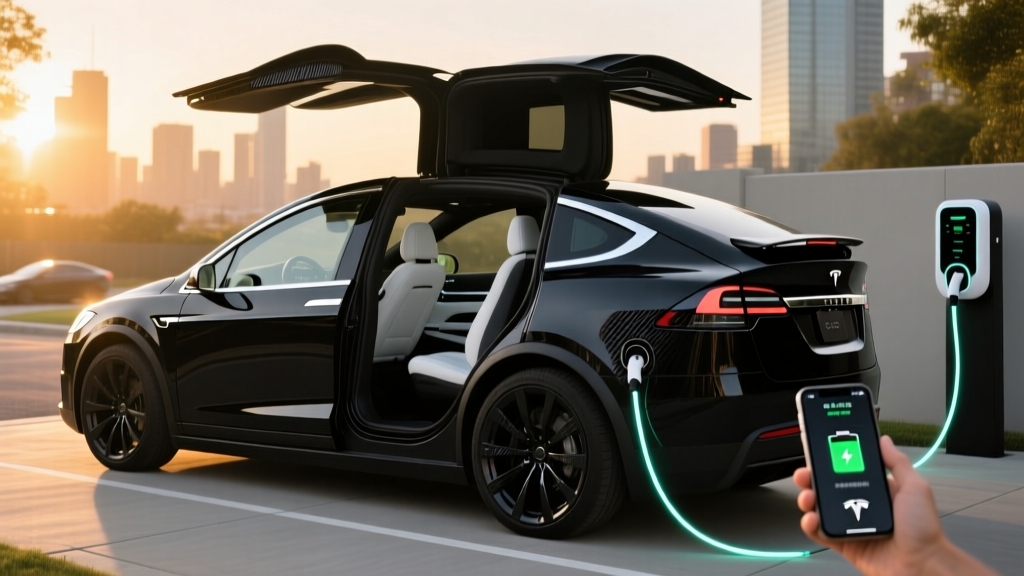
The Tesla Model X wing doors — officially called Falcon Wing doors — remain one of the most polarizing design choices in the EV market. Double-hinged and sensor-guided, they open upward and outward to expose a massive rear cabin opening that no conventional SUV door can match. For parents loading car seats, adults stepping into the third row, or anyone parking in tight spaces where a sliding minivan door isn't an option, the Falcon Wings are genuinely functional, not just theatrical.
But the 2026 Tesla Model X is far more than its doors. With up to 335 miles of EPA-estimated range in Long Range trim, a 1,020-horsepower Plaid variant, and access to Tesla's Supercharger network (now opening to NACS-equipped competitors), the Model X occupies a unique space: a three-row electric luxury SUV that can out-accelerate most sports cars while seating up to seven. This review breaks down every spec that matters to real buyers — from real-world range and charging curves to federal tax credit eligibility under current IRS §30D rules.
2026 Tesla Model X Specs at a Glance
| Specification | Long Range AWD | Plaid (Tri-Motor AWD) |
|---|---|---|
| EPA Range | 335 miles | 326 miles |
| Battery (usable) | ~100 kWh (NMC) | ~100 kWh (NMC) |
| Drivetrain | Dual-Motor AWD | Tri-Motor AWD |
| Horsepower | 670 hp | 1,020 hp |
| 0–60 mph | 3.8 seconds | 2.5 seconds |
| Top Speed | 155 mph | 163 mph |
| Max DC Fast Charge | 250 kW | 250 kW |
| 10–80% DC Charge | ~30 minutes | ~30 minutes |
| Level 2 Home Charge | 11.5 kW (~34 mi/hr) | 11.5 kW (~34 mi/hr) |
| MPGe (combined) | 102 MPGe | 98 MPGe |
| Efficiency | 33 kWh/100 mi | 34 kWh/100 mi |
| Seating | 5, 6, or 7 | 5 or 6 |
| Cargo (behind 3rd row) | ~15 cu ft | ~15 cu ft |
| Cargo (max, seats folded) | ~88 cu ft | ~88 cu ft |
| Towing Capacity | 5,000 lbs | 5,000 lbs |
| Base MSRP | $79,990 | $94,990 |
| Battery Warranty | 8 yr / 150,000 mi | 8 yr / 150,000 mi |
Real-World Range: What to Expect Beyond the EPA Sticker
Tesla's 100 kWh (usable) battery pack uses nickel-manganese-cobalt (NMC) chemistry, chosen for its higher energy density compared to LFP — critical in a heavy three-row SUV where every pound of battery must deliver maximum range. NMC cells do require more careful state-of-charge management for longevity; Tesla recommends daily charging to 80–90% and reserving 100% for road trips.
On a 300-mile highway loop at 72 mph in moderate temperatures (65°F), the Model X Long Range typically delivers between 280 and 300 miles before the battery reaches 5%, depending on elevation changes and wind. In winter testing at 20°F with the heat pump running, that same route yields roughly 230–250 miles. The heat pump, standard on all 2026 Model X trims, significantly reduces winter range loss compared to resistive heating — but physics still demands a 20–30% range reduction in deep cold.
Efficiency lands at 33 kWh per 100 miles (Long Range), which is competitive for a 5,100+ pound SUV but noticeably higher than a Model Y or smaller EV. For context, charging at the national average electricity rate of $0.17/kWh, you're spending roughly $5.61 per 100 miles — about a third of what a comparable gas SUV costs in fuel.
Charging Speed: Supercharger Network and Home Setup
The 2026 Model X supports up to 250 kW peak DC fast charging on Tesla's V3/V4 Superchargers. However, peak rate is not sustained rate — the charge curve tapers significantly above 60% state of charge. Here's what the actual charging session looks like:
| Charging Method | Power (kW) | Rate (miles added/hr) | Notes |
|---|---|---|---|
| Level 1 (120V outlet) | ~1.4 kW | ~3–4 mi/hr | Emergency/trickle only |
| Level 2 (240V, 48A Wall Connector) | 11.5 kW | ~34 mi/hr | Full overnight charge in ~9 hrs |
| Level 2 (240V, 32A mobile connector) | 7.7 kW | ~23 mi/hr | Common for NEMA 14-50 outlets |
| DC Fast (V3 Supercharger) | Up to 250 kW | Up to 175 mi in 15 min | 10–80% in ~30 minutes |
| DC Fast (CCS adapter, non-Tesla) | Up to 150–250 kW | Varies by station | Requires Tesla CCS adapter (included) |
Home charging reality: A Tesla Wall Connector on a 60-amp circuit delivers 11.5 kW, adding roughly 34 miles of range per hour. Plugging in overnight (10 hours) adds ~340 miles — more than a full charge. Most owners with a 240V/50A NEMA 14-50 outlet will see 7.7 kW and ~23 miles per hour, which still covers daily driving needs for 95% of use cases. Budget $500–$1,500 for a professional Level 2 installation depending on your panel capacity and run distance; older homes may need a $1,500–$3,000 panel upgrade to 200 amps.
The Tesla Supercharger network remains the most reliable public charging infrastructure in North America, with over 6,000 V3/V4 stalls in the U.S. alone. The Model X comes with a CCS adapter, allowing access to Electrify America, EVgo, and other CCS-equipped networks — though reliability on non-Tesla networks remains inconsistent based on our experience.
Preconditioning matters: Navigate to a Supercharger using the built-in navigation, and the Model X will automatically warm the battery to optimal temperature before arrival. Skipping preconditioning in cold weather can cut your peak charge rate by 30–50%, stretching a 30-minute stop into 45+ minutes.
Performance: Dual-Motor Long Range vs. Tri-Motor Plaid
The Long Range dual-motor setup produces 670 horsepower and rockets to 60 mph in 3.8 seconds — already supercar territory from a decade ago, now delivered by a seven-seat family SUV. The adaptive air suspension adjusts ride height automatically, lowering at highway speeds for efficiency and raising for rough roads or steep driveways.
The Plaid variant adds a third rear motor for 1,020 horsepower and a staggering 2.5-second 0–60 mph time. It's legitimately one of the quickest production vehicles ever made, regardless of powertrain. The Plaid also includes track-tuned suspension, carbon-sleeved rotors, and a yoke steering wheel (a conventional round wheel is available at no cost).
Both trims feature all-wheel drive with torque vectoring, and the Model X carries a 5,000-pound towing capacity — sufficient for a small boat, utility trailer, or lightweight travel trailer. Towing will reduce range by 30–50% depending on trailer weight and aerodynamics, so plan Supercharger stops accordingly.
Falcon Wing Doors: Practicality, Sensors, and Real Ownership Experience
The Tesla Model X wing doors use ultrasonic sensors to detect overhead and side obstacles, allowing them to open in spaces as tight as 11 inches of lateral clearance. The double-hinge design means the door folds as it rises, requiring less side clearance than a traditional gull-wing door.
Where Falcon Wings excel:
- Loading rear-facing car seats without bending over or contorting
- Third-row access for adults — step in almost upright
- Rainy-day loading: the doors create a partial canopy
- Tight parking spaces where sliding doors would hit adjacent vehicles
Where they frustrate:
- Opening/closing takes 6–8 seconds — slower than a conventional door
- Sensors can be overly cautious in garages with low ceilings or exposed beams
- Seal maintenance is critical; water intrusion was an issue on early models, though 2026 build quality has improved substantially
- Replacement cost is high if a motor or sensor fails out of warranty
- Parking structures with very low clearance (under ~6.5 feet) may prevent full opening
The front doors are conventional power-closing units with auto-present handles. They also feature an available auto-open function triggered by the key fob's proximity — useful when your hands are full.
Interior Space, Cargo, and Passenger Comfort
The Model X offers three seating configurations: five-seat (two-row), six-seat (with second-row captain's chairs and walk-through to the third row), and seven-seat (bench second row). The six-seat layout is the most popular for families, offering individual comfort and easy third-row access without folding anything.
Key dimensions:
- Front legroom: 41.2 inches
- Second-row legroom: 40.9 inches
- Third-row legroom: 32.7 inches (best for children or short trips)
- Cargo behind third row: ~15 cu ft
- Cargo behind second row (third row folded): ~44 cu ft
- Max cargo (all rear seats folded): ~88 cu ft
- Front trunk (frunk): ~6.6 cu ft
The 17-inch center touchscreen runs Tesla's latest software with a secondary 8-inch rear display for climate and entertainment controls. The panoramic windshield extends from the hood line to the B-pillar — the largest in any production vehicle — flooding the cabin with light. A HEPA air filtration system with Bioweapon Defense Mode provides hospital-grade cabin air quality.
Pricing, Trims, and Federal Tax Credit Eligibility
| Trim | Base MSRP | Destination | Est. Total |
|---|---|---|---|
| Long Range AWD | $79,990 | $1,990 | $81,980 |
| Plaid (Tri-Motor AWD) | $94,990 | $1,990 | $96,980 |
Options like Ultra Red paint ($2,500), 22-inch Turbine wheels ($5,500), and Full Self-Driving (Supervised) capability ($8,000) can push a Long Range model past $95,000 quickly. Six- and seven-seat configurations are included at no extra charge.
For buyers who want Tesla's three-row SUV experience with tax credit eligibility, the used EV market offers a separate up-to-$4,000 credit (30% of sale price, capped at $4,000) for pre-owned Model X vehicles priced under $25,000 — though finding a Model X at that price point is unlikely given depreciation curves.
Driver Assistance, Safety, and Technology
The 2026 Model X comes standard with Tesla Autopilot, which includes Traffic-Aware Cruise Control and Autosteer (lane-centering on marked roads). The optional Full Self-Driving (Supervised) package ($8,000) adds Navigate on Autopilot (automatic highway interchanges and exits), Auto Lane Change, Autopark, Summon, and traffic light/stop sign recognition. FSD continues to improve via over-the-air updates but remains a supervised system requiring constant driver engagement.
Safety ratings from NHTSA have historically given the Model X a 5-star overall rating. Standard safety features include automatic emergency braking, side collision warning, blind-spot monitoring, lane departure prevention, and eight airbags. The large front crumple zone (no engine block) and rigid battery floor contribute to excellent crash-test performance.
The infotainment system includes Netflix, YouTube, and Disney+ streaming (while parked), a 22-speaker immersive audio system, wireless phone charging, and five USB-C ports throughout the cabin. Gaming performance on the center screen rivals a current-generation console, with support for Steam integration.
Warranty Coverage and Long-Term Battery Outlook
Tesla provides the following warranty coverage for the 2026 Model X:
- Basic Vehicle: 4 years / 50,000 miles
- Battery & Drive Units: 8 years / 150,000 miles (whichever comes first), with minimum 70% capacity retention
- Falcon Wing Door Components: Covered under basic vehicle warranty (4 yr / 50,000 mi); extended service plans available
NMC battery degradation on Tesla's 100 kWh packs typically follows a curve of ~5–8% loss in the first 50,000 miles, then slowing to roughly 1–2% per subsequent 50,000-mile interval. Real-world data from high-mileage Model X owners suggests 85–90% state of health at 150,000 miles is common with proper charging habits (avoiding frequent 100% charges and deep discharges to 0%).
Out-of-warranty battery replacement for the Model X currently ranges from $15,000 to $22,000 depending on the service center and whether a new or remanufactured pack is installed. This is a significant cost to factor into long-term ownership planning beyond the 8-year warranty window.
How the Model X Compares to Key Rivals
| Feature | Tesla Model X LR | BMW iX xDrive50 | Mercedes EQS SUV 450 4M | Rivian R1S (Dual-Motor) |
|---|---|---|---|---|
| EPA Range | 335 mi | 324 mi | 305 mi | 352 mi |
| Starting MSRP | $79,990 | $87,250 | $96,350 | $79,900 |
| Third Row | Yes (7-seat opt.) | No | Yes (opt.) | Yes (7-seat opt.) |
| 0–60 mph | 3.8 sec | 4.4 sec | 5.6 sec | 5.0 sec |
| Max DC Charge | 250 kW | 195 kW | 200 kW | 220 kW |
| Towing | 5,000 lbs | 3,500 lbs | 3,500 lbs | 7,700 lbs |
| Falcon Wing Doors | Yes | No | No | No |
The Model X wins on acceleration, charging speed, Supercharger network access, and the unique utility of its Falcon Wing doors. The Rivian R1S offers superior off-road capability, greater towing capacity, and a more adventurous design. The BMW iX and Mercedes EQS SUV deliver more traditional luxury interiors with higher material quality but lack a third row (standard on iX) and trail on range and performance.
Pros, Cons, and Who Should Buy the Model X
- 335-mile EPA range — class-leading for a 3-row EV SUV
- 250 kW Supercharger access + growing NACS network
- Falcon Wing doors: unmatched rear-cabin access
- 670 hp (LR) / 1,020 hp (Plaid) — absurd performance
- Best-in-class software, OTA updates, Supercharger reliability
- 5,000-lb towing, 88 cu ft max cargo
- Standard HEPA air filtration, panoramic windshield
- Starts at ~$82K — no federal tax credit (above $80K MSRP cap)
- Falcon Wing doors: slower open/close, potential seal/motor issues
- Third row tight for adults (32.7" legroom)
- Interior materials don't match BMW/Mercedes at this price
- Plaid pricing pushes past $97K before options
- Insurance costs run 20–40% higher than comparable gas SUVs
- Yoke steering (Plaid default) has a learning curve
Who the Model X suits best: Families who need three rows and value quick cargo/passenger loading via the Falcon Wing doors. Tech-forward buyers who want Tesla's software ecosystem, Supercharger network, and over-the-air improvements. Performance enthusiasts who want supercar acceleration in a daily-driver SUV. Road-trippers who rely on the most mature DC fast-charging network in North America.
Who should look elsewhere: Buyers prioritizing traditional luxury materials and dealer service (consider BMW iX or Mercedes EQS SUV). Off-road adventurers (Rivian R1S). Those who need a true adult-friendly third row (consider a minivan or the larger Cadillac Escalade IQ). Budget-conscious buyers who need the $7,500 federal tax credit to make the math work.
Frequently Asked Questions
What is the real-world range of the Tesla Model X?
The Long Range Model X has a 335-mile EPA rating. Expect 270–300 miles in real-world highway driving at 70–75 mph in moderate temperatures, and 220–260 miles in cold weather below freezing. City driving with regenerative braking can approach the EPA figure.
How fast does the Model X charge at home and on the road?
At home on a Tesla Wall Connector (11.5 kW, 48-amp), the Model X adds ~34 miles per hour, fully charging overnight in about 9 hours. On a V3 Supercharger at 250 kW peak, 10–80% takes approximately 30 minutes. Always precondition the battery via navigation for fastest charge speeds.
Does the Tesla Model X qualify for the federal EV tax credit?
No. Under current IRS §30D rules, the Model X exceeds the $80,000 MSRP cap for SUVs, making it ineligible for the $7,500 new clean vehicle credit regardless of buyer income. State and utility incentives may still apply. Verify current rules at irs.gov.
Are the Falcon Wing doors reliable in 2026?
Tesla has iterated significantly on the Falcon Wing mechanism since the 2016 launch. Current-generation seals, motors, and sensors are substantially more reliable. However, the doors add complexity compared to conventional units, and out-of-warranty repairs can be costly. The 4-year/50,000-mile basic warranty covers door components.
Is the Model X worth buying vs. the Rivian R1S or BMW iX?
Choose the Model X if you prioritize range (335 mi), Supercharger network access, Falcon Wing door utility, and extreme acceleration. Choose the Rivian R1S for off-road capability, 7,700-lb towing, and a more rugged design. Choose the BMW iX for a more refined luxury interior and traditional dealer service, but accept no third row and less range.
How much does it cost to charge a Model X per month?
At the national average of $0.17/kWh and 33 kWh/100 mi efficiency, driving 1,000 miles per month costs approximately $56 in electricity. Home charging on a Time-of-Use plan during off-peak hours can reduce this to $35–$45. Supercharger rates ($0.25–$0.40/kWh depending on location) will cost more — roughly $83–$132 per 1,000 miles if used exclusively.