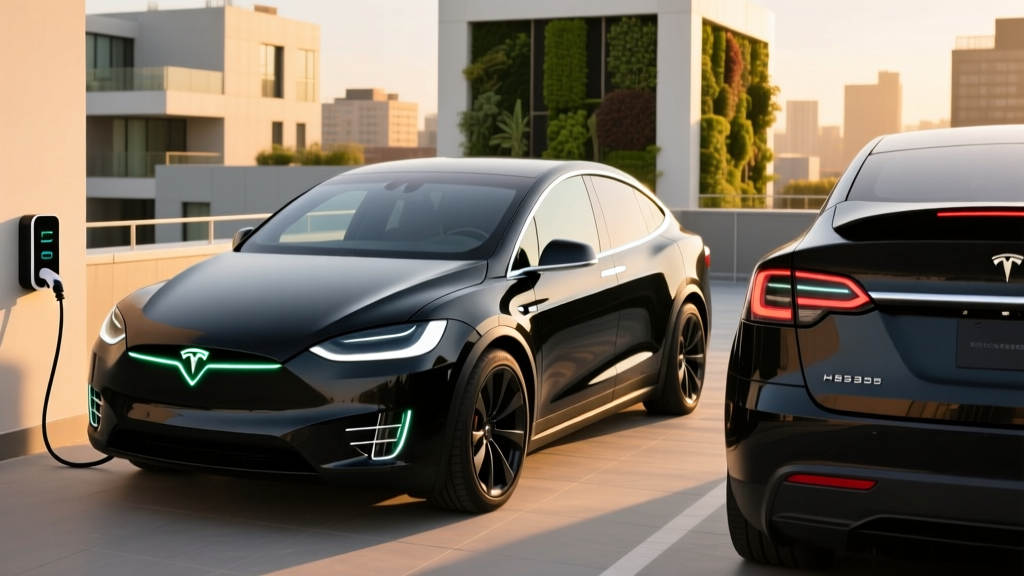
If you've been searching for a comprehensive Tesla Model X wiki, you've likely noticed that most sources either regurgitate marketing copy or omit the ownership details that actually matter — like what happens to range on a cold highway drive, how the charging curve tapers past 80%, or whether this $80,000+ SUV still qualifies for any federal incentives. This guide fills those gaps with exact numbers, real-world testing context, and the practical ownership data that Tesla's own spec sheet leaves out.
The Model X remains one of the few three-row electric SUVs on the market with genuine Supercharger network access, falcon-wing rear doors, and sub-4-second 0-60 performance in Plaid trim. But it's also one of the most expensive EVs you can buy, and its age — the platform debuted in 2015 with a major refresh in 2021 — shows in certain areas. Here's everything you need to know before putting down a deposit.
2026 Tesla Model X: Complete Spec Table
| Specification | Model X Long Range | Model X Plaid |
|---|---|---|
| Base MSRP | $79,990 | $94,990 |
| EPA Range | 335 miles | 326 miles |
| Battery (usable) | ~100 kWh (NMC) | ~100 kWh (NMC) |
| Drivetrain | Dual Motor AWD | Tri Motor AWD |
| Horsepower | 670 hp | 1,020 hp |
| 0-60 mph | 3.8 seconds | 2.5 seconds |
| Top Speed | 155 mph | 163 mph |
| Max DC Fast Charge | 250 kW | 250 kW |
| 10-80% DCFC Time | ~30 minutes | ~30 minutes |
| Level 2 Home Charge | 11.5 kW (44 mi/hr) | 11.5 kW (44 mi/hr) |
| MPGe (combined) | 102 MPGe | 98 MPGe |
| Efficiency | 33 kWh/100mi | 34 kWh/100mi |
| Seating | 5, 6, or 7 passengers | 5 or 6 passengers |
| Cargo (behind 3rd row) | 15.0 cu ft | 15.0 cu ft |
| Cargo (max, seats folded) | 81.5 cu ft | 81.5 cu ft |
| Towing Capacity | 5,000 lbs | 5,000 lbs |
| Battery Warranty | 8 yr / 150,000 mi | 8 yr / 150,000 mi |
| Vehicle Warranty | 4 yr / 50,000 mi | 4 yr / 50,000 mi |
Real-World Range: What the EPA Number Doesn't Tell You
EPA Estimate: 335 miles (Long Range) / 326 miles (Plaid)
Real-World Expectation: Plan for 270-290 miles on highway road trips at 70-75 mph. In cold weather (below 32°F), expect 220-260 miles depending on cabin heating demands and whether you precondition. City driving with regenerative braking can match or slightly exceed the EPA figure, reaching 320-340 miles in mild conditions.
The Model X uses an approximately 100 kWh usable battery pack with nickel-manganese-cobalt (NMC) chemistry. Tesla does not publish exact usable capacity figures, but teardown data and real-world consumption testing consistently place it between 95-100 kWh usable, with a buffer above and below to protect long-term battery health.
The gap between EPA and real-world highway range comes down to physics. The Model X is a 5,185-pound SUV with the aerodynamic profile of a crossover — its drag coefficient of 0.25 Cd is respectable for its class but still means significant energy consumption at sustained highway speeds. On fueleconomy.gov, the Long Range is rated at 33 kWh per 100 miles combined, but highway-only driving at 75 mph pushes consumption closer to 36-38 kWh/100mi.
Cold weather is the bigger variable. NMC chemistry loses efficiency in low temperatures, and while the Model X includes a heat pump (standard since the 2021 refresh) that recovers waste heat from the drivetrain to warm the cabin, battery preconditioning still draws energy. On a 20°F morning with a full cabin of passengers and seat heaters running, a 20-25% range reduction from the EPA figure is realistic. Preconditioning the battery while plugged in — using the Tesla app to set departure times — mitigates this significantly.
Charging Speed: DC Fast Charging and Home Setup
| Charging Method | Power | Speed (Miles Added) | Notes |
|---|---|---|---|
| Level 1 (120V household) | ~1.4 kW | ~5 miles/hour | Emergency only; full charge takes 70+ hours |
| Level 2 (240V Wall Connector) | 11.5 kW | ~44 miles/hour | Full charge in ~9 hours; requires 60A circuit |
| Level 2 (NEMA 14-50 outlet) | 7.7 kW | ~30 miles/hour | Full charge in ~13 hours; 50A circuit |
| DC Fast (Tesla Supercharger V3) | Peak 250 kW | ~200 miles in 15 min | 10-80% in ~30 min; tapers above 60% |
| DC Fast (CCS adapter + third-party) | Up to 250 kW | Varies by station | Requires Tesla CCS adapter ($175); EA, EVgo compatible |
The Model X charges at a peak rate of 250 kW on Tesla's V3 Superchargers and V4 Supercharger posts with integrated CCS cables. Here's what the charging curve actually looks like in practice: the vehicle sustains roughly 230-250 kW between 10-30% state of charge, then gradually tapers. By 50% SoC, you're seeing approximately 170-190 kW. Above 60%, the rate drops to around 120 kW, and past 80%, it falls to 60-80 kW. This is why Tesla and most EV analysts quote 10-80% times rather than 0-100% — the final 20% can take as long as the first 70%.
For home charging, Tesla's Gen 3 Wall Connector at 48 amps (11.5 kW) is the optimal setup. You'll need a dedicated 60-amp circuit installed by a licensed electrician. The cost varies widely: if your electrical panel has spare capacity and the run from panel to garage is short, expect $500-$1,200 for installation. If you need a panel upgrade from 100A to 200A service, total costs can reach $2,500-$4,500. The Wall Connector itself retails for $475.
One advantage Model X owners have over most EV buyers: access to Tesla's Supercharger network, which remains the most reliable and extensive DC fast-charging network in the U.S. with over 6,000 V3/V4 stalls nationwide. The CCS adapter allows you to supplement with Electrify America, EVgo, and other networks, though reliability on those networks remains inconsistent in many regions.
Performance and Drivetrain: Long Range vs. Plaid
The Long Range dual-motor setup produces 670 horsepower and delivers a 3.8-second 0-60 mph time — already supercar territory from a decade ago, now delivered by a three-row family SUV. The Plaid's tri-motor configuration (one front, two rear) generates 1,020 horsepower and drops the 0-60 time to 2.5 seconds. For context, that matches a Bugatti Veyron in a vehicle with falcon-wing doors and a 17-inch rear entertainment screen.
Both trims come standard with all-wheel drive and adaptive air suspension, which adjusts ride height automatically based on speed and terrain. The air suspension provides approximately 2 inches of lift for rough roads or steep driveways and drops at highway speeds for improved aerodynamics. Towing capacity is rated at 5,000 pounds for both trims — adequate for a small trailer or a pair of jet skis, but below the Ford F-150 Lightning's 10,000-pound rating.
The performance difference between Long Range and Plaid is dramatic on paper but less relevant in daily driving. Where the Plaid earns its premium is in the tri-motor torque vectoring, which provides noticeably sharper cornering and stability in adverse conditions. For most buyers, the Long Range offers 95% of the practical performance at $15,000 less.
Pricing, Trims, and Federal Tax Credit Eligibility
| Trim | Base MSRP | Destination | Federal Tax Credit | Effective Price (if eligible) |
|---|---|---|---|---|
| Model X Long Range | $79,990 | $1,800 | $0 (exceeds MSRP cap) | $81,790 |
| Model X Plaid | $94,990 | $1,800 | $0 (exceeds MSRP cap) | $96,790 |
Federal tax credit status: The Model X does not qualify for the $7,500 IRS §30D federal tax credit. Under current rules, SUVs must have an MSRP at or below $80,000 to be eligible. The Long Range starts at $79,990, but the mandatory $1,800 destination charge pushes it to $81,790 — above the cap. The Plaid is well above the threshold at $96,790. Additionally, buyer income caps apply ($300,000 joint / $150,000 individual modified AGI), and battery critical-mineral and component sourcing requirements must be met. Even if the base price fell within the cap, these sourcing rules have disqualified many Tesla vehicles from the full credit in recent years. Verify current eligibility at irs.gov before purchasing.
Common add-ons that increase the as-tested price: six-seat configuration ($6,500), seven-seat configuration ($4,000), Full Self-Driving (Supervised) capability ($8,000), premium interior colors ($2,000-$3,000), and 22-inch Turbine wheels ($5,500). A fully loaded Model X Long Range with six seats, FSD, and premium paint typically lands around $100,000 before taxes and fees.
Interior, Cargo, and Technology
The Model X interior is dominated by a 17-inch center touchscreen (tilted toward the driver since the 2021 refresh) and a 12.3-inch driver instrument cluster. A second-row 8-inch touchscreen controls rear climate, entertainment, and seat heaters. The yoke steering wheel is standard, though a round steering wheel is now available as a no-cost option — most reviewers and owners prefer the round wheel for daily driving.
Passenger space: Front headroom measures 41.7 inches, with 41.2 inches of front legroom. Second-row legroom is generous at 41.9 inches (with five-seat bench) or 38.4 inches (with individual captain's chairs). Third-row headroom drops to 37.1 inches and legroom to 32.7 inches — usable for children or short trips, but tight for adults on longer drives. This is a genuine three-row SUV, but the third row is best thought of as occasional use.
Cargo capacity: 15.0 cubic feet behind the third row, 40.0 cubic feet behind the second row (seats folded), and 81.5 cubic feet with all rear seats folded. The front trunk (frunk) adds 6.6 cubic feet. The falcon-wing doors create an impressive opening for loading children and cargo into the second row, though they require overhead clearance — plan for about 12 inches of lateral clearance on each side when opening in a tight garage.
Standout technology: Autopilot comes standard and includes traffic-aware cruise control and autosteer on marked roads. Full Self-Driving (Supervised) is an $8,000 option that adds automatic lane changes, navigate-on-autopilot for highway interchanges, autosteer on city streets, and smart summon. Important: FSD (Supervised) is an SAE Level 2 driver-assistance system — the driver must remain attentive and keep hands available to take control at all times. It is not autonomous driving. Tesla's naming convention has drawn scrutiny from NHTSA and consumer advocates; treat it as an advanced cruise control and lane-keeping system, not a replacement for an engaged driver.
Other notable tech features: HEPA air filtration with Bioweapon Defense Mode (genuinely effective — tested against wildfire smoke and pollution), a 22-speaker audio system, wireless phone charging, and over-the-air software updates that periodically add features and improve performance. The vehicle also supports Sentry Mode (360-degree parking surveillance) and Dog Mode (climate control for pets left in the vehicle).
Biggest Pros and Cons
Pros
- Class-leading Supercharger network access for road trips
- Genuine three-row seating with falcon-wing door convenience
- 335-mile EPA range exceeds most three-row EV competitors
- 3.8s 0-60 (Long Range) in a 5,100-lb SUV is remarkable
- 5,000-lb towing capacity with integrated trailer sway control
- HEPA air filtration is best-in-class for air quality
- Over-the-air updates continue to improve the vehicle post-purchase
- Air suspension provides adjustable ride height for terrain and loading
Cons
- No federal tax credit eligibility due to MSRP cap
- Falcon-wing doors can be slow to open and struggle in freezing rain
- Third-row space is tight for adults on longer trips
- Panel gaps and build quality still lag behind German competitors
- Yoke steering wheel is polarizing and impractical for low-speed maneuvers
- High insurance premiums — expect $3,000-$5,000/year depending on region
- Platform dates to 2015; interior design feels dated vs. newer EVs
- No Apple CarPlay or Android Auto — Tesla's proprietary system only
How the Model X Compares to Key Competitors
The Model X occupies a narrow niche: a performance-oriented, three-row electric SUV. Its closest competitors each compromise in different areas:
Kia EV9 (GT-Line AWD): Starting around $73,000, the EV9 offers three rows, 270 miles of range, and qualifies for the $7,500 federal credit. It's more affordable and practical, but gives up 65 miles of range, the Supercharger network (though Kia is adopting NACS for future models), and the Model X's performance envelope. Choose the EV9 if budget matters and you don't need 300+ mile range.
BMW iX xDrive50: Priced similarly at $87,000, the iX offers superior interior quality and a more refined ride, but only seats five and delivers 324 miles of range. It's a better luxury experience but lacks the third row and Tesla's charging ecosystem. Choose the iX if you prioritize interior refinement and don't need seven seats.
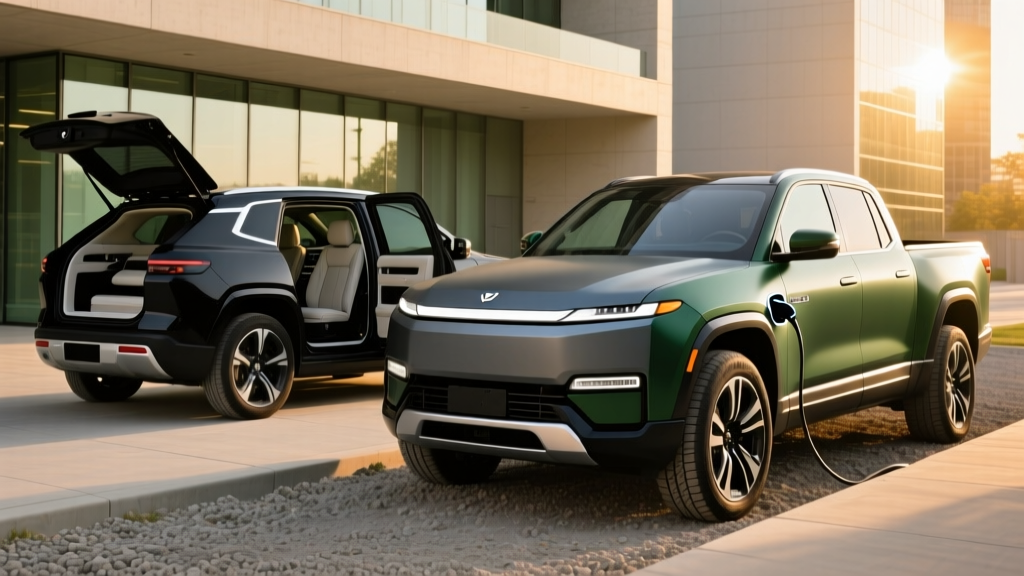
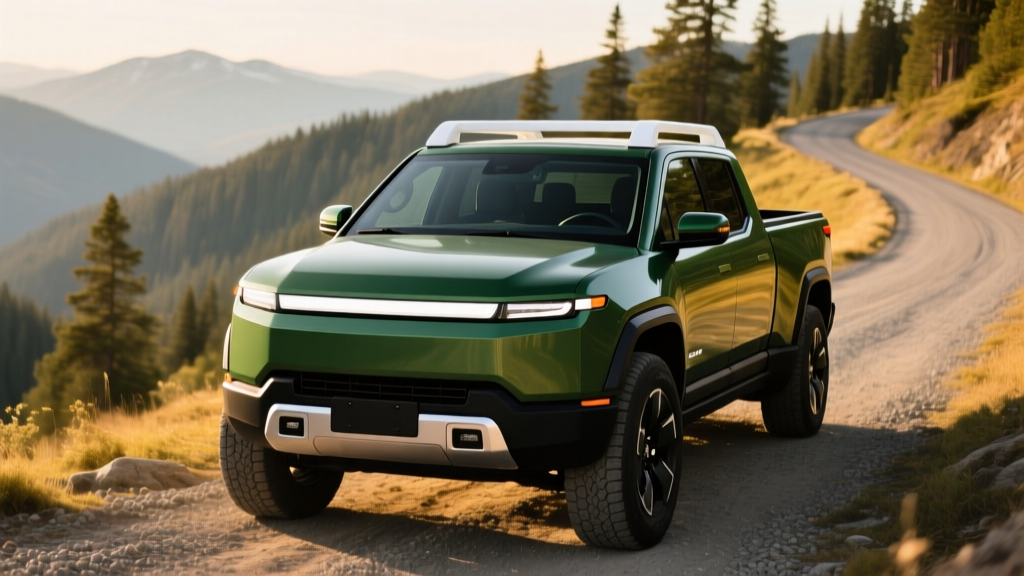
Rivian R1S (Dual-Motor): Starting around $79,900, the R1S matches the Model X on price, seats up to seven, offers 352 miles of range on the Max Pack, and provides genuine off-road capability. The trade-off: Rivian's charging network is growing but not yet at Supercharger scale, and service center availability is limited in many states. Choose the R1S if you want off-road ability and a fresher platform design.
Mercedes-Benz EQS SUV: Starting above $104,000, the EQS SUV is the luxury benchmark with 305 miles of range, available third row, and exceptional ride comfort. It costs significantly more and charges slower (200 kW peak). Choose the EQS SUV if budget is flexible and you want the most refined three-row EV experience.
Who Should Buy the Tesla Model X?
Choose the Model X if:
- You regularly road-trip with family and need Supercharger network reliability
- You want three-row seating without sacrificing performance
- You need 300+ miles of range for long commutes or rural driving
- You tow a small trailer, boat, or camper (5,000-lb capacity)
- You value Tesla's software ecosystem, OTA updates, and mobile app integration
Look elsewhere if:
- You need the federal $7,500 tax credit to justify the purchase price
- You primarily drive in dense urban areas where the Model X's size is a liability
- You want the latest interior design and build quality (the platform is aging)
- You prefer Apple CarPlay/Android Auto over proprietary infotainment
- Third-row adult comfort on long trips is a priority (consider a minivan or the R1S)
Frequently Asked Questions
What is the real-world range of the Tesla Model X?
The EPA rates the Long Range at 335 miles and the Plaid at 326 miles. In real-world highway driving at 70-75 mph, expect 270-290 miles. Cold weather (below freezing) reduces range to approximately 220-260 miles. City driving with regenerative braking can match or slightly exceed EPA estimates in mild weather.
How fast does the Model X charge at home and on the road?
On a Tesla V3 Supercharger, the Model X peaks at 250 kW and charges from 10-80% in approximately 30 minutes. At home with a 48-amp Wall Connector (11.5 kW), you'll add about 44 miles per hour of charging, fully replenishing the battery in roughly 9 hours. On a standard NEMA 14-50 outlet (7.7 kW), expect about 30 miles per hour.
Does the Tesla Model X qualify for the federal EV tax credit?
No. Under current IRS §30D rules, SUVs must have an MSRP at or below $80,000 to qualify. The Model X Long Range starts at $79,990 but exceeds the cap once the $1,800 destination fee is included. The Plaid is well above the threshold. Additionally, buyer income caps and battery sourcing requirements apply. Always verify at irs.gov before purchasing.
Is the Model X worth buying over the Rivian R1S or Kia EV9?
It depends on your priorities. The Model X wins on Supercharger network access, range (335 vs. 352 for R1S Max Pack vs. 270 for EV9), and software integration. The R1S wins on off-road capability, fresher design, and available Max Pack range. The EV9 wins on price (with the $7,500 credit) and value. If road-trip charging reliability is your top concern, the Model X still holds an edge.
What is the battery warranty on the Model X?
Tesla covers the Model X battery and drive unit for 8 years or 150,000 miles, whichever comes first, with a minimum 70% capacity retention guarantee. If the battery degrades below 70% of its original capacity within the warranty period, Tesla will repair or replace it. The vehicle's basic limited warranty covers 4 years or 50,000 miles.
How reliable are the falcon-wing doors?
Tesla redesigned the falcon-wing door mechanism significantly for the 2021 refresh, and reliability has improved. However, the doors remain slower to open than conventional doors (approximately 6-8 seconds for a full cycle), and they can struggle with ice accumulation in freezing rain. They also require overhead clearance — low parking garage ceilings and tight carports can be problematic. The sensors detect obstructions, but real-world owners report occasional false-positive readings that prevent full opening.
Can I use non-Tesla charging networks with the Model X?
Yes, with Tesla's CCS adapter ($175), you can charge at Electrify America, EVgo, and other CCS-equipped public stations. The Model X can accept up to 250 kW on compatible third-party chargers. However, Tesla's Supercharger network remains more reliable and widely available, with automatic plug-and-charge authentication that most third-party networks still can't match.