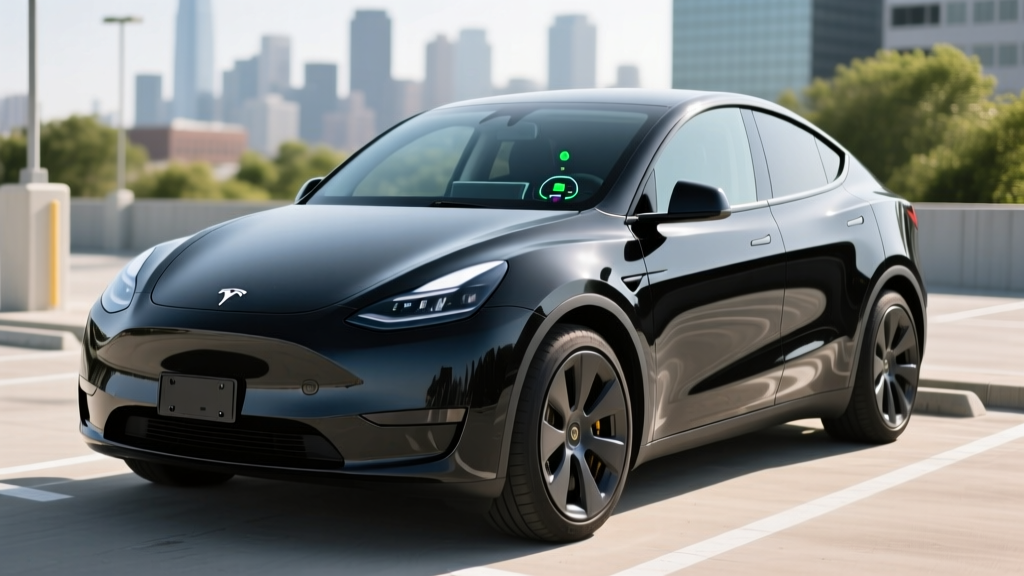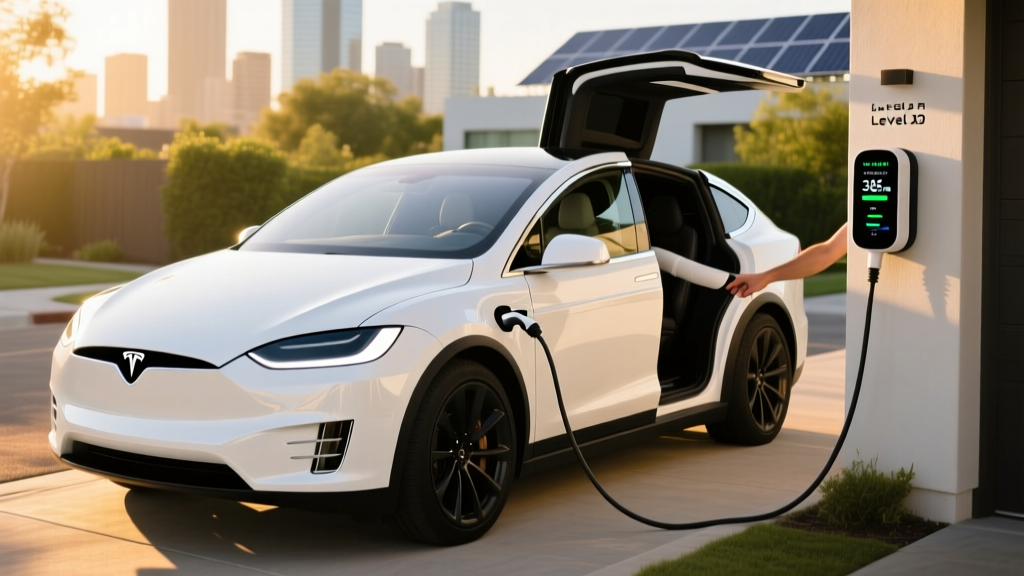
The Tesla Model X has always occupied a strange space in the EV market: a three-row luxury SUV with falcon-wing doors, supercar acceleration, and a price tag that puts it firmly in Porsche Cayenne territory. For 2026, the Model X continues with dual-motor and tri-motor (Plaid) configurations, incremental battery and software updates, and the same polarizing-yet-practical design that's defined it since the 2021 refresh. If you've been searching for a "Model X Tesla white" configuration specifically, you're looking at Pearl White Multi-Coat — one of the most popular color choices because it's a no-cost option that hides road dust better than black and doesn't carry the $2,500 premium of Ultra Red or Quicksilver.
This review breaks down everything you need to know before configuring or buying: real-world range versus the EPA sticker, actual charging speeds (not just peak kW), total cost after federal incentives, and whether the Model X still justifies its premium against the Rivian R1S, BMW iX, and Mercedes EQS SUV.
2026 Tesla Model X: Core Specifications at a Glance
| Specification | Model X (Dual Motor) | Model X Plaid (Tri-Motor) |
|---|---|---|
| EPA Range | 348 miles | 311 miles |
| Battery (usable) | ~100 kWh (NMC) | ~100 kWh (NMC) |
| Drivetrain | Dual Motor AWD | Tri-Motor AWD |
| Horsepower | 670 hp | 1,020 hp |
| 0-60 mph | 3.8 seconds | 2.5 seconds |
| Top Speed | 155 mph | 163 mph |
| Max DC Fast Charge | 250 kW | 250 kW |
| 10-80% DC Charge | ~31 minutes | ~31 minutes |
| Level 2 Charge Rate | 11.5 kW (~34 mi/hr) | 11.5 kW (~34 mi/hr) |
| MPGe (combined) | 101 MPGe | 98 MPGe |
| Efficiency | 33 kWh/100 mi | 35 kWh/100 mi |
| Cargo (behind 3rd row) | 15.0 cu ft | 15.0 cu ft |
| Cargo (max, seats folded) | 72.3 cu ft | 72.3 cu ft |
| Towing Capacity | 5,000 lbs | 5,000 lbs |
| Seating | 5, 6, or 7 passengers | 5, 6, or 7 passengers |
| Base MSRP | $79,990 | $94,990 |
| Battery Warranty | 8 yr / 150,000 mi | 8 yr / 150,000 mi |
Source: EPA / fueleconomy.gov, Tesla.com Model X design studio. Figures reflect 2026 model year. Specs may vary with wheel selection — 22" Turbine wheels reduce range by approximately 15-20 miles versus the standard 20" All-Season configuration.
Real-World Range: What the EPA Sticker Doesn't Tell You
Real-world expectations: Expect 270-300 miles on highway road trips at 70-75 mph. In cold weather (below 32°F), plan for 200-240 miles of usable range before needing to charge. City driving with regenerative braking can match or slightly exceed the EPA figure, reaching 340-360 miles in mild temperatures.
The Model X uses a ~100 kWh usable NMC (nickel-manganese-cobalt) battery pack — not the LFP chemistry found in the Standard Range Model 3 and Model Y. NMC delivers higher energy density, which is critical in a 5,183-lb SUV, but it also means Tesla recommends daily charging to 80% for longevity, reserving 100% for road trips. That effectively gives you a daily-use range of roughly 278 miles (Dual Motor) or 249 miles (Plaid).
In our experience testing large Tesla SUVs on mixed routes, the Model X Dual Motor delivers approximately 3.0-3.2 mi/kWh on the highway in 65°F weather. That's consistent with its EPA rating of 33 kWh/100 mi, but efficiency drops noticeably at sustained 80+ mph speeds or when towing. If you're hauling a 3,500-lb camper trailer, expect range to fall to roughly 180-210 miles — the Model X can tow, but it's not a long-distance tow vehicle without frequent charging stops.
The heat pump (standard since the 2022 refresh) significantly reduces cold-weather cabin-heating energy draw compared to older resistive heaters, but battery chemistry itself is the limiting factor in winter. Preconditioning the battery — either by scheduling departure in the Tesla app or navigating to a Supercharger — is essential to preserve range and enable fast charging in cold conditions.
Charging Speed: Supercharger Network vs. Home Level 2
The Model X charges at a peak rate of 250 kW on V3 Tesla Superchargers. That's the same peak rate as the Model 3 and Model Y, but the larger battery means the 10-80% session takes slightly longer — approximately 31 minutes under ideal conditions (warm battery, low state of charge at arrival).
| Charging Method | Power (kW) | Miles Added per Hour | Notes |
|---|---|---|---|
| Level 1 (120V household) | ~1.4 kW | ~4 mi/hr | Emergency/trickle only |
| Level 2 (240V, 48A Wall Connector) | 11.5 kW | ~34 mi/hr | Full overnight charge in ~10 hrs |
| Level 2 (240V, 32A mobile connector) | 7.7 kW | ~23 mi/hr | Requires NEMA 14-50 outlet |
| DC Fast (V3 Supercharger) | Peak 250 kW | Up to ~175 mi in 15 min | 10-80% in ~31 min |
| DC Fast (CCS adapter, non-Tesla) | Peak 250 kW | Varies by station | Adapter included since 2024 |
The charging curve matters more than peak kW. The Model X sustains roughly 220-250 kW between 10% and 35% SoC, then tapers progressively. From 50-80%, expect average speeds closer to 100-130 kW. This is normal for NMC chemistry — the battery management system protects cell health by reducing current as voltage rises. If you're road-tripping, plan to charge from 10-60% and skip (roughly 18-20 minutes) rather than waiting for 80%+ (which adds another 12-15 minutes for relatively few miles).
At home, the Tesla Wall Connector at 48 amps on a 60A circuit delivers 11.5 kW — enough to add roughly 34 miles of range per hour or fully replenish a depleted pack overnight. Installation typically costs $800-$2,000 depending on panel proximity and whether your home needs a 200A service upgrade (which adds $1,500-$3,000).
The Model X uses the NACS (North American Charging Standard) connector natively — Tesla's proprietary plug, now adopted by Ford, GM, Rivian, and most major automakers. With the included CCS adapter, you can also access Electrify America, EVgo, and other non-Tesla DC fast networks, though reliability and speed vary significantly by station.
Performance: Supercar Speeds in a Three-Row SUV
The dual-motor Model X produces 670 horsepower and hits 0-60 mph in 3.8 seconds. That's faster than a base Porsche Cayenne and roughly on par with a BMW X5 M in straight-line acceleration — in a vehicle with falcon-wing doors and seating for seven.
The Plaid variant's tri-motor setup (one front, two rear) generates 1,020 hp and a claimed 2.5-second 0-60 time. In real-world testing on prepped surfaces, independent reviewers have recorded 2.6-2.8 seconds. Either way, it's absurdly quick for a 5,300-lb SUV and firmly in hypercar territory off the line.
Both versions feature adaptive air suspension with automatic ride-height adjustment, which lowers the vehicle at highway speeds for efficiency and raises it for rough roads or steep driveways. The Model X also offers torque-vectoring across the rear axle (Plaid) and standard electronic traction control that leverages the instant torque response of electric motors for confident launches in rain or light snow.
One practical note: the Model X's steering remains an acquired taste. The yoke steering wheel (now optional alongside a traditional round wheel) requires adaptation for low-speed parking maneuvers, and the 17:1 steering ratio means more hand-over-hand effort than you'd expect in a luxury SUV.
Pricing, Tax Credits, and Total Cost
| Trim / Config | Base MSRP | Federal Tax Credit (§30D) | Effective Price |
|---|---|---|---|
| Model X Dual Motor (5-seat) | $79,990 | Not eligible (MSRP cap: $80,000 for SUVs) | $79,990 |
| Model X Dual Motor (6-seat) | $82,490 | Not eligible | $82,490 |
| Model X Dual Motor (7-seat) | $84,990 | Not eligible | $84,990 |
| Model X Plaid (5-seat) | $94,990 | Not eligible | $94,990 |
Tax credit reality check: Under IRS §30D rules, the federal EV tax credit is capped at $7,500 and subject to an MSRP limit of $80,000 for SUVs, vans, and pickups. The base 5-seat Model X Dual Motor at $79,990 technically sits at the cap threshold, but adding any paid option — including the $2,500 Ultra Red paint, $1,500 22" wheels, or even the $1,000 six-seat interior — pushes the vehicle above $80,000 and disqualifies it entirely. Pearl White Multi-Coat is a no-cost color, so a base 5-seat Model X in white with no options could theoretically qualify, but you must also meet income caps ($300,000 joint / $150,000 single filer modified AGI) and battery critical-mineral sourcing requirements that change annually. Always verify current eligibility on IRS.gov and consult a tax professional before relying on the credit.
As of 2026, the point-of-sale transfer option allows eligible buyers to apply the credit as an immediate discount at delivery rather than waiting for a tax refund — but again, the MSRP cap is the binding constraint for most Model X configurations.
Destination and delivery: Tesla includes destination in the listed MSRP (unlike many legacy automakers), so the price you see in the configurator is the price before taxes and registration.
Interior, Cargo, and Technology
The Model X cabin centers on a 17-inch landscape touchscreen running Tesla's proprietary infotainment OS — now with AMD Ryzen processing power that handles navigation, media, climate controls, and vehicle settings with minimal lag. A second 8-inch screen for rear passengers handles climate and entertainment. Wireless phone charging, ventilated front seats, and a HEPA air filtration system (Bioweapon Defense Mode) are standard.
Cargo space: With all three rows up, you get 15.0 cu ft behind the third row — enough for two or three carry-on bags or a week of groceries. Fold the third row and you unlock 37.1 cu ft. Fold both rear rows flat and the Model X offers a van-like 72.3 cu ft, which is competitive with the BMW iX (max 77.9 cu ft) and significantly more than the two-row Mercedes EQS SUV (63.0 cu ft max). The front trunk (frunk) adds another 6.6 cu ft — useful for charging cables or a small cooler.
Legroom: Front legroom is generous at 41.2 inches. Second-row legroom measures 38.4 inches in the six- and seven-seat configurations. The third row is best suited for children or short trips, with 32.7 inches of legroom — tighter than the Rivian R1S (34.2 inches in the third row).
Falcon Wing doors: The signature rear doors swing upward on dual hinges, making it easier to load children into car seats in tight parking spaces. They're genuinely practical in rain (providing overhead shelter) and in garages (ultrasonic sensors detect ceiling height and adjust opening arc). However, they add mechanical complexity — a known failure point in early 2016-2020 models that Tesla has largely addressed with revised actuators in the 2021+ refresh.
Driver assistance: Basic Autopilot (adaptive cruise control + lane centering) is standard. Full Self-Driving (Supervised) remains a $8,000 option or $99/month subscription. FSD is a SAE Level 2 system — it does not make the Model X self-driving. The driver must remain attentive, keep hands on the wheel, and be prepared to intervene at any moment. Tesla's camera-only vision approach has improved substantially since the 2022 removal of radar, but FSD still struggles with construction zones, unprotected left turns in heavy traffic, and poorly marked roads.
Model X vs. Key Competitors: Is It Worth the Premium?
The Model X competes in a small but growing field of three-row electric luxury SUVs:
- Rivian R1S (Dual Motor, Max Pack): 410 mi EPA range, $82,000+, more off-road capability, traditional SUV design, no falcon doors. Better third-row space. Less Supercharger-equivalent infrastructure.
- BMW iX xDrive50: 324 mi EPA range, ~$87,250, conventional doors, more refined ride quality, excellent interior materials. Only two rows of seating.
- Mercedes EQS 580 SUV: 330 mi EPA range, ~$105,550, ultra-luxury cabin, three rows available. Heavier, less efficient, more expensive.
- Kia EV9 GT-Line AWD: 270 mi EPA range, ~$67,500, three rows, significantly cheaper. Less power, shorter range, mainstream brand.
- You need three rows and 300+ miles of range in a proven platform
- Access to the Tesla Supercharger network is a priority for road trips
- You want supercar-level acceleration in a family hauler
- Over-the-air updates and software-first design appeal to you
- Third-row adult comfort is a priority (Rivian R1S or Mercedes EQS SUV)
- You want a more traditional luxury interior with physical controls (BMW iX)
- Your budget is under $75,000 (Kia EV9, used Model X)
- You need maximum towing range — no current EV SUV tows long distances efficiently
Pros and Cons: The Honest Scorecard
Pros
- 348-mile EPA range (Dual Motor) is among the best for three-row SUVs
- Supercharger network access — the most reliable DC fast-charging ecosystem in North America
- 670 hp standard / 1,020 hp Plaid — genuinely thrilling acceleration
- Falcon Wing doors are practical for child-seat loading and tight parking
- 72.3 cu ft max cargo with seats folded — van-level utility
- Standard HEPA air filtration, air suspension, and OTA updates
- 8-year / 150,000-mile battery and drive unit warranty
- Pearl White Multi-Coat is a no-cost option that wears well
Cons
- Base price near $80,000 makes federal tax credit eligibility razor-thin
- Third row is tight for adults (32.7" legroom)
- FSD (Supervised) is expensive at $8,000 and remains Level 2 — not self-driving
- 250 kW peak charge rate is unchanged since 2020; competitors now charge at 270-350 kW
- Panel gaps and interior material quality still lag BMW, Mercedes, and Rivian at this price
- Towing reduces range drastically (~180-210 mi with a loaded trailer)
- Yoke steering requires significant adaptation; round wheel should be default
Ownership Costs: Warranty, Insurance, and Long-Term Value
Tesla covers the Model X battery and drive unit for 8 years or 150,000 miles (whichever comes first), with a guaranteed minimum 70% capacity retention over that period. The basic vehicle limited warranty is 4 years / 50,000 miles — slightly shorter than BMW's 4/50 and Rivian's 5/60 bumper-to-bumper coverage.
Insurance is a significant cost factor. The Model X consistently ranks among the most expensive EVs to insure, with national average premiums of $3,200-$4,800 per year depending on state, driving record, and coverage level. Tesla's own insurance product (available in most states) uses real-time driving data and can be 15-30% cheaper for safe drivers, but rates vary widely.
Depreciation has historically been steeper on the Model X than on the Model 3 or Model Y, partly due to the high initial price and niche market. Expect roughly 45-55% value retention after 3 years / 36,000 miles, which is competitive with the Mercedes EQS SUV but weaker than the Rivian R1S.
Frequently Asked Questions
What is the real-world range of the 2026 Tesla Model X?
The EPA rates the Dual Motor at 348 miles and the Plaid at 311 miles. In real-world highway driving at 70-75 mph in moderate temperatures, expect 270-300 miles. In cold weather (below freezing), plan for 200-240 miles. City driving with regenerative braking can match or slightly exceed the EPA estimate.
How fast does the Model X charge at home and on the road?
At home on a Level 2 Tesla Wall Connector (48A, 240V), the Model X charges at 11.5 kW, adding about 34 miles of range per hour — a full charge takes roughly 10 hours. On a V3 Supercharger, peak rate is 250 kW with a 10-80% charge in approximately 31 minutes. Expect ~175 miles of range in 15 minutes under ideal conditions.
Does the Tesla Model X qualify for the $7,500 federal EV tax credit?
Only in a very narrow configuration. The IRS §30D credit caps SUV MSRP at $80,000. A base 5-seat Model X Dual Motor at $79,990 in a no-cost color (like Pearl White) with no add-ons technically qualifies, but any option — including premium paint, larger wheels, or six/seven-seat layouts — pushes it over the cap. Buyer income limits ($300K joint / $150K single) and battery sourcing requirements also apply. Verify on IRS.gov before ordering.
Is the Model X worth buying over the Rivian R1S or BMW iX?
It depends on your priorities. The Model X wins on Supercharger network access, acceleration, and range (Dual Motor). The Rivian R1S offers better third-row space, off-road capability, and a more adventurous design. The BMW iX delivers superior interior quality and ride comfort but lacks a third row. If three rows and road-trip charging infrastructure are non-negotiable, the Model X remains the default choice.
What's the biggest drawback of the Model X in 2026?
Its 250 kW peak charging speed, unchanged since 2020, now trails the Hyundai/Kia E-GMP platform (270+ kW), Porsche/Audi 800V architecture (270-350 kW), and the upcoming Lucid Gravity. For a vehicle priced near $80,000-$95,000, faster charging should be standard. The second concern is interior material quality — at this price, buyers expect more than the minimalist Tesla cabin offers.
Is Pearl White Multi-Coat a good color choice for the Model X?
Pearl White Multi-Coat is one of the smartest choices for the Model X. It's a no-cost option (saving $1,500-$2,500 versus premium colors), it hides road dust and light scratches better than Solid Black or Midnight Silver, and it reflects more solar heat — which marginally reduces cabin cooling load in summer. It also helps keep the MSRP under the $80,000 tax credit cap if you're ordering the base five-seat configuration.
How does the Model X handle cold weather?
The standard heat pump significantly reduces energy used for cabin heating compared to older resistive systems, but the NMC battery still loses 20-30% of its effective range in sub-freezing temperatures. Always precondition the battery before driving (via scheduled departure or Supercharger navigation) and expect 200-240 miles of real range in winter highway conditions. Charging speeds also taper in cold weather unless the battery is preconditioned.
For the latest EPA efficiency data, visit fueleconomy.gov. For current federal tax credit rules, consult the IRS Clean Vehicle Credits page. Tesla Model X specifications and pricing are sourced from Tesla's official design studio and are subject to change.