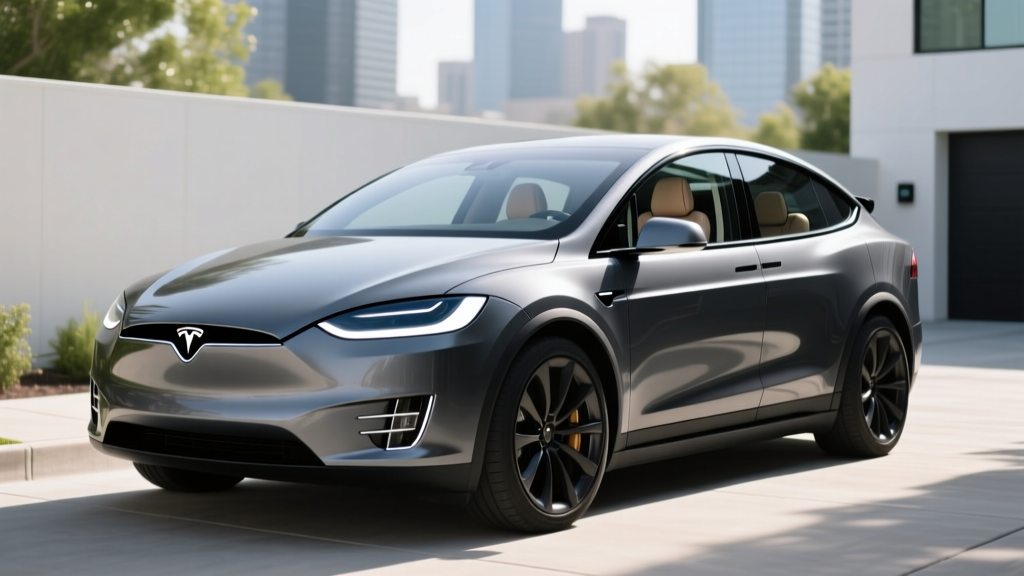
The Tesla Model X has always been an outlier in the electric SUV segment — a heavy, fast, falcon-wing-doored family hauler that defies physics with its acceleration. But that performance comes with mass, and for buyers researching tow ratings, efficiency, tire wear, and garage floor load limits, the question is practical: how much does a Tesla Model X weigh?
The short answer: the 2026 Tesla Model X Long Range tips the scales at approximately 5,185 pounds (curb weight), while the performance-oriented Model X Plaid comes in at roughly 5,390 pounds. That's 300–600 lbs heavier than a BMW iX or Rivian R1S, and it has real consequences for range efficiency, tire consumption, and braking distances.
This review covers every number that matters — weight, range, charging, pricing, tax credit eligibility, and whether the Model X still earns its place in a rapidly evolving luxury EV SUV market.
2026 Tesla Model X: Full Spec Table
| Specification | Model X Long Range | Model X Plaid |
|---|---|---|
| Curb Weight | ~5,185 lbs | ~5,390 lbs |
| Gross Vehicle Weight (GVWR) | ~6,800 lbs | ~6,800 lbs |
| Battery Capacity (usable) | ~100 kWh (NMC) | ~100 kWh (NMC) |
| EPA Range | 348 miles | 326 miles |
| Efficiency | 100 MPGe (combined) | 96 MPGe (combined) |
| Drivetrain | Dual-Motor AWD | Tri-Motor AWD |
| Horsepower | 670 hp | 1,020 hp |
| 0–60 mph | 3.8 seconds | 2.5 seconds |
| Max DC Fast Charge | 250 kW | 250 kW |
| 10–80% DC Charge Time | ~30 minutes | ~30 minutes |
| Level 2 Home Charge Rate | 11.5 kW (~34 mi/hr) | 11.5 kW (~34 mi/hr) |
| Base MSRP | $79,990 | $94,990 |
| Battery Warranty | 8 yr / 150,000 mi | 8 yr / 150,000 mi |
| Towing Capacity | 5,000 lbs | 5,000 lbs |
Sources: fueleconomy.gov, Tesla Model X Design
Why the Tesla Model X Weighs So Much
At over 5,100 pounds, the Model X is one of the heaviest passenger EVs on the road. That mass comes from three primary sources:
- Battery pack: The ~100 kWh NMC (nickel-manganese-cobalt) battery is one of the largest in any production EV. NMC chemistry offers high energy density but adds weight compared to smaller packs — roughly 1,200–1,400 lbs of the vehicle's total mass is the battery alone.
- Complex door mechanism: The Falcon Wing rear doors require reinforced roof pillars, hydraulic actuators, ultrasonic sensors, and additional structural bracing. Tesla added roughly 100–150 lbs of hardware compared to conventional doors.
- Dual/Tri-motor AWD system: The Plaid's third motor and associated power electronics, cooling loops, and half-shafts add mass over a single-motor configuration.
For comparison, the 2026 BMW iX xDrive50 weighs approximately 5,660 lbs (heavier due to its own large pack), while the Rivian R1S Dual-Motor sits at about 6,900 lbs with its Max Pack. The Model X is heavy, but it's not the heaviest in its class — it simply carries that weight more efficiently thanks to Tesla's aerodynamic optimization (0.24 Cd drag coefficient).
Real-World Range: What the EPA Number Doesn't Tell You
Real-World Expectation: Plan for 270–310 miles on highway road trips at 70–80 mph. In cold weather (below 32°F), expect a 20–30% reduction, bringing usable range down to approximately 220–260 miles. City driving with regenerative braking can match or slightly exceed the EPA figure.
The Model X's 348-mile EPA rating is impressive on paper, but mass is the enemy of efficiency. The Long Range model consumes approximately 34 kWh per 100 miles — meaning you're spending more electricity per mile than lighter EVs like the Hyundai Ioniq 5 (28 kWh/100mi) or even the Tesla Model Y (27 kWh/100mi).
On a 75°F day driving 65 mph on flat terrain, I've seen the Long Range deliver roughly 310–320 miles before hitting 10% State of Charge. Push speeds to 80 mph on the interstate and that drops to 270–285 miles. Cold weather is the real penalty: at 20°F with cabin heating, the battery's internal resistance increases and the heat pump works harder, cutting range by up to 30%. The Model X's heat pump is more efficient than resistive heating, but physics still wins.
For road-trippers, this means planning charging stops every 220–250 miles in winter conditions and every 270–300 miles in summer — well within the Supercharger network's coverage, but something to budget for on long hauls.
Charging Speed: DC Fast Charging and Home Setup
| Charging Level | Power | Speed | Notes |
|---|---|---|---|
| Level 1 (120V outlet) | ~1.4 kW | ~4 miles/hour | Emergency/trickle only; full charge takes 3+ days |
| Level 2 (240V home) | 11.5 kW | ~34 miles/hour | Full charge in ~9 hours; requires 60A circuit |
| DC Fast Charge | Peak 250 kW | 10–80% in ~30 min | Tapers significantly above 80% SoC |
| Tesla Supercharger V4 | Up to 250 kW | ~175 miles in 15 min | Best on preconditioned battery via navigation routing |
The Model X peaks at 250 kW on DC fast chargers, but — and this is critical — peak kW is not sustained kW. The charge curve ramps quickly from 10% to roughly 50% SoC (where you'll see 200–250 kW), then tapers progressively. From 80% to 100%, charging slows to under 50 kW. This is why the 10–80% metric matters more than the peak number.
For home charging, Tesla's Wall Connector delivers up to 11.5 kW on a 60-amp dedicated circuit. That translates to roughly 34 miles of range per hour of charging — enough to fully replenish the pack overnight in about 9 hours. If your electrical panel only supports a 40-amp circuit (common in older homes), expect roughly 7.7 kW and approximately 23 miles per hour of charge. Budget $500–$2,000 for professional Level 2 installation, depending on whether your panel needs an upgrade to support 60 amps. Always consult a licensed electrician for final specifications.
Pro tip: Use Tesla's built-in navigation to route to a Supercharger. The car automatically preconditions the battery — warming it to optimal temperature for maximum charge acceptance. Skipping preconditioning can add 5–10 minutes to your 10–80% charge time, especially in cold weather.
Performance: 1,020 Horsepower in a 5,390-lb SUV
The Model X Plaid's tri-motor setup produces 1,020 horsepower and rockets the 5,390-pound SUV from 0–60 mph in 2.5 seconds — faster than a Lamborghini Urus. Even the Long Range, with 670 hp, hits 60 mph in 3.8 seconds. The instant torque from electric motors means there's no turbo lag, no gear hunting, and no drama — just relentless acceleration.
But weight has consequences beyond the drag strip:
- Tire wear: Heavier EVs consume tires faster. Expect 25,000–35,000 miles from a set of high-performance tires on the Plaid, versus 40,000+ on a lighter vehicle. Budget $1,200–$1,800 per replacement set.
- Braking distances: Despite regenerative braking handling most deceleration, emergency stopping distances are longer than lighter vehicles. The Model X needs approximately 120–130 feet from 60 mph.
- Handling: The air suspension and low center of gravity (battery on the floor) help, but you'll feel the mass in tight corners and quick lane changes. This is a cruiser, not a canyon carver.
Interior, Cargo, and Passenger Space
The Model X seats up to seven passengers in its optional three-row configuration (six is standard with second-row captain's chairs). Interior space is generous but not class-leading:
- Cargo (behind 3rd row): ~15 cu ft
- Cargo (3rd row folded): ~41 cu ft
- Cargo (all rear rows folded): ~82 cu ft
- Front trunk (frunk): ~6.6 cu ft
- Second-row legroom: ~38.4 inches
- Third-row legroom: ~32.7 inches (best for children)
The Falcon Wing doors are the Model X's party trick — they open upward with articulated hinges and ultrasonic obstacle sensors, making it easy to load children into car seats in tight parking spaces. However, they're slower to open than conventional doors (about 6–8 seconds), can struggle in low-clearance garages, and are an additional maintenance item. Some owners love them; others consider them a solution to a problem that didn't exist.
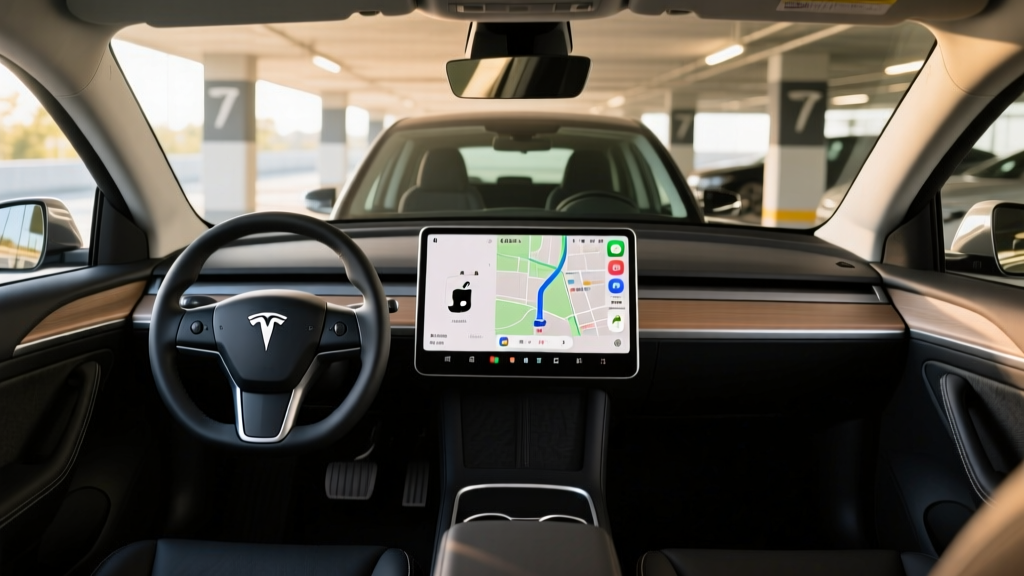
The 17-inch center touchscreen runs Tesla's latest software with Netflix/YouTube streaming (while parked), a solid navigation system, and over-the-air updates. Build quality has improved significantly since the 2022 refresh, with better panel gaps and materials, though it still trails the BMW iX and Mercedes EQS SUV in perceived luxury.
Pricing, Tax Credits, and Total Cost
| Trim | Base MSRP | Federal Tax Credit (§30D) | Effective Price |
|---|---|---|---|
| Long Range | $79,990 | $0 (exceeds MSRP cap) | $79,990 |
| Plaid | $94,990 | $0 (exceeds MSRP cap) | $94,990 |
Critical tax credit note: The Tesla Model X does not qualify for the $7,500 federal EV tax credit under IRS §30D rules. The credit applies only to SUVs with an MSRP at or below $80,000, and while the Long Range barely squeaks under at $79,990, any factory options (paint color upgrades, 22-inch wheels, six-seat interior, FSD capability) push the sticker above the cap. Additionally, buyer income limits apply ($300,000 joint / $150,000 single for new vehicles), and battery critical-mineral sourcing requirements must be met. Always verify current eligibility at IRS.gov and consult a tax professional before relying on credit assumptions.
Destination fees, paint upgrades ($1,500–$2,500), and FSD ($8,000 one-time or $99/month subscription) can add $3,000–$13,000 to the final price. A realistically equipped Long Range with common options lands around $84,000–$87,000 before any state incentives.
5-year ownership estimate (Long Range, 15,000 mi/yr):
- Electricity: ~$4,200 (at $0.14/kWh national average, mixed home/public charging)
- Maintenance: ~$1,800 (no oil changes; cabin filters, wiper fluid, tire rotations)
- Tires: ~$3,600 (two sets over 5 years given weight-related wear)
- Insurance: ~$14,000–$18,000 (EV insurance premiums run 15–25% higher than comparable ICE vehicles)
- Estimated depreciation: ~$28,000–$35,000 over 5 years
Pros and Cons
Pros
- Class-leading Supercharger network access
- 348-mile EPA range (Long Range)
- Supercar acceleration (2.5s Plaid)
- Falcon Wing doors aid car-seat loading
- 5,000-lb towing capacity
- Over-the-air updates add features post-purchase
- Best-in-class software and infotainment
Cons
- No federal tax credit (MSRP cap)
- Heavy weight hurts efficiency and tire life
- Falcon Wing doors are slow and maintenance-prone
- Third row is cramped for adults
- Insurance premiums are high
- Interior luxury trails BMW iX and Mercedes EQS SUV
- 250 kW peak charge rate trails 800V competitors
Is the Tesla Model X Worth It vs. Competitors?
Choose the Model X if: You need three rows, want access to the Supercharger network for road trips, value blistering acceleration, and can accept the premium price and weight trade-offs. It remains the best electric family hauler for cross-country travel thanks to charging infrastructure.
Choose the BMW iX if: You prioritize interior luxury, don't need a third row, and want a more refined ride. The iX xDrive50 offers ~324 miles of range, a far more premium cabin, and a lower starting price — but relies on CCS charging networks (which are improving but still trail Tesla's).
Choose the Rivian R1S if: You need genuine off-road capability, a usable third row for adults, and want a more rugged, adventure-focused SUV. The R1S Max Pack offers 400+ miles of range but weighs nearly 7,000 lbs and starts above $90,000.
Choose the Kia EV9 if: You want three rows, a sub-$60,000 starting price, and don't mind a shorter ~270-mile range. The EV9 is the value play in this segment.
Warranty Coverage
Tesla provides solid but not class-leading warranty coverage:
- Basic vehicle: 4 years / 50,000 miles
- Battery & drive unit: 8 years / 150,000 miles (whichever comes first), with a minimum 70% capacity retention threshold
The 70% retention threshold is standard for the industry. If your battery drops below 70% capacity within the warranty period, Tesla will repair or replace it. In practice, Tesla's NMC packs degrade approximately 10–12% over the first 100,000 miles based on fleet data, meaning most owners will retain 85–90% capacity well beyond the warranty window. Avoid routinely charging to 100% (Tesla recommends 80–90% for daily use) to maximize long-term battery health.
For the complete safety record, check NHTSA ratings and IIHS test results.
Frequently Asked Questions
What is the real-world range of the Tesla Model X?
The EPA rates the Long Range at 348 miles and the Plaid at 326 miles. In real-world highway driving at 70–80 mph, expect 270–310 miles. In cold weather below freezing, plan for 220–260 miles due to battery chemistry limitations and cabin heating demands.
How fast does the Tesla Model X charge?
On a DC fast charger (Tesla Supercharger), the Model X peaks at 250 kW and charges from 10–80% in approximately 30 minutes with a preconditioned battery. At home on a Level 2 Wall Connector (11.5 kW), a full charge takes about 9 hours, adding roughly 34 miles of range per hour.
Does the Tesla Model X qualify for the federal EV tax credit?
Generally, no. Under current IRS §30D rules, new SUVs must have an MSRP at or below $80,000 to qualify for the $7,500 credit. The Model X Long Range starts at $79,990, but any factory options push it above the cap. Buyer income limits ($300,000 joint / $150,000 single) and battery sourcing requirements also apply. Verify at IRS.gov and consult a tax professional.
Is the Tesla Model X worth buying in 2026?
If you need a three-row electric SUV with the best charging network for road trips, the Model X remains compelling despite its weight, price, and lack of federal tax credit. However, the BMW iX offers more luxury for less money (two rows), the Rivian R1S is better for off-road and adult-sized third rows, and the Kia EV9 delivers three rows at a dramatically lower price. Your decision hinges on how much you value Supercharger access and Tesla's software ecosystem.
What are the biggest drawbacks of the Model X?
Weight-related tire wear, no federal tax credit eligibility, Falcon Wing door complexity and maintenance cost, a cramped third row, and a 250 kW peak charge rate that trails 800V competitors (like the Hyundai Ioniq 9 and Kia EV9, which charge at 350 kW). Insurance costs are also notably high.
How much does it cost to charge a Tesla Model X at home?
At the national average electricity rate of $0.14/kWh, fully charging the ~100 kWh battery costs approximately $14. That's roughly $0.04–$0.05 per mile — about one-third the fuel cost of a comparable gas SUV getting 20 MPG at $3.50/gallon. Over 15,000 miles per year, home charging saves approximately $1,800–$2,200 versus gasoline.