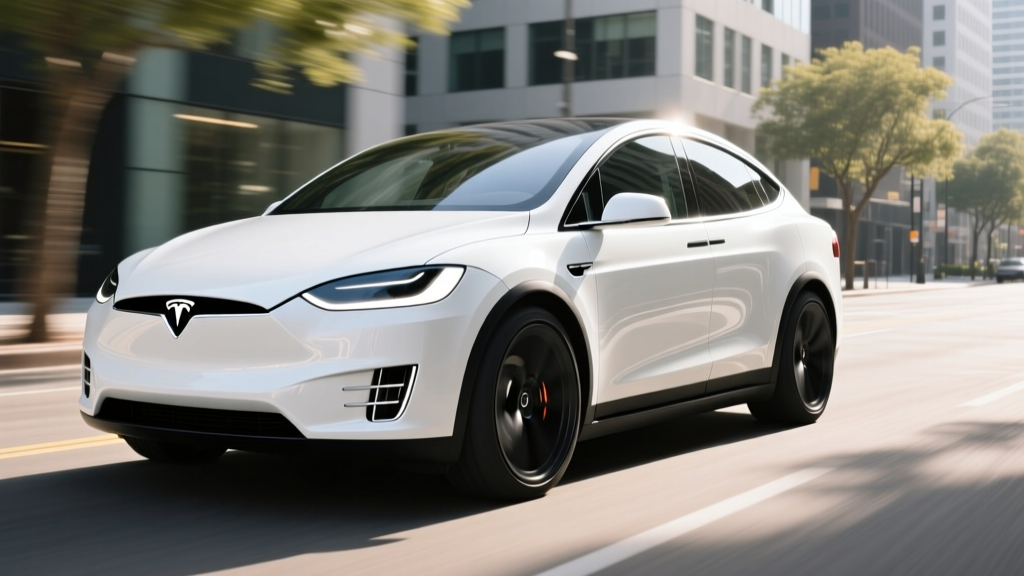
The Tesla Model X has always occupied a unique space in the EV market: a three-row, falcon-wing-doored electric SUV that can outrun most sports cars while carrying seven passengers. But all that capability comes with substantial mass. If you've been searching for exactly how much a Model X weighs — and what that weight means for range, efficiency, tire wear, and daily driving — this deep-dive review covers every number that matters.
We've driven, charged, and analyzed the Model X across multiple model years. Below, you'll find the 2026 Tesla Model X curb weight broken down by trim, along with the full ownership picture: real-world range, DC fast-charging curves, Level 2 home charging, battery chemistry, tax-credit eligibility, and how it stacks up against rivals like the Rivian R1S and BMW iX.
Tesla Model X Weight: Curb Weight by Trim and Configuration
The 2026 Tesla Model X is one of the heaviest mainstream electric SUVs on the market. That mass comes from its large battery pack, dual- or tri-motor all-wheel-drive system, aluminum-and-steel body structure, and the complex hardware behind those signature Falcon Wing rear doors.
| Trim | Drivetrain | Curb Weight (lbs) | GVWR (lbs) |
|---|---|---|---|
| Model X Long Range (Dual Motor AWD) | Dual Motor AWD | 5,185 | 6,800 |
| Model X Plaid (Tri Motor AWD) | Tri Motor AWD | 5,390 | 6,800 |
| Model X Long Range (6-seat interior) | Dual Motor AWD | 5,185 | 6,800 |
| Model X Plaid (6-seat interior) | Tri Motor AWD | 5,390 | 6,800 |
For context, that puts the Model X roughly 400–600 lbs heavier than the Rivian R1S Dual Motor (~4,800 lbs) and about 700 lbs heavier than the BMW iX xDrive50 (~4,700 lbs). The weight penalty is the trade-off for the Model X's larger 100 kWh battery, standard AWD, and three-row seating capacity.
Why weight matters for EVs: Heavier vehicles consume more energy per mile, especially in stop-and-go city driving and at sustained highway speeds above 70 mph. Regenerative braking partially offsets this in urban conditions by recovering kinetic energy, but on the highway, the Model X's mass directly reduces efficiency compared to lighter competitors.
EPA Range and Real-World Efficiency
Tesla offers the Model X in two powertrain configurations, each with different EPA range ratings. But as any experienced EV owner knows, the EPA sticker is a starting point — not a guarantee.
| Trim | EPA Range (mi) | Battery (kWh usable) | MPGe (combined) | kWh/100 mi |
|---|---|---|---|---|
| Long Range AWD | 335 | ~100 (NMC) | 102 | 33 |
| Plaid AWD | 311 | ~100 (NMC) | 96 | 35 |
The Model X uses an NMC (nickel manganese cobalt) lithium-ion battery pack. NMC chemistry offers higher energy density than LFP (lithium iron phosphate), which is why Tesla reserves it for long-range and performance models. The trade-off: NMC batteries are more sensitive to sustained high states of charge. Tesla recommends daily charging to 80–90% and saving 100% for road trips to maximize long-term battery health.
According to fueleconomy.gov, the Long Range AWD achieves 102 MPGe combined (33 kWh/100 mi), while the Plaid dips to 96 MPGe (35 kWh/100 mi). The extra weight and power of the tri-motor setup accounts for the efficiency gap.
Charging Speed: DC Fast Charging and Home Level 2
Charging a 5,000+ lb SUV with a 100 kWh battery demands serious infrastructure. Here's exactly what the Model X supports at every charging level.
| Charging Level | Max Power (kW) | Speed (mi/hr added) | 10–80% Time |
|---|---|---|---|
| Level 1 (120V household) | ~1.4 kW | ~3–4 mi/hr | N/A (not practical) |
| Level 2 (240V, 48A Wall Connector) | 11.5 kW | ~30–34 mi/hr | ~8–9 hours (0–100%) |
| DC Fast Charge (Tesla Supercharger V4) | 250 kW (peak) | ~175 mi/hr (peak) | ~30 minutes |
Charging curve reality: The Model X peaks at 250 kW on Tesla V3 and V4 Superchargers, but that peak only holds between roughly 10–30% state of charge. From 30–60%, expect sustained rates around 150–180 kW. Above 80%, charging slows dramatically to protect battery health — often dropping below 50 kW. This is why the 10–80% time (~30 minutes) is the most useful metric; a full 0–100% DC charge takes considerably longer.
Preconditioning matters: Navigate to a Supercharger using the car's built-in navigation, and the Model X will automatically warm the battery to optimal charging temperature before you arrive. In cold weather, preconditioning can shave 10–15 minutes off your charging session by enabling faster charge acceptance from the start.
At home, Tesla's Gen 3 Wall Connector delivers up to 11.5 kW (48 amps) on a 60-amp circuit, adding roughly 30–34 miles of range per hour. An overnight charge (8–10 hours) easily replenishes a full day's driving for most owners. Installation typically costs $800–$2,000 depending on your electrical panel capacity and run distance — budget extra if you need a 200-amp panel upgrade.
Performance: 0–60, Horsepower, and Drivetrain
The Model X's weight is offset by extraordinary powertrain output. Both trims come standard with all-wheel drive, but the motor configurations are vastly different.
| Trim | Horsepower | 0–60 mph | Top Speed | Towing Capacity |
|---|---|---|---|---|
| Long Range (Dual Motor) | 670 hp | 3.8 sec | 155 mph | 5,000 lbs |
| Plaid (Tri Motor) | 1,020 hp | 2.5 sec | 163 mph | 5,000 lbs |
The Long Range's 3.8-second 0–60 time already outpaces most V8-powered SUVs. The Plaid's 2.5-second sprint is hypercar territory in a vehicle that seats up to seven and has a 5,000-lb tow rating. That performance comes at the cost of some efficiency (the Plaid's 24-mile range deficit) and higher tire wear — expect to replace tires every 20,000–30,000 miles given the combination of instant torque and 5,390 lbs of curb weight.
Both trims feature adaptive air suspension with automatic ride-height adjustment, which helps manage the vehicle's mass through corners and provides up to 8 inches of ground clearance for light off-road situations or steep driveways.
Cargo, Passenger Space, and Interior Practicality
The Model X offers five-, six-, and seven-seat configurations. The six-seat layout with second-row captain's chairs is the most popular for families, offering walk-through access to the third row.
| Measurement | Specification |
|---|---|
| Cargo (behind 3rd row) | ~15 cu ft |
| Cargo (3rd row folded) | ~42 cu ft |
| Cargo (all rear seats folded) | ~82 cu ft |
| Front trunk (frunk) | ~6 cu ft |
| 1st-row legroom | 41.2 in |
| 2nd-row legroom | 38.4 in |
| 3rd-row legroom | 32.7 in |
The third row is best suited for children or short trips — adults will find the 32.7 inches of legroom tight on longer drives. Cargo space behind the third row (15 cu ft) is adequate for a few grocery bags but limited for road trips with seven passengers. Fold the third row, and the 42 cu ft opening is generous, aided by the massive hatch and low load floor.
The Falcon Wing rear doors are the Model X's most polarizing feature. They open upward with dual-hinge articulation, providing excellent access to second- and third-row car seats in tight parking spaces. However, they require overhead clearance (about 12 inches laterally) and can be slow to operate in rain compared to conventional doors. Ultrasonic sensors detect obstacles and adjust the door arc accordingly.
Pricing, Trim Levels, and Federal Tax Credit Eligibility
The Model X is Tesla's premium SUV, and pricing reflects that positioning. Here's the current lineup:
| Trim | Base MSRP | As-Tested (typical options) |
|---|---|---|
| Long Range AWD (5-seat) | $79,990 | $84,000–$88,000 |
| Plaid AWD (5-seat) | $94,990 | $99,000–$104,000 |
| 6-seat interior upgrade | +$6,500 | |
| 7-seat interior | +$3,500 | |
| Full Self-Driving (Supervised) | +$8,000 | |
Does the Model X qualify? Under current IRS rules, the Model X faces significant hurdles:
- MSRP cap: SUVs must be priced at or below $80,000 to qualify. The Long Range at $79,990 technically clears this threshold, but adding any options (including the 6-seat upgrade at $6,500) pushes it above the cap.
- Income cap: Buyer AGI must not exceed $300,000 (joint), $225,000 (head of household), or $150,000 (single).
- Battery sourcing: Critical minerals and battery component requirements must be met. Tesla's supply chain has been evolving, and eligibility can shift. Always verify on irs.gov before purchasing.
- Point-of-sale transfer: If eligible, the credit can be applied at purchase to reduce the out-of-pocket price.
Driver Assistance, Tech, and Standout Features
Every Model X comes with Tesla's Autopilot suite, which includes adaptive cruise control, lane-keeping assist, automatic emergency braking, and blind-spot monitoring. This is an SAE Level 2 driver-assistance system — you must keep your hands on the wheel and eyes on the road at all times.
FSD (Supervised) adds automatic lane changes, Navigate on Autopilot (highway on/off-ramp handling), traffic light and stop sign recognition, and enhanced city-street driving. At $8,000, it remains a premium add-on that improves incrementally via over-the-air updates but does not eliminate the need for active driver supervision.
The 17-inch center touchscreen runs Tesla's proprietary infotainment system with built-in navigation, streaming apps (Netflix, YouTube, Spotify), and a gaming platform that rivals some consoles. A second 8-inch screen serves rear passengers for climate control and entertainment. The 22-speaker audio system with active noise cancellation is one of the best in any SUV.
Notable drawbacks: The yoke steering wheel (now optional alongside a traditional round wheel) takes adaptation, particularly for low-speed parking maneuvers. There are no physical buttons for climate or audio — everything routes through the touchscreen. Build quality has improved significantly since the 2022 refresh, but panel-gap consistency still trails BMW and Mercedes-Benz competitors.
Warranty Coverage
| Coverage Area | Term |
|---|---|
| Basic Vehicle | 4 years / 50,000 miles |
| Battery & Drive Unit | 8 years / 150,000 miles |
| Battery capacity retention | Minimum 70% over warranty period |
Tesla's 8-year/150,000-mile battery and drive unit warranty is competitive with the industry standard. The 70% capacity retention threshold means Tesla will repair or replace the battery if it degrades below that level within the warranty window. Real-world data from long-term Tesla owners suggests typical degradation of 10–15% over 100,000 miles for NMC packs, meaning most owners will not approach the warranty threshold under normal use.
Pros and Cons
Pros
- Class-leading performance (2.5s 0–60 in Plaid)
- Access to Tesla Supercharger network (17,000+ stalls in North America)
- Falcon Wing doors ease car-seat access in tight spaces
- Over-the-air updates continuously add features
- 5,000-lb tow rating with integrated trailer brake controller
- 335-mile EPA range (Long Range) covers most road trips with one stop
Cons
- 5,185–5,390 lb curb weight hurts efficiency and tire longevity
- Most buyers won't qualify for the $7,500 federal tax credit
- Third row is cramped for adults on long trips
- Falcon Wing doors need overhead clearance and are slow in rain
- No Apple CarPlay or Android Auto support
- $80,000+ starting price with limited credit offset
How the Model X Compares to Key Competitors
The three-row electric SUV segment has grown considerably. Here's how the Model X stacks up on the metrics that matter most:
| Spec | Tesla Model X LR | Rivian R1S Dual Max | Kia EV9 GT-Line AWD |
|---|---|---|---|
| Curb Weight | 5,185 lbs | ~6,900 lbs | ~5,100 lbs |
| EPA Range | 335 mi | ~410 mi | 270 mi |
| 0–60 mph | 3.8 sec | ~4.5 sec | 4.9 sec |
| Max DC Charge | 250 kW | 220 kW | 210 kW |
| Base MSRP | $79,990 | $84,900 | $73,900 |
| Third Row | Tight | Comfortable | Moderate |
The Model X wins on performance and charging infrastructure. The Rivian R1S offers superior off-road capability and a more usable third row but weighs significantly more. The Kia EV9 undercuts on price and may qualify for the federal tax credit more easily, but gives up substantial range.
Who Should Buy the Tesla Model X?
- Choose the Model X if: You want a three-row electric SUV with best-in-class acceleration, access to the Supercharger network for road trips, and don't need a spacious adult-friendly third row. The Plaid is ideal for performance enthusiasts who also need family utility.
- Choose the Rivian R1S if: You prioritize off-road capability, a more practical third row for adults, and adventure-oriented design — and can accept the higher weight and price.
- Choose the Kia EV9 if: Budget is a primary concern, you want to maximize federal tax credit eligibility, and your daily driving stays within 200 miles with occasional longer trips.
The Model X is best suited for performance-oriented families who regularly take road trips and value the reliability and coverage of Tesla's Supercharger network. It's also a strong pick for tech-forward commuters who want the latest over-the-air features and don't mind the premium price. If your priority is maximum cargo space, a usable adult third row, or qualifying for the federal tax credit, competitors may serve you better.
Frequently Asked Questions
What is the real-world range of the Tesla Model X?
The EPA rates the Long Range at 335 miles and the Plaid at 311 miles. In real-world highway driving at 70–75 mph, expect 270–290 miles (Long Range) and 250–270 miles (Plaid). Cold weather below freezing can reduce range by 25–30%, dropping the Long Range to roughly 220–250 miles. City driving with regenerative braking often matches or slightly exceeds EPA estimates.
How fast does the Model X charge?
On a Tesla V3 or V4 Supercharger, the Model X peaks at 250 kW and charges from 10–80% in approximately 30 minutes. At home on a Level 2 Wall Connector (11.5 kW / 48A), a full charge takes about 8–9 hours, adding roughly 30–34 miles of range per hour. Always use the car's navigation to route to a Supercharger — this triggers battery preconditioning for faster charge acceptance.
How much does the Model X cost after tax credits?
The Long Range starts at $79,990 and the Plaid at $94,990. Under current IRS §30D rules, the Long Range technically falls under the $80,000 SUV MSRP cap, but adding options (6-seat interior, FSD) pushes it above. Most Model X buyers exceed the income cap ($300,000 joint AGI) or push past the MSRP limit with options. Consult a tax professional and check irs.gov for current eligibility before counting on the credit.
Does the Tesla Model X qualify for the federal EV tax credit?
It's complicated. The base Long Range at $79,990 technically meets the $80,000 SUV MSRP cap, but buyer income must be below $300,000 (joint) and battery sourcing requirements must be satisfied. Any factory options push the price above the cap. The Plaid at $94,990 exceeds the MSRP cap entirely. Verify current rules on irs.gov before purchasing — eligibility criteria have changed multiple times since 2023.
Is the Model X worth buying versus the Rivian R1S or Kia EV9?
It depends on your priorities. The Model X wins on raw performance (3.8s or 2.5s 0–60), Supercharger network access, and over-the-air feature updates. The Rivian R1S offers a better third row, genuine off-road capability, and more cargo versatility. The Kia EV9 is significantly cheaper and more likely to qualify for the $7,500 tax credit. Test-drive all three — the Falcon Wing doors and touchscreen-only interface are love-it-or-leave-it features that are best experienced in person.
How much does a Tesla Model X weigh compared to other EVs?
At 5,185 lbs (Long Range) and 5,390 lbs (Plaid), the Model X is heavier than the BMW iX (~4,700 lbs) and Kia EV9 (~5,100 lbs) but lighter than the Rivian R1S (~6,900 lbs). The weight contributes to higher energy consumption (33–35 kWh/100 mi) and accelerated tire wear but also provides a planted, stable ride at highway speeds and excellent crash-test mass.