Quick Verdict: The Model X Warranty and Ownership Picture for 2026
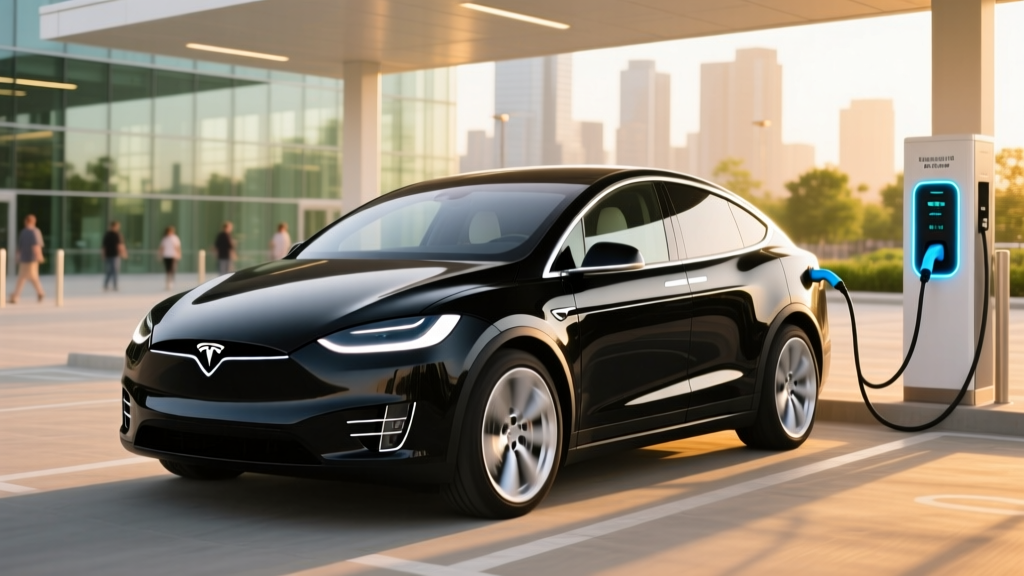
If you're researching the Tesla Model X warranty before signing a six-figure purchase agreement, you're asking the right question. The Model X remains one of the most capable electric SUVs on the market—offering up to 335 miles of EPA-estimated range, falcon-wing rear doors, and a 5,000-lb towing capacity. But at its price point, understanding exactly what Tesla covers, what it doesn't, and what real-world ownership costs look like is essential before committing.
This guide breaks down the 2026 Model X warranty structure in detail—battery, drive unit, and limited vehicle coverage—alongside the range, charging, performance, and pricing data you need to make an informed decision. We'll also address the federal tax credit situation, because at this MSRP, eligibility is far from guaranteed.
2026 Tesla Model X Specifications at a Glance
| Spec | Long Range AWD | Plaid (Tri-Motor AWD) |
|---|---|---|
| Base MSRP | $79,990 | $94,990 |
| EPA Range | 335 mi | 326 mi |
| Battery (usable) | ~100 kWh (NMC) | ~100 kWh (NMC) |
| Drivetrain | Dual-Motor AWD | Tri-Motor AWD |
| Horsepower | 670 hp | 1,020 hp |
| 0–60 mph | 3.8 sec | 2.5 sec |
| Peak DC Charge Rate | 250 kW | 250 kW |
| 10–80% DC Charge | ~30 min | ~30 min |
| Level 2 Rate (48A) | ~11.5 kW / 36 mi/hr | ~11.5 kW / 36 mi/hr |
| MPGe (combined) | 103 MPGe | 98 MPGe |
| Efficiency | 33 kWh/100 mi | 35 kWh/100 mi |
| Cargo (behind 3rd row) | 15.3 cu ft | 15.3 cu ft |
| Cargo (max, seats folded) | 83.1 cu ft | 83.1 cu ft |
| Towing Capacity | 5,000 lbs | 5,000 lbs |
| Seating | 5, 6, or 7 passengers | 5, 6, or 7 passengers |
Sources: fueleconomy.gov, Tesla.com 2026 Model X specs. Prices reflect destination charge. Specs subject to change by model year.
Tesla Model X Warranty: What's Covered and for How Long
The Tesla Model X warranty is split into three distinct coverage areas. Understanding each is critical, because the battery and drive unit warranty operates under different terms than the bumper-to-bumper coverage.
Basic Vehicle Limited Warranty (Bumper-to-Bumper)
Tesla covers the Model X with a 4-year / 50,000-mile basic limited warranty, whichever comes first. This covers most vehicle components including the touchscreen, HVAC system, power windows, suspension components, falcon-wing door mechanisms, and interior trim. It does not cover wear items like tires, brake pads, or wiper blades.
Battery and Drive Unit Warranty
This is the coverage most buyers care about. The Model X battery pack and drive unit(s) are covered for 8 years / 150,000 miles, whichever comes first. Tesla guarantees the battery will retain a minimum of 70% of its original capacity over that period. If degradation exceeds 30% within the warranty window, Tesla will repair or replace the battery to bring it back above that threshold.
Key details on the battery warranty:
- Chemistry: The Model X uses an NMC (nickel manganese cobalt) lithium-ion battery pack. NMC offers higher energy density than LFP but is more sensitive to sustained high state-of-charge. Tesla recommends daily charging to 80–90% for longevity.
- Capacity threshold: 70% retention. This is consistent with most industry warranties (Hyundai, Kia, and VW also use 70%).
- Transferability: The battery and drive unit warranty transfers to subsequent owners at no cost, which supports resale value.
- What voids it: Modifications to the battery or drivetrain, salvage title, use of the vehicle as a stationary power source outside Tesla-approved V2H/V2G configurations.
Restraint System Warranty
Seatbelts and airbag systems carry a separate 5-year / 60,000-mile warranty.
Real-World Range: What to Actually Expect
EPA Estimate: 335 miles (Long Range) / 326 miles (Plaid)
Real-World Highway (70–75 mph): ~260–290 miles
Real-World Mixed Commuting: ~290–320 miles
Cold Weather (below 32°F): ~220–270 miles (20–30% reduction)
With Towing (loaded trailer): ~160–200 miles
The EPA range figure assumes a mix of 55% city and 45% highway driving at moderate temperatures. In practice, the Model X's large frontal area and ~5,100-lb curb weight work against it at sustained highway speeds. Expect efficiency to drop to roughly 36–40 kWh/100 mi at 75 mph on flat terrain.
Cold weather compounds this. NMC chemistry loses performance in freezing temperatures, and while the Model X includes a heat pump for cabin and battery thermal management, preconditioning the battery draws from the pack if you're not plugged in. Always precondition while connected to your home charger to preserve range.
For road trips, plan around 250–270 miles of usable range between stops to keep state-of-charge above 10% and avoid the steepest part of the charge-curve taper above 80%.
Charging Speeds: DC Fast, Home Level 2, and Level 1
| Charging Level | Power | Speed (miles added) | Typical Use Case |
|---|---|---|---|
| Level 1 (120V, 12A) | ~1.4 kW | ~4–5 mi/hr | Emergency / overnight trickle |
| Level 2 (240V, 48A) | ~11.5 kW | ~36 mi/hr | Home daily charging (Wall Connector) |
| Level 2 (240V, 32A mobile) | ~7.7 kW | ~24 mi/hr | Portable connector / destination |
| DC Fast (Tesla Supercharger V3/V4) | Peak 250 kW | ~175 mi in 15 min | Road trips |
| DC Fast (CCS adapter, non-Tesla) | Peak ~150–250 kW | Varies by station | Electrify America, etc. |
The Model X peaks at 250 kW on V3 and V4 Tesla Superchargers, but like all EVs, it doesn't sustain that rate. The charge curve tapers progressively: you'll see ~250 kW from roughly 10–30% SoC, dropping to ~120 kW by 50%, and ~50 kW by 80%. A 10–80% session takes approximately 30 minutes under ideal thermal conditions.
Preconditioning matters. Navigate to a Supercharger using the car's built-in navigation, and the battery will preheat to optimal temperature before arrival. Skip this step (or use a third-party app to start charging) and your peak rate may be 100–150 kW, adding 10–15 minutes to your stop.
For home charging, the Tesla Wall Connector on a 60-amp circuit (48A continuous) delivers roughly 36 miles of range per hour. A full overnight charge from 20% to 90% takes about 7–8 hours—plenty for daily use. Installation typically costs $800–$2,500 depending on panel proximity and local permit requirements. Budget for a possible $1,500–$3,000 panel upgrade if your home still has a 100-amp service panel.
Pricing, Trims, and Federal Tax Credit Eligibility
| Trim | MSRP (incl. destination) | §30D Federal Credit | Effective Price |
|---|---|---|---|
| Long Range AWD | $79,990 | $0 (MSRP cap exceeded) | $79,990 |
| Plaid Tri-Motor AWD | $94,990 | $0 (MSRP cap exceeded) | $94,990 |
Tax credit reality check: The Model X does not qualify for the $7,500 federal EV tax credit under IRS §30D rules. The law caps eligible SUVs at an MSRP of $80,000. The Long Range trim starts at $79,990, which includes the destination charge—but any single option (paint color, wheels, FSD, tow package) pushes it over the threshold. In practice, virtually no Model X configuration qualifies.
Additionally, §30D has buyer income caps ($300,000 joint / $150,000 single filer modified AGI) and battery critical-mineral sourcing requirements that change annually. Even if you could spec a Model X under $80,000, you'd need to verify the specific VIN's battery sourcing on fueleconomy.gov before counting on the credit.
For buyers in states with additional incentives (California's CVRP, Colorado's innovative motor vehicle credit, etc.), check your state's energy office for current programs. Some states offer rebates that aren't subject to the federal MSRP cap.
Performance, Tech, and Interior Practicality
Performance
The Long Range Model X delivers 670 hp and a 3.8-second 0–60 mph time—quick by any measure for a three-row SUV. The Plaid's tri-motor setup produces 1,020 hp and a 2.5-second sprint, placing it in supercar territory despite its 5,100+ lb weight. Both trims use Tesla's adaptive air suspension, which adjusts ride height for efficiency at speed and raises for rough roads or loading.
Interior and Cargo
The Model X offers three seating configurations: 5-seat (two rows), 6-seat (captain's chairs in row two), and 7-seat (bench + third row). Third-row legroom is tight at 32.7 inches—best for children or short trips. Cargo behind the third row is 15.3 cu ft, expanding to 83.1 cu ft with both rear rows folded. The front trunk (frunk) adds roughly 6.5 cu ft for charging cables or a small bag.
The 17-inch center touchscreen runs Tesla's latest software with navigation, streaming, and gaming. A rear 8-inch screen controls climate and entertainment for second-row passengers. Build quality has improved significantly since the 2022 refresh, though panel gaps and interior material quality still draw mixed reviews compared to rivals like the BMW iX or Mercedes EQS SUV.
Driver Assistance
Every Model X includes Tesla Autopilot (adaptive cruise + lane centering). Full Self-Driving (Supervised) is a $8,000 option that adds automatic lane changes, traffic-light recognition, and city-street navigation. Important: FSD (Supervised) is an SAE Level 2 system—it requires continuous driver attention and hands-on-wheel supervision at all times. It is not autonomous driving.
Pros, Cons, and Who the Model X Is For
- 335-mi EPA range is class-leading for a 3-row EV SUV
- 250 kW Supercharger access with reliable Tesla network
- Falcon-wing doors ease car-seat loading in tight spaces
- 5,000-lb towing covers most boat/trailer needs
- Over-the-air updates continuously add features
- 8-yr/150,000-mi battery warranty with 70% retention guarantee
- $80K+ MSRP eliminates federal tax credit eligibility
- Third row is cramped for adults
- Build quality inconsistency vs. German luxury rivals
- Falcon-wing doors can be slow and problematic in heavy rain/snow
- No Apple CarPlay / Android Auto
- Insurance premiums are among the highest in the EV segment
Who Should Buy the Model X
Ideal buyer: A family needing three rows, strong range for road trips, and access to the Supercharger network—without wanting to step up to a full-size electric truck or SUV like the Rivian R1S or Cadillac Escalade IQ. The Model X works well for school runs, weekend towing, and cross-country drives where charging infrastructure reliability matters.
Consider alternatives if: You don't need a third row (the Model Y or BMW iX offer better value), you want a more luxurious interior (Mercedes EQS SUV, Audi Q8 e-tron), or you need the federal tax credit to make the math work (the Rivian R1S Dual-Motor can be spec'd under $80K with the right configuration).
Frequently Asked Questions
What is the real-world range of the 2026 Tesla Model X?
The EPA rates the Long Range at 335 miles and the Plaid at 326 miles. In real-world highway driving at 70–75 mph, expect 260–290 miles. In cold weather below freezing, plan for 220–270 miles. Always precondition the battery for best efficiency.
How fast does the Model X charge at home and on road trips?
On a home Level 2 Tesla Wall Connector (48A / 11.5 kW), the Model X gains about 36 miles of range per hour, fully replenishing overnight. On a V3/V4 Supercharger, it peaks at 250 kW, adding roughly 175 miles in 15 minutes. A 10–80% session takes about 30 minutes.
Does the 2026 Model X qualify for the $7,500 federal EV tax credit?
Effectively, no. The IRS §30D credit caps eligible SUVs at $80,000 MSRP. The Long Range starts at $79,990 including destination, but any factory option pushes it over the cap. Verify specific VIN eligibility on fueleconomy.gov, but plan your budget without assuming the credit.
What does the Tesla Model X battery warranty actually cover?
Tesla covers the battery and drive unit for 8 years or 150,000 miles (whichever comes first), guaranteeing at least 70% capacity retention. If degradation exceeds 30%, Tesla repairs or replaces the pack. The warranty transfers to subsequent owners.
Is the Model X worth buying over the Rivian R1S or BMW iX?
It depends on priorities. Choose the Model X if you need Supercharger network reliability, falcon-wing convenience, and the longest range in a three-row EV. Choose the Rivian R1S for off-road capability and potential tax-credit eligibility. Choose the BMW iX (two-row only) for superior interior luxury and build quality.
How much does it cost to insure a Model X?
Insurance premiums for the Model X are among the highest in the EV segment, averaging $3,500–$5,000+ annually depending on your location, driving record, and coverage level. Tesla offers its own insurance product in many states, which uses real-time driving data to set rates. Get quotes from multiple carriers before purchasing.
For the latest Model X specs and warranty terms, consult Tesla's official configurator. Tax credit rules are subject to change—verify current eligibility at IRS.gov.