Quick Verdict: The Model X in 2026
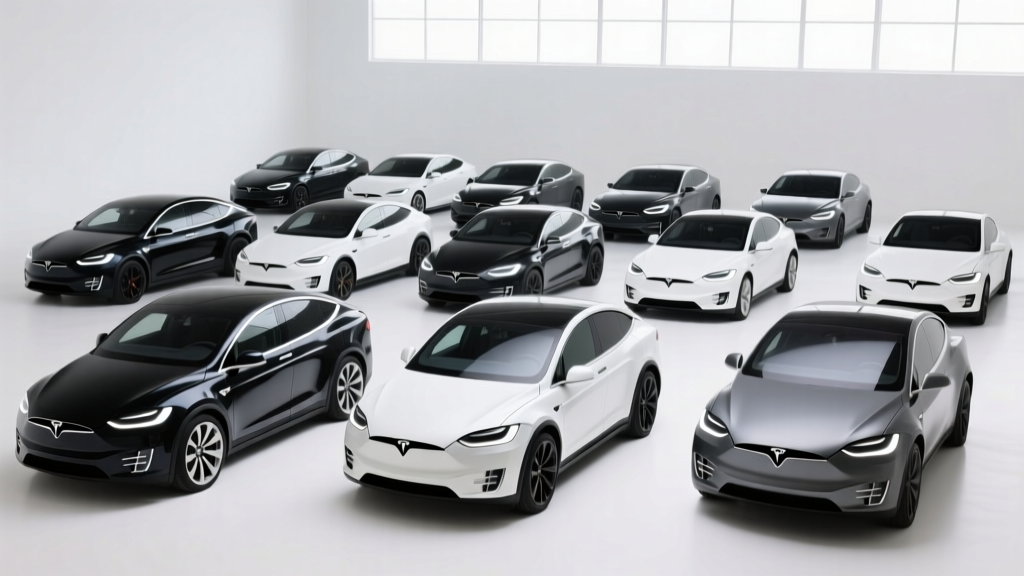
The Tesla Model X enters 2026 as the only electric SUV that pairs falcon-wing rear doors with a 348-mile EPA range and access to Tesla's 250 kW Supercharger network. It remains one of the most capable three-row electric vehicles on the market, competing against the Rivian R1S, BMW iX, and the upcoming Mercedes EQS SUV refresh. After multiple trim and battery updates since the 2021 "Palladium" refresh, buyers now face a lineup that can feel like 17 Tesla Model X possible configurations when you count wheel options, paint, interior layouts (5-, 6-, and 7-seat), and the dual-motor versus tri-motor Plaid powertrain split.
This guide cuts through that complexity. We'll walk through the exact specs that matter — real-world range, charging curves, tax credit eligibility under current IRS §30D rules, and who should actually buy one versus cross-shopping the Rivian R1S or BMW iX xDrive50.
| Spec | Long Range (Dual Motor) | Plaid (Tri Motor) |
|---|---|---|
| EPA Range | 348 mi | 326 mi |
| Battery (usable) | ~100 kWh (NMC) | ~100 kWh (NMC) |
| Drivetrain | Dual-Motor AWD | Tri-Motor AWD |
| Horsepower | 670 hp | 1,020 hp |
| 0–60 mph | 3.8 sec | 2.5 sec |
| Peak DC Charge Rate | 250 kW | 250 kW |
| 10–80% DC Time | ~30 min | ~30 min |
| Level 2 (11.5 kW) | ~34 mi/hr | ~34 mi/hr |
| MPGe (combined) | 102 MPGe | 98 MPGe |
| kWh/100 mi | 33 | 34 |
| Towing Capacity | 5,000 lb | 5,000 lb |
| Base MSRP | $74,990 | $89,990 |
| Battery Warranty | 8 yr / 150,000 mi | 8 yr / 150,000 mi |
Source: fueleconomy.gov and Tesla's official order page. Specs reflect 2026 model year.
Range and Efficiency: EPA vs. Real World
The Long Range Model X carries an EPA-estimated 348 miles on a full charge, while the Plaid drops to 326 miles due to its higher-output tri-motor setup and stickier tire compound. Both use a roughly 100 kWh usable nickel-manganese-cobalt (NMC) battery pack — Tesla has not moved the Model X to lithium iron phosphate (LFP), which is reserved for the lower-cost Model 3 and Model Y RWD trims.
EPA 348 mi (Long Range) is a blended city/highway figure. Expect the following in practice:
- Highway cruising (70–75 mph, 65°F): ~280–300 mi
- City/suburban mixed driving: ~320–340 mi (regen braking helps)
- Cold weather (below 32°F, highway): ~230–260 mi — a 25–35% drop is typical for NMC packs without consistent preconditioning
- Towing (5,000 lb trailer): ~160–190 mi — cut your planning range in half
The Model X's heat pump is standard and helps cabin efficiency in winter, but the large, heavy SUV body and 5,185-lb curb weight work against it at highway speeds. Plan road trips around 250-mile legs to keep a comfortable buffer.
Charging: Supercharger Speeds and Home Setup
Tesla's 250 kW V3 Supercharger network remains the Model X's strongest ownership advantage. On a preconditioned battery (the car does this automatically when you navigate to a Supercharger), the Model X peaks near 250 kW between roughly 10–30% state of charge, then tapers progressively. The 10–80% session averages about 30 minutes — competitive with Hyundai's 800V E-GMP platform, though Hyundai's Ioniq 9 and Kia EV9 sustain peak power slightly longer due to their higher-voltage architecture.
| Charging Level | Power | Miles Added per Hour | Typical Use Case |
|---|---|---|---|
| Level 1 (120V, 12A) | ~1.4 kW | ~3–4 mi/hr | Emergency trickle |
| Level 2 (240V, 48A) | 11.5 kW | ~34 mi/hr | Home overnight (Wall Connector) |
| DC Fast (V3 Supercharger) | Up to 250 kW | ~175 mi in 15 min | Road trips |
| DC Fast (V4 Supercharger) | Up to 250 kW* | ~175 mi in 15 min | Newer Tesla stations |
*The Model X is limited to 250 kW by its vehicle-side architecture; V4 posts capable of higher output do not benefit it.
Home charging setup: Tesla's Wall Connector at 48 amps on a 60-amp dedicated circuit delivers the full 11.5 kW. Expect to pay $600 for the hardware and $800–$2,200 for a licensed electrician to install a NEMA 14-50 or hardwired connection, depending on panel proximity and local permit fees. A full 0–100% charge at home takes roughly 9.5 hours — easily done overnight. If your panel is maxed at 100 amps, a $1,500–$3,000 panel upgrade to 200 amps may be required.
Performance and Driving Dynamics
The dual-motor Long Range Model X hits 0–60 mph in 3.8 seconds with 670 hp — already supercar territory for a three-row SUV. The Plaid's tri-motor setup (one front, two rear) pushes 1,020 hp and a 2.5-second 0–60 time, making it one of the quickest production vehicles ever sold. Both use a single-speed transmission with instantaneous torque delivery.
Driving dynamics are a mixed bag. The air suspension provides a comfortable highway ride and adjustable ground clearance (useful for light off-road or steep driveways), but the Model X's 5,185-lb weight is noticeable in corners. Body roll is well-controlled for its size, but the Rivian R1S with its quad-motor setup and lower center of gravity feels more planted on twisty roads. The Model X shines as a grand tourer — quiet, fast, and effortless at 80 mph with excellent straight-line stability.
Interior, Cargo, and Technology
The Model X offers three seating configurations: 5-seat (two rows), 6-seat (captain's chairs in row two), and 7-seat (bench in row two). Cargo volume behind the third row is 37.1 cu ft, expanding to 72.3 cu ft behind the second row and 85.7 cu ft with both rear rows folded. The front trunk (frunk) adds 6.6 cu ft — useful for charging cables and groceries.
Legroom is generous up front (41.2 inches) but third-row space is tight at 32.7 inches — adequate for children on short trips, not adults on long drives. The falcon-wing rear doors are genuinely practical in tight parking spaces (they articulate upward with ultrasonic sensors to avoid overhead obstacles), though they add weight and complexity to the body structure.
Tech highlights:
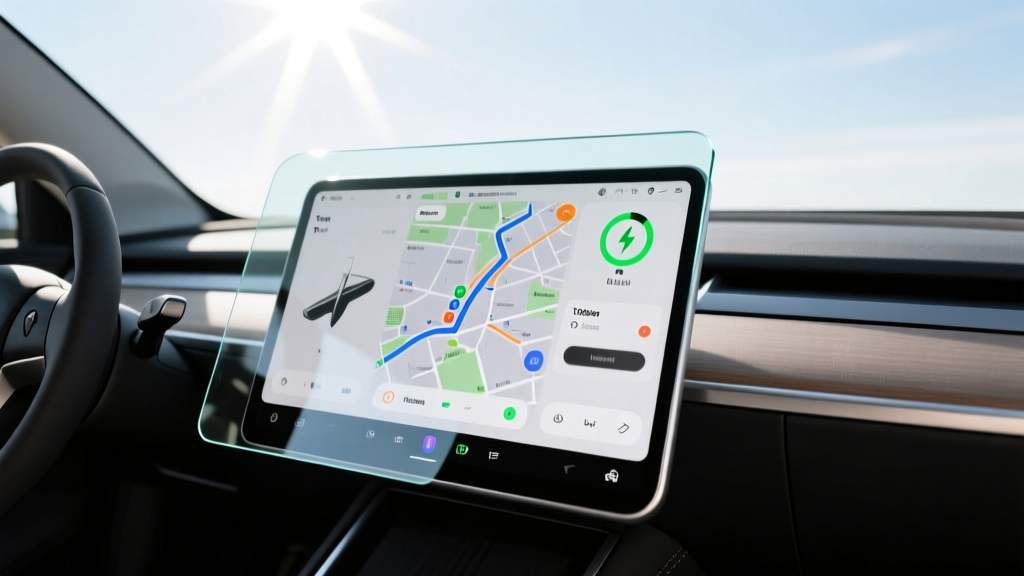
- 17-inch center touchscreen (tilt-adjustable) with Netflix, YouTube, and full gaming suite
- 22-speaker 960-watt audio system
- Second-row 8-inch touchscreen for climate and media
- Autopilot standard (SAE Level 2 lane-keeping and adaptive cruise)
- Full Self-Driving (Supervised) available as a $8,000 add-on or $99/month subscription — still Level 2, requires active driver engagement
- HEPA air filtration with "Bioweapon Defense Mode"
Autopilot and FSD (Supervised) are SAE Level 2 driver-assistance systems. They do NOT make the Model X self-driving. You must keep your hands on the wheel, eyes on the road, and remain prepared to take over instantly. Only Level 4 services like Waymo operate without a human driver, and those are geofenced robotaxis — not consumer vehicles.
Pricing, Trims, and Federal Tax Credit Eligibility
The 2026 Model X lineup starts at $74,990 for the Long Range dual-motor and $89,990 for the Plaid tri-motor. Options that move the needle include:
- 6-seat interior: +$6,500
- 7-seat interior: +$3,500
- FSD (Supervised): +$8,000
- 22-inch Turbine wheels: +$5,500 (reduces range to ~311 mi on Long Range)
- Premium paint (Ultra Red, Quicksilver): +$2,500–$3,000
A well-equipped Long Range with 6 seats and FSD typically lands around $89,490 before destination and taxes. The Plaid with comparable options crosses $105,000.
Here's where the Model X hits a wall for most buyers:
- MSRP cap: SUVs must be under $80,000 MSRP to qualify. The Long Range at $74,990 clears this; the Plaid at $89,990 does not.
- Income cap: Modified AGI must be ≤ $150,000 (single), ≤ $225,000 (head of household), ≤ $300,000 (married filing jointly).
- Battery sourcing: Critical minerals and battery components must meet escalating North American/free-trade-partner thresholds. Tesla's supply chain has improved, but verify your specific VIN's compliance at purchase.
- Point-of-sale transfer: Eligible buyers can apply the credit as a down-payment reduction at the dealer, rather than waiting for tax filing.
- Credit amount: Up to $7,500 if both critical-mineral and battery-component requirements are met; $3,750 if only one is met.
Verify eligibility with your tax professional and the IRS §30D guidance before purchasing. Rules are subject to legislative change.
| Configuration | Base MSRP | Max §30D Credit | Effective Price |
|---|---|---|---|
| Long Range (base) | $74,990 | $7,500* | ~$67,490 |
| Long Range + 6-seat + FSD | $89,490 | $0 (over cap) | $89,490 |
| Plaid (base) | $89,990 | $0 (over cap) | $89,990 |
*Only if buyer income and battery-sourcing requirements are fully met. Adding options that push MSRP above $80,000 eliminates eligibility entirely.
Ownership Costs and Warranty
Tesla covers the Model X with a 4-year/50,000-mile basic warranty and an 8-year/150,000-mile battery and drive unit warranty. The battery warranty guarantees at least 70% capacity retention over that period — if degradation exceeds 30%, Tesla replaces or repairs the pack. Real-world data from Tesla's fleet suggests average degradation of roughly 10–12% over the first 150,000 miles for NMC packs, though individual results vary with charging habits and climate.
Insurance costs are notably high for the Model X — expect $3,200–$4,800 annually depending on your state, driving record, and coverage level. This is roughly 40–60% more than a comparable BMW iX, driven by Tesla's proprietary repair network and expensive body panels (those falcon-wing doors are costly to replace).
On the savings side, electricity costs average $0.14/kWh nationally, making a full Model X charge roughly $14 for 348 miles — or about 4 cents per mile. A comparable gas SUV at 22 mpg and $3.50/gallon runs about 16 cents per mile. Over 15,000 miles annually, that's roughly $1,800 in fuel savings.
Pros, Cons, and Who Should Buy
- 348-mile EPA range (Long Range) is best-in-class for 3-row EV SUVs
- Access to Tesla's Supercharger network — still the most reliable DC fast-charging ecosystem
- Falcon-wing doors genuinely useful in tight parking
- Plaid's 2.5-second 0–60 is unmatched in the segment
- Over-the-air updates continuously add features
- 5,000-lb towing capacity
- Standard HEPA filtration and premium audio
- Third-row legroom (32.7 in) is tight for adults
- 250 kW peak charge rate is slower than 800V competitors (Hyundai/Kia/Porsche)
- Insurance premiums 40–60% above segment average
- Option packages quickly push MSRP past the $80K tax credit cap
- FSD (Supervised) remains Level 2 despite the "self-driving" name
- Interior material quality trails BMW iX and Mercedes EQS SUV
- Falcon-wing door mechanisms add long-term maintenance risk
- Choose the Model X Long Range if: You need 3 rows, prioritize real-world range and Supercharger access for road trips, and can keep your configuration under $80,000 MSRP for the tax credit.
- Choose the Model X Plaid if: Performance is a priority and budget is not a constraint — you're paying for 1,020 hp bragging rights and accept no tax credit.
- Choose the Rivian R1S instead if: You want better off-road capability, more rugged styling, and a quad-motor option. The R1S trails on range (~321 mi max) but leads on interior versatility and adventure use cases.
- Choose the BMW iX xDrive50 instead if: Interior luxury, quieter ride, and lower insurance costs matter more than maximum range. The iX offers ~324 mi EPA and a more traditional ownership experience.
Frequently Asked Questions
What is the real-world range of the 2026 Tesla Model X?
The Long Range Model X carries an EPA estimate of 348 miles, but expect 280–300 miles at highway speeds and 230–260 miles in cold weather. The Plaid drops to 326 miles EPA, with similar real-world reductions.
How fast does the Model X charge at home and on the road?
At home on a Level 2 Wall Connector (11.5 kW), the Model X adds about 34 miles of range per hour, reaching a full charge in roughly 9.5 hours. On a V3 Supercharger, it peaks at 250 kW and reaches 10–80% in about 30 minutes with battery preconditioning.
Does the Tesla Model X qualify for the $7,500 federal EV tax credit?
The base Long Range at $74,990 MSRP qualifies if you meet the income caps ($150K single / $300K married) and the battery-sourcing requirements. Adding options that push MSRP above $80,000 eliminates eligibility. The Plaid at $89,990 does not qualify regardless of income. Verify specifics at irs.gov.
Is the Model X worth buying over the Rivian R1S or BMW iX?
It depends on your priorities. The Model X wins on range (348 mi) and Supercharger network access. The Rivian R1S is better for off-road and adventure use. The BMW iX offers a more luxurious interior and lower insurance costs. For families who road-trip frequently, the Model X's charging infrastructure advantage is significant.
How long will the Model X battery last?
Tesla warranties the NMC battery pack for 8 years or 150,000 miles with a 70% capacity retention guarantee. Fleet data suggests typical degradation of 10–12% over 150,000 miles. To maximize longevity, avoid frequent 100% charges and deep discharges — daily charging to 80–90% is ideal for NMC chemistry.
Can the Model X tow, and how does that affect range?
Yes, the Model X is rated to tow 5,000 pounds. However, towing at highway speeds roughly halves your range — expect 160–190 miles per charge with a loaded trailer. Plan charging stops accordingly and use Tesla's built-in trailer mode for recalibrated range estimates.