The search for a practical three row Tesla leads to exactly one current-production vehicle: the Tesla Model X. While the automaker has teased a smaller, more affordable three-row SUV (often referred to as "Model Q" or the next-gen platform vehicle), that car remains unreleased as of early 2026. If you need seating for six or seven from Tesla today, the Model X is your only option — and it's an option that comes with serious compromises alongside serious strengths.
After spending time with the refreshed Model X Long Range and Plaid trims, analyzing EPA data from fueleconomy.gov, and cross-referencing IRS §30D tax credit rules, here's the complete ownership picture for 2026.
2026 Tesla Model X: Core Specifications at a Glance
| Specification | Long Range | Plaid |
|---|---|---|
| EPA Range | 320 miles | 311 miles |
| Real-World Highway (est.) | ~260–280 mi | ~245–265 mi |
| Battery (usable) | ~100 kWh (NMC) | ~100 kWh (NMC) |
| Max DC Fast Charge | 250 kW | 250 kW |
| 10–80% DCFC Time | ~30 min | ~30 min |
| Level 2 Home Charge | 11.5 kW (~34 mi/hr) | 11.5 kW (~34 mi/hr) |
| 0–60 mph | 3.8 seconds | 2.5 seconds |
| Horsepower | 670 hp | 1,020 hp |
| Drivetrain | Dual-Motor AWD | Tri-Motor AWD |
| EPA Efficiency | 101 MPGe (33 kWh/100mi) | 98 MPGe (34 kWh/100mi) |
| Towing Capacity | 5,000 lbs | 5,000 lbs |
| Cargo (behind 3rd row) | 15.3 cu ft | 15.3 cu ft |
| Cargo (all rows folded) | 77.5 cu ft | 77.5 cu ft |
| Base MSRP | $79,990 | $94,990 |
| Federal Tax Credit | Not eligible (MSRP cap) | Not eligible (MSRP cap) |
| Battery Warranty | 8 yr / 150,000 mi | 8 yr / 150,000 mi |
Real-World Range: What the EPA Sticker Doesn't Tell You
EPA Combined Range: 320 miles (Long Range) / 311 miles (Plaid)
Real-World Expectation: Plan for 260–280 miles on highway road trips at 70–80 mph. In cold weather (below 32°F), expect a further 20–30% reduction, dropping usable range to roughly 190–220 miles on a full charge. City driving with regenerative braking recovers more energy and can approach or even exceed the EPA figure in stop-and-go traffic.
The Model X Long Range carries an estimated 100 kWh usable battery using NMC (nickel manganese cobalt) chemistry. Tesla has not moved the Model X to LFP (lithium iron phosphate), which makes sense given the vehicle's weight and the energy-density advantage NMC provides. However, NMC chemistry is more sensitive to sustained high states of charge — Tesla recommends daily charging to 80–90% and only charging to 100% when you need the full range for a trip.
The Plaid's tri-motor setup draws more energy under aggressive acceleration, which explains its 9-mile EPA deficit. If you're not regularly launching the vehicle, the Long Range is the more efficient family hauler.
One factor specific to the Model X: its aerodynamic profile is less efficient than the Model Y or Model 3. The SUV's taller, wider stance creates more drag at highway speeds, which is where range loss becomes most pronounced. If your commute is mostly suburban and city driving, the gap between EPA and real-world narrows considerably.
Charging Speed: DC Fast Charging and Home Setup
The Model X peaks at 250 kW on DC fast chargers, which is Tesla's current Supercharger V3 maximum. This is not a sustained rate — like all EVs, the Model X follows a charge curve that tapers significantly as the battery fills.
| Charging Method | Power (kW) | Speed | Notes |
|---|---|---|---|
| DC Fast Charge (Supercharger V3) | Up to 250 kW peak | ~175 miles in 15 min | Tapers above 50% SoC; 10–80% in ~30 min |
| DC Fast Charge (Supercharger V2) | Up to 150 kW | ~130 miles in 20 min | Still common at older stations |
| Level 2 Home (Wall Connector, 48A) | 11.5 kW | ~34 miles per hour | Full charge in ~10 hours; requires 60A circuit |
| Level 2 Home (Mobile Connector, 32A) | 7.7 kW | ~23 miles per hour | Uses NACS plug; 40A circuit required |
| Level 1 (120V outlet) | ~1.4 kW | ~4 miles per hour | Emergency/trickle only; impractical for daily use |
Preconditioning matters. The Model X will automatically precondition its battery when you navigate to a Supercharger in the car's built-in navigation. This warms the battery to optimal charging temperature, which can shave 5–10 minutes off your 10–80% time, especially in cold weather. If you arrive at a Supercharger without preconditioning (for example, using a third-party app or driving to a charger not in the nav system), expect slower initial charge rates.
The Model X uses the NACS (North American Charging Standard) connector natively. This is now the dominant standard in North America, with Ford, GM, Rivian, Volvo, and others adopting it — meaning Supercharger access is both a current advantage and a diminishing differentiator as competitors gain access.
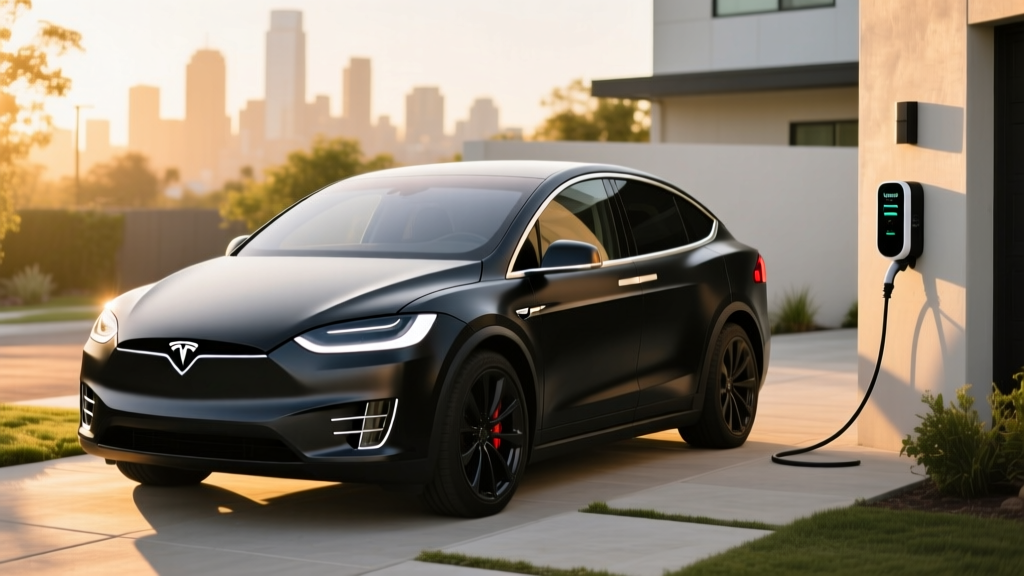
For home charging, Tesla's Wall Connector at 48 amps delivers 11.5 kW, adding roughly 34 miles of range per hour. For a 100 kWh battery, a full charge from near-empty takes about 10 hours. Most owners who plug in nightly never need a full charge — a 30–40 minute top-up each evening covers a typical 60–80 mile daily commute with margin to spare.
Home installation typically requires a 60-amp dedicated circuit. If your electrical panel has capacity, expect $500–$1,500 for a standard Wall Connector install by a licensed electrician. If you need a panel upgrade (common in older homes with 100-amp service), costs can reach $2,000–$4,000.
Performance: The Fastest Three-Row SUV Money Can Buy
The Model X Long Range hits 0–60 mph in 3.8 seconds with 670 horsepower from its dual-motor all-wheel-drive powertrain. That's sports-car territory from a 5,100-pound SUV carrying three rows of seats.
The Plaid trim adds a third rear motor for 1,020 horsepower and a 2.5-second 0–60 time, making it one of the quickest production vehicles ever built, regardless of powertrain. In real-world driving, the Plaid's acceleration is genuinely startling — and largely irrelevant for a family vehicle. The Long Range's 3.8 seconds is already faster than virtually every three-row SUV on the market, gas or electric.
Both trims feature adaptive air suspension with automatic ride-height adjustment. The suspension lowers at highway speeds for improved aerodynamics and raises for rough roads or steep driveways. The air suspension also enables the Model X's 5,000-pound towing capacity — adequate for a small boat, motorcycle trailer, or light camping trailer, though well below what a full-size truck can handle.
Interior, Cargo, and the Three-Row Reality
The Model X offers two seating configurations: a six-seat layout with second-row captain's chairs (standard) and an optional seven-seat layout with a second-row bench. The captain's chair configuration is more comfortable and provides easier third-row access via a walk-through aisle, but sacrifices one seat.
Third-row space is the Model X's most significant compromise as a family hauler. The third row accommodates children and smaller adults for short trips, but legroom is tight — roughly 32–33 inches — and the seat cushion sits low, creating a knees-up posture that becomes uncomfortable on drives longer than 30 minutes. For families who regularly need all three rows for adults, the Rivian R1S or the upcoming three-row Kia EV9 offer genuinely usable third-row space.
Cargo behind the third row is 15.3 cubic feet — enough for a few grocery bags or a stroller, but not enough for a week's luggage for six people. Fold the third row, and you get 42.5 cubic feet. Fold everything, and the Model X opens up to 77.5 cubic feet, aided by the front trunk (frunk) which adds an additional 6.7 cubic feet for charging cables, a small cooler, or a backpack.
The Model X's signature feature remains its falcon-wing rear doors, which hinge upward to provide excellent access to the second and third rows in tight parking spaces. They're genuinely useful for loading children into car seats. However, they add mechanical complexity, can be slow to open in heavy rain, and have historically been a source of maintenance issues, though Tesla has improved the mechanism in recent model years.
Pricing, Trims, and Federal Tax Credit Eligibility
| Trim | Base MSRP | Destination | Total Before Incentives | Federal §30D Credit | Effective Price |
|---|---|---|---|---|---|
| Long Range | $79,990 | $1,995 | $81,985 | $0 (exceeds $80K SUV cap) | $81,985 |
| Plaid | $94,990 | $1,995 | $96,985 | $0 (exceeds $80K SUV cap) | $96,985 |
The Model X does not qualify for the $7,500 federal EV tax credit under IRS §30D rules. The law caps the credit for SUVs at vehicles with an MSRP of $80,000 or less. Since the Long Range starts at $79,990, it technically falls just under — but with the mandatory $1,995 destination charge and any paint, wheel, or interior upgrades, the total MSRP quickly exceeds the threshold. The Plaid, at $94,990, is well above the cap regardless of configuration.
Even if a base Long Range were configured to stay under $80,000 total MSRP, buyers must also meet income caps (adjusted gross income of $300,000 for joint filers, $150,000 for single filers) and the vehicle must meet critical mineral and battery component sourcing requirements, which have become more restrictive under current IRS guidance. Always verify current-year eligibility with a tax professional before counting on the credit.
Some states offer their own rebates or incentives that may apply regardless of the federal cap. Check your state's energy or DMV website for current programs, as these vary significantly by jurisdiction.
Tech, Driver Assistance, and Safety
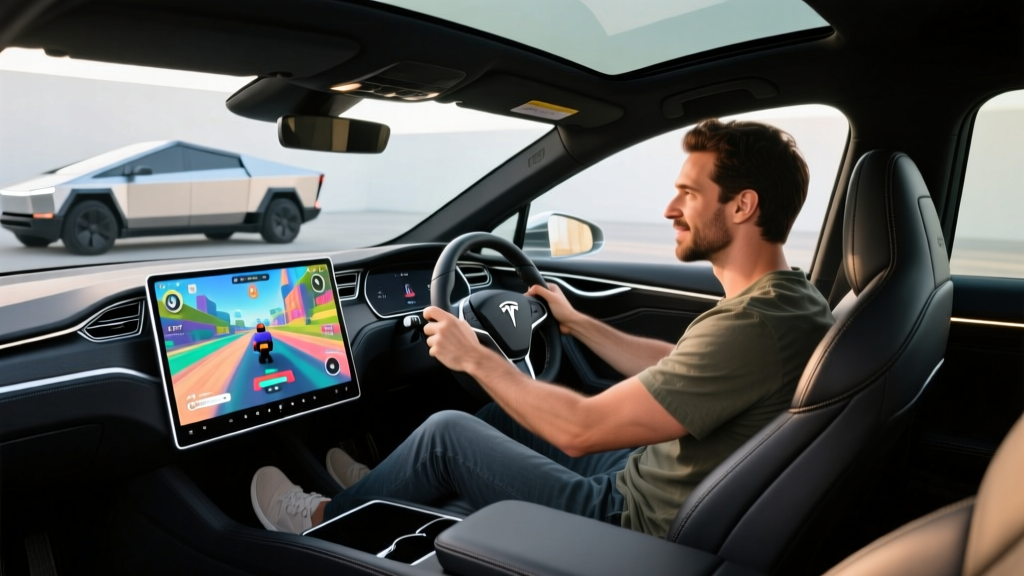
The Model X centers its tech experience around a 17-inch landscape-oriented touchscreen running Tesla's proprietary infotainment OS. The system handles navigation, media, climate controls, and vehicle settings. A secondary 8-inch screen for rear passengers controls rear climate and entertainment. Wireless phone charging, USB-C ports in both rows, and a 22-speaker audio system are standard.
On the driver-assistance front, the Model X comes with Basic Autopilot standard, which includes adaptive cruise control and lane-centering. Enhanced Autopilot ($6,000) adds automatic lane changes, Navigate on Autopilot (highway on/off-ramp assistance), and enhanced summon. Full Self-Driving (Supervised) ($8,000 or $99/month subscription) adds traffic light and stop sign recognition and city-street autosteer.
SAE Automation Level: Level 2. Despite the "Full Self-Driving" name, all current Tesla driver-assistance features are SAE Level 2 — meaning the driver must remain fully attentive, keep hands available for steering input, and be prepared to take over at any moment. The Model X is not a self-driving vehicle. Only Level 4 services like Waymo operate without a human driver, and those are geofenced robotaxis, not consumer vehicles.
Safety ratings are strong: the Model X earned a 5-star overall rating from NHTSA, with top marks in frontal, side, and rollover crash tests. The IIHS has not recently tested the Model X, so current ratings there are limited.
Warranty and Long-Term Battery Outlook
Tesla covers the Model X battery and drive unit with an 8-year/150,000-mile warranty (whichever comes first), guaranteeing a minimum of 70% battery capacity retention over that period. The vehicle's basic limited warranty covers 4 years or 50,000 miles.
NMC batteries in the Model X have demonstrated reasonable long-term degradation in fleet data. Most owners report 8–12% capacity loss over the first 100,000 miles, with degradation slowing significantly after the initial break-in period. To maximize battery longevity, Tesla recommends:
- Setting daily charge limit to 80–90%
- Avoiding frequent DC fast charging when Level 2 is available
- Not leaving the vehicle at 100% SoC for extended periods
- Using preconditioning before fast-charging sessions
Battery replacement, should it be needed out of warranty, is estimated at $15,000–$22,000 depending on the pack and labor — a significant cost that buyers should factor into long-term ownership projections.
Pros and Cons
Pros
- Best-in-class Supercharger network access and charging infrastructure
- Exceptional performance — 3.8s 0–60 (Long Range) from a three-row SUV
- Falcon-wing doors provide genuinely useful child-seat and third-row access
- Strong 320-mile EPA range (Long Range) covers most daily and road-trip needs
- Over-the-air updates continuously add features and improvements
- 5,000-lb towing capacity with trailer sway control
Cons
- Third row is cramped — suitable for children only on longer trips
- $80K+ MSRP eliminates federal tax credit eligibility
- Cargo behind third row (15.3 cu ft) is tight for a vehicle this size
- Falcon-wing doors add complexity and potential long-term maintenance cost
- Panel gaps and interior material quality lag competitors at this price point
- 250 kW peak DCFC is slower than 800V competitors (Hyundai/Kia at 350 kW)
How the Model X Compares to Key Rivals
The three-row electric SUV market has grown significantly, and the Model X faces legitimate competition:
Tesla Model X vs. Rivian R1S: The R1S offers a more usable third row, superior off-road capability, and a more premium interior. However, it has shorter range (~316 miles max), slower DC charging (peak ~220 kW on older packs, improving on newer), and lacks Supercharger access. The R1S starts lower (~$75,900) and may qualify for the federal credit depending on configuration and sourcing.
Tesla Model X vs. Kia EV9: The EV9 is the value play — starting around $54,900, it qualifies for the federal credit in eligible configurations, offers a genuinely comfortable third row, and supports 800V charging at up to 350 kW (10–80% in ~18 minutes). Its trade-off: shorter range (~270–304 miles depending on trim) and no Supercharger access, though Kia's Ioniq network and Electrify America partnerships provide reasonable coverage.
Tesla Model X vs. Cadillac Escalade IQ: The Escalade IQ is a larger, more luxurious three-row EV with a massive battery (~200+ kWh) and 400+ miles of range, but starts above $130,000. It's a different vehicle class entirely — more competitor to a Model X Plaid in price than in mission.
Who Should Buy the Model X (And Who Shouldn't)
The Model X is the right choice if you need Tesla's Supercharger network for frequent road trips, want sports-car acceleration from a three-row SUV, and primarily carry children or smaller passengers in the third row. It's also the default for current Tesla ecosystem owners who want to stay within one app, one charging standard, and one service network.
Look elsewhere if: you regularly carry six or seven adults (the Rivian R1S or Kia EV9 handle third-row passengers far better), you're counting on the federal tax credit to make the math work (the Model X won't qualify), or you prioritize interior luxury and build quality at this price point (the Rivian R1S or Mercedes EQB/EQS SUV deliver more premium materials).
Frequently Asked Questions
What is the real-world range of the Tesla Model X?
The EPA rates the Model X Long Range at 320 miles combined. In real-world highway driving at 70–80 mph, expect 260–280 miles. In cold weather (below freezing), plan for 190–220 miles. The Plaid trim delivers slightly less due to its tri-motor power draw: 311 miles EPA, roughly 245–265 real-world highway miles.
How fast does the Model X charge at home and on the road?
On a DC fast charger (Supercharger V3), the Model X peaks at 250 kW, adding ~175 miles in 15 minutes and reaching 10–80% in about 30 minutes. At home on a Level 2 Wall Connector (11.5 kW / 48 amps), it adds approximately 34 miles of range per hour, fully charging in about 10 hours.
Does the Tesla Model X qualify for the federal EV tax credit?
No. Under current IRS §30D rules, SUVs must have an MSRP of $80,000 or less to qualify. The Model X Long Range starts at $79,990, but with destination charges and any options, it exceeds the cap. The Plaid at $94,990 is well above it. Buyers must also meet income limits ($300K joint / $150K single) and battery sourcing requirements. Consult a tax professional for your specific situation.
Is the Model X worth buying over the Rivian R1S or Kia EV9?
It depends on your priorities. Choose the Model X if Supercharger access and maximum performance matter most. Choose the R1S for a more usable third row, off-road ability, and better interior quality. Choose the EV9 for the best value, 800V fast charging, and federal tax credit eligibility. Each is a strong vehicle for different buyers.
Can the Model X tow, and does towing affect range?
The Model X is rated to tow 5,000 pounds. Towing will significantly reduce range — expect a 40–60% reduction depending on trailer weight and aerodynamics. A 3,500-pound camper trailer could reduce effective range to 140–180 miles, requiring careful route planning around Supercharger stops.
What battery does the Model X use, and how long will it last?
The Model X uses an NMC (nickel manganese cobalt) lithium-ion battery pack of approximately 100 kWh usable capacity. Tesla warranties it for 8 years or 150,000 miles with a minimum 70% capacity retention guarantee. Real-world fleet data suggests 8–12% degradation over 100,000 miles with normal use and proper charging habits.