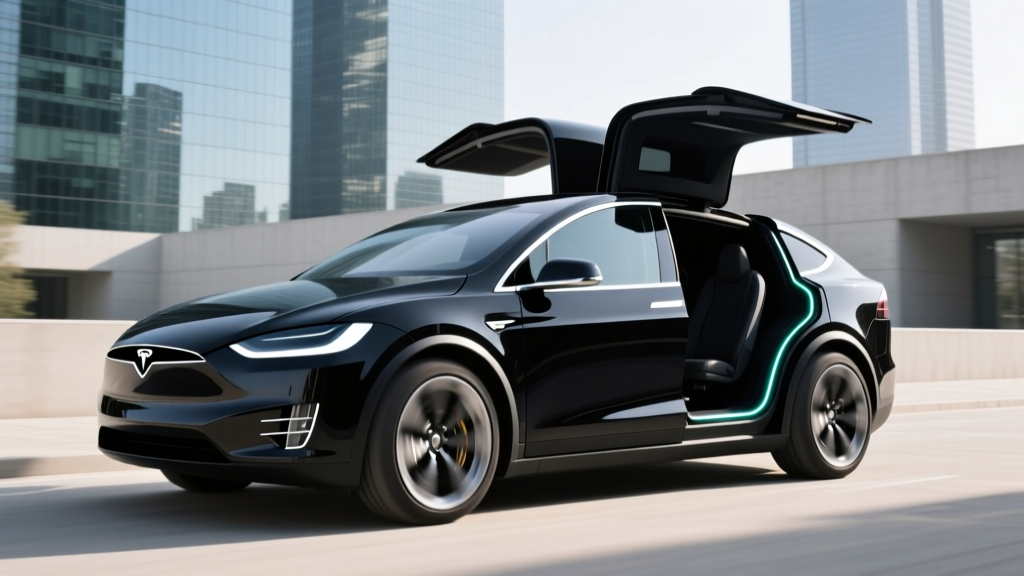
If you've searched for a Tesla with suicide doors, you're likely thinking of the Tesla Model X and its iconic rear falcon-wing doors. While technically not traditional suicide doors (which hinge at the rear and open backward), the Model X's upward-swinging rear doors are the closest thing Tesla has ever offered to a dramatic, coach-door-style entry. As of 2026, the Model X remains the only Tesla vehicle with this unconventional rear-door configuration, and it continues to polarize buyers with its mix of practicality and theatricality.
This review covers the 2026 Tesla Model X in depth: its real-world range, charging performance, interior space, pricing after federal tax credits, and whether its falcon-wing doors are a genuine advantage or a costly novelty. We'll compare it head-to-head against the three-row EV SUVs that have emerged as serious rivals.
2026 Tesla Model X: Quick Verdict
The Model X is a paradox. It offers class-leading acceleration, strong EPA range, and access to the Supercharger network — yet its falcon-wing doors remain a maintenance liability, its interior material quality lags behind rivals at this price point, and its starting MSRP of $79,990 pushes it well above the federal tax credit's vehicle-price cap. For buyers who want a three-row electric SUV with genuine performance credentials and don't mind paying a premium, the Model X delivers. For those prioritizing value or interior luxury, competitors like the Rivian R1S and Kia EV9 deserve serious consideration.
| Spec | Long Range (AWD) | Plaid (Tri-Motor AWD) |
|---|---|---|
| EPA Range | 335 miles | 311 miles |
| Battery (usable) | ~100 kWh (NMC) | ~100 kWh (NMC) |
| 0–60 mph | 3.8 seconds | 2.5 seconds |
| Horsepower | 670 hp | 1,020 hp |
| Drivetrain | Dual-Motor AWD | Tri-Motor AWD |
| Max DC Fast Charge | 250 kW | 250 kW |
| 10–80% DC Charge | ~32 minutes | ~32 minutes |
| Level 2 Home Charge | 11.5 kW (~34 mi/hr) | 11.5 kW (~34 mi/hr) |
| MPGe (combined) | 102 MPGe | 98 MPGe |
| Base MSRP | $79,990 | $94,990 |
| Battery Warranty | 8 yr / 150,000 mi | 8 yr / 150,000 mi |
Range & Efficiency: EPA vs. Real-World
The 2026 Model X Long Range carries an EPA-estimated 335 miles of range, while the Plaid drops to 311 miles due to its tri-motor power draw and stickier, higher-drag tires. According to fueleconomy.gov, the Long Range achieves 102 MPGe combined (roughly 33 kWh per 100 miles).
EPA 335 miles (Long Range) — but expect ~270–290 miles in sustained 75 mph highway driving in moderate temperatures. In cold weather (below 32°F), range can drop to ~220–250 miles due to battery heating demands and reduced regenerative braking efficiency. The Model X's large frontal area and boxy SUV profile hurt highway efficiency compared to a sedan like the Model S. Plan road trips around 220–250 miles between charges to maintain a comfortable buffer.
Tesla's heat pump (standard across the lineup since 2021) helps mitigate cold-weather losses compared to older EVs using resistive cabin heaters, but the Model X's sheer mass (~5,185 lbs curb weight) and aerodynamic drag still exact a toll at highway speeds. City driving with frequent regenerative braking opportunities will get you closer to the EPA sticker, often exceeding 340 miles in stop-and-go traffic.
Charging: DC Fast, Level 2, and the Supercharger Advantage
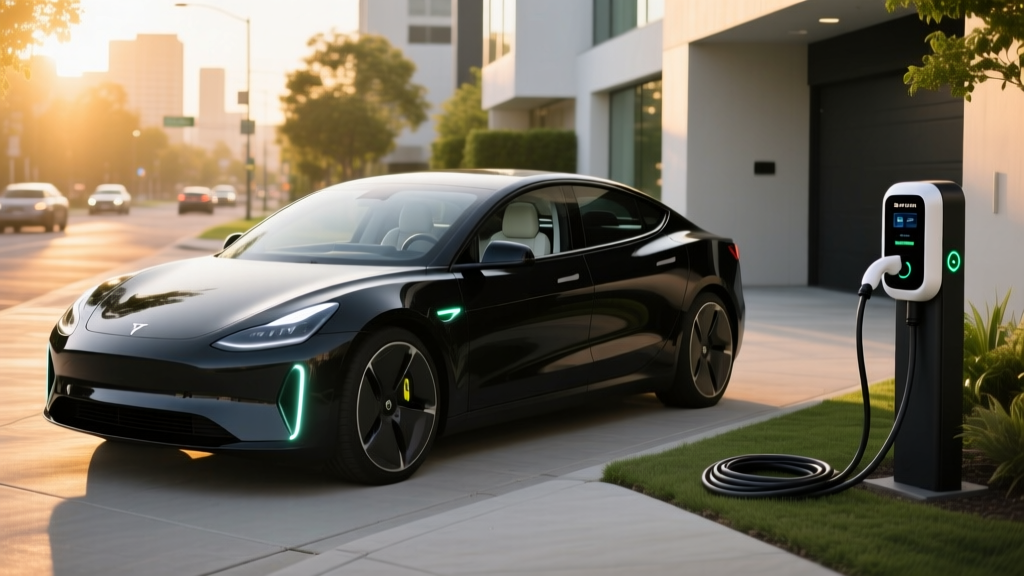
The Model X supports up to 250 kW on a V3 Supercharger or any CCS-compatible DC fast charger (using Tesla's included CCS adapter or the native NACS port on 2025+ models). Tesla's charging architecture remains one of the strongest ownership advantages, with over 6,000 Supercharger stations in North America as of early 2026.
| Charging Level | Power | Miles Added per Hour | Notes |
|---|---|---|---|
| Level 1 (120V) | ~1.4 kW | ~3–4 mi/hr | Emergency/trickle only |
| Level 2 (240V, 48A) | 11.5 kW | ~34 mi/hr | Home Wall Connector; full charge ~10 hrs |
| DC Fast (V3 Supercharger) | Peak 250 kW | ~175 mi in 15 min | 10–80% in ~32 min; tapers sharply above 80% |
| DC Fast (V4 Supercharger) | Peak 250 kW* | ~175 mi in 15 min | *Model X currently capped at 250 kW even on V4 posts |
The charge curve matters: the Model X pulls peak 250 kW only between roughly 10–30% state of charge, then tapers to ~150 kW by 50% and ~75 kW by 75%. This is typical for NMC lithium-ion chemistry, which Tesla manages via its battery thermal preconditioning system. When navigating to a Supercharger, the car automatically preconditions the battery pack, ensuring you hit peak charge rates upon arrival.
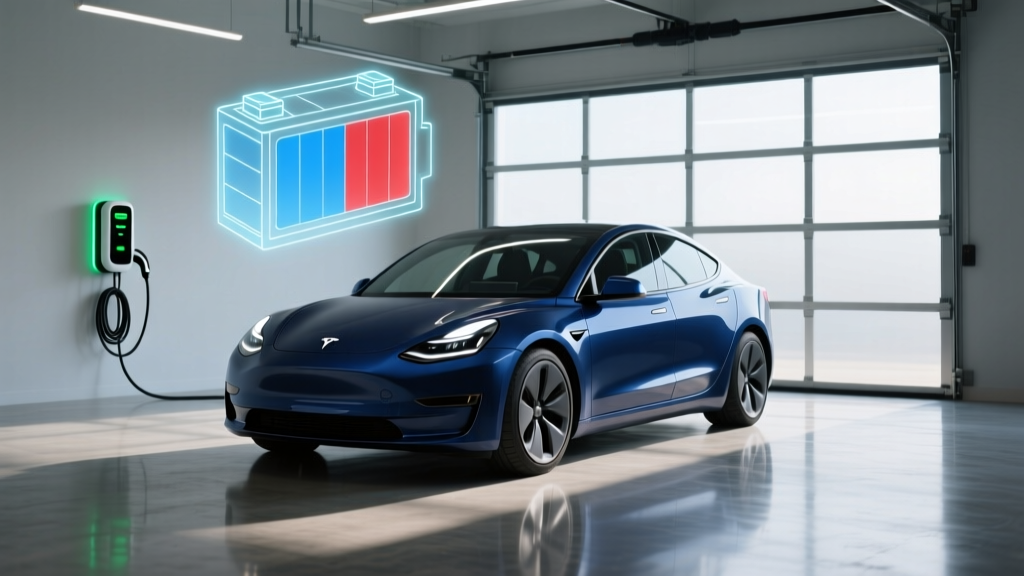
For home charging, Tesla's Wall Connector at 48 amps delivers 11.5 kW, adding approximately 34 miles of range per hour. A full charge from 10% takes roughly 10 hours — fine for overnight charging but worth noting if you frequently deplete the pack on road trips and need quick turnaround at home.
Performance: Supercar Acceleration in a Three-Row SUV
The Model X Long Range hits 0–60 mph in 3.8 seconds with 670 horsepower from its dual-motor all-wheel-drive setup. That's quicker than most sports sedans and remarkable for a 5,185-pound SUV with three rows of seating.
The Plaid variant is genuinely absurd: 1,020 horsepower, tri-motor AWD, and a 2.5-second 0–60 time. It remains one of the quickest production SUVs ever built. Both trims feature adaptive air suspension with automatic ride-height adjustment, which lowers the vehicle at highway speeds for improved aerodynamics and raises it for rough roads or steep driveways.
Braking performance is adequate but not exceptional — the Model X's mass shows during repeated hard stops, and brake feel remains somewhat vague compared to the Rivian R1S. Regenerative braking is strong and enables effective one-pedal driving in most conditions, though Tesla removed the adjustable regen setting years ago, leaving only a single (fairly aggressive) regen profile.
Falcon-Wing Doors: The "Suicide Door" Question
Let's address the keyword directly: when people search for a "Tesla with suicide doors," they're almost always referring to the Model X's falcon-wing rear doors. Traditional suicide doors (rear-hinged, opening backward, like on the Rolls-Royce Phantom or the discontinued Mazda RX-8) have never appeared on any Tesla. The falcon-wing doors are a double-hinged, upward-swinging design unique to the Model X.
Practical advantages:
- Wider opening for loading child seats and reaching third-row passengers
- Less lateral clearance needed than conventional doors (useful in tight parking spots)
- Ultrasonic sensors detect overhead and side obstacles, adjusting the door arc automatically
Known drawbacks:
- Complex mechanism with more failure points than conventional doors
- Water ingress complaints have been documented in earlier model years
- Overhead sensor calibration can require service visits
- Cannot install most roof racks or roof boxes
- Garage clearance: requires at least ~7 feet of overhead clearance depending on opening angle
Tesla has improved the door mechanism's reliability since the 2016–2019 production years, but they remain the Model X's most service-prone component. If you're considering a used Model X, have the falcon-wing mechanisms inspected thoroughly.
Interior, Cargo, and Technology
The 2026 Model X continues with Tesla's minimalist interior: a 17-inch center touchscreen (landscape orientation), a 12.3-inch driver instrument cluster, and a yoke-style or round steering wheel (buyer's choice at no additional cost). A rear-seat 8-inch touchscreen controls climate and entertainment for second-row passengers.
Cargo and passenger space:
- Seating: 5, 6, or 7 passengers (depending on second-row bench vs. captain's chairs)
- Cargo behind third row: ~37.1 cu ft
- Cargo with third row folded: ~72.3 cu ft
- Cargo with both rear rows folded: ~85.1 cu ft
- Front trunk (frunk): ~6.5 cu ft
- Second-row legroom: ~40.9 inches
- Third-row legroom: ~32.7 inches (tight for adults on long trips)
The third row is best suited for children or short trips. Adults will find legroom cramped and the seat cushion low to the floor. Compared to the Rivian R1S (34.9 inches third-row legroom) or the Kia EV9 (32.0 inches), the Model X is competitive but not class-leading.
Driver assistance: Tesla's Autopilot comes standard, providing adaptive cruise control and lane-keeping (SAE Level 2). Full Self-Driving (Supervised) is a $8,000 option or $99/month subscription as of 2026. FSD remains a Level 2 system requiring active driver supervision — it is not autonomous driving. Tesla continues to iterate on its vision-only FSD stack, but NHTSA reminds consumers that no production vehicle sold today is self-driving.
Tesla Autopilot and Full Self-Driving (Supervised) are SAE Level 2 driver-assistance systems. You must keep your hands on the wheel and eyes on the road at all times. The vehicle does not handle all driving scenarios, and the driver is legally responsible for the vehicle's operation at all times.
Pricing, Trims, and Federal Tax Credit Eligibility
The 2026 Model X starts at $79,990 for the Long Range and $94,990 for the Plaid, before options and destination fees. A well-equipped Long Range with FSD, premium paint, and 22-inch wheels can approach $95,000.
| Trim | Base MSRP | Federal §30D Credit | Effective Price |
|---|---|---|---|
| Long Range | $79,990 | Not eligible (MSRP cap: $80,000 for SUVs) | $79,990+ |
| Plaid | $94,990 | Not eligible | $94,990+ |
Critical tax credit note: Under IRS §30D rules, the federal EV tax credit for new vehicles is capped at $7,500 and subject to MSRP limits ($80,000 for SUVs, vans, and pickups), buyer income limits ($300,000 joint / $150,000 single modified AGI), and battery critical-mineral and component sourcing requirements. The Model X Long Range at $79,990 technically sits under the $80,000 SUV cap, but once destination and any options are added, it exceeds the threshold. The Plaid is well above the cap. Additionally, as of 2025–2026, the battery sourcing requirements have tightened significantly, and Tesla's supply chain compliance for the Model X's NMC pack is subject to periodic IRS determination. Consult a tax professional and verify current IRS guidance before assuming credit eligibility.
For buyers who can access the credit (by configuring a base Long Range with no options and meeting all income/sourcing requirements), the point-of-sale transfer provision allows the $7,500 credit to be applied directly at purchase rather than waiting for tax filing.
How Does the Model X Compare?
- Best-in-class acceleration (especially Plaid)
- Supercharger network access (still the most reliable DC network)
- Falcon-wing doors aid child-seat loading and tight-space entry
- Strong EPA range for a three-row SUV (335 mi)
- Over-the-air updates continuously add features
- Excellent visibility with massive windshield
- Falcon-wing doors are a long-term reliability concern
- Interior quality doesn't match the $80K+ price tag
- Third row is tight for adults
- Likely ineligible for $7,500 federal tax credit in most configurations
- No Apple CarPlay or Android Auto
- Insurance premiums are among the highest for any SUV
Key competitors to cross-shop:
- Rivian R1S ($75,900+): Better off-road capability, more rugged interior, quad-motor option, but lower range (~321 mi max) and no Supercharger access without an adapter.
- Kia EV9 ($54,900+): Dramatically cheaper, qualifies for the federal tax credit in many trims, 304-mile range, but far less performance and no frunk.
- Mercedes EQS SUV ($104,400+): Superior interior luxury, 305-mile range, but even more expensive and slower to DC-charge.
- Tesla Model Y ($44,990+): If you don't need falcon-wing doors or a true third row, the Model Y offers better value, tax-credit eligibility, and similar tech at nearly half the price.
Who Should Buy the 2026 Tesla Model X?
Choose the Model X if:
- You want a three-row electric SUV with genuine sports-car acceleration
- You frequently load child seats and value the falcon-wing door opening
- Supercharger network access is a priority for your road-trip patterns
- You've budgeted $80K–$100K+ for an EV and accept the premium
Look elsewhere if:
- Federal tax credit eligibility is important to your purchase decision
- You prioritize interior material quality and quiet luxury
- You need a genuinely comfortable third row for regular adult passengers
- You want a simpler, more conventional door mechanism with lower long-term service risk
The Model X suits tech-forward families who value performance and Tesla's ecosystem over traditional luxury cues. It's a compelling road-trip vehicle thanks to Supercharger access and 335-mile range, but its price and tax-credit limitations make it a conscious premium choice rather than a value play.
Frequently Asked Questions
Does Tesla make a car with actual suicide doors?
No. Tesla has never produced a vehicle with traditional suicide doors (rear-hinged, backward-opening). The Model X's falcon-wing doors swing upward with a double hinge and are the closest Tesla has come to an unconventional rear-door design. No upcoming Tesla models have been announced with suicide doors as of early 2026.
What is the real-world range of the 2026 Tesla Model X?
The EPA rates the Long Range at 335 miles and the Plaid at 311 miles. In real-world highway driving at 75 mph, expect approximately 270–290 miles (Long Range). In cold weather below freezing, plan for 220–250 miles. City driving with regenerative braking can match or slightly exceed the EPA estimate.
How fast does the Model X charge at home and on road trips?
At home on a Level 2 Tesla Wall Connector (48A/11.5 kW), the Model X gains about 34 miles of range per hour, with a full 10–100% charge taking roughly 10 hours. On a V3 Supercharger, it peaks at 250 kW and charges from 10–80% in approximately 32 minutes, adding about 175 miles in 15 minutes under ideal conditions.
Does the 2026 Tesla Model X qualify for the federal EV tax credit?
It's complicated. The IRS §30D credit caps SUV MSRP at $80,000. The Model X Long Range starts at $79,990, but adding any options, paint upgrades, or destination charges pushes it above the cap. The Plaid at $94,990 is well above. Buyer income limits ($300K joint / $150K single) and battery-sourcing requirements also apply. Verify with the IRS and a tax professional before relying on credit eligibility.
Are falcon-wing doors reliable?
Tesla has improved the mechanism significantly since the 2016–2019 launch years, but falcon-wing doors remain more complex than conventional doors. Common service items include sensor recalibration, seal replacement, and actuator maintenance. If buying used, have them inspected. They are covered under the 4-year/50,000-mile basic warranty, and extended service plans are available.
Is the Model X worth buying over the Rivian R1S or Kia EV9?
It depends on priorities. The Model X wins on acceleration, Supercharger access, and tech integration. The Rivian R1S offers better off-road capability, a more premium interior, and a lower starting price. The Kia EV9 is dramatically cheaper ($25K+ less), qualifies for the federal tax credit, and offers competitive range — but with far less performance. If budget is flexible and Tesla's ecosystem matters, the Model X is compelling. If value or luxury interior quality is paramount, look at the R1S or EV9.
What is the battery warranty on the Model X?
Tesla covers the Model X battery and drive unit for 8 years or 150,000 miles (whichever comes first), with a minimum 70% capacity retention guarantee over that period. The NMC battery pack is approximately 100 kWh usable. Out-of-warranty replacement costs have historically ranged from $15,000 to $22,000 depending on pack availability and labor.