Quick Verdict: The Original Electric Family Hauler Still Competes
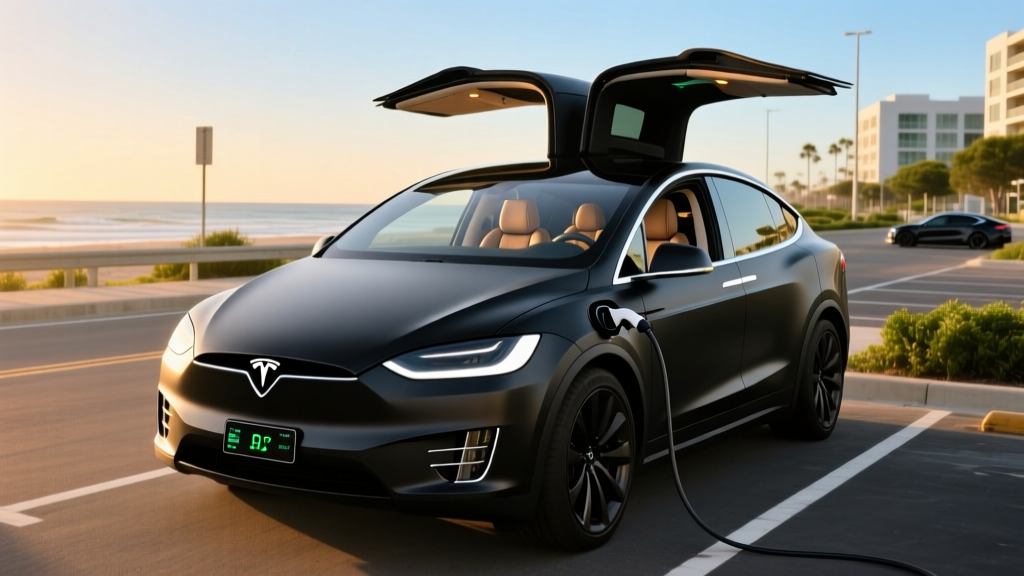
The 2026 Tesla Model X remains one of the few premium three-row electric SUVs that can genuinely seat seven adults without compromising cargo space or range. While newer rivals like the Rivian R1S and Kia EV9 have closed the gap in tech and pricing, the Model X's combination of Supercharger network access, 320 miles of EPA-estimated range, and sub-4-second 0-60 performance (in dual-motor form) keeps it relevant for families who prioritize road-trip readiness over bargain pricing.
But at a starting MSRP near $81,630, buyers need to weigh whether falcon-wing doors and Tesla's software ecosystem justify the premium over more affordable three-row EVs. This review breaks down every spec that matters for a real ownership decision.
Range, Efficiency, and Real-World Expectations
The 2026 Model X Long Range AWD carries a usable battery capacity of approximately 95 kWh using nickel-manganese-cobalt (NMC) chemistry. Tesla does not publish exact pack sizes, but teardown data and EPA test filings consistently place the current-generation Model X in the 93–100 kWh usable range.
| Spec | Value |
|---|---|
| EPA Range | 320 miles |
| Battery (usable, est.) | ~95 kWh, NMC |
| MPGe (city/hwy/combined) | 104 / 96 / 100 MPGe |
| Energy Consumption | ~34 kWh/100 mi |
| Drivetrain | Dual-motor AWD |
| Horsepower | 670 hp |
| 0–60 mph | 3.8 seconds |
| Top Speed | 155 mph |
| Towing Capacity | 5,000 lbs |
The EPA sticker says 320 miles, but real-world results depend heavily on conditions:
- Highway cruising (70–75 mph, 65°F): Expect 270–290 miles before needing a charge stop.
- City/mixed driving: Closer to the 300–320 mile EPA figure thanks to regenerative braking.
- Cold weather (below 32°F): Range drops 15–25%, yielding roughly 240–270 miles. The Model X includes a standard heat pump, which mitigates cabin-heating losses compared to older resistive heaters.
- Towing: Hitching a 3,000-lb trailer can cut range by 35–50%.
For a seven-seat family SUV weighing over 5,000 lbs, these figures are competitive — but plan road trips around 220–250 miles between stops for a comfort buffer.
Efficiency at 34 kWh/100 miles is typical for a large, heavy electric SUV. For comparison, the Rivian R1S (Dual-Motor) consumes roughly 37 kWh/100 mi, while the lighter Kia EV9 (LR AWD) sits around 33 kWh/100 mi. According to fueleconomy.gov, the Model X Long Range achieves 100 MPGe combined — adequate but not class-leading.
Charging Speed: DC Fast and Home Level 2
Charging performance is where the Model X continues to leverage Tesla's ecosystem advantage. The NACS (North American Charging Standard) port is native, meaning access to over 20,000 Supercharger stalls nationwide without an adapter.
| Charging Level | Power / Rate | Speed |
|---|---|---|
| Level 1 (120V, 12A) | ~1.4 kW | ~3–4 miles per hour |
| Level 2 (240V, 48A Wall Connector) | 11.5 kW | ~34 miles per hour |
| DC Fast Charge (Supercharger V3/V4) | Peak 250 kW | 10–80% in ~30 minutes |
Charging curve reality: The 250 kW peak is not sustained. The Model X typically holds 200+ kW from roughly 10–30% state of charge, then tapers to ~150 kW by 50%, and drops sharply above 80%. On a road trip, a 10–80% session takes approximately 30 minutes at a V3 Supercharger. Charging from 80–100% adds another 25–35 minutes — avoid this on road trips unless you need the final miles.
At home with a Tesla Wall Connector on a 60-amp circuit (48A continuous), you'll add roughly 34 miles of range per hour. A full overnight charge (8 hours) restores about 270 miles — more than enough for daily driving. Installation typically costs $800–$2,000 depending on panel capacity and run length; consult a licensed electrician for your specific setup.
For non-Tesla DC fast chargers (Electrify America, EVgo, ChargePoint), Tesla now includes a CCS adapter with new vehicles, though charging speeds on third-party networks may not reach the full 250 kW peak due to handshake and protocol differences.
Performance and Drivetrain
The dual-motor AWD powertrain delivers 670 horsepower and launches the Model X to 60 mph in 3.8 seconds — remarkable for a three-row SUV weighing approximately 5,100 lbs. The Plaid variant (1,020 hp, 2.5-second 0–60) remains available but pushes pricing well past $100,000 and reduces range to roughly 311 miles EPA.
Acceleration in everyday driving is effortless. Merge onto highways, overtake on two-lanes, or launch from stoplights — the instant torque never feels strained. The air suspension is standard and provides a comfortable, adaptive ride, though some owners report a firmness over sharp impacts that doesn't quite match the plushness of a BMW iX or Mercedes EQS SUV.
Handling is competent for its size, with a low center of gravity from the floor-mounted battery pack. Body roll is well-controlled, but the steering lacks the feedback enthusiasts might want. This is a cruiser, not a canyon carver.
Interior, 7-Seat Layout, and Cargo Space
The seven-seat configuration uses a 2-3-2 layout: two front seats, a three-across second row (bench), and two third-row seats. This differs from the six-seat option (2-2-2 with second-row captain's chairs), which sacrifices one seat for easier third-row access and more second-row comfort.
| Dimension | Measurement |
|---|---|
| Front Headroom | 40.5 in |
| Front Legroom | 41.2 in |
| 2nd-Row Legroom | 38.4 in |
| 3rd-Row Legroom | 32.7 in |
| Cargo (behind 3rd row) | ~15 cu ft (est. w/ sub-trunk) |
| Cargo (3rd row folded) | ~43 cu ft |
| Cargo (all rear rows folded) | ~81 cu ft |
| Front Trunk (Frunk) | ~6.6 cu ft |
Third-row reality: The 32.7 inches of third-row legroom is tight for adults on trips longer than 30 minutes. Children and teens fit fine. The second-row bench in the 7-seat layout is flat and wide enough for three across with car seats, but the center position is less comfortable than outboard seats due to a slight floor hump.
Falcon-wing rear doors are the Model X's signature feature. They open upward with sensors that detect overhead and side obstacles, making car-seat loading dramatically easier in tight parking spots. However, they can be slow to operate (4–6 seconds per cycle), and in heavy rain, the open doors expose the cabin to more weather than conventional doors. Maintenance and repair costs for the hydraulic hinges are higher than standard doors out of warranty.
The 17-inch center touchscreen runs Tesla's latest software with responsive performance, integrated navigation with Supercharger routing, gaming (including AAA titles via the onboard computer), and streaming apps. A rear-seat 8-inch touchscreen handles climate and entertainment for second-row passengers. Wireless charging pads, ventilated front seats, and a HEPA air filtration system (Bioweapon Defense Mode) are all standard.
Pricing, Trims, and Federal Tax Credit Eligibility
| Trim | Base MSRP | Federal §30D Credit | Effective Price |
|---|---|---|---|
| Long Range AWD (7-seat) | ~$81,630 | $0 (exceeds MSRP cap) | ~$81,630 |
| Plaid AWD (6-seat) | ~$96,630 | $0 (exceeds MSRP cap) | ~$96,630 |
Critical tax credit detail: The Tesla Model X does not qualify for the federal §30D new clean vehicle credit. IRS rules cap eligible SUVs at an $80,000 MSRP, and every current Model X trim exceeds that threshold. This applies regardless of buyer income or battery sourcing. For full rules, see IRS.gov §30D guidelines.
Buyers may still qualify for state and utility incentives — for example, California's CVRP, Colorado's innovative motor vehicle credit, or local utility rebates for home charger installation. These vary by jurisdiction; check your state energy office and utility provider.
As-tested pricing for a well-equipped 7-seat Long Range with Full Self-Driving (Supervised) capability ($8,000), 22-inch wheels ($4,500), and premium interior colors can reach $94,000–$98,000 before delivery fees.
Warranty and Long-Term Ownership
| Component | Coverage |
|---|---|
| Basic Vehicle | 4 years / 50,000 miles |
| Battery & Drive Unit | 8 years / 150,000 miles (min 70% retention) |
| Roadside Assistance | 4 years / 50,000 miles |
The 8-year/150,000-mile battery warranty guarantees at least 70% capacity retention. In practice, Tesla's NMC packs in the Model X have shown degradation curves that plateau around 90–92% state of health after 50,000 miles, with slow linear decline thereafter. Data from owner surveys and fleet analyses suggest most Model X packs retain 85%+ capacity at 100,000 miles when owners avoid habitual 100% charges and frequent DC fast charging in extreme heat.
Out-of-warranty battery replacement for a Model X currently ranges from $15,000–$22,000 depending on pack availability and labor. Tesla offers refurbished packs at lower cost when available.
Autopilot, FSD (Supervised), and Safety
Tesla Autopilot and Full Self-Driving (Supervised) are Level 2 driver-assistance systems per SAE classification. The driver must remain fully engaged, hands on the wheel, and eyes on the road at all times. These systems do NOT make the vehicle self-driving. Only Level 4 services like Waymo operate without a human driver in defined areas.
Standard Autopilot includes Traffic-Aware Cruise Control and Autosteer (lane-centering on marked highways). The optional FSD (Supervised) package ($8,000 one-time or $99/month) adds automatic lane changes, Navigate on Autopilot (highway on/off-ramp routing), Autopark, Summon, and traffic-light/stop-sign recognition. As of 2026, FSD remains a supervised system requiring constant driver attention.
The Model X earns strong safety marks. According to NHTSA, the Model X carries a 5-Star Overall Safety Rating. Standard active safety features include automatic emergency braking, blind-spot monitoring, lane-departure warning, and side-collision warning. The large front crumple zone (no engine block) and rigid battery structure contribute to excellent crash-test performance.
Pros, Cons, and Who Should Buy
Pros
- 320-mile EPA range competitive for a 3-row EV SUV
- Supercharger network — most reliable DC fast-charging ecosystem
- Falcon-wing doors make car-seat loading genuinely easier
- Strong performance (3.8s 0–60) without sacrificing efficiency
- OTA software updates continuously add features
- HEPA cabin air filtration is class-leading
- 5,000-lb towing capability
Cons
- No federal tax credit (MSRP exceeds $80K SUV cap)
- Third row is tight for adults (32.7" legroom)
- Falcon-wing doors are slow and expensive to repair out of warranty
- Panel-gap quality and interior material finish lag German rivals
- High starting price vs. Kia EV9, Hyundai Ioniq 9
- FSD remains a supervised Level 2 system despite the name
- 22-inch wheels reduce range and ride comfort
- Choose the Model X 7-seat if: You need Supercharger road-trip readiness, want genuine 7-seat capability with easy car-seat loading (falcon-wing doors), value performance, and your budget supports $80K+ without a tax credit.
- Consider the Rivian R1S instead if: You want off-road capability, a more rugged design, or plan to tow frequently (R1S offers up to 7,700-lb towing).
- Consider the Kia EV9 instead if: Budget is a priority (starts ~$55K, may qualify for credits depending on sourcing), and you primarily drive in metro areas with good third-party DC charging.
Frequently Asked Questions
What is the real-world range of the 2026 Tesla Model X 7-seat?
The EPA rates it at 320 miles, but expect 270–290 miles at highway speeds (70–75 mph) in mild weather, and 240–270 miles in freezing temperatures. For road-trip planning, budget 220–250 miles between charge stops to maintain a comfort buffer.
How fast does the Model X charge at home and on the road?
At home on a Level 2 Tesla Wall Connector (48A/11.5 kW), it adds ~34 miles of range per hour — a full overnight session restores ~270 miles. On DC fast charging, it peaks at 250 kW at V3/V4 Superchargers, achieving a 10–80% charge in approximately 30 minutes. Charging tapers significantly above 80%.
Does the Tesla Model X qualify for the federal EV tax credit?
No. Under current IRS §30D rules, new electric SUVs must have an MSRP at or below $80,000 to qualify. Every Model X trim exceeds this cap. Buyer income limits and battery-sourcing requirements are secondary — the MSRP cap alone disqualifies it. State and utility incentives may still apply; check your local programs.
Is the Model X 7-seat worth buying vs. the Rivian R1S or Kia EV9?
The Model X wins on Supercharger access, charging speed, and software ecosystem. The Rivian R1S offers better towing, off-road capability, and more rugged styling. The Kia EV9 is significantly more affordable and may qualify for incentives, but relies on third-party charging networks. Your choice depends on road-trip frequency, budget, and whether you prioritize ecosystem lock-in (Tesla) or flexibility.
How usable is the third row for adults?
With 32.7 inches of legroom, the third row is suitable for children, teens, or adults on short trips (under 30 minutes). For regular adult use in all three rows, the Rivian R1S or a large minivan offers more third-row comfort. The 7-seat Model X's bench second row makes third-row access less convenient than the 6-seat captain's-chair layout.
What does a Model X battery replacement cost?
Out-of-warranty battery replacement runs $15,000–$22,000 including labor. Under warranty, Tesla covers the battery for 8 years or 150,000 miles, whichever comes first, guaranteeing at least 70% capacity retention. Real-world degradation data suggests most packs retain 85%+ at 100,000 miles with reasonable charging habits.
Can I tow with the Model X?
Yes — the Model X is rated to tow up to 5,000 lbs when properly equipped with the factory tow package. Expect range to drop 35–50% while towing depending on trailer weight, aerodynamics, and terrain. The onboard navigation will adjust Supercharger routing estimates when towing mode is active.