Why Seat Configuration Matters in the Model X
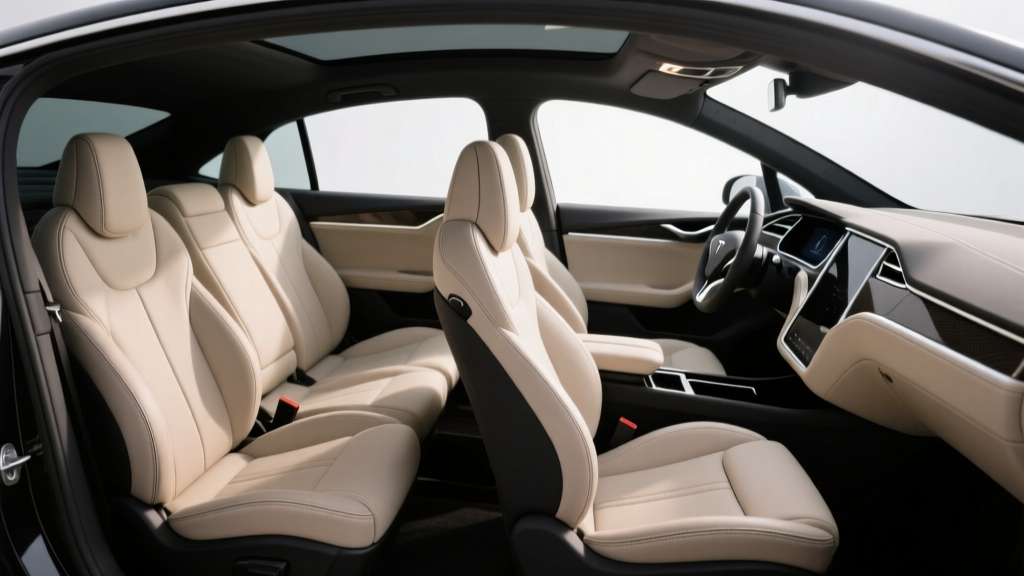
The Tesla Model X remains one of the few electric SUVs offering genuine flexibility in passenger capacity. Unlike most three-row EVs that lock you into a single layout, Tesla sells the Model X in three distinct seat configurations: a five-seat (two-row), a six-seat (captain's chairs in the second row), and a seven-seat (bench second row with a small third row). Each configuration changes not just passenger count but cargo volume, second-row comfort, access to the third row, and even the vehicle's starting price.
This guide walks through every seat layout, pairs it with the Model X's full EV spec sheet — range, charging, performance, and pricing — and helps you decide which configuration matches your actual use case. We'll also address federal tax credit eligibility, real-world range expectations, and how the Model X stacks up against competitors like the Rivian R1S and Kia EV9.
Model X Seat Configurations at a Glance
Before diving into range and charging, here's how the three configurations differ on the dimensions that matter to families and haulers.
| Attribute | 5-Seat (2-Row) | 6-Seat (Captain's Chairs) | 7-Seat (Bench + 3rd Row) |
|---|---|---|---|
| Second-Row Type | 3-passenger bench | 2 individual captain's chairs | 3-passenger bench |
| Third Row | None | 2-seat fold-flat third row | 2-seat fold-flat third row |
| Max Passengers | 5 | 6 | 7 |
| Cargo (behind 2nd row) | ~37.1 cu ft | ~37.1 cu ft | ~37.1 cu ft |
| Cargo (behind 3rd row) | N/A | ~12.6 cu ft | ~12.6 cu ft |
| Cargo (all rows folded) | ~72.3 cu ft | ~72.3 cu ft | ~72.3 cu ft |
| Front Trunk (Frunk) | ~6.6 cu ft | ~6.6 cu ft | ~6.6 cu ft |
| Second-Row Comfort | Standard bench | Premium individual seats w/ armrests | Tighter bench, best for kids |
| Third-Row Access | N/A | Walk-through between captain's chairs | Slide-and-tilt bench |
| Price Adder vs. 5-Seat | Base (included) | +$6,500 | +$3,500 |
Real-World Range and Efficiency by Configuration
The Model X uses a 100 kWh (usable ~95 kWh) NMC (nickel manganese cobalt) battery pack. Tesla does not offer an LFP option in the Model X — the energy density of NMC chemistry is necessary to achieve the vehicle's range targets given its weight and aerodynamic profile.
Efficiency varies slightly by configuration. The seven-seat model adds roughly 50-75 lbs of seat hardware, which is negligible for range. The bigger variable is wheel choice and driving style. The EPA rates the Long Range at approximately 100 MPGe combined (roughly 33-35 kWh/100 mi). Plaid models consume more energy — figure roughly 38-40 kWh/100 mi in mixed driving.
Charging Speed: DC Fast and Home Level 2
| Charging Level | Max Rate | Speed / Time |
|---|---|---|
| DC Fast Charge (Supercharger V4) | 250 kW peak | 10-80% in ~30 minutes; ~175 miles added in 15 min |
| DC Fast Charge (CCS adapter) | ~150-170 kW (varies by station) | 10-80% in ~38-45 minutes |
| Level 2 Home (Tesla Wall Connector) | 11.5 kW / 48A | ~34 miles of range per hour; full charge in ~9-10 hours |
| Level 2 Home (NEMA 14-50 outlet) | 7.7 kW / 32A | ~23 miles of range per hour; full charge in ~13-14 hours |
| Level 1 (120V standard outlet) | ~1.3 kW | ~3-4 miles per hour (emergency/trickle only) |
The Model X uses Tesla's proprietary NACS connector natively, which is now the dominant standard in North America. This means direct access to the Tesla Supercharger network — over 25,000 stalls in the US — without an adapter. For Electrify America and other CCS-based networks, Tesla sells a CCS adapter, though charge rates on non-Tesla networks tend to be lower because the Model X's onboard charge curve is optimized for Supercharger communication.
Charge curve reality: The Model X peaks at 250 kW only at low states of charge (roughly 10-25% SoC). By 50% SoC, the rate tapers to approximately 150 kW, and above 80%, it drops sharply to under 50 kW. This is standard for NMC packs at this capacity — the 10-80% time of ~30 minutes is the practical metric to plan road trips around, not the peak kW figure.
Performance: Long Range vs. Plaid
| Spec | Long Range (Dual Motor AWD) | Plaid (Tri-Motor AWD) |
|---|---|---|
| Drivetrain | Dual Motor AWD | Tri-Motor AWD |
| Horsepower | 670 hp | 1,020 hp |
| 0-60 mph | 3.8 seconds | 2.5 seconds |
| Top Speed | 155 mph | 163 mph |
| EPA Range (20" wheels) | 335 miles | 311 miles |
| Towing Capacity | 5,000 lbs | 5,000 lbs |
Both variants are available in all three seat configurations. The Plaid's tri-motor setup adds weight but doesn't affect interior dimensions. For families prioritizing range and value, the Long Range is the pragmatic choice — it's cheaper, goes further per charge, and 3.8 seconds to 60 mph is hardly slow.
Pricing, Trims, and Federal Tax Credit Eligibility
| Configuration | Long Range MSRP | Plaid MSRP |
|---|---|---|
| 5-Seat (Long Range base) | $79,990 | $94,990 |
| 6-Seat (+$6,500) | $86,490 | $101,490 |
| 7-Seat (+$3,500) | $83,490 | $98,490 |
All prices include destination. Destination fees for Tesla are currently $1,390 and included in the figures above.
Federal EV Tax Credit (§30D) — Does the Model X Qualify?
This is where the Model X faces a significant hurdle. Under current IRS §30D rules, the federal clean vehicle credit of up to $7,500 requires:
- MSRP cap: SUVs must have an MSRP at or below $80,000.
- Buyer income cap: Modified AGI must not exceed $300,000 (joint), $225,000 (head of household), or $150,000 (single).
- Battery sourcing: Critical minerals and battery components must meet escalating domestic-sourcing thresholds.
The 5-seat Long Range at $79,990 technically clears the MSRP cap by $10. However, adding the 6-seat or 7-seat option pushes the MSRP above $80,000, which disqualifies those configurations from the federal credit. The Plaid variants are well above the cap regardless of seat layout. Additionally, Tesla's battery supply chain sourcing has fluctuated — always verify current eligibility on fueleconomy.gov before purchasing, as component-sourcing compliance can change by production batch.
The point-of-sale transfer option allows eligible buyers to apply the credit as an immediate discount at purchase rather than waiting to claim it on their tax return. Consult a tax professional to confirm your individual eligibility.
Technology, Driver Assistance, and Interior
The Model X continues to feature Tesla's 17-inch center touchscreen (landscape orientation), a 12.3-inch driver instrument cluster, and a rear-seat 8-inch display for climate and entertainment controls. The yoke steering wheel is standard, with a conventional round wheel available as a no-cost option — a significant consideration for those who find the yoke impractical in low-speed parking maneuvers.
Autopilot and Full Self-Driving (Supervised)
Basic Autopilot (traffic-aware cruise control and lane centering) is included. FSD (Supervised) remains a $8,000 option or $99/month subscription and adds automatic lane changes, navigate-on-autopilot for highway interchanges, and city street driving capability. Real-world FSD performance varies significantly by geography and road conditions — it handles well-mapped suburban arterials competently but still requires frequent interventions in construction zones, complex intersections, and adverse weather.
Standout Features and Drawbacks
Pros
- Falcon-wing rear doors provide exceptional access to second- and third-row seats, especially in tight parking spaces
- Supercharger network access gives the Model X a road-trip advantage over most competitors
- Three seat configurations allow buyers to tailor the vehicle to their family size
- Standard AWD with strong performance across both powertrains
- HEPA air filtration system with Bioweapon Defense Mode
- Over-the-air updates continue to add features post-purchase
Cons
- Third row in 6- and 7-seat configs is very tight — realistically only suitable for children under ~5'4"
- Cargo space behind the third row (12.6 cu ft) is minimal compared to the Rivian R1S or Kia EV9
- Most configurations exceed the $80,000 MSRP cap, eliminating the $7,500 federal tax credit
- Build quality inconsistencies (panel gaps, interior trim alignment) remain reported by owners
- Falcon-wing doors can be slow to open/close and have had reliability issues historically
- No Apple CarPlay or Android Auto — Tesla's proprietary infotainment only
Who Should Buy the Model X — and Which Seat Config?
Decision Framework
Choose the 5-seat configuration if: You don't need a third row, want maximum cargo space behind the second row, and want to stay under the $80,000 MSRP cap for potential federal tax credit eligibility. This is the value play.
Choose the 6-seat configuration if: You regularly carry 2-4 passengers and prioritize second-row comfort. The captain's chairs with a center walk-through offer the best passenger experience and easiest third-row access. Ideal for families with older children who can use the third row occasionally.
Choose the 7-seat configuration if: You need to carry 6-7 people regularly but the third-row passengers are primarily small children. The bench second row is tighter for adults but allows three-across car seat installations. The $3,500 upcharge is the most affordable way to add a third row.
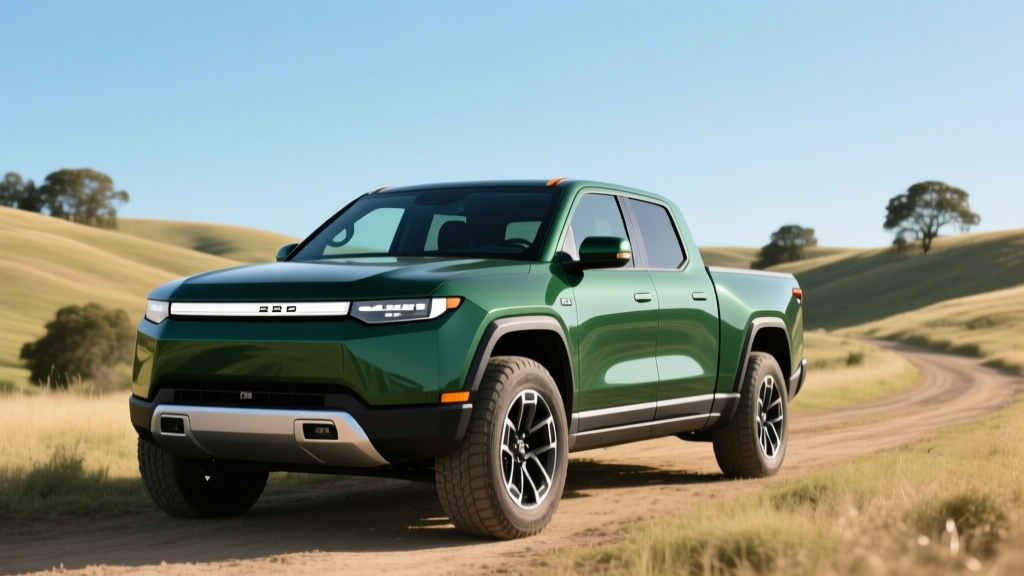
Consider the Rivian R1S instead if: You need genuinely usable third-row space for adults, want more cargo volume behind the third row, or prefer a more rugged, adventure-oriented vehicle. The R1S offers a usable third row with 36.9 inches of legroom.
Consider the Kia EV9 instead if: Budget is a primary concern and you need three rows. The EV9 starts around $54,900 and offers competitive range with a more traditional SUV form factor and better third-row usability.
Warranty and Ownership Considerations
Tesla provides a 4-year/50,000-mile limited vehicle warranty and an 8-year/150,000-mile battery and drive unit warranty for the Model X (Long Range and Plaid). The battery warranty guarantees that the pack will retain at least 70% of its original capacity over the warranty period. If degradation exceeds 30% within 8 years or 150,000 miles, Tesla will repair or replace the battery to bring it back to at least 70% capacity.
Insurance costs for the Model X are notably higher than the segment average. Expect annual premiums in the range of $2,800-$4,200 depending on your location, driving record, and coverage levels. Tesla offers its own insurance product in many states, which uses real-time driving data to calculate premiums — some owners report savings of 15-25% compared to traditional insurers.
Frequently Asked Questions
What is the real-world range of the Tesla Model X?
The EPA rates the Long Range at 335 miles (20-inch wheels) and the Plaid at 311 miles. In real-world highway driving at 70+ mph, expect 280-300 miles in mild weather. Cold weather (below freezing) can reduce range by 15-25%, bringing practical range to 240-270 miles. The Model X's heat pump helps mitigate cold-weather losses compared to older EVs with resistive heating.
How fast does the Model X charge at home and on the road?
On a Tesla Supercharger (V3/V4), the Model X peaks at 250 kW and charges from 10-80% in approximately 30 minutes. At home with a Tesla Wall Connector on a 60A circuit (48A continuous), it charges at 11.5 kW, adding about 34 miles of range per hour — enough to fully replenish overnight. On a standard NEMA 14-50 outlet, expect about 23 miles per hour of charging.
Does the Tesla Model X qualify for the $7,500 federal EV tax credit?
Only the 5-seat Long Range at $79,990 MSRP technically clears the $80,000 SUV MSRP cap. Adding the 6-seat or 7-seat option pushes the price above the cap, eliminating eligibility. The Plaid exceeds the cap in all configurations. Buyers must also meet income requirements ($300K joint / $150K single) and the vehicle must meet battery-sourcing rules, which can vary by production batch. Always verify on fueleconomy.gov before purchasing.
Is the Model X third row actually usable?
For children and shorter adults on short trips, yes. Third-row legroom is approximately 32.7 inches — tight for anyone over 5'6" on longer drives. The 6-seat configuration offers the best third-row access thanks to the walk-through between captain's chairs. If you regularly need to carry full-size adults in the third row, the Rivian R1S or Kia EV9 offer more accommodating dimensions.
Is the Model X worth buying vs. competitors in 2026?
The Model X excels in Supercharger network access, performance (especially the Plaid), and falcon-wing door practicality. However, the Rivian R1S offers better third-row usability, more cargo space, and competitive range at a lower starting price. The Kia EV9 provides three rows at a significantly lower price point. The Model X's biggest vulnerability is its pricing relative to the tax credit cap — most configurations disqualify themselves from the $7,500 credit, widening the effective price gap against competitors. If Supercharger access and Tesla's software ecosystem are priorities, the Model X remains compelling; if space-per-dollar matters more, look at the R1S and EV9.