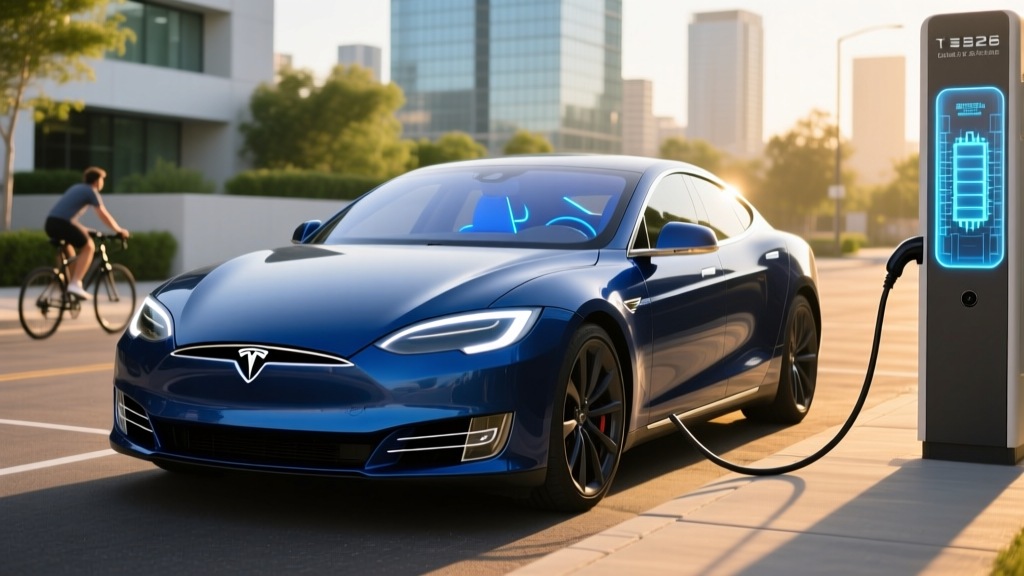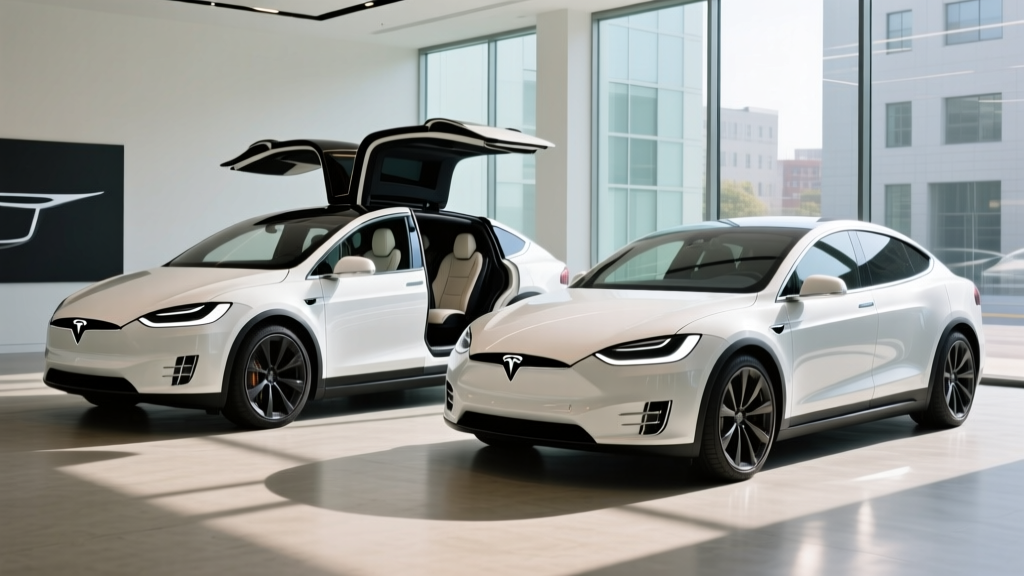
If you've been searching for answers about why Tesla might discontinue the Model X and Model S, you're not alone. Rumors about the end of Tesla's flagship SUV and sedan circulate regularly in EV forums and financial media. As of early 2026, however, both models remain in production and available for order — though their long-term future is genuinely uncertain. Here's what the data actually tells us about sales trends, platform economics, and whether these legacy Tesla vehicles still make sense to buy today.
The Discontinuation Rumor: Where It Comes From
The speculation about Tesla pulling the plug on Model X and Model S isn't baseless. It stems from several converging realities:
- Dominance of Model Y and Model 3: The more affordable Model Y and refreshed Model 3 account for the vast majority of Tesla's global deliveries. The S and X have represented a shrinking percentage of total output for years.
- Platform age: Both vehicles ride on Tesla's original platform architecture, predating the structural battery pack and 4680 cell manufacturing approach used in newer models. Retooling Fremont for a ground-up redesign would require significant capital.
- Elon Musk's own comments: In various earnings calls and public statements, Musk has acknowledged that the S and X are essentially in "legacy" status, maintained more for brand prestige than volume growth.
- Competitive pressure: The luxury EV segment has become fiercely competitive, with the BMW iX, Mercedes EQS SUV, Lucid Air, and Rivian R1S offering compelling alternatives that didn't exist when Model X launched in 2015.
That said, Tesla has not issued any official discontinuation announcement. Both models are listed on Tesla's configurator as of 2026, and the company continues to ship them. What's more useful for prospective buyers is understanding exactly what you get — and what you're giving up — if you choose either vehicle today.
2026 Tesla Model S: Current Specs at a Glance
| Specification | Model S Long Range (Dual Motor) | Model S Plaid (Tri-Motor) |
|---|---|---|
| EPA Range | 402 miles | 359 miles |
| Battery (usable, est.) | ~95 kWh, NMC | ~95 kWh, NMC |
| Drivetrain | Dual-Motor AWD | Tri-Motor AWD |
| Horsepower | 670 hp | 1,020 hp |
| 0-60 mph | 3.1 seconds | 1.99 seconds |
| Top Speed | 155 mph | 200 mph |
| Peak DC Fast Charge | 250 kW | 250 kW |
| 10-80% DC Charge Time | ~27 minutes | ~27 minutes |
| Level 2 Home Charging | 11.5 kW (~41 mi/hr) | 11.5 kW (~41 mi/hr) |
| MPGe (combined) | 120 MPGe | 116 MPGe |
| Efficiency | 28 kWh/100 mi | 29 kWh/100 mi |
| Cargo Volume | 28 cu ft (rear) / 71 cu ft (folded) + 3.1 cu ft frunk | 28 cu ft (rear) / 71 cu ft (folded) + 3.1 cu ft frunk |
| Seating | 5 passengers | 5 passengers |
| Base MSRP | $74,990 | $89,990 |
| Battery/Drive Unit Warranty | 8 years / 150,000 miles | 8 years / 150,000 miles |
The EPA estimates 402 miles for the Long Range variant. In our experience and consistent with independent testing, expect approximately 320-350 miles on sustained highway driving at 70-75 mph, and as low as 260-290 miles in freezing temperatures with cabin heating engaged. The Plaid's higher energy consumption further reduces real-world highway range to roughly 280-310 miles under similar conditions. These aren't deficiencies unique to Tesla — all EVs lose range at high speeds and in cold weather — but they're critical to plan around if you're road-tripping.
2026 Tesla Model X: Current Specs at a Glance
| Specification | Model X Long Range (Dual Motor) | Model X Plaid (Tri-Motor) |
|---|---|---|
| EPA Range | 335 miles (20" wheels) | 311 miles (21" wheels) |
| Battery (usable, est.) | ~95 kWh, NMC | ~95 kWh, NMC |
| Drivetrain | Dual-Motor AWD | Tri-Motor AWD |
| Horsepower | 670 hp | 1,020 hp |
| 0-60 mph | 3.8 seconds | 2.5 seconds |
| Peak DC Fast Charge | 250 kW | 250 kW |
| 10-80% DC Charge Time | ~31 minutes | ~31 minutes |
| Level 2 Home Charging | 11.5 kW (~34 mi/hr) | 11.5 kW (~34 mi/hr) |
| MPGe (combined) | 109 MPGe | 101 MPGe |
| Efficiency | 31 kWh/100 mi | 33 kWh/100 mi |
| Cargo Volume | 15.8 cu ft (6-seat, behind 3rd row) / 81.6 cu ft (max) + 6.6 cu ft frunk | 15.8 cu ft / 81.6 cu ft + 6.6 cu ft frunk |
| Seating | 5, 6, or 7 passengers | 5, 6, or 7 passengers |
| Towing Capacity | 5,000 lbs | 5,000 lbs |
| Base MSRP | $79,990 | $94,990 |
| Battery/Drive Unit Warranty | 8 years / 150,000 miles | 8 years / 150,000 miles |
The Model X's larger frontal area and heavier curb weight (~5,185 lbs) take a toll on efficiency. The EPA's 335-mile figure assumes a mix of driving conditions. On highway-heavy trips, expect closer to 270-300 miles. In winter conditions with temperatures below 30°F, plan for 230-260 miles of usable range before needing to charge. The Model X Plaid, with its wider tires and tri-motor energy draw, drops to roughly 250-275 miles highway and 210-240 miles in cold weather. For a family SUV, these numbers are adequate for most daily use but require route planning on longer trips.
Charging Speed: What You'll Actually Experience
| Charging Level | Power (kW) | Approximate Speed | Use Case |
|---|---|---|---|
| Level 1 (120V household) | ~1.4 kW | ~3-4 miles per hour | Emergency / overnight trickle only |
| Level 2 (240V, home Wall Connector) | 11.5 kW | ~34-41 miles per hour | Daily home charging; full charge in ~8-9 hours |
| DC Fast Charge (Tesla Supercharger V3) | Up to 250 kW peak | ~200 miles in 15 min (at peak) | Road trips; 10-80% in ~27-31 min |
| DC Fast Charge (CCS adapter at third-party stations) | Up to 250 kW (varies by station) | Station-dependent | Non-Tesla networks; requires CCS adapter (included) |
Charging curve reality: Both the Model S and Model X peak at 250 kW on V3 Superchargers, but that peak is sustained only briefly — typically between 10-30% state of charge (SoC). Above 50% SoC, the rate tapers significantly, often dropping to 80-100 kW. By 80% SoC, you're typically seeing 40-60 kW. This taper is why Tesla (and the EPA) quote 10-80% times rather than 0-100%. Charging from 80-100% can add another 25-35 minutes. If you're road-tripping, the practical strategy is to charge to 80% and drive on — unless you specifically need the full battery for a long stretch without chargers.
Both models now ship with a CCS adapter, granting access to Electrify America, EVgo, and other third-party networks alongside the Tesla Supercharger network. With Tesla opening Superchargers to other brands via NACS adoption, the Supercharger network remains a significant ownership advantage — though it's no longer exclusive.
Pricing, Tax Credit Eligibility, and Total Cost
| Model / Trim | Base MSRP | §30D Federal Credit Eligible? | Effective Price (if eligible) |
|---|---|---|---|
| Model S Long Range | $74,990 | No — exceeds $55,000 sedan MSRP cap | $74,990 |
| Model S Plaid | $89,990 | No — exceeds $55,000 sedan MSRP cap | $89,990 |
| Model X Long Range | $79,990 | No — exceeds $80,000 SUV MSRP cap in most configurations | $79,990 |
| Model X Plaid | $94,990 | No — exceeds $80,000 SUV MSRP cap | $94,990 |
Tax credit reality: Under current IRS §30D rules, new EVs must meet MSRP caps ($55,000 for sedans, $80,000 for SUVs/vans/pickups), buyer income limits ($150,000 single / $300,000 joint modified AGI), and battery critical-mineral and component sourcing requirements to qualify for up to $7,500 in federal tax credits. Both the Model S (all trims, sedan cap) and the Model X (most configurations, SUV cap) exceed their respective MSRP thresholds. This means neither vehicle qualifies for the federal new-EV tax credit as of 2026. Buyers should verify current rules at IRS.gov as regulations and manufacturer sourcing compliance can shift.
For buyers who purchased a Model S or X before the MSRP caps took effect, or who can locate a qualifying used example (the separate §25E used-EV credit allows up to $4,000 on vehicles priced under $25,000 — unlikely for these models), the math changes. But for new purchases today, budget the full MSRP plus destination and any options.
Tech, Driver Assistance, and Interior
Both the Model S and Model X come equipped with Tesla's current-generation infotainment system on a 17-inch center touchscreen, a 12.3-inch driver instrument cluster, and a rear-seat 8-inch display. The yoke steering wheel is standard, with a conventional round wheel available at no additional cost. Gaming capability (including AAA titles) and Netflix/YouTube streaming while parked remain standout entertainment features.
Driver assistance: Tesla's Basic Autopilot is standard, providing adaptive cruise control and lane-keeping. Full Self-Driving (Supervised) remains an $8,000 add-on (or $99/month subscription as of 2026). It is critical to understand that FSD is an SAE Level 2 driver-assistance system — the driver must remain fully engaged, hands on the wheel (or providing torque input), and eyes on the road at all times. It is not autonomous driving. Tesla's naming convention has drawn regulatory scrutiny precisely because "Full Self-Driving" overstates the system's capabilities relative to Level 4 robotaxi services like Waymo.
Tesla Autopilot and FSD (Supervised) are SAE Level 2 systems. They do not make the vehicle self-driving. The driver is legally and practically responsible for all vehicle operation. These systems can fail to detect stationary objects, construction zones, and certain road geometries. NHTSA has investigated multiple incidents involving Autopilot. Never use these systems while impaired, fatigued, or inattentive.
Notable drawbacks: The Model X's falcon-wing rear doors, while visually striking, add mechanical complexity and have historically been a source of seal and sensor issues. Panel gap quality on both models, while improved from early production years, still draws criticism relative to German luxury competitors. The absence of Apple CarPlay and Android Auto continues to alienate some buyers who prefer phone-mirroring interfaces. And the yoke steering, while offering an unobstructed instrument cluster view, requires adaptation — particularly during low-speed maneuvering and three-point turns.
Pros and Cons: The Honest Assessment
Pros
- Class-leading EPA range (Model S LR at 402 mi)
- Access to Tesla Supercharger network — the most reliable DC fast-charging network in the US
- Brutal performance — Model S Plaid's 1.99-second 0-60 remains among the fastest production cars ever made
- Over-the-air updates continue to add features post-purchase
- Model X offers genuine three-row seating (6 or 7 passengers) with a frunk — rare in the EV SUV segment
- 5,000-lb towing capacity on Model X is practical for boat and light camper duty
- 8-year/150,000-mile battery and drive unit warranty exceeds the industry-standard 8/100,000
Cons
- No federal tax credit eligibility due to MSRP caps
- Charging speed capped at 250 kW — newer competitors (Hyundai Ioniq 5, Lucid Air) charge at 350 kW on compatible stations
- Platform is aging — no structural battery pack, no 4680 cells, no 800V architecture
- FSD (Supervised) remains Level 2 despite its name and $8,000 price tag
- Model X falcon-wing doors add complexity and potential repair cost
- Build quality and panel gaps still trail BMW, Mercedes, and Lucid
- No Apple CarPlay or Android Auto
- High insurance premiums relative to segment (check quotes before purchasing)
Competitor Comparison: Is It Worth Buying?
The luxury EV landscape has evolved dramatically since the Model S launched in 2012 and the Model X in 2015. Here's how they stack up against key rivals:
- Lucid Air Grand Touring: 516 miles EPA range, 300+ kW charging capability, and a more luxurious interior — but starting around $125,000 and with a smaller service network.
- BMW iX xDrive50: ~324 miles EPA, 195 kW DC charging, excellent build quality and comfort, ~$87,000. More refined interior, but less range and slower charging.
- Mercedes EQS SUV 580: ~305 miles EPA, 200 kW DC charging, three-row seating, ~$110,000. Superior luxury and ride quality, but significantly more expensive and less efficient.
- Rivian R1S (Dual-Motor Max Pack): ~410 miles EPA (with Max Pack), 200+ kW charging, genuine off-road capability, 7-passenger seating, ~$90,000+. A strong Model X alternative for adventure-oriented families.
The Model S remains compelling for buyers who prioritize range, Supercharger access, and straight-line performance. The Model X holds a narrower niche — it's one of the few EVs offering three-row seating, a frunk, and 5,000-lb towing. But in both cases, you're buying into an aging platform at a premium price with no tax-credit offset.
Who Should Buy — and Who Should Wait
The Model S is best for: Drivers who want maximum EPA range in a sedan, who road-trip frequently and value Supercharger network reliability, and who find the Plaid's performance genuinely meaningful. If you're cross-shopping the Lucid Air and don't need 500+ miles, the Model S Long Range offers 90% of the capability at a substantially lower price.
The Model X is best for: Families who need three-row seating and cargo flexibility, who want EV towing capability, and who prioritize Supercharger access for family road trips. If you don't need the third row, the Model Y (with significantly lower pricing and tax credit eligibility) or the Rivian R1S may serve you better.
Who should wait: If the discontinuation rumors concern you, consider that Tesla may eventually replace both vehicles with next-generation models on the newer platform architecture. However, waiting for an unannounced vehicle carries its own risk — there's no timeline, no confirmed specs, and no guarantee of pricing. If you need a vehicle now and the current S or X meets your requirements, buying now locks in known specs and immediate delivery. If you can wait 18-24 months, you may see either a refreshed platform or a formal end-of-production announcement with clearance pricing.
Frequently Asked Questions
Is Tesla actually discontinuing the Model X and Model S?
As of 2026, Tesla has not officially announced discontinuation of either model. Both remain available for order on Tesla's website. However, sales volumes have declined as a percentage of Tesla's total output, and the platform is aging relative to competitors. Industry analysts consider a phase-out or eventual replacement plausible within the next 2-4 years, but nothing is confirmed.
What is the real-world range of the 2026 Model S and Model X?
The Model S Long Range is EPA-rated at 402 miles; expect 320-350 miles highway and 260-290 miles in freezing weather. The Model S Plaid is rated at 359 miles; expect 280-310 highway. The Model X Long Range is rated at 335 miles; expect 270-300 highway and 230-260 in cold weather. The Model X Plaid is rated at 311 miles; expect 250-275 highway.
How fast do the Model S and Model X charge?
Both vehicles peak at 250 kW on Tesla V3 Superchargers, achieving a 10-80% charge in approximately 27 minutes (Model S) to 31 minutes (Model X). Real-world charging time depends on battery temperature, state of charge, and station conditions. Preconditioning the battery via navigation routing to a Supercharger is essential to achieving peak rates. Home Level 2 charging at 11.5 kW adds roughly 34-41 miles per hour.
Do the Model S and Model X qualify for the federal EV tax credit?
No. Under current IRS §30D rules, the Model S (a sedan) exceeds the $55,000 MSRP cap, and the Model X (an SUV) exceeds the $80,000 MSRP cap in most configurations. Additionally, buyers must meet income limits ($150,000 single / $300,000 joint) and the vehicle must meet battery-sourcing requirements. Always verify current eligibility at IRS.gov or consult a tax professional.
Should I buy now or wait for a replacement?
If you need a vehicle now and the current Model S or X fits your budget and use case, buying now gives you known specs, immediate delivery, and years of useful life regardless of future production decisions. If you can comfortably wait 18-24 months and want a next-generation platform, holding off is reasonable — but there's no guarantee of what Tesla will offer or at what price. End-of-production clearance pricing could be attractive if discontinuation is announced.
How does the Supercharger advantage factor in?
Tesla's Supercharger network remains the most reliable and widely deployed DC fast-charging network in the United States. However, with Tesla opening the network to NACS-equipped vehicles from other manufacturers, this advantage is narrowing. Model S and X owners still benefit from seamless plug-and-charge integration and the broadest station coverage, but competitors charging on the same network via NACS are increasingly viable.
What's the battery warranty on the Model S and X?
Both models carry an 8-year / 150,000-mile battery and drive unit warranty, with Tesla guaranteeing a minimum of 70% battery capacity retention over that period. This exceeds the more common 8-year / 100,000-mile warranty offered by many competitors. Real-world data from high-mileage Tesla owners suggests NMC battery degradation typically plateaus around 10-15% loss after the first 50,000-80,000 miles, though individual results vary based on charging habits and climate.