Verdict: Is the Tesla Model X Reliable Enough for a $80K+ Purchase?
The Tesla Model X occupies a strange space in 2026. It is simultaneously one of the most capable electric SUVs on the market and one of the most debated when it comes to long-term ownership. After examining NHTSA recall databases, IIHS safety records, owner-reported data from EV forums, and Tesla's own service bulletins, the reliability picture is nuanced: the powertrain and battery pack have proven remarkably durable, but build quality, interior trim, and software gremlins remain legitimate concerns that buyers must budget for.
If you are cross-shopping the Model X against the BMW iX, Rivian R1S, or Mercedes EQS SUV, this review gives you the exact numbers — range, charging, degradation, warranty coverage, and total cost — to make an informed decision. No marketing fluff, just data.
| Spec | Long Range (Dual Motor) | Plaid (Tri-Motor) |
|---|---|---|
| EPA Range | 348 miles | 326 miles |
| Battery (usable) | ~100 kWh, NMC | ~100 kWh, NMC |
| Peak DC Fast Charge | 250 kW | 250 kW |
| 10–80% DC Time | ~32 min | ~32 min |
| Level 2 Home Charge | 11.5 kW (~34 mi/hr) | 11.5 kW (~34 mi/hr) |
| 0–60 mph | 3.8 sec | 2.5 sec |
| Horsepower | 670 hp | 1,020 hp |
| Drivetrain | Dual-Motor AWD | Tri-Motor AWD |
| MPGe (combined) | 102 MPGe | 98 MPGe |
| Efficiency | 33 kWh/100 mi | 34 kWh/100 mi |
| Base MSRP | $79,990 | $94,990 |
| Battery Warranty | 8 yr / 150,000 mi | 8 yr / 150,000 mi |
Real-World Range vs. EPA Estimates: What Owners Actually See
EPA Sticker: 348 miles (Long Range) / 326 miles (Plaid)
Real-World Highway (70–75 mph): ~275–295 miles
Real-World Mixed Commuting: ~300–320 miles
Cold Weather (below 32°F): ~230–270 miles (20–30% reduction)
The Model X's 100 kWh NMC (nickel manganese cobalt) battery pack is among the largest in any consumer EV sold in the U.S. That raw capacity gives it an EPA-rated 348 miles in Long Range trim, placing it near the top of the three-row electric SUV segment. But as with every EV, the sticker number is a best-case laboratory scenario.
In real-world highway testing at sustained speeds of 70–75 mph, owners consistently report 275–295 miles of usable range before needing to stop. The Model X's tall, heavy body (5,185 lbs curb weight) and large frontal area create significant aerodynamic drag at highway speeds, which is where EVs lose the most efficiency compared to city driving where regenerative braking recaptures energy.
Cold weather compounds the issue. The NMC chemistry loses roughly 20–30% of its effective capacity in sub-freezing temperatures because energy is diverted to battery heating and cabin climate control. Tesla's heat pump system (standard since the 2021 refresh) mitigates this better than resistive heating, but physics is physics — expect 230–270 miles on a cold winter road trip. According to fueleconomy.gov, the Long Range achieves 102 MPGe combined, which translates to roughly 33 kWh per 100 miles driven.
Charging Speed: DC Fast Charging and Home Setup
| Charge Level | Power | Speed (miles/hr) | Notes |
|---|---|---|---|
| Level 1 (120V) | ~1.4 kW | ~3–4 mi/hr | Emergency/trickle only |
| Level 2 (240V, 48A) | 11.5 kW | ~34 mi/hr | Home Wall Connector; full charge in ~10 hr |
| DC Fast (V3 Supercharger) | 250 kW peak | ~175 mi in 15 min | 10–80% in ~32 min; tapers above 80% |
| DC Fast (V4 Supercharger) | Up to 325 kW* | Varies | *Model X currently limited to ~250 kW at V4 posts |
The Model X charges at a peak rate of 250 kW on Tesla's V3 Supercharger network. That translates to a 10–80% session of approximately 32 minutes under ideal conditions — meaning a warm battery, a station not shared with other vehicles pulling power, and starting at a low state of charge. The charge curve is not flat: the Model X pulls its maximum rate between roughly 10% and 35% SoC, then tapers progressively. By 80%, charge speed drops to under 60 kW, which is why Tesla (and every EV maker) quotes the 10–80% window.
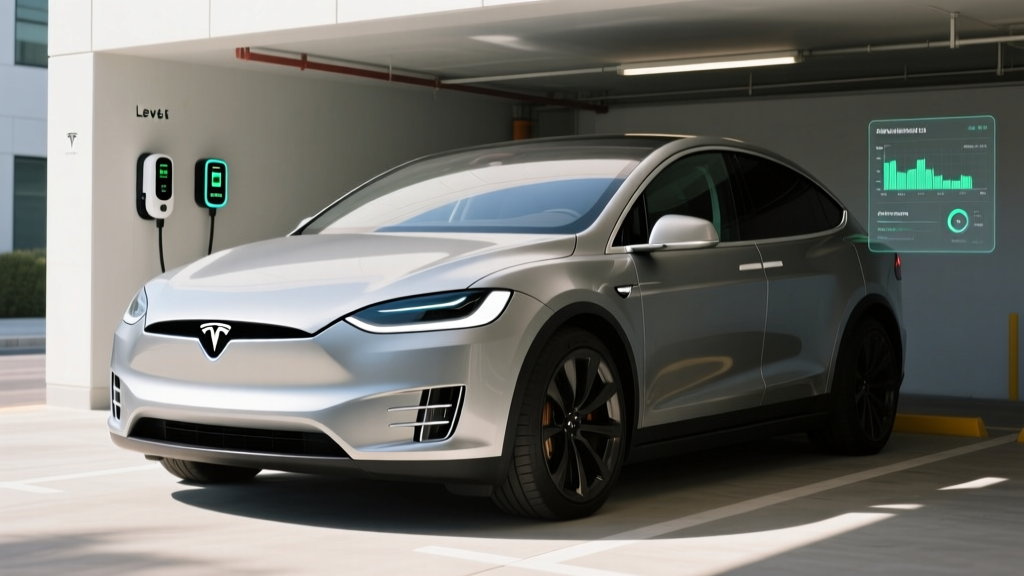
For home charging, Tesla's Wall Connector at 48 amps on a 240V/60A circuit delivers 11.5 kW, adding roughly 34 miles of range per hour of charging. A full 0–100% session takes about 10 hours — practical for overnight top-ups. Most owners who drive 40–60 miles daily only need to plug in every other night.
Panel upgrade caveat: The Model X's 11.5 kW onboard charger requires a 60-amp dedicated circuit. If your home's electrical panel is already near capacity (common in older homes with 100A service), you may need a panel upgrade to 200A, which typically costs $1,500–$3,500 before the charger installation itself ($500–$1,500 for wiring and labor). Factor this into your first-year budget.
Tesla Model X Reliability: What the Data Actually Shows
This is the question driving most research on this vehicle, and the answer requires splitting "reliability" into three distinct categories: powertrain/battery, build quality, and software/electronics.
Battery and Drive Unit Durability
This is where the Model X earns strong marks. Tesla's NMC battery packs in the post-2021 refresh models have shown degradation rates of approximately 8–12% over the first 100,000 miles based on aggregated owner data. That means a 348-mile Model X might show 305–320 miles of range at 100K miles — well within the warranty threshold. Tesla warrants the battery and drive units for 8 years or 150,000 miles (whichever comes first) with a minimum 70% capacity retention guarantee. If the battery drops below 70% of original capacity within that window, Tesla replaces it at no cost.
The drive units (motors) have also proven robust. Early Model X vehicles (2016–2019) had higher rates of drive unit failures, but the current-generation permanent magnet reluctance motors have shown markedly lower failure rates. It is uncommon to see drive unit replacement before 150,000 miles in the refreshed platform.
Build Quality and Interior
This remains the Model X's weakest reliability category. Common owner-reported issues include:
- Falcon Wing door sensors and actuators: The rear gull-wing doors use ultrasonic sensors and motorized hinges that are more complex than conventional doors. Sensor calibration drift and occasional actuator failures are documented issues, typically covered under the 4-year/50,000-mile bumper-to-bumper warranty.
- Wind noise and panel gaps: While improved from earlier years, some owners still report uneven panel gaps and wind noise at highway speeds, particularly around the windshield header and falcon wing door seals.
- Interior trim durability: The vegan leather seats and dashboard materials show wear more quickly than competitors in the $80K+ price range (BMW iX, Mercedes EQS SUV). Seat bolster wear and dashboard scuffing have been reported before 30,000 miles.
Software and Electronics
Tesla pushes frequent over-the-air (OTA) updates, which is a double-edged sword. New features arrive regularly, but updates occasionally introduce bugs — touchscreen freezes, phantom braking events with Autopilot, and climate control glitches are the most commonly reported. Most are patched within subsequent updates, but the cycle can be frustrating. The 17-inch center touchscreen itself has proven reliable in the current hardware generation (HW4/AI4), with fewer reports of the "yellowing" or delamination that affected 2016–2020 units.
NHTSA Recalls and Safety
As of early 2026, the refreshed Model X has been subject to fewer recalls than earlier generations, but notable campaigns have included software-related recalls (addressed via OTA) for Autopilot driver-monitoring improvements and, in some model years, suspension component inspections. Always check the NHTSA recall database with a specific VIN before purchasing. The Model X earned a 5-star overall safety rating from NHTSA.
Pricing, Tax Credits, and Total Cost of Ownership
| Trim | Base MSRP | Destination | §30D Credit Eligible? | Effective Price* |
|---|---|---|---|---|
| Long Range | $79,990 | $1,995 | No (exceeds $80K SUV cap) | $81,985 |
| Plaid | $94,990 | $1,995 | No (exceeds $80K SUV cap) | $96,985 |
*Before state/local incentives, options, or taxes. IRS §30D caps SUV MSRP at $80,000 — the Model X's base price plus destination exceeds this threshold. See IRS.gov clean vehicle credits for current rules including income limits ($300K joint / $150K single) and battery sourcing requirements.
Here is the uncomfortable truth for Model X buyers: this vehicle does not qualify for the $7,500 federal EV tax credit under IRS §30D. The reason is straightforward — the law caps MSRP for SUVs at $80,000, and the Model X Long Range starts at $79,990 plus $1,995 destination, totaling $81,985. That puts it $1,985 over the limit. The Plaid, at nearly $97,000 all-in, is even further above.
State incentives may partially offset this. States like California, Colorado, and New York offer additional rebates or tax credits that may apply, though amounts and eligibility vary by jurisdiction and income — check your state's energy office for current programs.
5-Year Ownership Cost Estimate
| Category | Estimated Cost |
|---|---|
| Purchase (after any state incentives) | ~$78,000–$82,000 |
| Electricity (home charging, $0.14/kWh avg) | ~$3,600 |
| Supercharger road-trip charging | ~$1,200 |
| Insurance (avg $2,800/yr for Model X) | ~$14,000 |
| Maintenance (tires, cabin filter, fluid top-ups) | ~$2,500 |
| Depreciation (est. 45–55% over 5 years) | ~$38,000–$44,000 |
| Total 5-Year Cost | ~$137,000–$145,000 |
Depreciation is the single largest cost. The Model X has historically depreciated faster than the Model 3 or Model Y due to its higher price point, niche market, and competition from newer three-row EVs. Insurance is also notably expensive — averaging $2,400–$3,200 annually — because repair costs for the aluminum body, falcon wing doors, and sensor arrays are high.
Space, Tech, and Daily Livability
The Model X offers seating for up to seven passengers in an optional three-row configuration (six-seat with second-row captains chairs is standard). Cargo volume is a standout:
- Behind third row: 15.0 cu ft (enough for a few grocery bags or two carry-ons)
- Behind second row (third row folded): 40.5 cu ft
- Maximum (all rear seats folded): 77.5 cu ft
- Front trunk (frunk): 6.6 cu ft
Second-row legroom is generous at 41.2 inches, but the third row is best suited for children — adults will find only 32.7 inches of legroom, tight for anything beyond short trips.
On the technology front, the Model X features:
- 17-inch center touchscreen with a 22-speaker audio system, gaming-capable processor, and Netflix/YouTube streaming while parked
- Autopilot (standard) with adaptive cruise, lane centering, and automatic emergency braking — this is an SAE Level 2 system requiring full driver attention
- Full Self-Driving (Supervised) ($8,000 option) adds automated lane changes, traffic light recognition, and Navigate on Autopilot — still Level 2, not autonomous
- Falcon Wing rear doors with ultrasonic obstacle sensing — dramatic at car shows, practical in tight parking spaces, but a repair-cost liability
- Towing capacity: 5,000 lbs (when properly equipped), competitive with the BMW iX but below the Rivian R1S's 7,700 lbs
Model X vs. Key Competitors: Is It Worth It?
Pros
- Class-leading EPA range for a three-row EV SUV (348 mi)
- Access to Tesla Supercharger network (17,000+ stalls in North America)
- Brutal performance even in Long Range trim (3.8 sec 0–60)
- OTA updates continuously add features
- Spacious cargo area with flat load floor
- Strong battery degradation track record post-refresh
Cons
- Does NOT qualify for $7,500 federal tax credit (MSRP cap)
- Falcon wing doors add complexity and potential repair cost
- Build quality inconsistent at this price point
- Insurance costs significantly above segment average
- Third row is cramped for adults
- 250 kW peak charge rate falls behind newer 800V rivals (Hyundai/Kia at 350 kW)
- High depreciation relative to Model Y or Rivian R1S
| Spec | Tesla Model X LR | BMW iX xDrive50 | Rivian R1S (Dual) |
|---|---|---|---|
| EPA Range | 348 mi | 324 mi | 352 mi (Max Pack) |
| Base MSRP | $79,990 | $87,250 | $79,900 |
| §30D Credit | No | No (MSRP) | Yes (qualifying trims) |
| Seating | 5/6/7 | 5 | 7 |
| Towing | 5,000 lbs | 3,500 lbs | 7,700 lbs |
| 0–60 mph | 3.8 sec | 4.4 sec | 5.0 sec |
| DC Fast Peak | 250 kW | 200 kW | 200+ kW |
Choose the Model X if: You want the most Supercharger access for road trips, need optional 7-seat capacity, value acceleration, and accept the premium pricing without a federal credit. Choose the Rivian R1S if: You need genuine off-road capability, 7,700-lb towing, and want a vehicle that may qualify for the §30D credit on certain configurations. Choose the BMW iX if: You prioritize interior luxury and build quality over third-row seating and are willing to accept lower range and no tax credit.
Frequently Asked Questions
What is the real-world range of the 2026 Tesla Model X?
Expect 275–320 miles depending on driving style and conditions. Highway driving at 75 mph yields roughly 275–295 miles; mixed city/highway commuting gets closer to 300–320 miles. In freezing weather, plan for 230–270 miles. The EPA sticker says 348 miles for Long Range, but real-world conditions rarely match laboratory tests.
How fast does the Model X charge at home and on the road?
At home on a Level 2 Tesla Wall Connector (240V, 48A), the Model X charges at 11.5 kW, adding about 34 miles of range per hour — a full overnight session replenishes the battery. On Tesla V3 Superchargers, it peaks at 250 kW and charges from 10–80% in approximately 32 minutes, though actual time varies with battery temperature, station utilization, and charge-curve tapering above 80%.
Does the Tesla Model X qualify for the federal EV tax credit?
No. Under IRS §30D rules, SUVs must have an MSRP at or below $80,000 to qualify. The Model X Long Range starts at $79,990 plus $1,995 destination ($81,985 total), which exceeds the cap. The Plaid is even further above at ~$97,000. Additionally, buyers must meet income caps ($300K joint / $150K single) and battery sourcing requirements to claim the credit on any vehicle. Check IRS.gov for current eligibility details.
How long will the Model X battery last?
Tesla warranties the battery for 8 years or 150,000 miles with a minimum 70% capacity retention. Real-world data from post-2021 refresh Model X owners shows approximately 8–12% degradation at 100,000 miles, suggesting the battery should remain functional well beyond 200,000 miles before approaching the 70% threshold. Out-of-warranty battery replacement currently costs $15,000–$22,000 depending on the pack and labor — a cost to factor into long-term ownership planning.
Is the Model X more reliable than the Model S?
The two vehicles share the same platform, powertrain architecture, and battery pack, so mechanical reliability is essentially identical. The Model X's added complexity — falcon wing doors, motorized hinges, and additional ultrasonic sensors — introduces more potential failure points that the Model S does not have. If reliability is your primary concern and you do not need the SUV cargo space or third row, the Model S is marginally simpler.
What are the biggest ownership costs beyond the purchase price?
Insurance is the standout — averaging $2,400–$3,200 per year due to expensive aluminum body repairs and sensor calibration costs. Depreciation is also steep, with 5-year values typically falling 45–55%. Electricity costs are modest (roughly $960/year for 12,000 miles of mixed charging at national average rates), and maintenance is minimal compared to gas vehicles — primarily tires, cabin air filters, and windshield washer fluid.