First Look: The 2026 Tesla Model X at a Glance
If you've been searching for Tesla Model X pictures to decide whether this flagship electric SUV still earns its premium price tag, you're not alone. The Model X remains one of the most recognizable EVs on the road — thanks to its signature falcon-wing rear doors, panoramic windshield, and a 0-60 time that embarrasses sports cars. But beyond the striking photos and social media presence, the Model X is a serious family hauler with real trade-offs that every buyer needs to understand before signing a purchase agreement.
For 2026, Tesla continues to offer the Model X in two primary configurations: the dual-motor Long Range and the tri-motor Plaid. Both ride on a ~100 kWh battery pack, share the same striking exterior that photographs so well, and seat up to seven passengers across three rows. What separates them is performance — and a substantial price gap. This review breaks down every spec, charging figure, and ownership cost you need to make an informed decision.
Exterior Design and the Photos That Turn Heads
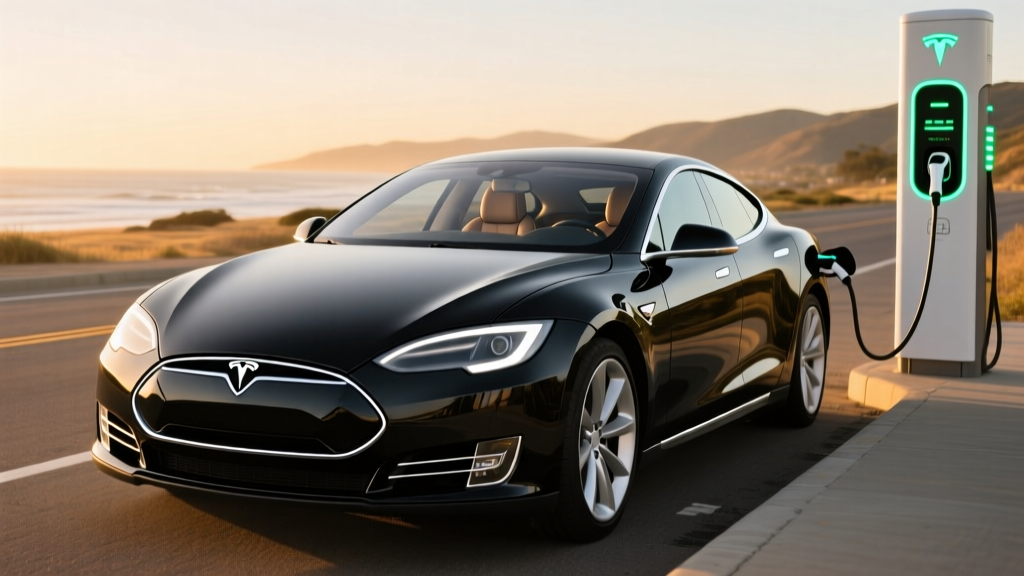
The Model X hasn't undergone a dramatic exterior redesign since its 2021 refresh, but it doesn't need one — its silhouette is instantly recognizable. The smooth, drag-optimized body (Cd 0.24) lacks a traditional grille, featuring instead a sleek front fascia that houses the camera and sensor suite for Tesla's Autopilot system. The defining feature, of course, remains the falcon-wing rear doors, which articulate upward on dual hinges to provide dramatic access to the second and third rows.
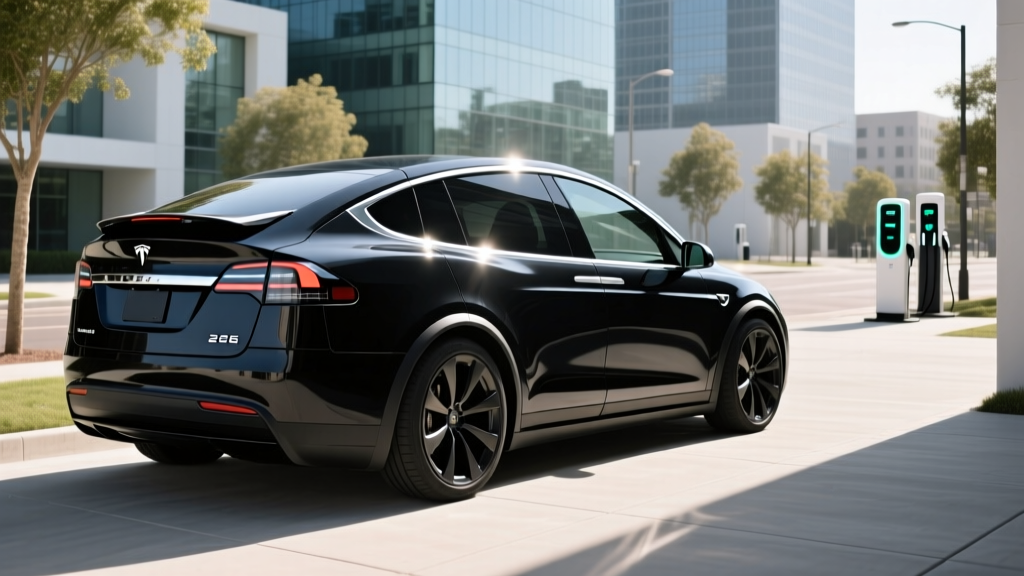
In photographs, the Model X reads as a premium crossover with a fastback roofline that slopes aggressively toward the rear. The full-width light bar up front and the distinctive LED taillight signature make it unmistakable at night. Available exterior colors for 2026 include Pearl White Multi-Coat, Solid Black, Deep Blue Metallic, Ultra Red, and Quicksilver — the latter two commanding a $2,500 premium.
For those researching Tesla Model X pictures online, the most photographed angles tend to be: the falcon-wing doors fully deployed (always dramatic), the panoramic windshield viewed from the driver's seat looking upward, the 17-inch center touchscreen tilted in its new horizontal orientation (introduced in the refresh), and the minimalist rear profile with the retracting door handles flush against the body.
Range, Battery, and Real-World Efficiency
The 2026 Tesla Model X Long Range carries an EPA-estimated 335 miles of range on its dual-motor all-wheel-drive powertrain. The tri-motor Plaid variant drops to an EPA-estimated 326 miles due to the additional motor's weight and energy draw. Both versions use a ~100 kWh (usable) NMC (nickel manganese cobalt) battery pack — Tesla does not offer LFP chemistry in the Model X lineup.
| Spec | Long Range (Dual Motor) | Plaid (Tri Motor) |
|---|---|---|
| EPA Range | 335 mi | 326 mi |
| Battery (Usable) | ~100 kWh, NMC | ~100 kWh, NMC |
| MPGe (Combined) | 102 MPGe | 98 MPGe |
| kWh/100 mi | 33 kWh | 34 kWh |
| Real-World Highway (75 mph) | ~280-300 mi | ~270-290 mi |
| Cold-Weather Estimate (<32°F) | ~240-270 mi | ~235-265 mi |
Efficiency, measured in kWh per 100 miles, lands at 33 kWh/100mi for the Long Range — reasonable for a vehicle of this size and weight, though the lighter BMW iX xDrive50 achieves slightly better figures. According to fueleconomy.gov, the Model X Long Range earns a combined 102 MPGe rating.
Charging Speed: DC Fast Charge and Home Level 2
Charging speed is where the Model X's 400-volt architecture shows its age compared to newer 800-volt competitors like the Hyundai Ioniq 9 or Porsche Macan Electric. The Model X supports a peak DC fast-charge rate of 250 kW on Tesla's V3 Superchargers. In practice, the charge curve peaks near 250 kW only between roughly 10-30% state of charge, then tapers progressively. A 10-80% charge takes approximately 30-32 minutes at a V3 Supercharger.
At home on a Level 2 charger (240V), the Model X accepts up to 11.5 kW using Tesla's Wall Connector. This translates to roughly 34 miles of range per hour of charging. A full 0-100% charge at 11.5 kW takes approximately 10-11 hours, making overnight charging straightforward for most owners.
| Charging Level | Max Rate | Speed / Time |
|---|---|---|
| Level 1 (120V, 12A) | ~1.4 kW | ~3-4 mi/hr |
| Level 2 (240V, 48A Wall Connector) | 11.5 kW | ~34 mi/hr; 0-100% in ~10-11 hr |
| DC Fast Charge (Tesla V3 Supercharger) | 250 kW peak | 10-80% in ~30-32 min |
| DC Fast Charge (CCS adapter, non-Tesla) | ~150-170 kW (adapter limited) | 10-80% in ~45-50 min |
The Model X uses the NACS (North American Charging Standard) connector natively — Tesla's proprietary plug that has now been adopted industry-wide. This gives Model X owners seamless access to the entire Tesla Supercharger network (over 20,000 stalls in North America) without adapters. A CCS adapter is available for use on non-Tesla DC fast chargers, though throughput is often limited by the adapter's thermal constraints.
Preconditioning tip: Always navigate to a Supercharger using the car's built-in navigation before arriving. The Model X will automatically precondition (warm) the battery en route, enabling peak 250 kW charge rates. Cold-soaked batteries arriving at a charger without preconditioning may peak at only 50-100 kW until the pack warms up.
Performance: 0-60, Horsepower, and Drivetrain
The Model X Long Range uses a dual-motor all-wheel-drive setup producing 670 horsepower. Tesla claims a 0-60 mph time of 3.8 seconds — remarkable for a 5,185-lb three-row SUV. The Long Range's top speed is electronically limited to 155 mph.
The Model X Plaid steps up to a tri-motor AWD configuration generating 1,020 horsepower. Its 0-60 time of 2.5 seconds makes it one of the quickest production SUVs ever built. Top speed rises to 163 mph. The Plaid's three-motor torque-vectoring system provides exceptional cornering grip and stability, though the vehicle's mass is always present in transitions.
Both variants feature adaptive air suspension with adjustable ride height (useful for clearing steep driveways or improving highway aero) and Tesla's electric power steering, which is precise if somewhat light on feel. Towing capacity is rated at 5,000 lbs for both trims when equipped with the factory tow package.
Interior, Cargo Space, and Tech Features
Step inside the Model X and the most striking feature is the panoramic windshield — the largest in any production vehicle — which sweeps up and over the front seats, flooding the cabin with light. The 17-inch center touchscreen (now mounted horizontally) handles virtually all vehicle controls, navigation, media, and climate functions. A secondary 8-inch touchscreen for rear passengers controls rear climate, seat heaters, and entertainment.
Seating configurations include five, six, and seven passengers. The six-seat layout with second-row captain's chairs is the most popular and provides the best third-row access. Cargo volume figures:
- Behind third row: 15.0 cu ft
- Behind second row (third row folded): 42.5 cu ft
- Behind front seats (all rear rows folded): 81.4 cu ft
- Front trunk (frunk): 6.6 cu ft
Second-row legroom measures 40.9 inches; third-row legroom is a tight 32.7 inches — adequate for children but cramped for adults on longer trips. Headroom is generous in the first two rows thanks to the panoramic glass, but the sloping roofline cuts into third-row headroom.
Notable tech features:
- Tesla Autopilot (standard) with adaptive cruise, lane-keeping, and automatic emergency braking
- Full Self-Driving (Supervised) available as a $8,000 add-on — note this is SAE Level 2, requiring active driver supervision at all times
- HEPA air filtration with Bioweapon Defense Mode
- 22-speaker audio system with immersive sound
- Gaming-capable infotainment (up to 10 teraflops of compute)
- Over-the-air software updates that add features regularly
Notable drawbacks: The yoke steering wheel (optional, $1,000) is polarizing and makes low-speed parking maneuvers more difficult. Build quality, while improved since early production, still shows occasional panel-gap inconsistencies that buyers at this price point may find disappointing. The falcon-wing doors, while photogenic, can be slow to open/close and have historically been a source of reliability complaints — sensors sometimes fail to detect overhead obstructions correctly.
Pricing, Trims, and Federal Tax Credit Eligibility
The 2026 Tesla Model X is available in two trims. Pricing (before any incentives) as of early 2026:
| Trim | Base MSRP | Est. As-Tested* |
|---|---|---|
| Long Range (Dual Motor AWD) | $79,990 | $87,000-$92,000 |
| Plaid (Tri Motor AWD) | $94,990 | $102,000-$110,000 |
*As-tested prices include common options: premium paint ($2,500), 22" wheels ($5,500), FSD Supervised ($8,000), and six-seat interior.
Federal Tax Credit: Does the Model X Qualify?
This is where many buyers are surprised. Under the IRS §30D clean vehicle credit rules, the Model X faces a significant hurdle: the SUV MSRP cap of $80,000. The Long Range at $79,990 squeaks under the cap by a single dollar, making it potentially eligible for up to $7,500 in federal tax credits — but only if the buyer also meets all other requirements. The Plaid at $94,990 exceeds the cap and is not eligible for the federal credit regardless of buyer income.
- ✅ MSRP at or below $80,000 (SUV cap) — Long Range qualifies at $79,990
- ⚠️ Buyer income cap: $300,000 (MFJ), $225,000 (HoH), $150,000 (single) — check your MAGI
- ⚠️ Battery critical minerals and component sourcing requirements must be met (verify current-year compliance on Tesla's website or IRS guidance)
- ⚠️ Credit is non-refundable unless transferred at point of sale to the dealer for an instant price reduction
- ❌ Model X Plaid ($94,990 MSRP) exceeds the $80,000 SUV cap — not eligible
Always verify eligibility with a tax professional. Rules change annually and depend on battery sourcing compliance at time of delivery. Source: IRS.gov
Warranty Coverage and Long-Term Battery Outlook
Tesla provides the following warranty coverage for the 2026 Model X:
- Basic vehicle limited warranty: 4 years / 50,000 miles
- Battery and drive unit warranty: 8 years / 150,000 miles (whichever comes first), with a guaranteed minimum 70% capacity retention over the warranty period
The 150,000-mile battery warranty on the Model X is more generous than the 120,000-mile coverage on the Model 3/Y, reflecting Tesla's expectation that premium buyers will accumulate more miles. NMC chemistry in the Model X typically sees 8-12% degradation over the first 100,000 miles based on fleet data, with the steepest drop occurring in the first 20,000 miles before leveling off. A full battery replacement outside warranty currently costs between $15,000 and $22,000 depending on labor and pack availability — a figure to keep in mind for long-term ownership planning.
Who Should Buy the 2026 Tesla Model X?
The Model X is best for: Families who need three-row seating and want the most dramatic, recognizable EV on the road. Road-trippers who rely on Tesla's Supercharger network for long-distance travel. Performance enthusiasts who want supercar-rivaling acceleration with room for kids and cargo. Tech-forward buyers who value OTA updates, the best-in-class infotainment system, and access to FSD Supervised.
Look elsewhere if: You prioritize interior luxury and material quality at this price point (the BMW iX and Mercedes EQS SUV offer more traditional luxury). You need a spacious, adult-friendly third row (the Rivian R1S is roomier in the back). You want the fastest DC charging available (800V competitors charge 10-80% in under 20 minutes). You need the federal tax credit and are considering the Plaid (over MSRP cap).
Pros
- 335-mile EPA range is excellent for a three-row SUV
- Supercharger network access (native NACS)
- Supercar acceleration (3.8s / 2.5s 0-60)
- Panoramic windshield and falcon-wing doors are showstoppers
- Best-in-class software and infotainment
- 5,000-lb towing capacity
Cons
- Starting price is steep; Plaid exceeds tax credit cap
- 400V architecture limits DC charging vs. 800V rivals
- Third row is tight for adults
- Falcon-wing doors: slow, occasionally unreliable
- Interior materials don't match luxury competitors at this price
- Yoke steering is divisive and impractical for some
Frequently Asked Questions
What is the real-world range of the 2026 Tesla Model X?
The EPA rates the Long Range at 335 miles and the Plaid at 326 miles. In real-world highway driving at 75 mph, expect 280-300 miles for the Long Range. Cold weather (below freezing) can reduce that to 240-270 miles. The onboard heat pump helps, but a 5,000+ lb SUV moving through cold air demands significant energy.
How fast does the Model X charge at home and on the road?
At home on a Level 2 Tesla Wall Connector (240V, 48A), the Model X charges at up to 11.5 kW, adding about 34 miles of range per hour — a full charge takes 10-11 hours overnight. On DC fast chargers, it peaks at 250 kW on V3 Superchargers, achieving a 10-80% charge in approximately 30-32 minutes. Charging above 80% slows significantly to protect the battery, as is standard for all NMC packs.
How much does the Model X cost after tax credits?
The Long Range starts at $79,990. If you qualify for the full $7,500 federal §30D credit (meeting income, sourcing, and MSRP requirements), your effective price drops to approximately $72,490. The Plaid at $94,990 does not qualify for the federal credit due to exceeding the $80,000 SUV MSRP cap. State incentives may apply additionally — check your local DMV or energy office for current programs.
Is the Model X worth buying vs. the Rivian R1S or BMW iX?
It depends on your priorities. The Model X wins on Supercharger network access, software/tech, and straight-line performance. The Rivian R1S (starting ~$75,900) offers a more rugged design, better third-row space, and competitive range. The BMW iX xDrive50 (starting ~$73,000) delivers a far more luxurious interior and faster 800V-class charging but has no third row and a smaller charging network. Cross-shop all three before committing.
Does the Model X qualify for the federal EV tax credit?
The Long Range ($79,990 MSRP) is potentially eligible for up to $7,500 under §30D, provided the buyer meets income caps ($300K MFJ / $150K single), and the battery meets critical-mineral and component sourcing requirements for the current tax year. The Plaid ($94,990) does not qualify due to exceeding the SUV MSRP cap. Always confirm eligibility with a tax professional before purchase. See IRS.gov §30D guidance for current rules.
Is Tesla Autopilot or FSD self-driving?
No. Both Autopilot (standard) and Full Self-Driving Supervised ($8,000 option) are classified as SAE Level 2 driver-assistance systems. The driver must remain fully engaged, hands on or near the wheel, and eyes on the road at all times. Tesla's FSD Supervised can handle complex urban and highway scenarios impressively, but it is not autonomous — it requires continuous human oversight. True self-driving (Level 4) is currently limited to geofenced robotaxi services like Waymo in select cities.