Quick Verdict: Still the Fastest Three-Row SUV on the Planet
The 2026 Tesla Model X Performance exists in a category it essentially invented: a three-row, 7,000-pound electric SUV that hits 60 mph in 2.5 seconds while offering over 300 miles of EPA-rated range. It remains an engineering flex — but one that comes with a $92,490 starting price, a complex tax-credit picture, and a cabin that hasn't aged as gracefully as its powertrain. For buyers who need serious acceleration alongside family-hauling practicality and access to the Supercharger network, the Model X Performance still has no direct equal. For everyone else, the Long Range variant or competitors like the Rivian R1S and BMW iX deserve a hard look.
Range & Efficiency: EPA vs. the Real World
The 2026 Model X Performance carries a 100 kWh usable battery pack (NMC chemistry — nickel-manganese-cobalt, chosen for its higher energy density over LFP). The EPA rates it at 320 miles of combined range, with an efficiency rating of 109 MPGe (approximately 33 kWh per 100 miles).
EPA Sticker: 320 miles
Highway driving (70-80 mph): Expect 260–280 miles. The Model X's tall, wide profile and 5,100+ lb curb weight create significant aerodynamic drag at speed.
Cold weather (below 30°F): Plan for 220–250 miles. NMC chemistry loses efficiency in cold, and the heavy cabin/cabin-heating demand compounds range loss. Preconditioning via the Tesla app mitigates some of this.
City/stop-and-go: 290–310 miles. Regenerative braking recovers meaningful energy in traffic.
Bottom line: budget 260 miles as your practical planning range for mixed road-trip use, less in winter.
Compared to the Long Range variant (348 miles EPA), the Performance model sacrifices roughly 28 miles — a trade-off driven by its more aggressive rear motor tuning, stickier tires, and slightly higher rolling resistance. That's a modest penalty for the power upgrade.
Charging: DC Fast, Level 2, and the Supercharger Advantage
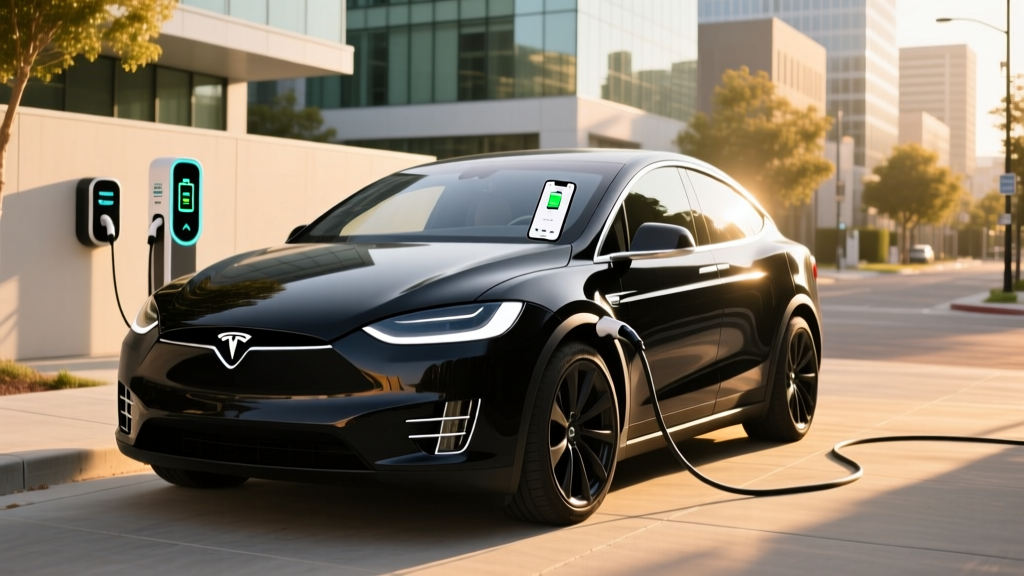
Charging speed is where the Model X's 2026 architecture shows both its strengths and its age. The Performance model peaks at 250 kW on V3 Superchargers (CCS1 adapter or native NACS port, depending on build date — Tesla transitioned all North American vehicles to NACS by late 2025).
| Level | Power | Speed | Notes |
|---|---|---|---|
| Level 1 (120V) | 1.4 kW | ~4 mi/hr | Emergency/trickle only |
| Level 2 (240V/48A) | 11.5 kW | ~34 mi/hr | Full overnight charge in ~9 hrs |
| DC Fast (V3 Supercharger) | 250 kW peak | ~175 mi in 15 min | 10–80% in ~32 min |
| DC Fast (V4 Supercharger) | 250 kW (vehicle-limited) | Same as V3 | Model X architecture caps at 250 kW |
Charging curve reality check: The 250 kW peak only sustains between roughly 10–30% state of charge. By 50% SoC, you'll see speeds taper to ~150 kW, and above 80%, charging drops below 60 kW to protect the NMC cells. This is normal for large NMC packs but means your actual average charging speed over a 10–80% session is closer to 160 kW. Plan your road-trip stops for 25–35 minutes, not 15.
On the Supercharger network, the Model X's native integration remains best-in-class: no app fumbling, no payment-card swiping, and reliable preconditioning that warms the battery en route for optimal charge speed. According to Tesla's Supercharger page, there are now over 6,500 V3/V4 stalls in North America.
Performance: The Numbers That Justify the Name
| Spec | Value |
|---|---|
| Drivetrain | Dual Motor AWD (permanent magnet rear + induction front) |
| Horsepower | 1,020 hp (combined) |
| Torque | ~1,050 lb-ft |
| 0–60 mph | 2.5 seconds |
| Top Speed | 163 mph |
| Quarter Mile | 9.9 seconds |
| Battery (usable) | 100 kWh, NMC |
| EPA Range | 320 miles |
| EPA Efficiency | 109 MPGe / 33 kWh/100mi |
| Max DC Charge Rate | 250 kW |
| Towing Capacity | 5,000 lbs |
| Curb Weight | ~5,185 lbs |
The tri-motor Plaid powertrain (one front, two rear) delivers instantaneous torque that no combustion SUV can match. In real-world driving, the 2.5-second 0–60 time is repeatable with launch control engaged and a warm battery. The dual-motor AWD system uses an induction motor up front (which freewheels with zero drag when not needed) and a permanent-magnet motor in the rear for maximum efficiency during cruising.
Adaptive air suspension is standard, providing a 3-inch ride-height range from Low (highway efficiency) to Very High (rough-road clearance). The Performance trim adds track-tuned damping and larger 22-inch wheels that sharpen handling at the cost of roughly 10–15 miles of range versus the 20-inch setup.
Interior, Tech & Driver Assistance
The Model X interior is a study in contrasts. The 17-inch center touchscreen remains one of the most responsive in the industry, running Tesla's latest software with Netflix/YouTube streaming (while parked), a full web browser, and over-the-air updates that add features years after purchase. The second-row passengers get their own 8-inch display for climate and entertainment controls.
Seating configurations: The Model X offers 5-seat (two-row), 6-seat (captain's chairs), and 7-seat (bench + third row) layouts. The 7-seat option is best for children — third-row legroom at 32.7 inches is tight for adults on longer trips.
| Measurement | Value |
|---|---|
| Cargo (behind 3rd row) | 12.6 cu ft |
| Cargo (3rd row folded) | 37.1 cu ft |
| Cargo (all rows folded) | 74.4 cu ft |
| Front Trunk (Frunk) | 6.5 cu ft |
| Front Legroom | 41.2 in |
| 2nd-Row Legroom | 38.4 in |
| 3rd-Row Legroom | 32.7 in |
Autopilot & FSD (Supervised): Every Model X ships with Basic Autopilot (lane-centering + adaptive cruise). The optional Full Self-Driving (Supervised) package adds automated lane changes, traffic-light/stop-sign recognition, and the "Navigate on Autopilot" highway feature. FSD remains a SAE Level 2 driver-assistance system — you must keep your hands on the wheel and eyes on the road at all times. It is not autonomous driving. For context on automation levels, NHTSA's AV safety page outlines the distinction between Level 2 (driver must supervise) and Level 4 (true driverless, like Waymo in limited geofenced areas).
FSD does NOT make the Model X self-driving. It requires continuous driver supervision. Performance in construction zones, unmapped roads, heavy rain, and complex intersections remains inconsistent. Treat it as an advanced cruise-control system, not a chauffeur.
Notable drawbacks: The yoke steering wheel (standard on Performance) requires adaptation and draws polarizing reviews — particularly for low-speed parking maneuvers. Panel-gap consistency, while improved from earlier years, still falls short of BMW or Mercedes build quality at this price point. There is no Apple CarPlay or Android Auto — Tesla's ecosystem is closed.
Pricing, Tax Credits & Total Cost
| Trim | Base MSRP | EPA Range | 0–60 |
|---|---|---|---|
| Long Range | $74,990 | 348 mi | 3.8 sec |
| Performance | $92,490 | 320 mi | 2.5 sec |
Destination fee adds $1,995. Common options that push as-tested prices higher: FSD (Supervised) at $8,000, 7-seat interior at $3,500, premium paint colors ($1,500–$2,500). A fully loaded Model X Performance easily crosses $108,000.
Federal Tax Credit Eligibility (§30D)
- MSRP Cap: Vans/SUVs must be ≤ $80,000. The Model X Performance at $92,490 exceeds this cap — it does NOT qualify for the $7,500 federal credit. The Long Range at $74,990 does meet the MSRP cap.
- Buyer Income Cap: Modified AGI ≤ $300,000 (joint), $225,000 (head of household), $150,000 (single). If you exceed these, no credit regardless of vehicle.
- Battery Sourcing: Critical minerals and battery components must meet phased-in domestic/free-trade-partner thresholds per IRS §30D rules. Tesla's supply chain has been progressively re-shored, but exact eligibility can shift quarterly.
- Point-of-Sale Transfer: If eligible, you can transfer the credit to the dealer at purchase for an immediate price reduction rather than waiting for tax filing.
| Trim | MSRP | §30D Credit | Effective Price |
|---|---|---|---|
| Long Range | $74,990 | Up to $7,500 | ~$67,490 |
| Performance | $92,490 | $0 (over MSRP cap) | $92,490 |
Ownership Costs: Warranty, Insurance & Maintenance
Warranty: Tesla covers the Model X battery and drive unit for 8 years / 150,000 miles (whichever comes first), with a guaranteed minimum 70% capacity retention over that period. The basic vehicle limited warranty is 4 years / 50,000 miles. This battery warranty is competitive with the industry standard and reflects confidence in NMC longevity with Tesla's thermal management system.
Insurance: Expect premiums 20–40% higher than a comparable gas SUV. The Performance variant's 1,020 hp and high repair costs (aluminum body, integrated battery structure) push rates higher. Average annual premiums range from $2,800–$4,200 depending on state, driving record, and age. Always get a quote before purchasing.
Maintenance: EVs eliminate oil changes, spark plugs, and transmission fluid. Expect to budget for tire rotation every 6,000 miles (the Model X's weight accelerates tire wear — budget $1,200–$1,800 for a set of four 22-inch tires), cabin air filter replacement annually, brake fluid checks every 2 years, and wiper fluid. Total annual maintenance averages $300–$500 — a fraction of a comparable BMW X5 M or Mercedes AMG.
Charging cost: At the national average electricity rate of $0.17/kWh, fully charging the 100 kWh pack costs ~$17 at home. On Superchargers (average $0.30–$0.40/kWh), a full charge runs $30–$40. Per the EPA's fueleconomy.gov data, the Model X costs roughly $0.05–$0.06 per mile on home electricity vs. $0.14–$0.18 per mile for a comparable gas SUV at $3.50/gallon.
Model X Performance vs. the Competition
- 2.5-sec 0–60 is unmatched in any 3-row SUV
- Supercharger network = best road-trip charging experience
- Falcon-wing doors ease 2nd/3rd row car-seat loading
- OTA updates keep software current for years
- 5,000-lb towing with integrated trailer sway control
- Massive frunk + cargo space for family gear
- $92,490 MSRP disqualifies it from the $7,500 federal credit
- 250 kW peak charging is slower than Hyundai/Kia's 350 kW
- Interior materials don't match BMW/Mercedes at this price
- Yoke steering is divisive and impractical for some
- No Apple CarPlay/Android Auto
- Third row is cramped for adults
- Panel gaps still inconsistent vs. legacy luxury brands
vs. Rivian R1S Tri-Motor: The R1S offers comparable performance (~2.9 sec 0–60), a more rugged off-road character, better interior materials, and a lower starting price (~$84,000). But it lacks the Supercharger network (though Rivian now has NACS access to Superchargers) and has a smaller service-center footprint.
vs. BMW iX M60: The iX delivers a far more luxurious interior, a smoother ride, and qualifies for the federal credit (~$87,000 MSRP, but within the SUV cap). It's slower to 60 (3.6 sec) and offers less range (324 miles EPA), but wins on refinement.
vs. Mercedes EQS SUV: More opulent, quieter, and more comfortable — but heavier, less efficient, and far more expensive when optioned. Not a performance vehicle by comparison.
Choose the Model X Performance if: You need sub-3-second acceleration, rely on the Supercharger network for frequent road trips, and want falcon-wing practicality for car seats.
Choose the Model X Long Range if: You want most of the utility and 90% of the performance while qualifying for the $7,500 federal credit.
Choose the Rivian R1S if: You want a more adventurous, off-road-capable SUV with better interior quality and don't mind a smaller (but growing) charging ecosystem.
Choose the BMW iX M60 if: Luxury and ride comfort matter more than raw acceleration, and you want a traditional dealership service experience.
Frequently Asked Questions
What is the real-world range of the Tesla Model X Performance?
The EPA rates it at 320 miles. In real-world mixed driving, expect 270–290 miles. On sustained highway trips at 75+ mph, plan for 260–280 miles. In cold weather (below freezing), range can drop to 220–250 miles. Always precondition the battery via the Tesla app before driving in cold weather to minimize losses.
How fast does the Model X Performance charge at home and on the road?
At home on a Level 2 (240V/48A) charger, it adds about 34 miles of range per hour, fully charging overnight in roughly 9 hours. On a V3 Supercharger, it peaks at 250 kW and charges from 10–80% in approximately 32 minutes. The vehicle's architecture caps charging at 250 kW, so newer V4 Superchargers don't provide faster speeds for this model.
Does the Tesla Model X Performance qualify for the federal EV tax credit?
No. Under current IRS §30D rules, SUVs must have an MSRP of $80,000 or less to qualify. The Model X Performance starts at $92,490, exceeding this cap. The Long Range variant at $74,990 does qualify, assuming you meet the income caps ($300K joint / $150K single) and battery-sourcing requirements. Always verify on IRS.gov and consult a tax professional.
Is the Model X Performance worth it vs. the Long Range?
If you value the 1.3-second improvement in 0–60 time and the tri-motor powertrain's track capability, yes. For most families, the Long Range offers 28 more miles of range, qualifies for the $7,500 federal credit, and hits 60 mph in a still-rapid 3.8 seconds — all for $17,500 less. The Performance premium buys you bragging rights and track-day capability, not daily practicality.
How long will the Model X battery last?
Tesla warranties the battery for 8 years / 150,000 miles with a 70% capacity-retention guarantee. Real-world data from high-mileage Tesla owners suggests NMC packs in the Model X typically retain 85–90% capacity at 100,000 miles when charged primarily on Level 2 and kept between 20–80% SoC for daily use. Battery replacement, if needed out of warranty, currently costs $15,000–$22,000 at Tesla service centers.
Can the Model X tow, and how does it affect range?
Yes — it's rated for 5,000 lbs of towing capacity. When towing near maximum capacity, expect range to drop by 40–50%, bringing effective range to roughly 160–190 miles. Tesla's integrated trailer brake controller and sway control make it competent for boat and small-camper towing, but plan charging stops accordingly.