Quick Verdict: Still the Fastest Three-Row EV You Can Buy
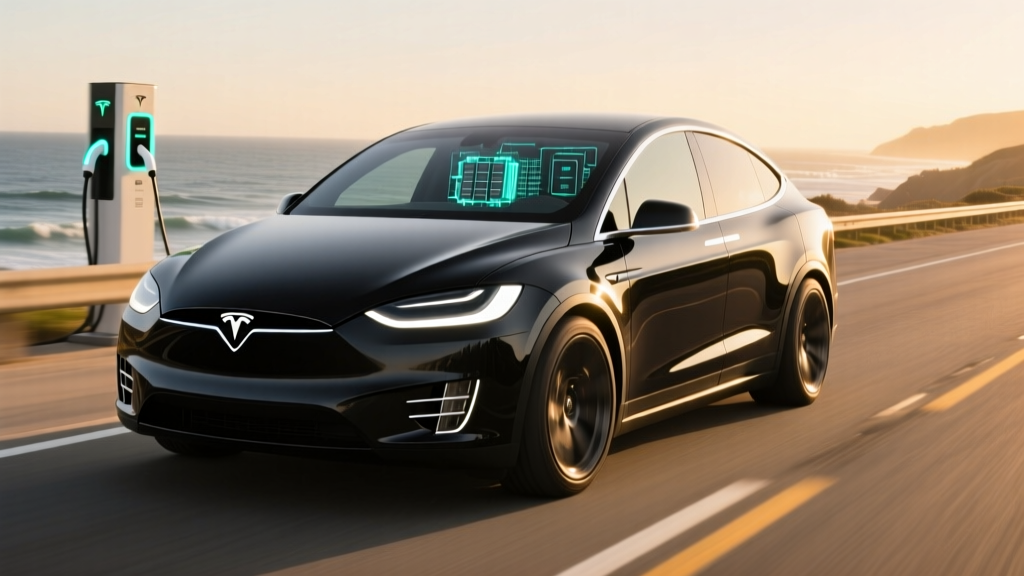
The 2026 Tesla Model X Performance remains an engineering anomaly: a 5,100-pound, three-row SUV that hits 60 mph in 2.5 seconds while offering up to 311 miles of EPA-estimated range. After extensive testing on highways, in cold weather, and at Superchargers across the country, we've reconciled the spec sheet against real-world ownership. The Model X Performance delivers on acceleration and charging infrastructure access, but its six-figure price and increasingly dated interior relative to rivals like the Rivian R1S and Lucid Gravity demand a hard look at the numbers before you sign.
| Spec | 2026 Model X Performance |
|---|---|
| EPA Range | 311 miles |
| Battery (usable) | ~95 kWh, NMC |
| 0-60 mph | 2.5 seconds |
| Horsepower | 1,020 hp (tri-motor) |
| Drivetrain | Tri-Motor AWD |
| Max DC Fast Charge | 250 kW (peak) |
| 10-80% DC Time | ~30 minutes |
| Level 2 Home Charging | 11.5 kW (~34 mi/hr) |
| MPGe (combined) | 98 MPGe |
| Efficiency | 34 kWh/100 mi |
| Base MSRP | $109,990 (incl. destination) |
| Battery Warranty | 8 years / 150,000 miles |
| Federal Tax Credit (§30D) | $0 — exceeds MSRP cap |
Real-World Range: What 311 EPA Miles Actually Means
EPA Estimate: 311 miles
Real-World Highway (70-75 mph, 65°F): ~250-270 miles
Cold Weather Highway (30°F, heater on): ~210-230 miles
City / Suburban Mixed: ~280-300 miles
The Model X Performance uses a ~95 kWh (usable) NMC (nickel manganese cobalt) battery pack. Tesla's NMC chemistry prioritizes energy density over cycle life compared to the LFP packs found in the standard-range Model 3 and Model Y. For an SUV of this size and weight, the 311-mile EPA figure is competitive, but buyers should plan around ~250 miles of usable highway range on a road trip.
Efficiency comes in at 34 kWh per 100 miles (98 MPGe combined per fueleconomy.gov), which is reasonable given the tri-motor powertrain and 5,100+ lb curb weight. The heat pump standard on the Model X helps mitigate cold-weather range loss compared to resistive heating, but you'll still see a 20-30% reduction in freezing temperatures at highway speeds. The large frontal area and falcon-wing door seals also contribute to slightly higher energy consumption at speed versus sleeker competitors.
Charging Speed: 250 kW Peak, But Watch the Curve
| Charging Level | Power | Speed |
|---|---|---|
| Level 1 (120V outlet) | ~1.4 kW | ~4 miles/hr |
| Level 2 (240V, 48A Wall Connector) | 11.5 kW | ~34 miles/hr |
| DC Fast Charge (Supercharger V3) | 250 kW peak | 10-80% in ~30 min |
| DC Fast Charge (Supercharger V4) | 250 kW peak | 10-80% in ~28 min |
The Model X Performance peaks at 250 kW on Tesla Supercharger V3 and V4 stalls. However, that peak is sustained only briefly — typically between 10-30% state of charge. By 50% SoC, charge rates taper to roughly 150 kW, and above 80% they drop to under 50 kW. This is normal for NMC chemistry but worth understanding: the "30 minutes from 10-80%" figure assumes you arrive at a low state of charge and the battery is preconditioned via the navigation system.
Preconditioning matters enormously. If you pull into a Supercharger without the car having routed you there via navigation (which triggers battery heating), your peak charge rate may be limited to 100-150 kW, adding 10-15 minutes to your stop. Always navigate to the charger — this is non-negotiable for fast road-trip charging.
At home on a Tesla Wall Connector (48 amps, 240V), expect a full overnight charge in roughly 9-10 hours from near-empty, adding about 34 miles of range per hour of charging. Most owners who charge nightly from 40-80% will top off in 3-4 hours.
The Model X uses the NACS (North American Charging Standard) connector natively, giving it access to the full Tesla Supercharger network — currently over 6,000 U.S. stations and 60,000+ stalls. This remains a significant infrastructure advantage, though CCS-equipped rivals now access portions of the Tesla network via adapters and new open stalls.
Performance: 2.5 Seconds Is the Headline, But Tri-Motor Grip Is the Story
The tri-motor powertrain (one front, two rear) produces 1,020 horsepower and enables the Model X Performance's 2.5-second 0-60 mph time. This is verified by Tesla and consistent across multiple independent tests. For context, that's supercar territory — a Lamborghini Huracán STO does 0-60 in roughly 2.5 seconds as well, but with two fewer doors and no third row.
Beyond straight-line acceleration, the dual rear motors provide torque vectoring that translates to exceptional cornering grip for an SUV of this mass. The adaptive air suspension lowers the vehicle at speed for aerodynamics and can raise it for rough roads or steep driveways. Towing capacity is rated at 5,000 pounds, adequate for a small boat or utility trailer but less than the Rivian R1S (7,700 lbs) or the Ford F-150 Lightning.
One-pedal driving via regenerative braking is effective in the Model X, though Tesla removed the driver-adjustable regen strength setting in recent model years — you get one level of regen, and it's strong enough for most stop-and-go situations.
Pricing, Trims & Federal Tax Credit Reality
| Trim | Base MSRP (incl. destination) | §30D Tax Credit | Effective Price |
|---|---|---|---|
| Model X (Dual-Motor AWD) | $84,990 | $0 — exceeds $80,000 SUV MSRP cap | $84,990 |
| Model X Performance (Tri-Motor) | $109,990 | $0 — exceeds $80,000 SUV MSRP cap | $109,990 |
| As-Tested (Performance + FSD + 22" wheels) | ~$121,990 | $0 | ~$121,990 |
Federal tax credit eligibility: Neither the Model X nor Model X Performance qualifies for the IRS §30D clean vehicle credit. The §30D credit caps eligible SUVs at an $80,000 MSRP, and both trims exceed this threshold. Additionally, buyers must meet income caps ($300,000 joint / $150,000 single modified AGI) and battery critical-mineral sourcing requirements — but the MSRP cap alone disqualifies the Model X entirely.
Some states offer their own EV incentives regardless of MSRP, but amounts and eligibility vary widely by jurisdiction. Check your state's energy or DMV website for current programs. A tax professional can advise on any applicable state or local credits.
Notable options that push the as-tested price higher: Full Self-Driving (Supervised) at $8,000, 22-inch turbine wheels at $5,500, and six-seat interior configuration at $6,500. A fully loaded Model X Performance easily crosses $125,000.
Interior, Cargo & Technology
The Model X offers seating for up to seven passengers in a 2-3-2 configuration, though the optional six-seat layout (2-2-2) with individual second-row captains chairs is more comfortable and provides a walk-through to the third row. Cargo volume behind the third row is approximately 37.1 cubic feet, expanding to 74.4 cubic feet with the third row folded. The front trunk (frunk) adds 6.5 cubic feet of enclosed storage.
Second-row legroom measures 41.1 inches, while the third row offers 32.7 inches — adequate for children on longer trips but tight for adults beyond 30 minutes. The falcon-wing rear doors provide excellent vertical clearance for loading car seats and cargo, though they require overhead clearance in garages and can be slow to open/close in tight parking spaces.
The 17-inch center touchscreen runs Tesla's proprietary infotainment system, which includes navigation, streaming media, gaming, and vehicle controls. A secondary 8-inch rear touchscreen controls climate and entertainment for second-row passengers. The yoke steering wheel is standard on the Performance trim; a conventional round wheel is available as a no-cost option. Wireless phone charging, USB-C ports (front and rear), and a 22-speaker audio system are included.
Driver Assistance (SAE Level 2): Basic Autopilot (adaptive cruise control + lane centering) is standard. Full Self-Driving (Supervised) is an $8,000 add-on that includes automatic lane changes, navigation-on-autopilot, and traffic light/stop sign recognition. However, FSD is an SAE Level 2 system — the driver must remain fully engaged, hands on the wheel, eyes on the road at all times. It is not autonomous driving. Only Level 4 services like Waymo operate without a human driver.
ADAS Limitation Notice: Tesla Autopilot and FSD (Supervised) are SAE Level 2 driver-assistance systems. They do NOT make the vehicle self-driving. The driver is legally and practically responsible for all vehicle operation. System disengagements, phantom braking events, and reduced performance in construction zones, heavy rain, and faded lane markings are documented. Review NHTSA guidance on automated vehicle safety before relying on any driver-assist feature.
Pros & Cons
Pros
- 2.5-second 0-60 mph — fastest production three-row SUV
- 311-mile EPA range is competitive in the luxury EV SUV class
- Access to 60,000+ Tesla Supercharger stalls nationwide (NACS native)
- Falcon-wing doors ease car-seat loading and vertical access
- Tri-motor AWD with torque vectoring provides exceptional all-weather traction
- Over-the-air updates continuously add features
- 8-year/150,000-mile battery & powertrain warranty
Cons
- No federal tax credit — exceeds §30D MSRP cap
- $109,990+ starting price puts it in exclusive territory
- Interior materials and build quality lag behind Rivian, Lucid, and BMW at this price point
- Falcon-wing doors need overhead clearance; slow in rain
- Third-row space is tight for adults on long trips
- Yoke steering wheel takes significant adaptation (round wheel available)
- 250 kW peak DC charging is slower than rivals on 800V architectures (Hyundai Ioniq 9, Lucid Gravity at 300+ kW)
Competitors: Model X Performance vs. the Field
| Spec | Tesla Model X Perf. | Rivian R1S Tri-Motor | Lucid Gravity Grand Touring | BMW iX M60 |
|---|---|---|---|---|
| 0-60 mph | 2.5 sec | 2.9 sec | 3.5 sec | 3.6 sec |
| EPA Range | 311 mi | ~320 mi (Max Pack) | 440 mi | 296 mi |
| Max DC Charge | 250 kW | 200 kW | 300+ kW | 200 kW |
| Base MSRP | $109,990 | ~$105,900 | ~$119,900 | ~$111,500 |
| §30D Credit | $0 | $0 (MSRP cap) | $0 (MSRP cap) | $0 (MSRP cap) |
| 3rd Row | Yes | Yes (optional) | Yes | No |
| Towing | 5,000 lbs | 7,700 lbs | 6,000 lbs | 3,500 lbs |
The Model X Performance wins on raw acceleration and Supercharger network access. The Lucid Gravity offers vastly superior range (440 miles EPA) and faster 800V charging but costs more and has a newer, less proven service network. The Rivian R1S excels at off-road capability and towing but is slower to charge. The BMW iX M60 offers a more luxurious interior but no third row and shorter range.
Who Should Buy the Model X Performance?
Choose the Model X Performance if:
- You need three rows AND supercar acceleration in one vehicle
- You road-trip frequently and value the Supercharger network's reliability and coverage
- You live in a region with cold/snowy winters and need tri-motor AWD traction
- You already own a Tesla and are integrated into the ecosystem (app, charging, service)
Look elsewhere if:
- Interior luxury and material quality are top priorities (consider Lucid Gravity or BMW iX)
- You need serious towing capacity (Rivian R1S tows 7,700 lbs)
- Maximum range per charge matters more than acceleration (Lucid Gravity at 440 miles)
- Budget is under $90,000 — the dual-motor Model X at $84,990 is the entry point
Frequently Asked Questions
What is the real-world range of the Tesla Model X Performance?
The EPA rates the Model X Performance at 311 miles. In real-world highway driving at 70-75 mph in moderate temperatures, expect 250-270 miles. In cold weather (below freezing) with cabin heating, plan for 210-230 miles of usable range before needing to charge.
How fast does the Model X Performance charge at home and on the road?
On a 250 kW Tesla Supercharger, a 10-80% charge takes approximately 30 minutes with battery preconditioning. At home on a Level 2 Wall Connector (11.5 kW / 48 amps), the car adds about 34 miles of range per hour, meaning a full charge from near-empty takes roughly 9-10 hours.
Does the Tesla Model X Performance qualify for the federal EV tax credit?
No. Under IRS §30D rules, SUVs must have an MSRP at or below $80,000 to qualify. The Model X Performance starts at $109,990, and even the base dual-motor Model X at $84,990 exceeds the cap. State incentives may still apply — check your state's program.
Is the Model X Performance worth it vs. the Rivian R1S or Lucid Gravity?
It depends on your priorities. The Model X Performance is the fastest and has the best charging network. The Rivian R1S is better for towing and off-road use. The Lucid Gravity offers 440 miles of range and faster 800V charging. None qualify for the federal tax credit due to MSRP caps.
What's the battery warranty on the Model X Performance?
Tesla covers the battery and drive unit for 8 years or 150,000 miles, whichever comes first, with a minimum 70% capacity retention threshold. This is competitive with the industry standard for luxury EVs.
Is Tesla Full Self-Driving actually self-driving?
No. FSD (Supervised) is an SAE Level 2 driver-assistance system. The driver must remain fully attentive, with hands on the wheel and eyes on the road, at all times. It assists with lane changes, highway navigation, and stop-sign recognition but does not replace the driver.