Quick Verdict: The P100D Model X in 2026
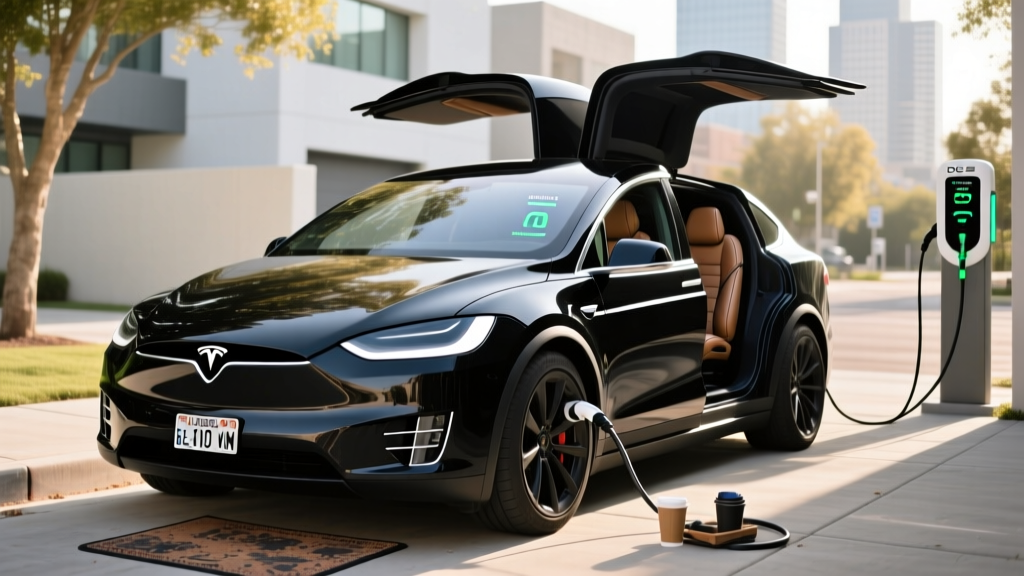
The Tesla Model X P100D was the flagship performance SUV of its era — a 7-seat electric hauler that could hit 60 mph in 2.9 seconds while carrying a family and their gear. In 2026, it exists exclusively on the used market, having been replaced by the refreshed Plaid and Long Range trims. For buyers who can find a well-maintained example, it remains one of the fastest SUVs ever built, with access to Tesla's Supercharger network and a cabin that still feels modern. But aging battery packs, out-of-warranty repair risk, and the absence of current federal tax credits make this a purchase that demands careful homework.
Range & Efficiency: EPA vs. Real-World
| Spec | Value |
|---|---|
| EPA Range | 289 miles |
| Battery (usable) | ~100 kWh (NMC) |
| EPA Efficiency | 89 MPGe / 38 kWh/100 mi |
| 0-60 mph | 2.9 seconds |
| Horsepower | ~762 hp (dual motor AWD) |
| Drivetrain | Dual Motor AWD |
| Max DC Fast Charge | ~250 kW (V3 Supercharger) |
| 10-80% DC Time | ~35-40 minutes |
| Level 2 Home Charging | 11.5 kW / ~34 mi/hr |
| Original Battery Warranty | 8 yr / 150,000 mi (70% retention) |
| Original MSRP (2017-2019) | ~$134,000 - $145,000 |
The P100D's 100 kWh NMC (nickel-manganese-cobalt) pack was among the largest ever fitted to a production SUV. NMC chemistry delivers high energy density, enabling that 289-mile figure in a heavy vehicle, but it is more sensitive to sustained high SoC and extreme temperatures than LFP chemistry. Tesla recommends daily charging to 80-90% for longevity, reserving 100% for road trips.
Charging Speed: Supercharger Access Is the Big Advantage
| Level | Power | Miles Added | Notes |
|---|---|---|---|
| Level 1 (120V) | ~1.4 kW | ~3-4 mi/hr | Emergency/trickle only |
| Level 2 (240V, 48A) | 11.5 kW | ~34 mi/hr | Full overnight charge in ~10 hrs |
| DC Fast (V3 Supercharger) | Up to 250 kW peak | ~175 mi in 15 min | Tapers significantly above 60% SoC |
| DC Fast (V2 Supercharger) | ~145 kW peak | ~120 mi in 15 min | Older stations, still common |
The Model X P100D uses Tesla's proprietary NACS (North American Charging Standard) connector, which is now the dominant standard in the US. This gives you native access to the Tesla Supercharger network — still the most reliable and widespread DC fast-charging network in the country, with over 30,000 stalls nationwide as of 2026.
A critical ownership detail: the P100D's charge curve is not flat. It peaks near 250 kW only at low SoC (10-30%), then tapers progressively. From 10-80%, expect roughly 35-40 minutes at a V3 Supercharger. Above 80%, charging slows dramatically to protect the NMC battery — going from 80-100% can add another 25-30 minutes. For road trips, plan stops around the 10-80% window for maximum time efficiency.
At home, a Level 2 Wall Connector at 48 amps delivers 11.5 kW, adding about 34 miles of range per hour. A full 10-100% charge takes roughly 10 hours — easily achievable overnight. Home charging installation typically costs $800-$2,500 depending on your electrical panel capacity and run length (a 60-amp dedicated circuit is recommended). If your home has a 100-amp main panel, a $1,500-$3,000 panel upgrade to 200 amps may be necessary.
Performance: Ludicrous Mode Still Stuns
The "P" in P100D stands for Performance, and this SUV delivers figures that still embarrass sports cars. Dual electric motors produce a combined output of approximately 762 horsepower, launching the 5,000+ lb vehicle to 60 mph in 2.9 seconds with Ludicrous Mode engaged. The instant torque delivery — no turbo lag, no gear shifts — makes the acceleration feel even more violent than the numbers suggest.
Beyond straight-line speed, the dual-motor AWD system provides excellent traction in rain and snow, with torque vectoring between front and rear axles. The adaptive air suspension adjusts ride height automatically (lowering at highway speeds for aerodynamics, raising for rough roads), and offers a genuinely comfortable ride in its default setting.
The trade-off for this performance is efficiency. The P100D's 89 MPGe (38 kWh/100 mi) trails the Long Range variants significantly, and aggressive driving will reduce real-world range to well below 200 miles per charge.
Interior, Cargo & Technology
The Model X P100D seats up to 7 passengers in its three-row configuration (5, 6, and 7-seat layouts were offered). The signature Falcon Wing rear doors provide dramatic curb appeal and genuinely improve access to the second and third rows in tight parking spaces, though they add mechanical complexity and have been a source of reliability complaints.
| Dimension | Measurement |
|---|---|
| Cargo (behind 3rd row) | 26.6 cu ft |
| Cargo (3rd row folded) | 57.2 cu ft |
| Cargo (all rear rows folded) | 81.7 cu ft |
| Front Trunk (Frunk) | 6.6 cu ft |
| 2nd Row Legroom | 38.4 inches |
| 3rd Row Legroom | 32.7 inches |
The 17-inch center touchscreen (vertical orientation on pre-refresh models) controls virtually all vehicle functions. Over-the-air software updates continue to add features years after purchase — a significant advantage over legacy automakers. The P100D includes:
- Autopilot basic functionality (adaptive cruise + lane-keeping, SAE Level 2)
- Optional Enhanced Autopilot or Full Self-Driving (Supervised) capability — verify transferability on used vehicles
- Premium audio system with 17 speakers
- HEPA air filtration with "Bioweapon Defense Mode"
- Navigation with real-time Supercharger routing
Used Market Pricing & Tax Credit Reality
The Tesla Model X P100D was produced roughly from late 2016 through 2020, with original MSRPs ranging from approximately $134,000 to over $145,000 depending on options. In the 2026 used market, expect to find examples priced between $38,000 and $65,000, heavily dependent on mileage, condition, battery health, and FSD transfer status.
| Factor | Details |
|---|---|
| Used Market Price Range | $38,000 - $65,000 |
| Federal Used EV Credit (§25E) | Up to $4,000 (30% of sale price, max $4,000) |
| §25E Income Cap (2026) | $75K single / $112,500 HOH / $150K joint |
| §25E Price Cap | Sale price must be $25,000 or less |
| New-Vehicle §30D Credit | NOT eligible (used vehicle) |
| Point-of-Sale Transfer | Available for §25E at participating dealers |
Critical tax credit note: The IRS §25E Used Clean Vehicle Credit offers up to $4,000 — but only if the sale price is $25,000 or less. Since most Model X P100D examples sell well above that threshold, the vast majority will NOT qualify for any federal tax credit. Buyers with income above the §25E caps ($75K single, $150K joint) are also excluded. Always consult a tax professional and verify current-year rules at irs.gov before counting on incentives.
Some states offer additional used-EV rebates (California's CVRP, for example), but these vary by jurisdiction and income. Check your state's energy or environmental agency for current programs.
Ownership Costs, Warranty & Longevity
The original battery and drive unit warranty on the P100D was 8 years / 150,000 miles with a 70% minimum capacity retention guarantee. For 2017-2019 model years, this warranty has expired or is expiring in 2025-2027. This is the single biggest financial risk of buying a used P100D.
A Tesla Model X battery replacement currently costs approximately $15,000-$22,000 (parts and labor) at a Tesla Service Center. While widespread pack failures are uncommon, gradual degradation is guaranteed. Budget for potential out-of-warranty repairs including:
- Falcon Wing door actuator replacement: $1,500-$3,000 per door
- MCU (Media Control Unit) failure: $1,500-$2,500
- Air suspension strut replacement: $1,200-$2,000 per corner
- Drive unit replacement: $5,000-$8,000
On the positive side, the Model X has no engine oil, transmission fluid, spark plugs, or exhaust system to maintain. Brake pad life is extended significantly by regenerative braking — many owners report 80,000+ miles on original pads. Tire wear is the primary recurring consumable, and the P100D's weight and torque are hard on tires; expect replacements every 25,000-35,000 miles at $1,200-$2,000 for a set.
Insurance costs remain elevated for the P100D due to its original price, repair complexity, and performance. Expect annual premiums of $2,500-$4,500 depending on your profile and location — get quotes before purchasing.
How It Compares: P100D vs. Alternatives
- You need 7 seats and Supercharger access
- You want 2.9-second 0-60 performance
- You prioritize OTA software updates and tech
- You can accept out-of-warranty repair risk
- Reliability and warranty coverage are top priorities (look at a CPO Rivian R1S or new Hyundai Ioniq 9)
- You want the latest 800V charging architecture (Kia EV9 charges faster)
- You need guaranteed 300+ mile real-world range
- Falcon Wing doors concern you mechanically
Against the Rivian R1S (used or new), the P100D is faster and has a more mature charging network, but the R1S offers superior off-road capability, a more conventional (and reliable) door design, and newer examples still under warranty. The Kia EV9 is a newer, more affordable 3-row EV with 800V architecture enabling faster DC charging, though it lacks the P100D's raw performance. The Mercedes EQS SUV offers a more luxurious cabin but at significantly higher used prices and with a less reliable charging ecosystem.
Pros & Cons
- Supercar-rivaling 2.9s 0-60 acceleration
- Native Tesla Supercharger network access
- 7-seat configuration with usable third row
- Over-the-air updates still adding features
- 81.7 cu ft max cargo with frunk
- Falcon Wing doors genuinely aid rear-seat access
- HEPA air filtration system
- Strong AWD traction in adverse weather
- Battery/drivetrain warranty expired or expiring
- $15K-$22K battery replacement risk
- Real-world range often 200-250 mi (degraded pack)
- Falcon Wing door mechanisms are failure-prone
- No federal tax credit (price exceeds $25K cap)
- High insurance premiums
- Older MCU and Autopilot hardware vs. current Teslas
- NMC battery degrades faster than LFP if mistreated
Frequently Asked Questions
What is the real-world range of the Tesla Model X P100D?
The EPA rates it at 289 miles, but expect 230-260 miles on highway trips and 190-220 miles in cold weather. On a used example with battery degradation (typical 85-92% State of Health at 6-8 years), real-world mixed driving range drops to roughly 200-250 miles. Always verify the displayed range at 100% SoC before purchasing.
How fast does the P100D charge at home and on the road?
At home on a Level 2 charger (11.5 kW), it adds about 34 miles per hour, completing a full charge overnight in ~10 hours. On a V3 Supercharger, it peaks at 250 kW and charges from 10-80% in approximately 35-40 minutes. The charge curve tapers significantly above 60% SoC — plan road-trip stops in the 10-80% window for efficiency.
Does the used Model X P100D qualify for any federal tax credit?
The new-vehicle §30D credit does not apply. The §25E used EV credit offers up to $4,000, but only on vehicles sold for $25,000 or less — which excludes nearly all P100D listings. Income caps ($75K single / $150K joint) also apply. Consult a tax professional for your specific situation.
Is the P100D worth buying vs. a newer EV SUV?
It depends on priorities. If you want maximum performance, 7 seats, and Supercharger access at a sub-$50K price, it's compelling. But you're accepting significant out-of-warranty risk, older hardware, and reduced range from battery degradation. A newer Kia EV9, Hyundai Ioniq 9, or CPO Rivian R1S offers more modern tech and warranty coverage, though often at higher cost.
What should I check before buying a used P100D?
Request a battery health report (State of Health percentage) from Tesla or a third-party diagnostic tool. Inspect Falcon Wing door actuators and seals. Verify whether Autopilot/FSD transfers with the vehicle (not guaranteed on private-party sales). Check for open recalls at nhtsa.gov/recalls. Get a pre-purchase inspection from a Tesla-qualified independent shop.
How long will the P100D battery last?
Tesla's NMC packs typically retain 85-92% capacity at 150,000 miles based on fleet data. With proper care (avoiding frequent 100% charges, minimizing DC fast charging, preconditioning in cold weather), many packs reach 200,000+ miles before dropping below 70% capacity. However, individual results vary based on climate, charging habits, and manufacturing variance.