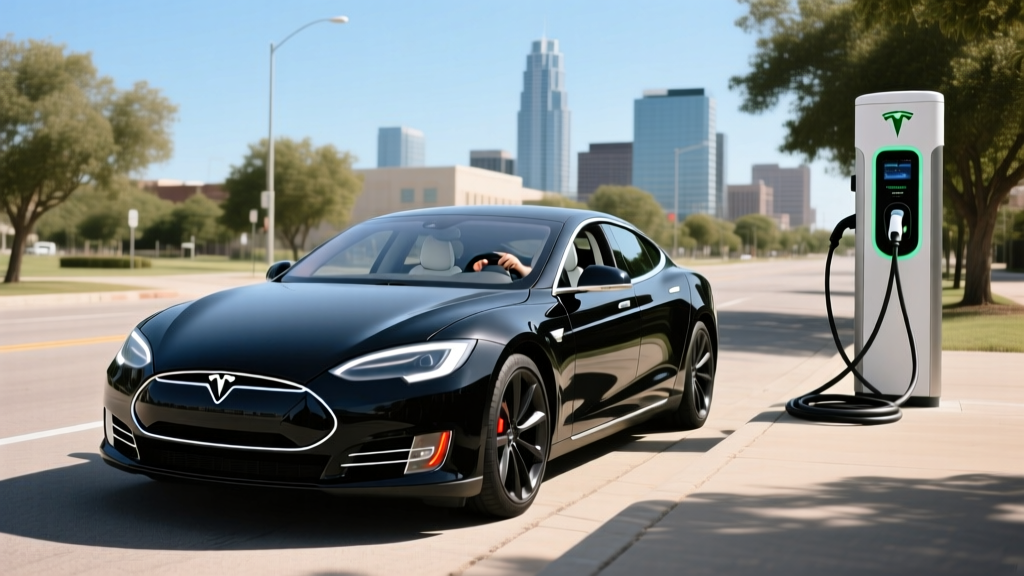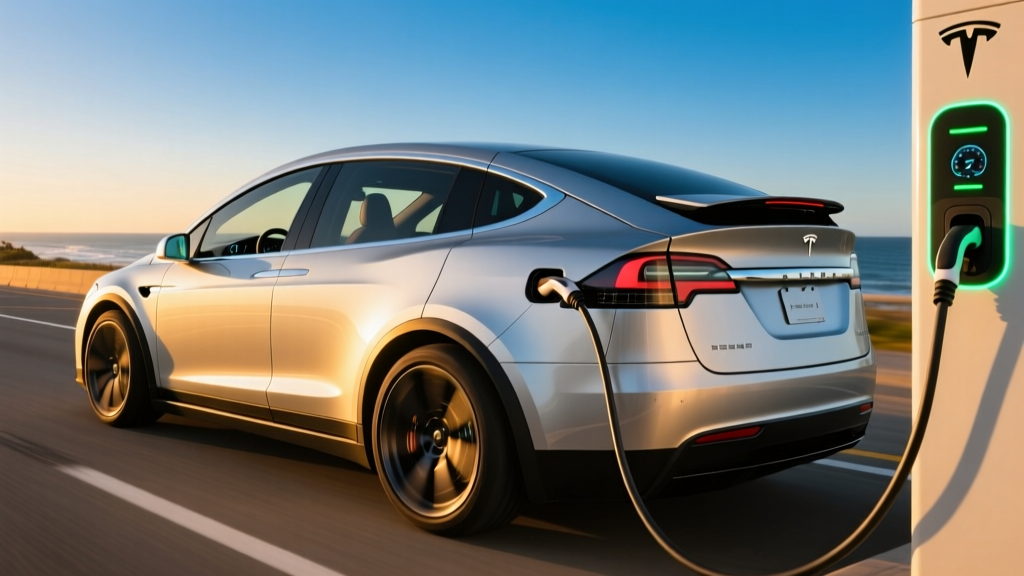
The Tesla Model X P100D occupies a strange space in the electric-vehicle landscape. Introduced for the 2017 model year and discontinued around 2019 when Tesla restructured its lineup into Standard Range, Long Range, and Plaid variants, the P100D was the flagship performance SUV of its era. With a 100 kWh battery, Ludicrous Mode, and falcon-wing rear doors, it promised supercar acceleration in a three-row family hauler. But in 2026, with the current Model X Plaid delivering 1,020 horsepower and 348 miles of EPA range, does a used P100D still make sense? This review breaks down the real-world ownership picture — range, charging, costs, and whether the federal used-EV tax credit can make it a compelling buy.
Tesla Model X P100D: Core Specifications
| Spec | Value |
|---|---|
| EPA Range | 289 miles (2017); 295 miles (2018–2019) |
| Battery Capacity | 100 kWh (usable ~98 kWh), NMC chemistry |
| Drivetrain | Dual-motor AWD |
| Horsepower | ~532 hp (standard); ~762 hp (Ludicrous Mode) |
| 0–60 mph | 2.9 seconds (Ludicrous Mode, rollout subtracted) |
| MPGe (Combined) | 83–89 MPGe (varies by model year) |
| Efficiency | ~38–40 kWh/100 mi |
| Max DC Fast Charge | ~120 kW peak (V2 Supercharger era) |
| 10–80% DC Charge Time | ~45–50 minutes |
| Level 2 Home Charge Rate | Up to 11.5 kW (48A) via Gen 2 Wall Connector |
| Cargo Volume | 88.1 cu ft (max, seats folded) |
| Seating | 5, 6, or 7 passengers |
| Battery Warranty | 8 years / 150,000 miles (70% retention) |
| Original MSRP | $134,500–$160,000+ (depending on options) |
Real-World Range: What the EPA Sticker Doesn't Tell You
Real-World Highway (70 mph, mild weather): ~235–255 miles
Real-World Cold Weather (below 32°F, mixed driving): ~195–220 miles
City/Commuter (moderate speeds, regen-heavy): ~265–280 miles
The Model X P100D's 100 kWh NMC (nickel-manganese-cobalt) battery pack was the largest Tesla offered at the time, and its EPA-rated range of 289–295 miles was genuinely impressive for a 5,000+ pound SUV. But EPA range is measured under controlled laboratory conditions that don't reflect the aerodynamic penalty of the Model X's tall profile at highway speed.
In real-world highway driving at 70–75 mph, expect to use roughly 38–42 kWh per 100 miles depending on temperature and elevation changes. That translates to approximately 235–255 miles of usable range before you'll want to find a Supercharger. The Model X's large frontal area and falcon-wing door seams create more drag than the sleeker Model S, which is why the sedan consistently outperforms the SUV on range despite sharing the same battery.
Cold weather compounds the problem. NMC chemistry loses efficiency in freezing temperatures, and the energy required to heat the cabin and battery can reduce range by 25–35%. On a 20°F winter highway drive, plan for 195–220 miles of real range. Preconditioning the battery while plugged in helps mitigate this, but the P100D-era thermal management system is less advanced than the heat-pump-equipped 2021+ Model X refresh.
One ownership reality worth noting: as of 2026, a 2017–2019 P100D is 7–9 years old. Battery degradation on NMC packs of this vintage typically runs 8–15% depending on charging habits and climate. A P100D that started with 295 EPA miles may now display 250–270 miles at 100% State of Charge. Always request a battery health reading before purchasing.
Charging Speed: Supercharger and Home Charging
The P100D predates Tesla's V3 Supercharger architecture (250 kW) and the vehicle's onboard charging hardware limits it to roughly 120 kW peak on V2 Superchargers. That's a significant gap versus the current Model X Plaid, which peaks at 250 kW.
| Charging Method | Power (kW) | Miles Added per Hour | 10–80% Time |
|---|---|---|---|
| Level 1 (120V household) | ~1.4 kW | ~3–4 mi/hr | N/A (impractical) |
| Level 2 (240V, 48A Wall Connector) | 11.5 kW | ~30–34 mi/hr | ~8–9 hours |
| DC Fast Charge (V2 Supercharger) | ~120 kW peak | ~280–320 mi/hr (peak) | ~45–50 minutes |
| DC Fast Charge (V3 Supercharger) | ~120 kW (vehicle-limited) | Same as V2 | ~45–50 minutes |
The charge curve on the P100D is notably gradual. Peak rate of ~120 kW is only sustained between roughly 10–30% State of Charge. Above 50%, the rate tapers to 70–80 kW, and above 80% it drops further to protect the NMC cells. A 10–80% session takes 45–50 minutes — workable for road trips but noticeably slower than modern EVs with 800V architectures that complete the same session in 18–25 minutes.
For home charging, the P100D supports up to 48 amps (11.5 kW) on a Tesla Gen 2 Wall Connector connected to a 60-amp circuit. This adds roughly 30–34 miles of range per hour, meaning an overnight charge from 20% to 80% takes about 5–6 hours — perfectly adequate for daily use. Installation of a 60-amp dedicated circuit typically costs $800–$2,000 depending on your electrical panel's capacity and the distance from panel to charger location, according to Tesla's home charging guidelines.
One advantage the P100D retains in 2026: full access to Tesla's Supercharger network, which now exceeds 6,000 stations in North America. With the NACS connector native to the vehicle, no adapter is needed. Non-Tesla EVs are gaining Supercharger access via NACS adapters, but the P100D plugs in natively and enjoys seamless navigation-integrated routing.
Performance: Ludicrous Mode Still Thrills
The P100D's dual-motor all-wheel-drive powertrain was engineered for one thing: devastating straight-line acceleration. In standard mode, the P100D produces roughly 532 horsepower. Engage Ludicrous Mode (a $10,000 option when new, standard on the P100D badge), and output surges to an estimated 762 horsepower with a 0–60 mph time of 2.9 seconds — a figure that embarrassed supercars costing three times as much when it debuted.
In 2026, the current Model X Plaid does 0–60 in 2.5 seconds with 1,020 hp from its tri-motor setup. But the P100D's 2.9-second run remains genuinely thrilling and more than adequate for any real-world driving scenario. The instant torque delivery, combined with the SUV's elevated seating position, creates a surreal experience that still turns heads at stoplights.
Beyond acceleration, the P100D's air suspension provides adjustable ride height — useful for clearing speed bumps or reducing drag at highway speeds. However, the steering feel is numb by enthusiast standards, and the vehicle's 5,400-pound curb weight is evident in corners. This is a drag-strip-and-commute SUV, not a canyon carver.
Pricing, Used Market Value, and Tax Credit Eligibility
The Model X P100D originally stickered between $134,500 and $160,000+ depending on options like the Ludicrous Mode enhancement, premium interior, and Enhanced Autopilot. Depreciation has been steep — as of early 2026, used P100D examples typically trade between $38,000 and $58,000 depending on mileage, condition, and battery health.
| Condition / Mileage | Typical Price Range |
|---|---|
| Excellent (<40,000 mi, strong SoH) | $52,000–$58,000 |
| Good (40,000–80,000 mi, moderate SoH) | $42,000–$52,000 |
| Fair (80,000+ mi, noticeable degradation) | $38,000–$42,000 |
Federal Used-EV Tax Credit (§25E)
The P100D is no longer eligible for the new-vehicle §30D credit — it's out of production and well above the $80,000 SUV MSRP cap. However, it may qualify for the federal used-EV tax credit under §25E, which offers up to $4,000 (or 30% of the sale price, whichever is less) for qualifying pre-owned electric vehicles. Key requirements:
- Vehicle sale price: Must be $25,000 or less to qualify for the full $4,000 credit. Many P100D examples exceed this threshold.
- Buyer income caps: Modified adjusted gross income must not exceed $75,000 (single), $112,500 (head of household), or $150,000 (joint filers).
- Vehicle age: Must be at least two model years old (P100D qualifies easily).
- Dealer requirement: Must be purchased from a licensed dealer (private-party sales do not qualify).
- First transfer: The credit applies only to the first qualified sale of the vehicle after August 16, 2022 — if the P100D was previously sold under this provision, it won't qualify again.
Realistically, finding a P100D at or below $25,000 is unlikely in 2026 unless it has very high mileage or significant issues. Most buyers will pay full market price without federal credit assistance. Always consult a tax professional and verify eligibility on IRS.gov before counting on the credit.
Interior, Cargo, and Technology
The Model X P100D's interior is defined by its massive 17-inch center touchscreen (portrait orientation, pre-refresh), which controls nearly every vehicle function. The infotainment system remains responsive in 2026 thanks to Tesla's over-the-air updates, though the pre-2021 hardware lacks the AMD Ryzen processor found in newer models. You'll notice slower map rendering and occasional lag in the app launcher compared to a current Model X.
The signature falcon-wing rear doors are the P100D's most polarizing feature. They open vertically, providing excellent access to the second and optional third rows in tight parking spaces. But they're slow to operate (roughly 6–7 seconds to open or close), can struggle in low-clearance garages, and have been a persistent source of water-leak complaints among owners. The ultrasonic sensors that detect nearby obstacles work well in theory but occasionally misjudge overhanging branches or low carports.
Cargo capacity is generous: 88.1 cubic feet with all rear seats folded, 24.3 cubic feet behind the third row (in 7-seat configuration), and an additional front trunk (frunk) offering roughly 6.6 cubic feet. The flat load floor and wide opening make the P100D practical for furniture runs, camping gear, or airport pickups.
Second-row legroom measures 38.4 inches, and the optional six-seat configuration with individual captain's chairs provides excellent comfort. The third row is best suited for children or short trips — adults will find the 32.7 inches of legroom tight.
Driver Assistance: Autopilot (Not Self-Driving)
The P100D's Autopilot and optional Enhanced Autopilot / Full Self-Driving (FSD) capability are driver-assistance systems. The driver must remain fully engaged, hands on the wheel, eyes on the road. These are not self-driving systems. Only Level 4 services like Waymo operate without a human driver.
The P100D shipped with Tesla's Hardware 2.5 or Hardware 3.0 computer depending on build date. Vehicles with HW3.0 (introduced mid-2019) support the latest FSD (Supervised) software, while HW2.5 units are limited to basic Autopilot features. If FSD capability matters to you, verify the hardware version before purchasing — the VIN or the vehicle's software menu will confirm it.
Warranty and Long-Term Battery Outlook
Tesla covered the P100D's battery and drive unit with an 8-year / 150,000-mile warranty (whichever comes first), guaranteeing a minimum of 70% battery capacity retention. For a 2017 model, this warranty expired in 2025. For a 2019 model, coverage extends through 2027 or 150,000 miles.
This is a critical consideration for used buyers. If you're purchasing a 2017 P100D in 2026, you're likely buying it without any remaining battery warranty. A full battery replacement on a 100 kWh Model X pack currently costs between $14,000 and $20,000 at a Tesla Service Center, though third-party repair shops are increasingly offering module-level repairs for $5,000–$10,000.
NMC battery degradation data from Tesla's fleet suggests these packs lose roughly 10–12% capacity over the first 100,000 miles, then degrade more slowly. A P100D with 80,000 miles and a displayed range of 260+ miles at full charge is likely in acceptable health. Below 240 miles at 100% SoC, negotiate the price down to account for potential future replacement.
Pros and Cons: The P100D Ownership Reality
Pros
- 2.9-second 0–60 mph in Ludicrous Mode — still elite performance
- Access to Tesla's Supercharger network (native NACS connector)
- Generous cargo space (88.1 cu ft max) and flexible seating
- OTA software updates keep infotainment current
- Air suspension with adjustable ride height
- Strong towing capacity (5,000 lbs with tow package)
Cons
- DC fast charging capped at ~120 kW — slow vs. modern EVs
- Real-world highway range closer to 235–255 mi, not 295
- Falcon-wing doors are slow, prone to leaks, and expensive to repair
- Battery warranty likely expired on 2017–2018 models
- Pre-refresh interior feels dated vs. 2021+ Model X
- High insurance premiums ($2,500–$4,000/yr typical)
- Most examples exceed $25,000, disqualifying from used-EV tax credit
Who Should Buy the Tesla Model X P100D?
- You want a three-row electric SUV with supercar-level acceleration at a used-market discount
- You have reliable home Level 2 charging and mostly drive within 200 miles round-trip
- Supercharger network access is a priority for your road-trip routes
- You can verify battery health (above 85% SoH) and accept the out-of-warranty risk
- You need fast DC charging for frequent long-distance travel (consider a 2022+ Model X or Hyundai Ioniq 5)
- You want current-generation driver-assist hardware (HW4.0 on new Teslas)
- A federal tax credit is essential to your budget (the P100D rarely qualifies)
- You prioritize a modern interior over raw acceleration
Compared to key rivals in the used electric SUV market, the P100D trades blows with the Jaguar I-PACE (better handling, less range and charging access) and the older Audi e-tron (quieter cabin, significantly less range). Neither offers anything close to the P100D's acceleration, and neither has Supercharger access. If performance and charging infrastructure matter most, the P100D remains unique — but buyers prioritizing modern efficiency and charging speed should look at newer options.
Frequently Asked Questions
What is the real-world range of the Tesla Model X P100D?
The EPA rated the P100D at 289–295 miles depending on model year. In real-world highway driving at 70 mph, expect 235–255 miles. Cold weather (below freezing) can reduce that to 195–220 miles. Battery degradation on 7–9 year old examples may further reduce range by 8–15%.
How fast does the Model X P100D charge?
On DC fast chargers, the P100D peaks at approximately 120 kW, completing a 10–80% session in roughly 45–50 minutes. At home on a Level 2 Wall Connector (11.5 kW / 48A), it adds about 30–34 miles of range per hour. It cannot access V3 Supercharger speeds (250 kW) due to its older charging hardware.
Does the Model X P100D qualify for any federal tax credit?
It does not qualify for the new-vehicle §30D credit (discontinued, and original MSRP exceeded caps). It may qualify for the used-EV §25E credit of up to $4,000, but only if the sale price is $25,000 or less, buyer income is within limits, and the vehicle hasn't previously been transferred under this provision. Most P100D examples in 2026 exceed the $25,000 price cap. Verify rules at IRS.gov.
Is the P100D worth buying versus a newer Model X Long Range or Plaid?
It depends on budget and priorities. A 2022+ Model X Long Range offers 348 miles of EPA range, 250 kW DC fast charging, HW4.0 Autopilot, and a refreshed interior — but starts around $80,000+ used. The P100D at $40,000–$55,000 delivers 80% of the experience at half the price, if you accept the charging-speed and range limitations.
What are the biggest risks of buying a used P100D?
Battery replacement cost ($14,000–$20,000 out of warranty), falcon-wing door mechanism repairs ($2,000–$5,000 per door), and the older infotainment hardware's slower performance. Always get a pre-purchase inspection that includes a battery health report showing State of Health percentage.
Can the P100D tow?
Yes. When equipped with the factory tow package, the Model X P100D is rated for up to 5,000 pounds. However, towing significantly reduces range — expect a 30–50% reduction depending on trailer weight and aerodynamics.