Quick Verdict: A Capable EV That Wasn't Born for the Trail
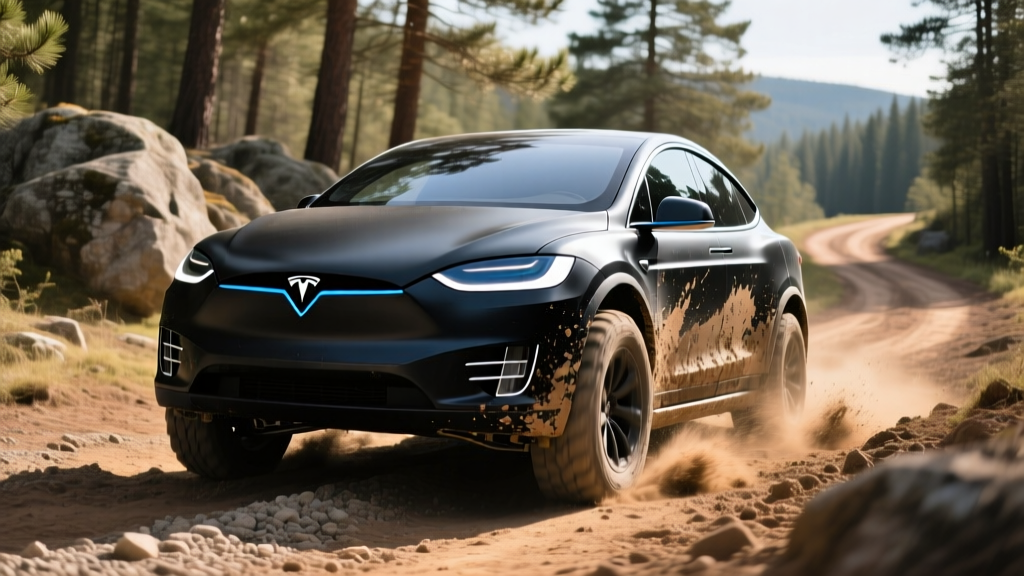
The phrase off-road Tesla Model X sounds like an oxymoron to anyone who's spent time on rocky single-track. Yet Tesla's largest SUV carries genuine advantages for dirt-road exploration: instant torque to all four wheels, a flat underbody with no exposed exhaust or drivetrain components, and adjustable air suspension that lifts the chassis higher than many crossover competitors. The 2026 Model X is not a Wrangler rival, and no serious owner should mistake it for one. But for fire roads, forest service trails, sandy washes, and moderate terrain that defines most American overlanding, the Model X delivers a surprisingly competent — if expensive — experience.
Before we dig into trail capability, let's ground this review in the numbers that matter to any EV buyer considering the Model X platform.
| Specification | Long Range (Dual Motor) | Plaid (Tri Motor) |
|---|---|---|
| EPA Range | 348 miles | 326 miles |
| Battery (usable) | ~100 kWh, NMC | ~100 kWh, NMC |
| Peak DC Fast Charge | 250 kW | 250 kW |
| 10–80% DC Charge Time | ~28 minutes | ~28 minutes |
| Level 2 Home Charge (48A) | ~34 mi/hr (11.5 kW) | ~34 mi/hr (11.5 kW) |
| 0–60 mph | 3.8 seconds | 2.5 seconds |
| Horsepower | 670 hp | 1,020 hp |
| Drivetrain | Dual Motor AWD | Tri Motor AWD |
| EPA Efficiency | 102 MPGe (33 kWh/100mi) | 98 MPGe (34 kWh/100mi) |
| Ground Clearance (max) | 9.0 in (Very High setting) | 9.0 in (Very High setting) |
| Towing Capacity | 5,000 lbs | 5,000 lbs |
| Base MSRP | $79,990 | $94,990 |
| Battery Warranty | 8 yr / 150,000 mi | 8 yr / 150,000 mi |
Real-World Range: What the EPA Number Doesn't Tell You
The EPA rates the 2026 Model X Long Range at 348 miles — a strong figure for a 5,300-pound SUV. But if you're searching for an off-road Tesla Model X experience, you need to budget far more conservatively.
- EPA Sticker: 348 miles
- Highway (70–75 mph, 70°F): ~275–295 miles
- Off-Road / Low-Speed Trail (rocky, sandy, elevation): ~250–280 miles (high torque demand, HVAC use, accessory loads)
- Cold Weather (below 32°F, mixed driving): ~220–260 miles
- Towing (loaded trailer, highway): ~175–210 miles
The Model X's aerodynamic profile — impressive for an SUV — becomes irrelevant off-road. Energy consumption on trails spikes because of constant torque-vectoring demands, low-speed climbing, sand resistance, and the HVAC working to manage cabin and battery temperature simultaneously. Plan your trail loops around a 220-mile safe buffer if you're far from charging.
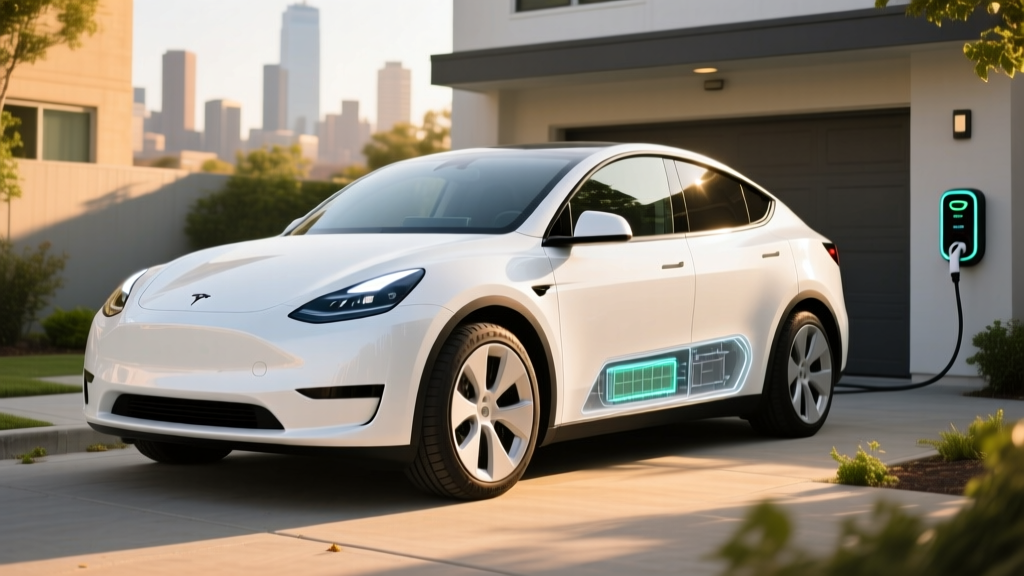
Tesla's NMC (nickel manganese cobalt) battery chemistry provides high energy density, which is why the Model X carries roughly 100 kWh of usable capacity in a package that still fits a third row. The trade-off versus LFP chemistry is slightly faster long-term degradation and a recommended daily charge limit of 80% — only charge to 100% when you're about to drive. This matters for off-road trip planning: if you're staging from home and need the full 348-mile envelope, you'll charge to 100% the morning of departure, but daily trailhead commuting should stay at 80%.
Ground Clearance, Suspension, and Trail Hardware
The Model X's adaptive air suspension is the feature that makes moderate off-roading possible. In its "Very High" setting, the SUV achieves approximately 9.0 inches of ground clearance — comparable to a Subaru Outback and enough for most fire roads, rutted forest service trails, and sandy desert washes. The suspension raises automatically at low speeds when you select the off-road driving mode, and the system remembers GPS-tagged locations so it pre-lifts at your favorite trailhead.
Underneath, the Model X benefits from a completely flat battery skid plate. There's no exhaust routing, no transfer case, no driveshaft — just a smooth, armored underbelly that slides over rocks and logs more gracefully than any body-on-frame SUV with dangling components. Approach and departure angles are reasonable for a 200-inch-long vehicle, though the front overhang (necessary for the frunk) limits steep incline transitions.
What the Model X lacks for serious off-road work:
- No mechanical locking differentials — torque distribution is entirely software-controlled via the electric motors
- No dedicated rock-crawling mode with ultra-low gearing
- 20- and 22-inch wheel options with low-profile tires are vulnerable to sidewall punctures on sharp rocks
- No factory skid plates beyond the battery enclosure
- Wading depth is not officially rated; Tesla does not publish a water-fording spec
For the vast majority of dirt roads in US national forests, BLM land, and state parks, the Model X is adequate. For Moab-class rock crawling or deep mud, it is not the right tool.
Charging on the Trail: Supercharger Network and Backcountry Limits
Charging is the single biggest logistical constraint for any off-road EV adventure, and the Model X is no exception. Tesla's Supercharger network remains the most reliable DC fast-charging infrastructure in North America, with over 6,000 stalls across the US as of 2026. However, Superchargers cluster along highways and near urban centers — not at remote trailheads.
| Charging Level | Power (kW) | Speed | Notes |
|---|---|---|---|
| Level 1 (120V household) | ~1.4 kW | ~3 mi/hr | Emergency trickle only |
| Level 2 (240V, 48A Wall Connector) | 11.5 kW | ~34 mi/hr | Full charge in ~9 hours |
| Level 2 (public, 40A) | 9.6 kW | ~28 mi/hr | Common at campgrounds |
| DC Fast Charge (Supercharger V3) | 250 kW peak | 10–80% in ~28 min | Tapers above 80% |
| DC Fast Charge (50 kW CCS adapter) | 50 kW | ~100 mi/hr | Via Tesla CCS adapter; non-Tesla networks |
The charge curve matters off-road. The Model X peaks at 250 kW only between roughly 10% and 35% state of charge. From 35% to 60%, it sustains around 150–180 kW. Above 80%, the rate drops sharply to protect the NMC battery — expect 40 kW or less. On a trail trip, this means your fastest charging happens when you arrive nearly depleted. Plan stops accordingly: a 20-minute Supercharger session at 15% SoC adds roughly 150 miles, but that same 20 minutes at 65% SoC adds only about 80 miles.
For genuine backcountry staging, consider a portable Level 2 EVSE (like the Tesla Mobile Connector with a NEMA 14-50 adapter) paired with a campground's 240V outlet. Many national forest campgrounds and RV parks offer 50-amp service that delivers ~34 miles of range per hour of charging — enough to replenish a day's trail driving overnight. According to fueleconomy.gov, the Model X Long Range consumes approximately 33 kWh per 100 miles in mixed driving, so a 10-hour campground charge at 11.5 kW restores roughly 340 miles of range — essentially a full battery.
Performance: Torque That Makes Trail Work Effortless
Where the Model X genuinely shines off-road is in low-speed torque delivery. Electric motors produce maximum torque at zero RPM, meaning the SUV can crawl up rocky inclines and pull through sand without the wheel-spin-and-lurch behavior of a gas engine hunting for the right gear. The dual-motor Long Range produces 670 horsepower and can vector torque between front and rear axles in milliseconds — faster than any mechanical limited-slip differential.
The 3.8-second 0–60 mph time (Long Range) is irrelevant on a trail, but the underlying powertrain capability is not. In Tesla's off-road mode, the traction control software is recalibrated to allow more wheel slip before intervening, which helps the tires dig through loose surfaces rather than freezing at the first hint of spin. The Plaid's tri-motor setup (1,020 hp, 2.5-second 0–60) offers even more granular rear-axle torque vectoring via its two independent rear motors, but the extra 2,500 pounds of battery mass works against it in soft sand and deep mud.
For towing a small off-road trailer, boat, or snowmobile carrier, the Model X is rated at 5,000 pounds. Be aware that towing cuts range nearly in half — expect 175–210 real-world miles with a loaded trailer at highway speeds.
Interior, Cargo, and Overlanding Practicality
The Model X seats up to seven in its optional third-row configuration, though the third row is best suited for children. Five-seat and six-seat (with second-row captain's chairs) layouts are also available. Cargo volume is a standout:
- Behind third row: ~15 cu ft
- Behind second row (third row folded): ~40 cu ft
- Behind front seats (all rear rows folded): ~80 cu ft
- Frunk (front trunk): ~6.6 cu ft — useful for storing recovery gear, tools, or a portable EVSE away from dirty cargo
The falcon-wing rear doors are a polarizing feature off-road. They open upward rather than outward, which is genuinely useful in tight campsite parking where a swing-out door would hit a picnic table or tree. However, the doors require overhead clearance — low-hanging branches and garage-style carports can trigger the ultrasonic sensors and limit opening height. In dusty, muddy conditions, the complex hinge mechanisms and seals require more maintenance attention than conventional doors.
The 17-inch center touchscreen runs Tesla's latest software, including navigation with Supercharger routing and battery preconditioning. For off-road navigation, you'll want a secondary GPS device or phone-based app (Gaia GPS, OnX Offroad) — Tesla's maps don't include forest service road numbers or trail difficulty ratings.
Pricing, Tax Credits, and Total Cost
The 2026 Model X starts at $79,990 for the Long Range and $94,990 for the Plaid, before options and destination. A fully loaded Long Range with six-seat interior, 22-inch wheels, and Full Self-Driving (Supervised) can push past $95,000.
| Trim | Base MSRP | As-Tested (typical) | §30D Credit Eligible? |
|---|---|---|---|
| Long Range | $79,990 | $85,000–$92,000 | No — exceeds $80,000 SUV MSRP cap |
| Plaid | $94,990 | $98,000–$105,000 | No — exceeds $80,000 SUV MSRP cap |
This is critical: under IRS §30D rules, the federal EV tax credit of up to $7,500 is capped at vehicles with an MSRP of $80,000 or less for SUVs. The Model X, at its base price, exceeds this cap in both trims. No 2026 Model X variant qualifies for the federal purchase credit. State incentives may still apply — check your state's energy office or the Alternative Fuels Data Center for local rebates. Some states like Colorado and California offer credits that are not subject to the federal MSRP cap.
Buyer income limits also apply to any vehicle that does qualify: modified adjusted gross income must not exceed $300,000 (joint filers), $225,000 (head of household), or $150,000 (single). Full details are available at IRS.gov's clean vehicle credit page.
Tesla's warranty covers the battery and drive units for 8 years or 150,000 miles (whichever comes first), with a guaranteed minimum 70% capacity retention over that period. The limited vehicle warranty is 4 years / 50,000 miles. For an off-road use case, note that suspension and underbody damage from trail use may fall outside warranty coverage if Tesla determines it resulted from abuse rather than normal driving.
Pros, Cons, and the Competition
- Flat underbody with integrated battery armor — no exposed drivetrain components
- Instant AWD torque with millisecond torque vectoring
- Adjustable air suspension up to 9.0 inches ground clearance
- 348-mile EPA range (Long Range) reduces range anxiety on remote loops
- Access to Tesla Supercharger network for highway staging
- Massive cargo volume (80 cu ft max) for gear and recovery equipment
- Frunk keeps dirty tools separate from cabin cargo
- Over-the-air updates continuously improve traction software
- No federal §30D tax credit — MSRP exceeds $80,000 SUV cap
- 20/22-inch low-profile tires are trail liabilities; aftermarket all-terrain options are limited
- No factory rock sliders, skid plates (beyond battery), or recovery points
- Falcon-wing doors require overhead clearance and add mechanical complexity
- 5,300+ lb curb weight works against traction in soft sand and deep mud
- Charging infrastructure is sparse near most trailheads
- No spare tire — tire repair kit only; a trail puncture can strand you
- $80,000+ entry price is steep for a vehicle that can't handle Class III+ trails
Key competitors for off-road-oriented EV buyers:
- Rivian R1S (Dual Motor / Quad Motor): Purpose-built for off-road with 14.9 inches of ground clearance, four dedicated off-road modes, available all-terrain tires, and a proper spare. Starts around $75,900 (base Dual Motor), potentially credit-eligible on lower trims. Range up to 410 miles (Max Pack). This is the direct rival and the better off-road tool.
- Jeep Wrangler 4xe (PHEV): Solid axles, 10.8 inches ground clearance, 370-mile total range (gas + electric), and a massive aftermarket. Only 22 miles of electric-only range, but it goes anywhere. ~$50,000 base; credit-eligible on qualifying trims.
- Ford Bronco (gas): Not electrified, but the benchmark for serious trail work. Included here as a capability baseline — the Model X does not compete here.
Who Should Buy the Model X for Off-Road Use?
- You primarily drive paved roads and want occasional fire-road / forest-service-trail capability
- You value Supercharger access for highway-heavy road trips that include dirt-road detours
- You need three-row seating and massive cargo space for family camping
- You already own or plan to install a Level 2 home charger
- Budget is not your primary constraint
- You plan to tackle Class III+ trails, rock gardens, or deep water crossings
- You need a full-size spare tire and robust recovery hardware
- You want a vehicle designed from the ground up for trail abuse
- You want potential federal tax credit eligibility (R1S base trims)
Frequently Asked Questions
What is the real-world range of the Tesla Model X off-road?
On moderate trails at low speeds with elevation changes and HVAC use, expect 250–280 miles from the Long Range model — roughly 20–28% below the 348-mile EPA sticker. Cold weather and towing reduce this further. Always plan trail loops with a 30% range buffer.
How fast does the Model X charge on the trail?
At a Tesla Supercharger (V3), it peaks at 250 kW and charges from 10–80% in approximately 28 minutes. At a campground Level 2 outlet (240V, 48A), it adds about 34 miles of range per hour. There is no DC fast charging at most trailheads, so overnight Level 2 staging is the practical off-road charging strategy.
Does the 2026 Model X qualify for the federal EV tax credit?
No. Under IRS §30D rules, SUVs must have an MSRP of $80,000 or less to qualify. The Model X starts at $79,990 for the Long Range, and with mandatory destination fees and standard equipment, it exceeds the cap. No current Model X trim qualifies. State incentives may still apply — consult your state energy office.
Can I put all-terrain tires on the Model X?
Aftermarket all-terrain tires in the Model X's OEM sizes (20" and 22") are extremely limited. Some owners fit 20-inch wheels from third-party suppliers with mild all-terrain rubber, but this can affect range, ride quality, and potentially warranty coverage. Consult a tire specialist familiar with EV load ratings — the Model X's 5,300+ lb weight demands XL-rated tires.
Is the Model X better off-road than the Rivian R1S?
No. The Rivian R1S offers significantly more ground clearance (14.9 in vs 9.0 in), dedicated off-road drive modes, available factory all-terrain tires, a full-size spare, and approach/departure angles designed for serious trail work. The Model X is a capable light-duty dirt-road SUV; the R1S is a purpose-built off-roader that happens to be electric.
Does Autopilot work on dirt roads?
Tesla's Autopilot and Full Self-Driving (Supervised) are SAE Level 2 driver-assist systems designed for paved, well-marked roads. On dirt roads, lane markings are absent and dust can obscure cameras. The system will disengage or behave unpredictably. You must drive manually off-road and remain fully engaged at all times — these are not self-driving systems.
What's the towing range penalty?
Towing a loaded 5,000-lb trailer at highway speeds reduces real-world range to approximately 175–210 miles. At trail speeds with a lighter off-road trailer, expect 220–260 miles. Always pre-condition the battery and plan Supercharger stops when towing.
The off-road Tesla Model X is a real, viable concept — within well-defined limits. If your adventures involve graded fire roads, scenic forest loops, and car-camp staging with Supercharger access on the highway in, the Model X delivers comfort, range, and torque that make the experience effortless. If your definition of off-road involves rock crawling, deep water, or miles from the nearest paved surface, look to the Rivian R1S or a plug-in hybrid Wrangler 4xe. Know the tool, respect its limits, and the Model X will carry you deeper into the backcountry than most luxury SUVs ever could.