The Tesla Model X has always been a polarizing vehicle: part luxury family hauler, part tech showcase, part status symbol. But one question rarely gets a thorough answer: how does the Tesla Model X perform off road? With its dual-motor all-wheel drive, air suspension, and substantial weight, the Model X presents an unusual proposition for buyers who need to tackle gravel fire roads, snowy mountain passes, or rutted campsite trails. This review examines the 2025 Tesla Model X through the lens of off-pavement capability while covering the full ownership picture — range, charging, pricing, and tax-credit reality.
Quick Verdict: The Model X Off Road in 30 Seconds
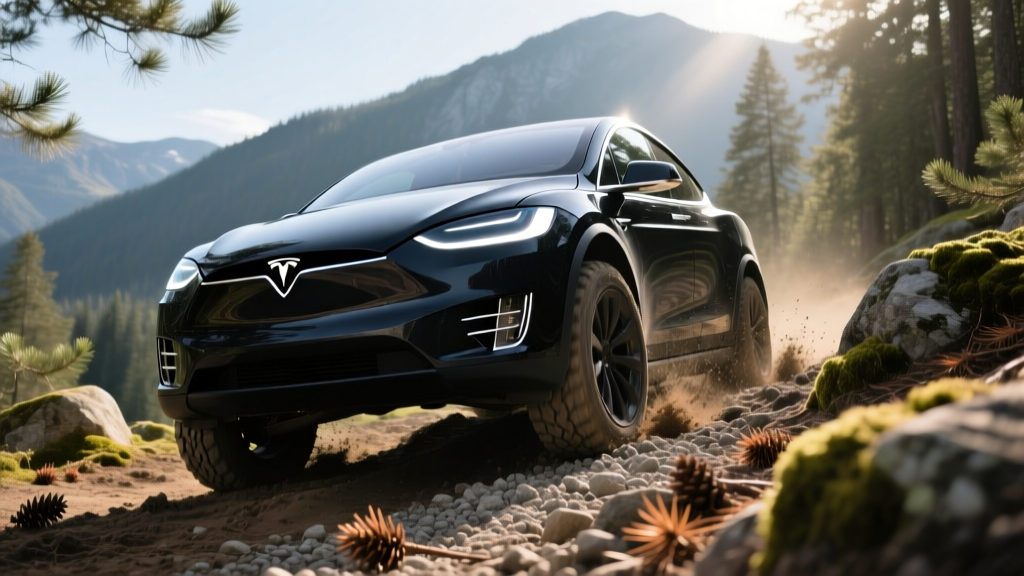
The Tesla Model X is a competent light-duty off-roader — capable on maintained dirt roads, forest service trails, snow-covered passes, and sandy campsite approaches. It is not a rock crawler, and it won't replace a Jeep Wrangler or Rivian R1S on technical terrain. Its 8.3 inches of adjustable ground clearance (in High mode), dual-motor AWD with sub-50-millisecond torque vectoring, and flat underbody give it genuine advantages over most crossovers. But 22-inch wheels, low-profile tires, and a 5,185-pound curb weight impose real limitations. Think of it as a premium all-weather adventure wagon, not a dedicated trail rig.
Range, Efficiency, and Real-World Expectations
| Spec | Model X Long Range | Model X Plaid |
|---|---|---|
| EPA Range | 335 miles | 326 miles |
| Battery (usable) | ~100 kWh (NMC) | ~100 kWh (NMC) |
| MPGe (combined) | 102 MPGe | 98 MPGe |
| kWh/100 mi | 33 kWh | 34 kWh |
| Drivetrain | Dual Motor AWD | Tri-Motor AWD |
According to fueleconomy.gov, the Model X Long Range achieves 102 MPGe combined — respectable for a 5,000+ pound SUV, but efficiency suffers noticeably when tires leave pavement. Sand, mud, and steep grades demand sustained high-torque output that drains the battery faster than any highway cruise.
Off-Road Capability: Ground Clearance, Traction, and Limits
Ground Clearance and Air Suspension
The Model X's adaptive air suspension offers multiple ride heights. In its highest setting, the vehicle provides approximately 8.3 inches of ground clearance — comparable to a Subaru Outback (8.7 inches) and slightly less than the Rivian R1S (up to 14.9 inches in Off-Road mode). This clearance handles most fire roads, washboard surfaces, and moderate ruts without issue. The flat underbody — with no exhaust, driveshaft, or differential housings — eliminates common snag points that plague conventional SUVs.
Traction and Torque Vectoring
The dual-motor AWD system (Long Range) and tri-motor setup (Plaid) provide independent front and rear torque delivery with response times measured in milliseconds — far faster than any mechanical AWD system with a center differential. On loose gravel, wet grass, and packed snow, this translates to confident grip and minimal wheelspin. The traction control system modulates individual wheel braking to redirect torque, mimicking a locking differential's effect without hardware complexity.
Where the Model X Struggles Off Road
- Tires: Factory 20- or 22-inch wheels ship with all-season or summer tires optimized for pavement. These compounds harden in cold mud and lack aggressive sidewall bite for loose surfaces. Swapping to all-terrain tires (like the Falken Wildpeak A/T Trail) dramatically improves capability but may reduce range by 5–10%.
- Weight: At 5,185 lbs (Long Range), the Model X is heavy. On soft sand or deep mud, that mass works against you — the vehicle sinks and requires more energy to extract itself.
- Approach/departure angles: The Model X's long front overhang and rear diffuser limit breakover and departure angles compared to body-on-frame SUVs. Steep ledges and deep ditches are out of its element.
- Underbody protection: While the battery pack sits within a reinforced structural enclosure, Tesla does not equip dedicated skid plates for off-road use. Sharp rocks at speed pose a risk to the undercarriage.
- No dedicated off-road mode: Unlike the Rivian R1S or Jeep Grand Cherokee 4xe, the Model X has no terrain-select system that adjusts throttle mapping, regen, and traction control for specific surfaces.
Charging Speed: DC Fast, Level 2, and Trail-Head Logistics
| Charging Level | Power / Rate | Speed | Notes |
|---|---|---|---|
| DC Fast Charge (Supercharger V4) | Peak 250 kW | 10–80% in ~30 min | Charge curve tapers above 60%; precondition battery via nav |
| DC Fast Charge (third-party CCS via adapter) | Up to 150 kW typical | 10–80% in ~45 min | Depends on station; Electrify America, EVgo |
| Level 2 (home Wall Connector, 48A) | 11.5 kW | ~34 miles/hr | Full charge in ~10 hours; requires 60A circuit |
| Level 2 (public, 40A typical) | 9.6 kW | ~28 miles/hr | Hotels, campgrounds, destination chargers |
| Level 1 (120V outlet) | ~1.4 kW | ~4 miles/hr | Emergency/trickle only; useful at remote cabins |
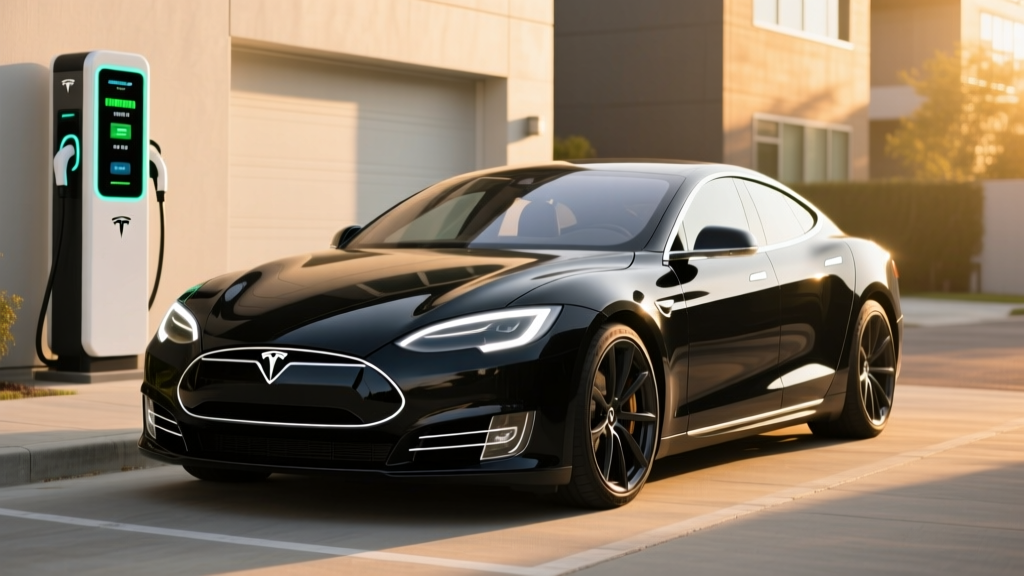
Charging logistics matter enormously for off-road adventures. If your trailhead is 200 miles from home with elevation gain and dirt driving, you'll consume more energy than the EPA sticker suggests. The Model X's NACS (North American Charging Standard) connector gives you native access to the Tesla Supercharger network — the most reliable and geographically extensive DC fast-charging network in the US, with over 6,000 stations. Many Superchargers are located near outdoor recreation corridors.
Charge curve reality: The Model X peaks at 250 kW only at low state-of-charge (SoC) and optimal battery temperature. Expect sustained rates of ~150–180 kW through the 20–60% range, then a significant taper above 60%. A 10–80% charge takes roughly 30 minutes. Plan stops accordingly — charging from 80–100% adds another 25+ minutes for diminishing range returns.
For remote camping, a Level 1 (120V) connection at a cabin or campground adds ~4 miles per hour — enough to recover 40–50 miles overnight. A portable Level 2 unit (like the Tesla Mobile Connector with a NEMA 14-50 adapter) at a 240V/50A outlet delivers ~34 miles/hr, making overnight recovery practical at RV parks near trailheads.
Performance and Driving Dynamics
| Spec | Long Range | Plaid |
|---|---|---|
| Horsepower | 670 hp | 1,020 hp |
| 0–60 mph | 3.8 seconds | 2.5 seconds |
| Top Speed | 155 mph | 163 mph |
| Towing Capacity | 5,000 lbs | 5,000 lbs |
On pavement, the Model X is ferociously quick. Off road, that power is manageable thanks to precise electric motor control — you can feather the throttle at crawling speeds with far more granularity than a gas engine's throttle body allows. The instant torque (no turbo lag, no transmission shift) means you can modulate out of ruts and over obstacles smoothly. However, the Plaid's 1,020 hp is excessive for off-road use; the Long Range's 670 hp is more than adequate and its slightly lower weight helps on soft surfaces.
Interior, Cargo, and Tech
Passenger and Cargo Space
The Model X seats up to seven in a 2-3-2 configuration (six with optional second-row captain's chairs). Cargo volume:
- Behind third row: ~15 cu ft (tight for gear-heavy trips)
- Behind second row (third row folded): ~37 cu ft
- Maximum (all rear rows folded): ~71 cu ft
- Frunk (front trunk): ~6.6 cu ft — useful for muddy gear, recovery equipment, or a portable charger
Second-row legroom is generous at 40.9 inches. Third-row legroom drops to 32.7 inches — fine for children, cramped for adults on long drives. The falcon-wing rear doors are a mixed blessing off road: they open upward (useful in tight parking) but require overhead clearance and can be slow to operate in wind or rain.
Standout Tech Features
- 17-inch center touchscreen with tilt — controls everything including suspension height, climate, and navigation
- Autopilot (SAE Level 2 driver assistance) — adaptive cruise + lane centering; reduces fatigue on long highway stretches to trailheads
- Full Self-Driving (Supervised) — SAE Level 2 with automatic lane changes, navigation on Autopilot; requires active driver supervision at all times
- Sentry Mode / Dashcam — records surroundings when parked; useful at remote trailheads
- Camp Mode — maintains climate control and USB power while parked; ideal for overnight camping
- Dog Mode — keeps cabin climate stable with a display message; useful when stopping at supply towns
Notable Drawbacks
- No dedicated off-road drive mode or terrain-select system
- Falcon-wing doors can be problematic in tight forest clearances or heavy wind
- No spare tire — Tesla provides a tire repair kit; a flat on a remote trail is a serious problem
- Build quality inconsistencies remain a concern (panel gaps, interior rattles on washboard roads)
- High insurance premiums relative to competitors
Pricing, Trims, and Federal Tax Credit
| Trim | Base MSRP | Federal Tax Credit (§30D) | Effective Price (if eligible) |
|---|---|---|---|
| Model X Long Range | $79,990 | $0 (exceeds MSRP cap) | $79,990 |
| Model X Plaid | $94,990 | $0 (exceeds MSRP cap) | $94,990 |
Critical tax credit note: Under current IRS §30D rules, the federal EV tax credit is capped at vehicles with an MSRP of $80,000 or less for SUVs. The Model X Long Range at $79,990 technically falls under this cap, but once destination fees and any options are added, the adjusted price typically exceeds $80,000, disqualifying it. Additionally, §30D imposes buyer income limits ($300,000 joint / $225,000 head of household / $150,000 individual AGI) and critical mineral and battery component sourcing requirements that change annually. Always verify eligibility at IRS.gov and consult a tax professional before relying on the credit.
With destination charges and common options (22-inch wheels, premium interior colors, FSD package), expect as-tested prices between $85,000 and $105,000+. At these prices, the Model X does not qualify for the federal credit in most configurations — a significant factor versus the Rivian R1S, which does qualify in certain trims.
How It Compares: Model X vs. Off-Road Competitors
| Spec | Tesla Model X LR | Rivian R1S Dual | Jeep Grand Cherokee 4xe |
|---|---|---|---|
| Ground Clearance | 8.3 in | 14.9 in (max) | 10.9 in (Off-Road II) |
| EPA Range / EV Range | 335 mi | 316 mi | 26 mi (electric) / 430 mi total |
| 0–60 mph | 3.8 sec | 4.5 sec | 6.0 sec |
| Towing | 5,000 lbs | 7,700 lbs | 6,000 lbs |
| Off-Road Mode | None | Yes (multiple) | Yes (Selec-Terrain) |
| Base Price | $79,990 | $79,900 | $62,995 |
| Federal Credit Eligible | Borderline | Yes (certain configs) | Yes ($7,500) |
The Rivian R1S is the clear winner for serious off-road use — more ground clearance, dedicated terrain modes, available all-terrain tires, and a quad-motor option with tank turns. The Grand Cherokee 4xe offers proven Trail Rated capability in Overland/Trailhawk trims at a lower price, though it's a PHEV with limited electric-only range. The Model X wins on pavement performance, charging network access, and tech-forward luxury — but it trails both rivals when the pavement ends.
Choose the Rivian R1S if: Off-road capability is a priority — you need serious ground clearance, terrain modes, all-terrain tires, and a vehicle designed from the ground up for adventure use.
Choose the Grand Cherokee 4xe if: You want proven off-road hardware at a lower price point and can accept limited electric-only range with the option of gas for remote areas without charging.
Pros and Cons
- 335 miles EPA range — longest in its class for an electric SUV
- Supercharger network access for reliable road-trip charging
- Instant torque and millisecond AWD response on loose surfaces
- Flat underbody with no mechanical snags
- Excellent tech: Camp Mode, Dog Mode, Sentry Mode for outdoor lifestyles
- Spacious interior with falcon-wing doors for easy loading
- 5,000-lb towing capacity
- 8.3 in max ground clearance — less than dedicated off-road SUVs
- No off-road drive mode or terrain-select system
- No spare tire — risky for remote trail use
- Heavy at 5,185 lbs — sinks in soft surfaces
- Factory tires not suited for mud, sand, or rock
- Typically does not qualify for federal EV tax credit at optioned prices
- Falcon-wing doors require overhead clearance
- High insurance costs
Who Should Buy the Model X for Off-Road Use?
The Tesla Model X off road is best suited for adventure-oriented families who spend 90% of their time on pavement and 10% on maintained dirt roads, forest service routes, or snowy mountain passes. If your "off-roading" means reaching a ski lodge, a dispersed campsite on a graded road, or a trailhead at the end of a gravel fire road, the Model X handles it confidently — especially with all-terrain tires and careful route selection.
If you plan to tackle technical rock crawling, deep sand dunes, or unmapped backcountry routes, look at the Rivian R1S or keep a dedicated off-road vehicle in your garage. The Model X is a capable all-rounder, not a specialist.
Warranty and Long-Term Ownership
Tesla covers the Model X with:
- Basic vehicle warranty: 4 years / 50,000 miles
- Battery and drive unit warranty: 8 years / 150,000 miles (Long Range), with a minimum 70% capacity retention threshold
The 8-year/150,000-mile battery warranty is competitive. The NMC chemistry in the Model X typically shows 8–12% degradation over 100,000 miles based on fleet data. For off-road-heavy use, watch for suspension wear — air springs and bushings take more abuse on rough roads, and replacement costs can be significant outside warranty coverage.
Frequently Asked Questions
What is the real-world range of the Tesla Model X off road?
On mixed dirt and pavement with elevation changes, expect 230–260 miles from a full charge — roughly 20–30% less than the 335-mile EPA estimate. Soft surfaces like sand and mud increase energy consumption significantly. Cold weather compounds the loss further.
How fast does the Model X charge at home and on the road?
At home on a Level 2 Tesla Wall Connector (48A/11.5 kW), the Model X gains about 34 miles of range per hour, with a full charge taking roughly 10 hours. On a Tesla Supercharger (DC fast charge), it peaks at 250 kW and charges from 10–80% in approximately 30 minutes, though the charge curve tapers noticeably above 60% SoC.
Does the Tesla Model X qualify for the federal EV tax credit?
It depends on configuration. The §30D credit imposes an $80,000 MSRP cap for SUVs, buyer income limits, and battery-sourcing requirements. The Model X Long Range's $79,990 base MSRP technically falls under the cap, but destination fees and options typically push it over. Verify current eligibility on IRS.gov and consult a tax professional.
Can I put all-terrain tires on the Tesla Model X?
Yes. Owners have successfully fitted all-terrain tires (such as Falken Wildpeak A/T Trail or BFGoodrich All-Terrain T/A KO2) to 20-inch Model X wheels. This is the single most impactful off-road upgrade available. Expect a 5–10% range reduction and slightly more road noise on pavement.
Is the Model X better off road than the Rivian R1S?
No. The Rivian R1S offers up to 14.9 inches of ground clearance, dedicated off-road drive modes, available all-terrain tires, better approach/departure angles, and higher towing capacity. The Model X excels on pavement and at Superchargers, but the R1S is the superior off-road vehicle.
What happens if I get a flat tire on a remote trail?
The Model X does not include a spare tire. Tesla provides a tire inflator kit with sealant. For remote off-road use, carry a plug kit, a portable air compressor, and know the location of the nearest tire service. Some owners mount a full-size spare on a roof rack or cargo trailer for backcountry trips.