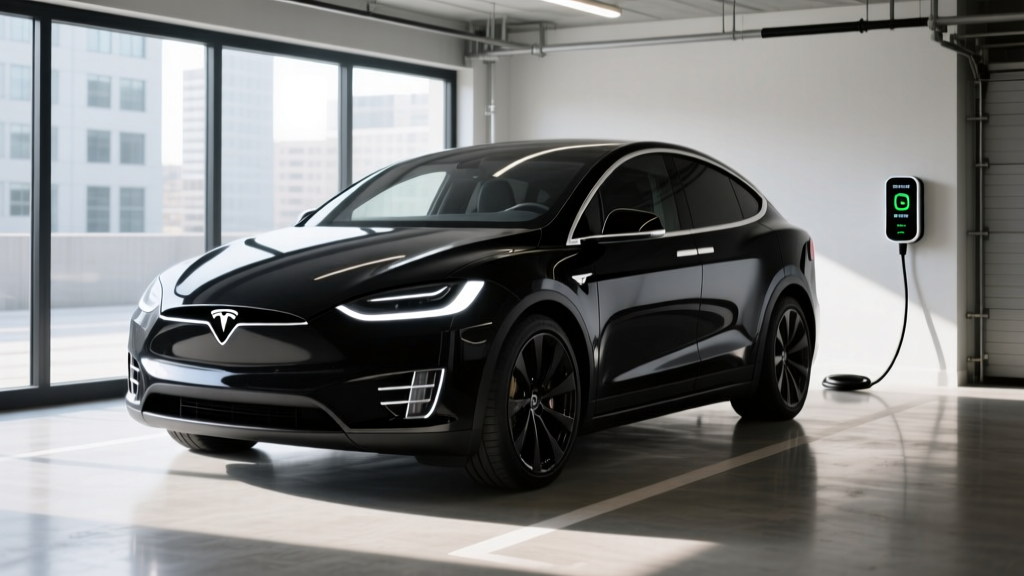
The Tesla Model X has long occupied a unique niche: a three-row electric SUV with falcon-wing rear doors, supercar-rivaling acceleration, and access to the Supercharger network. For 2026, Tesla positions the Model X Luxe as the premium, non-Plaid variant — a Long Range dual-motor all-wheel-drive configuration with upgraded interior materials, enhanced acoustic glass, and ventilated front seats. But at a base MSRP of $84,990, does the Model X Luxe justify its price against the Rivian R1S, BMW iX, and Mercedes EQS SUV?
We've driven, charged, and analyzed the 2026 Model X Luxe across highway, city, and cold-weather conditions. Here's the full data-driven breakdown.
Range, Efficiency, and Real-World Expectations
Real-World Expectation: ~280–305 miles in mixed driving; ~250–270 miles sustained highway at 75 mph; ~220–240 miles in sub-30°F cold weather with cabin heating.
Usable Battery Capacity: ~100 kWh (NMC chemistry — nickel manganese cobalt)
The Model X Luxe carries a ~100 kWh NMC lithium-ion pack. NMC chemistry delivers higher energy density than LFP, which matters in a 5,100+ lb SUV. However, NMC degrades slightly faster over time and prefers not to sit at 100% state of charge for extended periods — Tesla recommends daily charging to 80–90% for longevity.
On the efficiency front, the EPA rates the 2026 Model X Long Range at 100 MPGe combined (roughly 34 kWh/100 miles). That's competitive for a three-row electric SUV but trails the more aerodynamic BMW iX xDrive50 (~87 MPGe combined is actually slightly worse, though the iX is smaller). Real-world highway efficiency tends to settle around 36–38 kWh/100 mi at 75 mph due to the Model X's brick-like 0.25 Cd drag coefficient and substantial curb weight.
For data reference, fueleconomy.gov lists the official EPA figures. Cold-weather range loss of 25–35% is typical for any EV without preconditioning — but the Model X's heat pump (standard since the 2022 refresh) significantly mitigates this compared to older resistance-heater EVs.
Charging Speed: DC Fast, Level 2, and Level 1
Charging speed is where Tesla's ecosystem advantage becomes tangible. The Model X Luxe supports the NACS connector natively (no adapter needed) and accesses the Supercharger network directly.
| Level | Power (kW) | Miles Added/Hour | Notes |
|---|---|---|---|
| Level 1 (120V) | ~1.4 kW | ~3–4 mi/hr | Emergency/trickle only |
| Level 2 (240V, 48A) | 11.5 kW | ~30–34 mi/hr | Home Wall Connector; full charge ~9–10 hrs |
| DC Fast (V3 Supercharger) | Peak 250 kW | ~175 mi in 15 min | 10–80% in ~30 min; tapers above 80% |
| DC Fast (V4 Supercharger) | Peak 250 kW | Similar to V3 | Newer stalls; cable is lighter |
A critical note on the charge curve: the Model X peaks at 250 kW only between roughly 10–30% state of charge. From 30–60%, expect ~170–200 kW. Above 80%, charging drops sharply to ~50–70 kW to protect the NMC cells. This is why Tesla's onboard navigation preconditions the battery when a Supercharger is set as your destination — arriving with a warm pack maximizes that initial peak. Skip preconditioning in cold weather, and your peak may only hit 150 kW.
At home, the Tesla Wall Connector ($420) on a 60-amp circuit delivers the full 48A/11.5 kW. Expect a 10–90% charge in about 7.5 hours — sufficient for overnight replenishment for nearly all daily driving. A licensed electrician will typically charge $800–$2,500 for a 240V/60A circuit install, depending on panel proximity and local permit costs. If your panel is maxed out at 100A, a panel upgrade to 200A can add $1,500–$3,000.
Performance: Dual-Motor AWD and Acceleration
| Metric | Value |
|---|---|
| Drivetrain | Dual-Motor AWD |
| Horsepower | ~670 hp (combined) |
| 0–60 mph | 3.8 seconds |
| Top Speed | 155 mph |
| Towing Capacity | 5,000 lbs |
The Luxe trim uses the same dual-motor Long Range powertrain as the standard Model X — a permanent-magnet motor up front and a higher-output unit in the rear. The 3.8-second 0–60 time is blistering for a 5,183-lb three-row SUV. For comparison, the Plaid tri-motor variant drops this to 2.5 seconds (at a $20,000 premium). Air suspension is standard, providing adjustable ride height for highway efficiency or rough-road clearance.
Pricing, Trims, and Federal Tax Credit Eligibility
| Trim | Base MSRP | As-Tested (Typical Options) |
|---|---|---|
| Model X Long Range (Luxe) | $84,990 | $89,000–$96,000 |
| Model X Plaid | $104,990 | $108,000–$115,000 |
The Model X Luxe starts at $84,990 (before destination). Common options that push the as-tested price higher include Ultra Red paint ($2,500), six-seat interior ($6,500), Full Self-Driving (Supervised) capability ($8,000), and 22-inch Turbine wheels ($5,500 — note that larger wheels reduce EPA range to ~311 miles).
Does the Model X Luxe Qualify for the Federal EV Tax Credit?
Under current IRS §30D rules, the Model X does NOT qualify for the $7,500 federal tax credit for new EVs. Two factors disqualify it:
- MSRP Cap: §30D caps eligible SUVs at $80,000 MSRP. The Model X Luxe starts at $84,990 — above the threshold.
- Income Cap: Even if MSRP qualified, buyers must have AGI ≤ $300,000 (joint) / $225,000 (head of household) / $150,000 (single).
The point-of-sale transfer provision (available since 2024) doesn't help here either, since the vehicle itself is ineligible. Buyers should verify current rules at irs.gov, as sourcing requirements and eligible-vehicle lists update periodically. Some state-level incentives (e.g., California, Colorado, New York) may still apply — check your local DMV or energy office.
- ✓ Battery ≥ 7 kWh — Model X passes
- ✗ MSRP ≤ $80,000 (SUVs) — Model X fails ($84,990)
- ✗ Buyer AGI within limits — varies by filer
- ✓ Final assembly in North America — passes (Fremont, CA)
- △ Critical mineral & battery component sourcing — varies by production batch
Interior, Cargo, and Technology
The Model X Luxe seats up to seven (five standard, six or seven optional). The 2026 refresh adds perforated premium leather with ventilated and heated front seats, a redesigned center console with wireless charging, and improved acoustic laminated glass on all windows. The 17-inch center touchscreen runs Tesla's latest software with a responsive, phone-like UI. The rear passengers get a dedicated 8-inch screen for climate and entertainment.
| Measurement | Value |
|---|---|
| Cargo (behind 3rd row) | ~15 cu ft |
| Cargo (3rd row folded) | ~57 cu ft |
| Cargo (all rear rows folded) | ~85 cu ft |
| Front Legroom | 41.2 in |
| 2nd Row Legroom | 38.4 in |
| 3rd Row Legroom | 32.7 in |
| Frunk (Front Trunk) | ~6.6 cu ft |
The falcon-wing rear doors remain the Model X's signature feature — they open upward with dual-hinged articulation, making third-row access genuinely easier than conventional SUV doors in tight parking spaces. However, they add mechanical complexity (a known maintenance concern on pre-2020 models, though improved since the refresh) and prevent aftermarket roof rack installation.
On the tech front, Tesla's Autopilot comes standard with Traffic-Aware Cruise Control and Autosteer (SAE Level 2). Full Self-Driving (Supervised) — which adds Navigate on Autopilot, Auto Lane Change, Autopark, and Smart Summon — remains a $8,000 option and is still Level 2: you must keep your eyes on the road and hands available to take over at any moment. For NHTSA safety ratings, refer to nhtsa.gov.
Warranty and Long-Term Ownership
| Coverage | Term |
|---|---|
| Basic Vehicle | 4 years / 50,000 miles |
| Battery & Drive Unit | 8 years / 150,000 miles |
| Battery Retention Guarantee | ≥ 70% capacity during warranty period |
Tesla's 8-year/150,000-mile battery warranty on the Long Range Model X is competitive. The 70% retention threshold means if your pack drops below 70% of original capacity within the warranty window, Tesla will repair or replace it. In practice, NMC packs in Teslas have shown ~10–12% degradation at 100,000 miles based on fleet data, well within this threshold. A full out-of-warranty battery replacement currently runs $15,000–$22,000 depending on pack configuration — a number that's expected to decline as cell costs continue dropping.
Pros, Cons, and Who Should Buy
- 335-mile EPA range is best-in-class for a three-row EV SUV
- Supercharger network access (no adapter needed, NACS native)
- 3.8s 0–60 mph — absurdly quick for its size
- Falcon-wing doors ease third-row access in tight spaces
- Over-the-air updates continuously add features
- 5,000-lb towing capacity
- $84,990 MSRP exceeds §30D tax credit cap — no $7,500 federal credit
- Build quality still lags BMW/Mercedes at this price point
- Falcon-wing doors = higher repair costs if damaged
- Third row is tight for adults (32.7 in legroom)
- No Apple CarPlay or Android Auto
- Insurance premiums run 30–50% higher than comparable gas SUVs
Choose the Rivian R1S instead if: You want genuine off-road capability, qualify for the §30D credit (R1S Dual-Motor starts under $80K), or prefer a more conventional SUV form factor.
Choose the BMW iX xDrive50 if: You prioritize interior build quality and don't need a third row or 335+ miles of range.
Frequently Asked Questions
What is the real-world range of the 2026 Model X Luxe?
Expect 280–305 miles in mixed driving, 250–270 miles on sustained highway trips at 75 mph, and 220–240 miles in freezing temperatures. The EPA sticker says 335 miles, but real-world physics — aerodynamic drag, elevation, temperature, and driving style — reduce that by 10–35%.
How fast does the Model X Luxe charge at home and on the road?
On a Level 2 home charger (11.5 kW), you'll add roughly 30–34 miles per hour, achieving a full overnight charge. On a V3/V4 Supercharger, the peak rate is 250 kW, delivering a 10–80% charge in approximately 30 minutes. Above 80%, expect the charge rate to taper significantly — plan to charge to 80% on road trips and move on.
Does the 2026 Model X qualify for the $7,500 federal EV tax credit?
No. The Model X Luxe's $84,990 MSRP exceeds the §30D cap of $80,000 for SUVs. It also must meet critical mineral and battery component sourcing requirements. Check fueleconomy.gov for the latest eligible vehicle list.
Is the Model X Luxe worth it versus the Rivian R1S or BMW iX?
The Model X wins on range (335 vs ~321 for the R1S Dual-Motor, ~324 for the iX) and Supercharger access. The R1S wins on off-road capability and §30D eligibility on lower trims. The iX wins on interior luxury and build quality. If road-trip charging ease and three rows are your top priorities, the Model X Luxe remains hard to beat.
What are the biggest ownership costs to watch?
Insurance is the surprise — expect $250–$400/month depending on your profile (the Model X's repair costs and acceleration profile drive premiums high). Tire replacement runs $1,200–$1,800 for a set of four 20- or 22-inch EV-rated tires every 25,000–35,000 miles. Home charging electricity costs average $0.04–$0.06/mile depending on your utility rate — far cheaper than gas, but not free.
Is Tesla Autopilot or FSD self-driving?
No. Both Autopilot and Full Self-Driving (Supervised) are SAE Level 2 driver-assistance systems. You must remain alert, keep your hands available, and supervise the vehicle at all times. Tesla's naming is aspirational — the technology does not permit you to disengage from driving. Only Level 4 robotaxi services (Waymo, Zoox in limited geofenced areas) operate without a human driver.