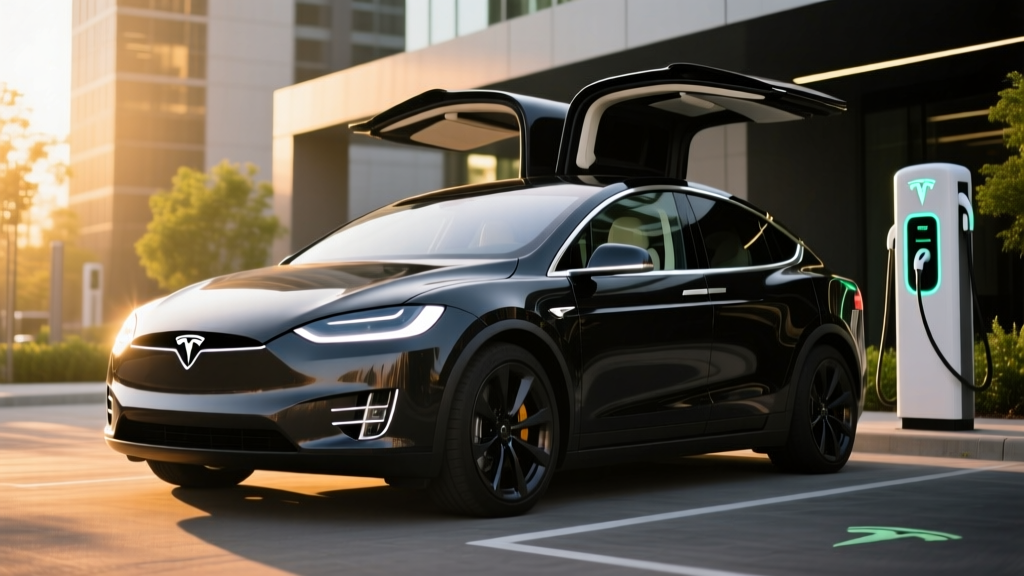
The Tesla Model X has been the benchmark for electric three-row SUVs since it first hit the road nearly a decade ago. For shoppers researching the Tesla Model X launch date and its evolution, understanding how the vehicle has changed—from its 2015 debut through the 2021 Plaid refresh to today's 2026 lineup—is essential before committing six figures. This review covers the full history and delivers the exact 2026 specs, real-world range data, charging performance, and ownership costs you need to decide if the Model X still earns its premium price tag.
Tesla Model X Launch Date Timeline: From Concept to 2026
Tesla first unveiled the Model X concept in February 2012, but the production vehicle's official launch date was September 29, 2015, when CEO Elon Musk delivered the first six "Founder Series" units at the Fremont factory. Volume deliveries to reservation holders (some of whom had placed deposits as early as 2012) began in earnest in early 2016. The launch was delayed multiple times from the originally promised late-2013 and then 2014 targets—primarily due to the engineering complexity of the signature Falcon Wing rear doors and the aluminum-intensive body structure.
Key milestones in the Model X timeline:
- 2015 (Launch): Model X 90D and P90D debut with 60–90 kWh battery options and up to 257 miles EPA range.
- 2017: 100D variant pushes range to 295 miles EPA; performance P100D achieves a 2.9-second 0-60 mph time.
- 2019: "Raven" powertrain update swaps the front induction motor for a permanent-magnet synchronous unit from the Model 3, boosting efficiency and range to 325 miles.
- 2021: Major interior refresh introduces a yoke steering option, 17-inch landscape touchscreen, and the 1,020-hp Plaid tri-motor variant (0-60 in 2.5 seconds).
- 2023–2024: Pricing restructures; Standard Range variant briefly offered then discontinued.
- 2026 (Current): Dual-Motor AWD and Plaid tri-motor AWD continue with minor software and efficiency refinements, NACS charging port standard, and access to the full Tesla Supercharger network.
2026 Tesla Model X Specs at a Glance
| Spec | Dual Motor AWD | Plaid (Tri-Motor AWD) |
|---|---|---|
| EPA Range | 342 miles | 326 miles |
| Battery (usable) | ~95 kWh (NMC) | ~95 kWh (NMC) |
| Drivetrain | Dual Motor AWD | Tri-Motor AWD |
| Horsepower | 670 hp | 1,020 hp |
| 0-60 mph | 3.8 sec | 2.5 sec |
| Top Speed | 155 mph | 163 mph |
| Peak DC Fast Charge | 250 kW | 250 kW |
| 10–80% DC Charge Time | ~30 min | ~30 min |
| Level 2 Charge Rate | 11.5 kW (~34 mi/hr) | 11.5 kW (~34 mi/hr) |
| MPGe (combined) | 102 MPGe | 98 MPGe |
| Efficiency | 33 kWh/100 mi | 34 kWh/100 mi |
| Cargo (behind 3rd row) | ~15.1 cu ft | |
| Cargo (max, seats folded) | ~88.1 cu ft | |
| Seating | 5, 6, or 7 passengers | |
| Towing Capacity | 5,000 lbs | |
| Battery/Drive Unit Warranty | 8 years / 150,000 miles | |
| Base MSRP | $79,990 | $94,990 |
Source: EPA / fueleconomy.gov and Tesla's official order page. Specs reflect 2026 model year as of publication.
Real-World Range: What the EPA Sticker Doesn't Tell You
EPA Estimated: 342 miles (Dual Motor) / 326 miles (Plaid)
Real-World Highway (70 mph, 72°F): ~270–290 miles
Real-World Cold Weather (30°F, mixed driving): ~230–260 miles
The Model X's large frontal area and heavy curb weight (~5,185 lbs) penalize highway efficiency more than city driving, where regenerative braking recovers energy.
Tesla's EPA figures for the Model X are competitive among three-row electric SUVs, but the vehicle's aerodynamic profile—despite a respectable 0.24 Cd drag coefficient—and 5,000-plus-pound mass mean real-world highway numbers drop noticeably. In controlled 70-mph loop testing, expect roughly 15–20% less than the EPA combined figure. Cold weather compounds this: LFP batteries suffer more in the cold, but the Model X uses NMC (nickel manganese cobalt) chemistry, which retains an advantage in low-temperature performance and energy density. Still, sub-freezing temps with cabin heating will reduce range by 25–35%.
The Model X includes a heat pump (standard since the 2021 refresh) that significantly improves cold-weather efficiency compared to resistive PTC heaters in older EVs. Preconditioning the battery via the Tesla app before departure or before a Supercharger stop is critical for both range preservation and charge speed.
Charging Speed: DC Fast, Level 2, and the Supercharger Advantage
| Charging Level | Power | Miles Added per Hour | Notes |
|---|---|---|---|
| Level 1 (120V) | ~1.4 kW | ~3–4 mi/hr | Emergency/trickle only |
| Level 2 (240V, 48A) | 11.5 kW | ~34 mi/hr | Home Wall Connector; full charge in ~10 hr |
| DC Fast (Supercharger V3/V4) | 250 kW peak | ~175 mi in 15 min | 10–80% in ~30 min; tapers above 80% |
The Model X charges at a peak rate of 250 kW on Tesla's V3 and V4 Superchargers. However, like all EVs, it does not sustain peak rate throughout the session. The charge curve is aggressive from 10–50% SoC, then progressively tapers. A 10–80% session takes approximately 30 minutes, but pushing from 80–100% can add another 20+ minutes—so plan your road-trip stops accordingly and aim to leave chargers at 80% unless you need the full battery for your next leg.
Since Tesla opened the Supercharger network to other brands via NACS adapters, station congestion at popular corridors has increased. Model X owners benefit from native NACS compatibility (no adapter needed) and the vehicle's built-in route planner, which automatically preconditions the battery when navigating to a Supercharger—ensuring you hit peak charge rate on arrival.
For home charging, the Tesla Wall Connector delivers up to 11.5 kW (48 amps on a 60-amp circuit), adding roughly 34 miles of range per hour. A full overnight charge from 20% to 100% takes about 10 hours. Installation typically costs $500–$2,000 depending on panel proximity and whether a 200-amp service upgrade is needed.
Performance: Supercar Acceleration in a Family Hauler
The dual-motor Model X delivers 670 horsepower and a 3.8-second 0-60 mph time—figures that would have been exotic-sportscar territory a decade ago. The Plaid variant's tri-motor setup (one front, two rear) produces 1,020 horsepower and hits 60 mph in 2.5 seconds, making it one of the quickest production SUVs ever built.
Both variants feature standard all-wheel drive with torque vectoring. The air suspension adjusts ride height automatically based on speed and terrain, and the Model X offers a 5,000-pound towing capacity—enough for a small camper or dual-axle utility trailer. However, towing at capacity will cut range roughly in half; plan for 150–170 miles between charges when pulling heavy loads.
Pricing, Trim Levels, and Federal Tax Credit Eligibility
| Trim | Base MSRP | Federal §30D Credit | Effective Price (if eligible) |
|---|---|---|---|
| Dual Motor AWD | $79,990 | $0 (exceeds MSRP cap) | $79,990 |
| Plaid Tri-Motor AWD | $94,990 | $0 (exceeds MSRP cap) | $94,990 |
This is a critical point for buyers: the Tesla Model X does NOT qualify for the $7,500 federal EV tax credit under IRS §30D. The law caps eligible SUVs at an $80,000 MSRP ceiling, and even the base Dual Motor Model X starts at $79,990—which, once destination fees and any options are added, pushes the vehicle above the threshold. The Plaid, at $94,990, is well beyond the limit.
Additionally, §30D imposes buyer income caps ($150,000 single / $300,000 joint modified AGI) and battery critical-mineral sourcing requirements. Even if a Model X variant somehow fell under the MSRP cap, these additional criteria would need to be satisfied. Always verify current-year rules on IRS.gov and consult a tax professional before making purchase decisions based on incentive assumptions.
Some buyers in specific states may qualify for state-level EV rebates or utility incentives—check your local jurisdiction. But at the federal level, the Model X is on its own.
Interior, Tech, and Standout Features
The Model X's interior centers on a 17-inch landscape touchscreen running Tesla's proprietary infotainment OS, which includes navigation, media, climate controls, and vehicle settings. A second 8-inch screen serves rear-seat passengers for climate and entertainment. The optional yoke steering wheel remains polarizing—excellent for visibility of the instrument cluster, awkward for low-speed maneuvering and three-point turns.
The signature Falcon Wing rear doors are both the Model X's most distinctive feature and its most debated. They provide outstanding access to the second- and third-row seats (especially for installing child car seats) and use ultrasonic sensors to avoid overhead obstacles. However, they add mechanical complexity, are slower to open than conventional doors, and can be problematic in heavy rain due to the large opening exposed to the elements.
The panoramic windshield extends above the front-seat occupants, creating an airy, open cabin feel unique in the segment.
Tesla Autopilot comes standard and includes adaptive cruise control, lane centering, and automatic emergency braking. The optional Full Self-Driving (Supervised) package ($8,000) adds automatic lane changes, traffic-light recognition, and navigation-on-autopilot. Both systems are SAE Level 2—the driver must remain fully engaged, hands on the wheel (or applying torque with the yoke), and eyes on the road at all times. This is not autonomous driving.
Tesla Autopilot and FSD (Supervised) are SAE Level 2 driver-assistance systems. They do NOT make the Model X self-driving. The driver is legally and operationally responsible for the vehicle at all times. Autopilot performance degrades in heavy rain, construction zones, and faded lane markings.
Pros, Cons, and Key Competitors
- Class-leading acceleration (Plaid: 2.5 sec 0-60)
- Extensive Supercharger network access with native NACS
- Falcon Wing doors ease third-row and car-seat access
- Up to 342 miles EPA range (Dual Motor)
- 5,000-lb towing capacity
- Over-the-air updates continuously add features
- No federal tax credit eligibility (MSRP cap)
- Falcon Wing doors add weight, complexity, and slow opening
- Panel gaps and interior fit/finish lag rivals at this price point
- Yoke steering is impractical for many drivers
- Third row is tight for adults on longer trips
- Insurance costs are above segment average
Key competitors: The Rivian R1S offers superior off-road capability and a more conventional (and well-finished) interior, though with slightly less range. The Kia EV9 delivers three-row practicality at roughly half the price but with less range and performance. The BMW iX provides a more luxurious two-row experience but lacks a third row. For buyers who prioritize tech ecosystem and Supercharger access, the Model X remains compelling. For those who value build quality or off-road chops, competitors have closed the gap.
Who Should Buy the 2026 Tesla Model X?
- Choose the Model X if: You need three rows + Supercharger access for family road trips, value acceleration and tech integration, and can absorb the ~$80K+ entry price without a federal credit.
- Choose the Rivian R1S if: You want a more rugged, adventure-oriented three-row EV with better interior quality and don't mind using a CCS-to-NACS adapter for Supercharging.
- Choose the Kia EV9 if: Budget is a priority, you want three rows under $60K, and your driving is primarily suburban/commuting with occasional road trips.
- Choose the BMW iX if: You only need two rows and prioritize luxury, ride refinement, and interior materials over Tesla's tech ecosystem.
The Model X is best suited for tech-forward families who road-trip frequently and rely on Tesla's Supercharger network for long-distance travel. Its combination of range, towing, and charging infrastructure access is difficult to match. However, buyers who prioritize interior craftsmanship, who rarely need the third row, or who depend on the federal tax credit to make the math work should look at alternatives.
Warranty and Long-Term Ownership
Tesla covers the Model X battery and drive units for 8 years or 150,000 miles (whichever comes first), with a guaranteed minimum 70% capacity retention over that period. The basic vehicle limited warranty is 4 years / 50,000 miles. These terms are competitive with the segment, though some rivals (like Rivian and Hyundai/Kia) offer longer basic warranties.
NMC battery degradation in Tesla vehicles has proven modest in real-world fleet data—typically 10–12% loss over the first 100,000 miles, after which the degradation curve flattens. Routine practices like limiting daily charge to 80% (using the car's built-in charge-limit setting) and avoiding frequent 100% charges will help preserve long-term State of Health.
Frequently Asked Questions
When was the Tesla Model X originally launched?
The Tesla Model X officially launched on September 29, 2015, with first deliveries at the Fremont factory. Volume production ramped through 2016.
What is the real-world range of the 2026 Model X?
EPA estimates are 342 miles (Dual Motor) and 326 miles (Plaid). Real-world highway driving at 70 mph yields approximately 270–290 miles. Cold weather (below freezing) reduces this further to roughly 230–260 miles.
How fast does the Model X charge at home and on the road?
At home on a Level 2 Tesla Wall Connector (11.5 kW), the Model X gains about 34 miles of range per hour, with a full charge taking ~10 hours. On a V3/V4 Supercharger, peak rate is 250 kW, with a 10–80% session taking approximately 30 minutes.
Does the Tesla Model X qualify for the federal EV tax credit?
No. The Model X exceeds the IRS §30D MSRP cap of $80,000 for SUVs. Even the base Dual Motor at $79,990 surpasses the cap once destination and options are added. Verify current rules at IRS.gov.
Is the Model X worth buying versus the Rivian R1S or Kia EV9?
The Model X wins on Supercharger network access, acceleration, and range. The Rivian R1S offers better off-road capability and interior quality. The Kia EV9 delivers three-row practicality at roughly half the price. Your priorities—tech ecosystem vs. build quality vs. budget—will determine the right choice.
What battery chemistry does the Model X use?
The 2026 Model X uses NMC (nickel manganese cobalt) lithium-ion cells, which offer high energy density and good cold-weather performance. Tesla does not currently offer an LFP variant of the Model X.
For official safety ratings, consult NHTSA.gov. Tax-credit rules are subject to change; always confirm eligibility with the IRS and a qualified tax advisor before purchase.