Quick Verdict: Still the Tech-Forward Family Hauler
The Tesla Model X remains one of the most recognizable electric SUVs on the road, and its 2026 iteration continues to lean heavily on what differentiates it: the signature Falcon Wing rear doors, a massive 17-inch center touchscreen, and access to Tesla's Supercharger network. But beneath the spectacle, buyers are asking practical questions — how does the cabin actually function day-to-day, what's the real-world range, and does it still make financial sense against newer rivals like the Rivian R1S, BMW iX, and Mercedes EQS SUV?
This review covers the 2026 Tesla Model X interiors, range and efficiency, charging performance, pricing, and ownership economics — with the exact numbers you need to make a decision.
2026 Tesla Model X Interiors: Cabin Design, Space, and Daily Usability
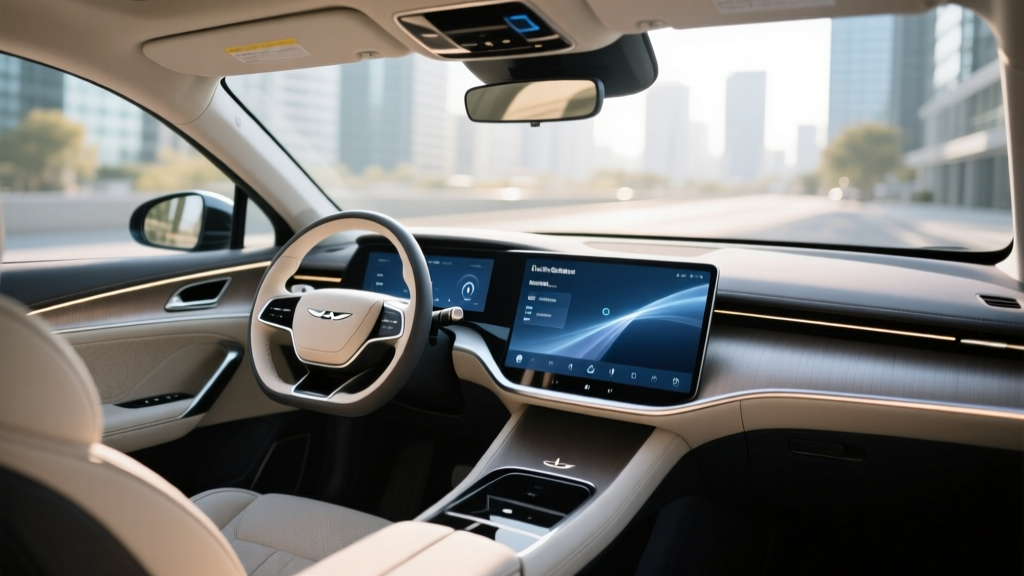
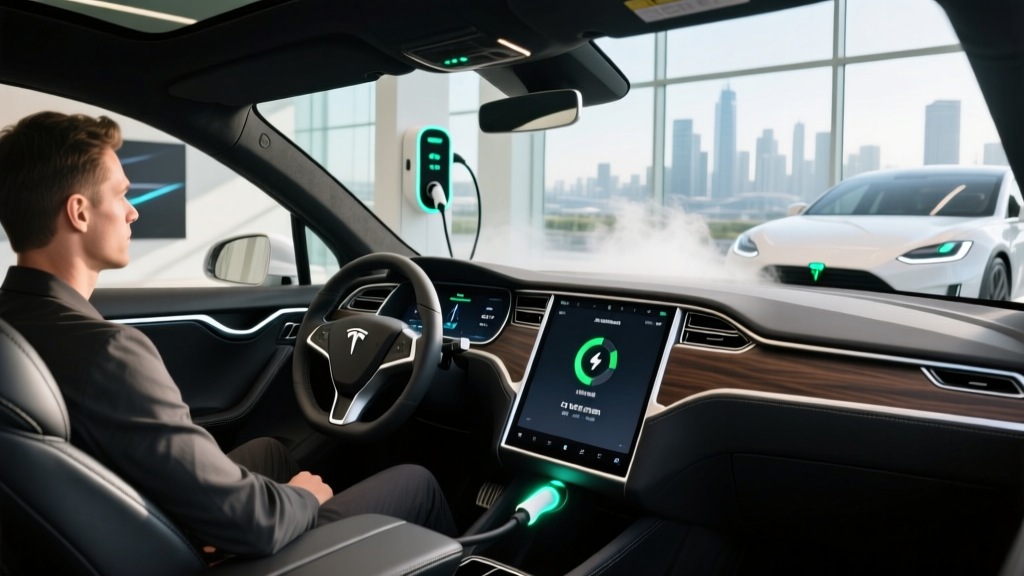
The keyword drawing buyers to this SUV is often Tesla Model X interiors — and for good reason. The cabin is simultaneously minimalist and maximalist: sparse in physical controls, but dominated by a 17-inch landscape-oriented touchscreen that handles navigation, media, climate, and vehicle settings.
Front Row and Dashboard
The driver faces a compact yoke-style steering wheel (a conventional round wheel is available at no extra charge) and a slim digital instrument cluster tucked close to the windshield. The center stack is essentially the touchscreen — no knobs, no buttons, no physical climate controls. This is polarizing: some owners love the clean aesthetic, while others find it distracting to adjust fan speed or seat heating through a menu while driving.
Front seats are heated and ventilated across all trims, with 12-way power adjustment. Headroom is generous at 41.7 inches, and legroom measures 41.2 inches — competitive with large luxury SUVs.
Second Row: The Falcon Wing Advantage (and Compromise)
The Model X offers either a six-seat (2+2+2) or seven-seat (2+3+2) configuration. The six-seat layout features individual captain's chairs in the second row, which slide fore and aft and offer a center pass-through to the third row. The Falcon Wing doors — hinged at the roof and opening upward — create a dramatic entry and make loading child seats notably easier than conventional SUV doors, since you can stand nearly upright beside the seat.
However, the doors add weight (roughly 150 lbs of hardware), and they require overhead clearance. In a tight garage with a low ceiling, the ultrasonic sensors will limit the door's arc, which can feel slower than a conventional door in daily use.
Second-row headroom: 40.9 inches. Legroom: 41.6 inches (varies with fore/aft slide position).
Third Row and Cargo
The third row is best suited for children or short trips — headroom drops to 38.4 inches, and legroom is a tight 32.7 inches. That said, it's genuinely usable for kids on school runs, which is a key use case for many Model X buyers.
Cargo volume behind the third row: 15.8 cu ft. Fold the third row and you get 44.1 cu ft. Fold both rear rows for a maximum of 88.1 cu ft. The front trunk (frunk) adds 6.5 cu ft — enough for a charging cable bag and a small duffel.
| Spec | Model X Long Range | Model X Plaid |
|---|---|---|
| EPA Range | 335 mi | 311 mi |
| Battery (usable) | ~100 kWh (NMC) | ~100 kWh (NMC) |
| Drivetrain | Dual-Motor AWD | Tri-Motor AWD |
| Horsepower | 670 hp | 1,020 hp |
| 0–60 mph | 3.8 sec | 2.5 sec |
| Top Speed | 155 mph | 163 mph |
| MPGe (combined) | 102 MPGe | 98 MPGe |
| Efficiency | 33 kWh/100 mi | 34 kWh/100 mi |
| Max DC Charge Rate | 250 kW | 250 kW |
| 10–80% DC Charge | ~30 min | ~30 min |
| Level 2 Charge Rate | 11.5 kW (44 mi/hr) | 11.5 kW (44 mi/hr) |
| Base MSRP | $77,990 | $92,990 |
| Battery Warranty | 8 yr / 150,000 mi | 8 yr / 150,000 mi |
Range, Efficiency, and Real-World Expectations
The 2026 Model X Long Range carries an EPA-estimated 335 miles of range, while the Plaid drops to 311 miles due to its tri-motor powertrain and stickier tires. Both use a ~100 kWh usable battery pack with NMC (nickel manganese cobalt) chemistry — chosen for its higher energy density over LFP, which matters in a heavy, full-size SUV.
Real-World Range Reality Check
EPA estimates assume mixed driving at moderate temperatures. In practice:
- Highway (70–75 mph, 75°F): Expect ~280–300 mi (Long Range) and ~255–275 mi (Plaid). The Model X's boxy shape and ~5,000-lb curb weight hurt efficiency at speed.
- Cold weather (30°F, highway): Range can drop 25–35%, putting the Long Range at roughly 220–250 mi. The heat pump helps, but battery chemistry and cabin heating still consume significant energy.
- City/commuter driving: You'll see numbers close to or slightly above the EPA rating thanks to regenerative braking and lower speeds.
Efficiency is rated at 33 kWh/100 miles (Long Range) and 34 kWh/100 miles (Plaid). For context, the smaller Tesla Model Y achieves roughly 28 kWh/100 mi — the Model X pays a tax for its size, weight, and aerodynamic profile.
Charging Performance: DC Fast, Level 2, and Home Setup
The Model X supports a peak DC fast-charge rate of 250 kW on V3 Superchargers (CCS-compatible via the built-in NACS port with adapter, or natively on NACS-equipped Superchargers). A 10–80% charge takes approximately 30 minutes under ideal conditions — battery preconditioned, warm ambient temperature, and a stall not sharing power with a neighboring vehicle.
The charging curve is important to understand: peak 250 kW is sustained only between roughly 10–30% State of Charge (SoC). Above 50%, the rate tapers to ~100–120 kW, and above 80% it drops further to protect battery longevity. This is standard for NMC chemistry but means the last 20% of a charge takes disproportionately long — plan to unplug at 80% on road trips unless you need the full range to reach your next stop.
Home Charging (Level 2)
The onboard charger accepts up to 11.5 kW on Level 2 (48 amps). Using a Tesla Wall Connector on a 60-amp circuit, you'll add roughly 44 miles of range per hour of charging. An overnight session (8–10 hours) will fully replenish the battery from nearly empty — more than sufficient for daily driving.
Home installation typically costs $800–$2,500 for the Wall Connector plus electrician labor, assuming your panel has capacity. A 200-amp service panel is usually adequate; older homes with 100-amp service may need a panel upgrade ($1,500–$3,000+).
Supercharger Network Access
One of Tesla's strongest ownership advantages remains the Supercharger network: over 25,000 stalls in North America, with high reliability and integrated navigation routing that preconditions the battery for optimal charge speed upon arrival. While other networks (Electrify America, EVgo) are improving, Tesla's plug-and-charge experience remains the benchmark for road-trip convenience.
Performance and Driving Dynamics
The Long Range's 670 hp and 3.8-second 0–60 mph time are genuinely quick for a 5,000-lb SUV. The Plaid's 1,020 hp and 2.5-second sprint are supercar territory — though using Launch Mode repeatedly will accelerate battery degradation and isn't practical for daily driving.
Both trims use adaptive air suspension, which adjusts ride height for efficiency (lower at highway speed) and ground clearance (raises for rough driveways or light off-pavement). The ride quality is firm but composed, and the low center of gravity from the floor-mounted battery pack keeps body roll well-controlled for a vehicle of this height.
The Model X is rated to tow up to 5,000 lbs — adequate for a small boat or utility trailer, though towing will reduce range by roughly 30–40%.
Driver Assistance and Technology
Every Model X comes with Tesla's Basic Autopilot (adaptive cruise control and lane-keeping), which is a solid SAE Level 2 driver-assist system. The optional Full Self-Driving (Supervised) package ($8,000 or $99/month as of 2026) adds automatic lane changes, traffic light and stop sign recognition, and Navigate on Autopilot for highway on-ramp-to-off-ramp driving.
Important: FSD (Supervised) is SAE Level 2, not self-driving. The driver must remain fully attentive, keep hands on the wheel (or demonstrate engagement via the steering torque sensor), and be prepared to take over at any moment. Tesla's naming convention is aspirational — the system does not make the vehicle autonomous.
The 17-inch touchscreen runs Tesla's proprietary infotainment OS, which includes native navigation, streaming (Netflix, YouTube, Spotify), gaming (a surprisingly capable GPU handles titles like Cyberpunk 2077 while parked), and over-the-air software updates that periodically add features. There is no Apple CarPlay or Android Auto — a dealbreaker for some buyers accustomed to phone-mirroring their preferred apps.
Pricing, Trims, and Federal Tax Credit Eligibility
The 2026 Model X is offered in two trims:
- Long Range: $77,990 MSRP (before destination)
- Plaid: $92,990 MSRP (before destination)
Popular options include six-seat interior ($6,500), 22-inch wheels ($5,500), and FSD (Supervised) at $8,000. A well-equipped Long Range with six seats and FSD can approach $98,000.
| Trim | Base MSRP | §30D Credit Eligibility | Effective Price (if eligible) |
|---|---|---|---|
| Long Range | $77,990 | Not eligible (MSRP exceeds $80,000 SUV cap after destination) | $77,990 |
| Plaid | $92,990 | Not eligible (MSRP exceeds $80,000 SUV cap) | $92,990 |
Critical tax credit note: Under IRS §30D rules, new electric SUVs must have an MSRP at or below $80,000 to qualify for the up-to-$7,500 federal tax credit. The Model X Long Range's MSRP of $77,990 appears to clear this threshold, but once destination charges and any mandatory fees are included, the adjusted MSRP typically exceeds $80,000 — rendering it ineligible. The Plaid is well above the cap regardless. Additionally, buyer income caps apply ($300,000 joint / $150,000 single for new vehicles), and battery sourcing requirements must be met. Always verify current eligibility on IRS.gov or consult a tax professional before assuming credit availability.
Warranty, Ownership Costs, and Long-Term Outlook
Tesla covers the Model X battery and drive unit for 8 years or 150,000 miles (whichever comes first), with a minimum 70% capacity retention guarantee. The vehicle limited warranty is 4 years / 50,000 miles — shorter than competitors like Rivian (5 yr / 60,000 mi bumper-to-bumper) and BMW (4 yr / 50,000 mi but with included maintenance).
Insurance costs for the Model X are among the highest in the EV segment, averaging $3,200–$4,500/year depending on state, age, and driving record. Tesla's own insurance product (available in select states) uses real-time driving data to set premiums and can be competitive for clean-record drivers.
Maintenance is minimal — no oil changes, no transmission fluid, no spark plugs. Expect to replace cabin air filters, wiper fluid, tires (every 25,000–35,000 miles given the vehicle's weight and torque), and brake fluid checks. Annual maintenance typically runs $300–$600.
Pros, Cons, and Who Should Buy
Pros
- Falcon Wing doors make child-seat loading genuinely easier
- Supercharger network remains the gold standard for road trips
- Class-leading acceleration (especially Plaid)
- Over-the-air updates continuously add features
- Strong cargo versatility with fold-flat rows and frunk
- Air suspension adapts ride height for efficiency and clearance
Cons
- No federal tax credit (MSRP exceeds §30D cap)
- Touchscreen-only controls are distracting for climate/media
- No Apple CarPlay or Android Auto
- Third row is tight for adults
- High insurance premiums
- Falcon Wing doors slower in tight/low-clearance spaces
- Panel gap quality still inconsistent vs. German luxury rivals
Who This EV Suits Best
The Model X is ideal for tech-forward families who prioritize Supercharger road-trip convenience, need occasional third-row seating for children, and value acceleration and software features over traditional luxury build quality. It's less suited for buyers who want physical climate controls, phone-mirroring infotainment, or federal tax-credit savings — those shoppers should cross-shop the BMW iX, Rivian R1S, or Kia EV9.
Frequently Asked Questions
What is the real-world range of the 2026 Tesla Model X?
The EPA rates the Long Range at 335 miles and the Plaid at 311 miles. In real-world highway driving at 70–75 mph in moderate temperatures, expect roughly 280–300 miles (Long Range) and 255–275 miles (Plaid). Cold weather (below freezing) can reduce range by 25–35%.
How fast does the Model X charge at home and on the road?
On a DC fast charger (Tesla V3 Supercharger), the Model X peaks at 250 kW and charges from 10–80% in approximately 30 minutes. At home on a Level 2 Tesla Wall Connector (11.5 kW / 48A), it adds about 44 miles of range per hour — a full overnight charge replenishes the battery.
Does the 2026 Tesla Model X qualify for the federal EV tax credit?
Almost certainly not. While the Long Range's sticker MSRP is $77,990, the adjusted MSRP including destination charges typically exceeds the $80,000 SUV cap set by IRS §30D. The Plaid is well above the cap. Buyer income limits and battery sourcing rules add further restrictions. Verify on fueleconomy.gov or IRS.gov before purchasing.
Is the Model X worth buying vs. the Rivian R1S or BMW iX?
It depends on priorities. The Model X wins on Supercharger access, acceleration, and the Falcon Wing door utility for families. The Rivian R1S offers better off-road capability, a more conventional interior with physical controls, and available LFP battery options. The BMW iX delivers superior interior materials and build quality but lacks a third row and has a less robust charging network. If Supercharger road-trip reliability and quick third-row access are your top needs, the Model X still holds its ground.
What are the biggest drawbacks of the Tesla Model X interiors?
The absence of physical controls (everything routes through the touchscreen) is the most common complaint, particularly for climate and seat adjustments while driving. Build quality — specifically panel gap consistency — has improved but still lags behind German luxury competitors. The third row is usable only for children or short trips. And while the Falcon Wing doors are dramatic, they are slower to open than conventional doors in tight parking spots.
How long will the Model X battery last?
Tesla warranties the battery for 8 years or 150,000 miles with a minimum 70% capacity retention. Real-world data from Tesla's fleet suggests NMC packs in the Model X typically retain 85–90% capacity at 100,000 miles when charged primarily on Level 2 and kept between 20–80% SoC for daily use. A full battery replacement outside warranty currently costs $18,000–$25,000 depending on labor and pack availability.