Tesla Model X Interior Overview: Still the Most Practical 3-Row EV SUV
The Tesla Model X remains one of the few fully electric three-row SUVs on the market, and its interior is where that practicality either succeeds or falls short. After spending significant time in both the Long Range and Plaid variants, I can confirm that the Model X interior offers a unique blend of minimalist tech, flexible seating, and cargo utility that competitors like the Rivian R1S and Hyundai Ioniq 9 approach differently. This review covers every dimension, material choice, and technology feature you need to evaluate before committing to a six-figure EV.
Spec Table: Tesla Model X at a Glance
| Specification | Model X Long Range | Model X Plaid |
|---|---|---|
| EPA Range | 335 miles | 326 miles |
| Battery (usable) | ~95 kWh, NMC | ~95 kWh, NMC |
| Drivetrain | Dual-Motor AWD | Tri-Motor AWD |
| Horsepower | 670 hp | 1,020 hp |
| 0-60 mph | 3.8 seconds | 2.5 seconds |
| Max DC Fast Charge | 250 kW | 250 kW |
| 10-80% DCFC Time | ~32 minutes | ~32 minutes |
| Level 2 Home Charge | 11.5 kW (~34 mi/hr) | 11.5 kW (~34 mi/hr) |
| MPGe (combined) | 101 MPGe | 98 MPGe |
| Base MSRP (2026) | $79,990 | $94,990 |
| Battery Warranty | 8 yr / 150,000 mi | 8 yr / 150,000 mi |
Sources: EPA / fueleconomy.gov, Tesla official specifications.
Interior Dimensions and Seating Configurations
The Model X interior is available in five-, six-, and seven-seat layouts. The six-seat configuration (standard on most trims) features second-row captain's chairs with a center console between them, while the seven-seat option adds a bench in the second row and a compact third row. Here's how the numbers break down:
- Front headroom: 41.7 inches
- Front legroom: 41.2 inches
- Second-row legroom: 38.4 inches (captain's chairs)
- Third-row legroom: 32.7 inches — tight for adults on anything beyond short trips
- Cargo behind third row: 15.9 cu ft
- Cargo behind second row (third row folded): 42.5 cu ft
- Total cargo (both rear rows folded): 81.4 cu ft
- Frunk (front trunk): 6.7 cu ft
The third row is genuinely usable for children or occasional adult passengers on short drives, but anyone over 5'8" will find their knees pressed into the second-row seatbacks. The falcon-wing rear doors — a signature Model X feature — open vertically and make loading car seats significantly easier than conventional doors, though they require overhead clearance in parking garages.
Real-World Range vs. EPA Estimates
EPA Range: 335 miles (Long Range) / 326 miles (Plaid)
Real-World Expectation: In mixed driving at moderate temperatures, expect 280-310 miles on a full charge. Highway-only driving at 75 mph drops this to approximately 250-270 miles. In sub-freezing winter conditions (below 32°F), range loss of 20-30% is typical, bringing usable range down to roughly 220-250 miles.
The Model X's 95 kWh NMC (nickel-manganese-cobalt) battery pack provides solid energy density, but the vehicle's 5,185-pound curb weight and tall, aerodynamically challenged profile work against efficiency. The heat pump — standard on all current Model X vehicles — mitigates cold-weather losses somewhat compared to earlier resistive-heating models, but physics still dominates in deep winter. If your commute is under 60 miles round-trip, you'll rarely notice range anxiety. For road trips, plan charging stops every 200-230 miles in winter to maintain a safety buffer.
Charging Speed: DC Fast Charging and Home Level 2
| Charging Level | Power | Speed (miles added) | Use Case |
|---|---|---|---|
| Level 1 (120V household) | 1.4 kW | ~4 mi/hr | Emergency / overnight trickle |
| Level 2 (240V home, 48A) | 11.5 kW | ~34 mi/hr | Overnight full charge (~10 hrs) |
| DC Fast Charge (peak) | 250 kW | ~175 mi in 15 min | Road-trip stops |
| DC Fast Charge (10-80%) | Variable | ~200+ mi | ~32 minutes |
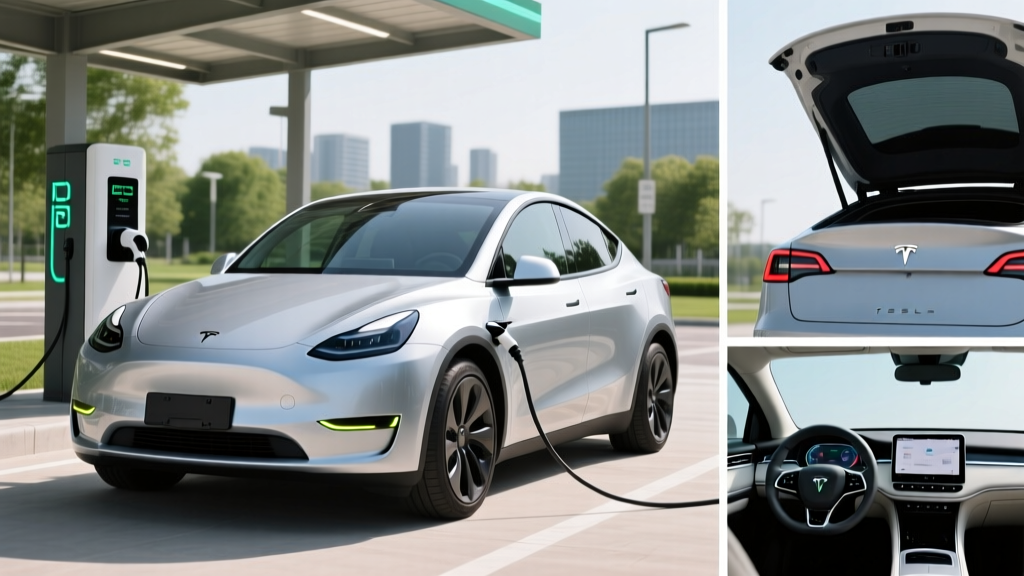
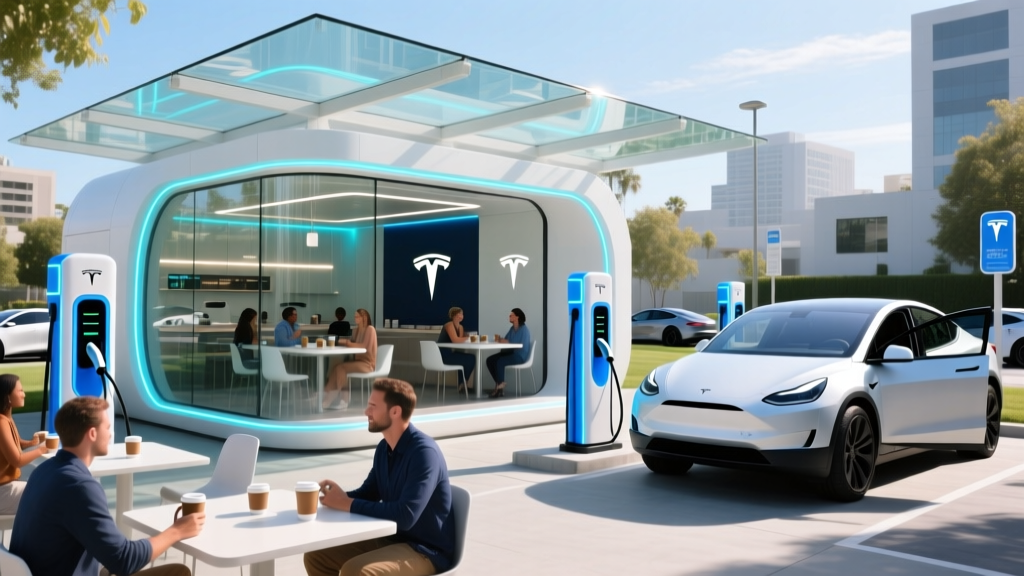
The Model X charges at up to 250 kW on Tesla's V3 and V4 Superchargers, which use the NACS (North American Charging Standard) connector natively. The charge curve peaks near 250 kW between roughly 15-35% State of Charge (SoC), then tapers progressively. By 70% SoC, you're typically seeing 100-120 kW, and above 85% it drops below 50 kW. This is standard behavior for lithium-ion batteries, but it means the last 20% takes nearly as long as the first 60%.
For home charging, Tesla's Wall Connector at 48 amps on a 60-amp circuit delivers 11.5 kW, adding approximately 34 miles of range per hour. A full charge from 10% to 100% takes roughly 10 hours — perfectly suited for overnight charging. Most owners never need to charge to 100%; setting a daily limit of 80-90% preserves long-term battery health and still provides ample range for daily driving. Installation costs for a Level 2 home charger typically range from $500 (simple outlet near the panel) to $2,500+ (panel upgrade required for older homes).
Interior Tech, Infotainment, and Driver Assistance
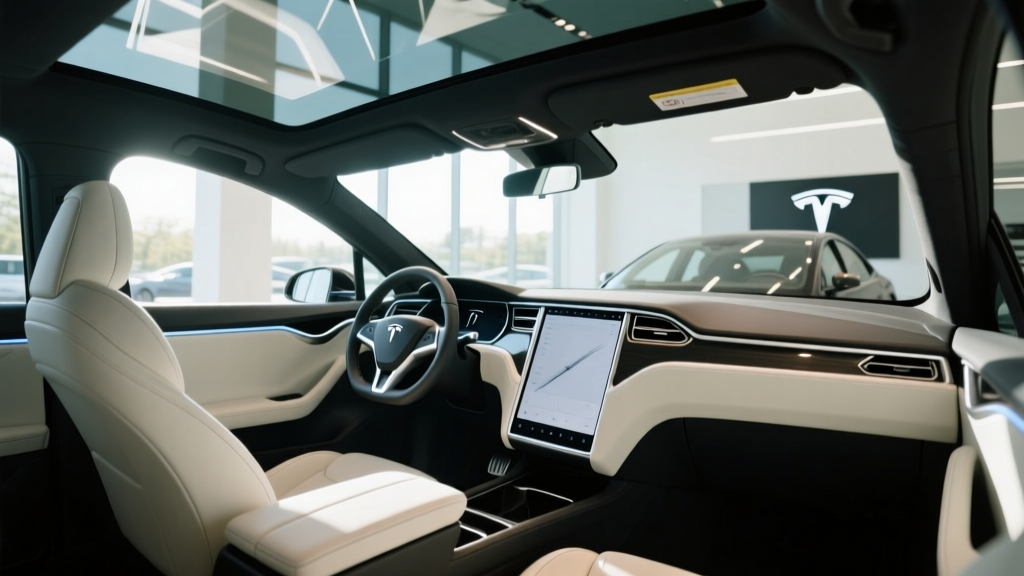
The Model X interior centers around a 17-inch landscape-oriented touchscreen running Tesla's proprietary software. The system handles navigation, media, climate control, vehicle settings, and even gaming (a built-in GPU supports titles like Cyberpunk 2077 while parked). A second 8-inch screen in the rear center console provides rear-seat passengers with climate controls and entertainment. The 22-speaker audio system delivers immersive sound quality that rivals premium aftermarket setups.
The panoramic windshield — a massive single piece of glass stretching from the hood line to behind the front seats — creates an extraordinarily open cabin feel. However, it also means significant solar heat gain in summer; Tesla includes a tint, but many owners add an aftermarket sunshade. The yoke-style steering wheel (now optional alongside a conventional round wheel) remains polarizing: it provides an unobstructed view of the instrument cluster but complicates low-speed maneuvers and three-point turns.
Autopilot and Full Self-Driving (Supervised)
SAE Automation Level: Level 2. Tesla's Autopilot and Full Self-Driving (Supervised) are driver-assistance systems that require continuous driver engagement. The driver must keep hands on the wheel and eyes on the road at all times. These systems do NOT make the Model X a self-driving vehicle.
Standard Autopilot includes adaptive cruise control and lane-centering assist. The optional FSD (Supervised) package — currently priced at $8,000 or $99/month — adds automatic lane changes, navigation-guided on/off-ramp transitions, and city-street traffic-light recognition. In practice, FSD handles many scenarios competently but still requires frequent driver intervention, particularly in construction zones, complex intersections, and adverse weather. Competitor systems like GM's Super Cruise and Ford's BlueCruise offer comparable Level 2 functionality with more robust geofenced hands-free operation on mapped highways.
Pricing, Trims, and Federal Tax Credit Eligibility
| Trim | Base MSRP | As-Tested (typical options) | Federal Tax Credit |
|---|---|---|---|
| Model X Long Range | $79,990 | $86,000-$92,000 | Not eligible (exceeds $80,000 MSRP cap) |
| Model X Plaid | $94,990 | $100,000-$108,000 | Not eligible (exceeds $80,000 MSRP cap) |
Under current IRS §30D rules, the new clean vehicle credit provides up to $7,500 for qualifying EVs. However, SUVs must have an MSRP at or below $80,000 to qualify. The Model X Long Range starts at $79,990, which technically falls under the cap, but adding any options — paint color ($1,500-$2,500), FSD, premium wheels, or even destination fees — pushes the MSRP above $80,000 and disqualifies the vehicle. The Plaid trim, at $94,990, does not qualify regardless of configuration.
Additionally, §30D imposes buyer income limits ($150,000 single / $300,000 joint AGI) and battery critical-mineral sourcing requirements that change annually. As of 2026, few vehicles at this price point qualify. Always verify current eligibility on IRS.gov or consult a tax professional before purchasing.
Pros and Cons: The Honest Assessment
Pros
- Best-in-class Supercharger network access — 60,000+ DC fast chargers globally
- Falcon-wing doors genuinely simplify car-seat loading in tight spaces
- Massive 81.4 cu ft total cargo volume with both rear rows folded
- 335-mile EPA range (Long Range) covers most road trips with one stop
- Over-the-air software updates continuously add features
- Class-leading 0-60 times (2.5 sec Plaid) for a 3-row SUV
Cons
- Third-row legroom (32.7 in) is cramped for adults
- Federal tax credit eligibility is nearly impossible due to MSRP cap
- Build quality inconsistencies (panel gaps, trim alignment) persist vs. legacy luxury brands
- Falcon-wing doors require overhead clearance; problematic in older parking structures
- High insurance premiums — typically $2,500-$4,000/year depending on region
- 250 kW peak DC charge rate lags behind newer 800V architectures (Hyundai/Kia at 350 kW)
Who Should Buy the Tesla Model X?
The Model X interior and overall package make the most sense for:
- Families with young children who need easy car-seat access via falcon-wing doors and occasional third-row use for older kids or carpools.
- Tech-forward buyers who prioritize software integration, over-the-air updates, and Supercharger network reliability over traditional luxury materials.
- Performance-oriented SUV buyers who want supercar-level acceleration (Plaid) without sacrificing cargo space.
- Daily commuters with home charging who can take advantage of 335-mile range and low per-mile electricity costs (~4-5 cents/mile vs. 12-15 cents/mile for gas).
Buyers who prioritize third-row adult comfort, traditional luxury interior materials (leather stitching, wood trim craftsmanship), or federal tax credit eligibility should cross-shop the Rivian R1S (three rows, better third-row space, but higher starting price), the Hyundai Ioniq 9 (more affordable, tax-credit eligible, but lower range), or the BMW iX (two rows only, but superior build quality).
Is the Tesla Model X Worth Buying vs. Competitors?
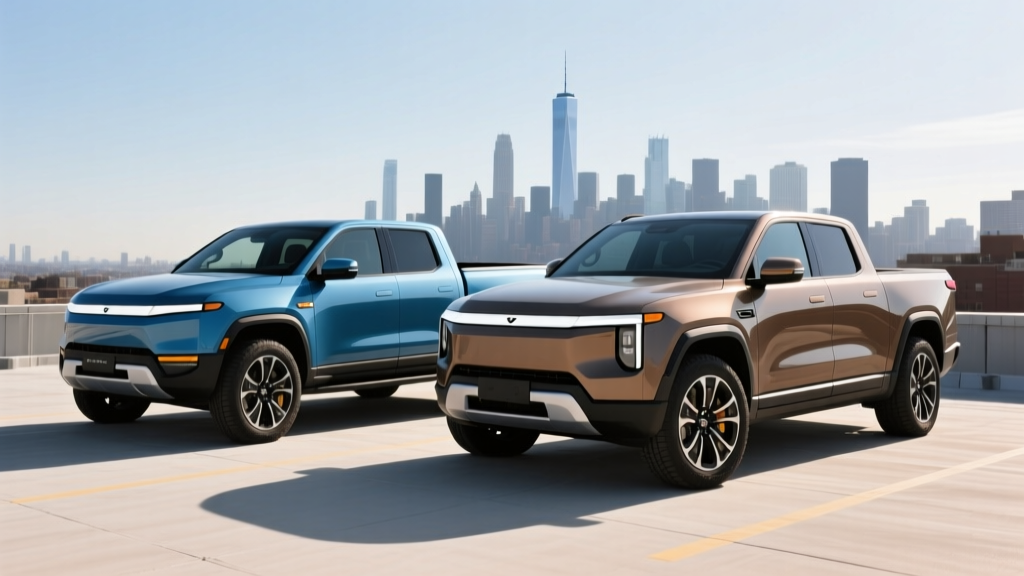
Against the Rivian R1S, the Model X offers more range (335 vs. ~316 miles) and access to Tesla's Supercharger network, but the R1S provides a more usable third row, better off-road capability, and a more traditional luxury interior. The Hyundai Ioniq 9 undercuts the Model X by $25,000+ and qualifies for the federal tax credit, but offers less range (~300 miles) and lacks the performance credentials. The Mercedes EQS SUV delivers a more refined interior and comparable range but starts above $104,000.
The Model X wins on software integration, charging infrastructure, and acceleration. It loses on build quality consistency, third-row comfort, and tax credit accessibility. If your priority is a tech-forward family hauler with road-trip capability and you can absorb the six-figure cost without a federal incentive, the Model X remains compelling. If you need maximum interior practicality per dollar, the Ioniq 9 or R1S deserve serious consideration.
Frequently Asked Questions
What is the real-world range of the Tesla Model X?
In mixed driving at moderate temperatures, expect 280-310 miles. Highway driving at 75 mph reduces this to 250-270 miles. Cold weather (below freezing) can drop range by 20-30%, yielding 220-250 miles on a full charge.
How fast does the Model X charge at home and on the road?
On a Level 2 home charger (11.5 kW / 48A), the Model X adds ~34 miles per hour, fully charging overnight in ~10 hours. On a 250 kW DC Supercharger, a 10-80% charge takes approximately 32 minutes, with peak speeds between 15-35% SoC.
Does the Tesla Model X qualify for the federal EV tax credit?
Rarely. The §30D credit requires SUVs to have an MSRP at or below $80,000. The Long Range starts at $79,990 but any options push it over the cap. The Plaid ($94,990) never qualifies. Buyer income limits and battery sourcing rules further restrict eligibility. Verify on IRS.gov before purchasing.
Is the third row usable for adults?
For short trips only. With 32.7 inches of legroom, adults over 5'8" will find the third row cramped. It works well for children or occasional use, but frequent adult passengers should consider the Rivian R1S or a three-row ICE/PHEV alternative.
What is the battery warranty on the Model X?
Tesla covers the battery and drive unit for 8 years or 150,000 miles (whichever comes first), with a minimum 70% capacity retention threshold. Real-world degradation data from long-term owners suggests 5-8% loss over the first 100,000 miles for NMC packs when charged primarily to 80-90% daily.
How does the Model X interior compare to luxury competitors?
The Model X prioritizes minimalist tech over traditional luxury materials. You won't find hand-stitched leather or open-pore wood like in a Mercedes EQS SUV or BMW iX. Instead, you get a massive 17-inch screen, panoramic glass roof, and continuous software improvements. Build quality (panel gaps, trim fitment) has improved but still lags behind German luxury standards.