Quick Verdict: A Tech-Forward Family Hauler With Real Trade-Offs
The interior of Tesla Model X remains one of the most polarizing cabins in the premium EV SUV segment. For 2026, Tesla continues to refine its flagship three-row electric SUV with a minimalist, screen-dominated dashboard, available six- or seven-passenger seating, and a massive 17-inch center touchscreen paired with a secondary rear entertainment display. The falcon-wing rear doors still command attention at school drop-off, but they also introduce real-world ownership quirks — sensor delays in tight garages and higher repair complexity if a hinge motor fails.
Underneath the cabin drama, the Model X Long Range delivers an EPA-estimated 335 miles of range, dual-motor all-wheel drive, and access to Tesla's Supercharger network — still the gold standard for road-trip reliability. Plaid trim trades range for absurd acceleration. Whether the interior justifies a starting MSRP above $77,000 depends on how much you value second-row theater and third-row usability over the more conventional execution of rivals like the Rivian R1S or BMW iX.
Model X Specifications at a Glance
| Spec | Long Range AWD | Plaid |
|---|---|---|
| EPA Range | 335 mi | 311 mi |
| Battery (usable) | ~100 kWh, NMC | ~100 kWh, NMC |
| Drivetrain | Dual-Motor AWD | Tri-Motor AWD |
| Horsepower | 670 hp | 1,020 hp |
| 0-60 mph | 3.8 sec | 2.5 sec |
| Max DC Fast Charge | 250 kW | 250 kW |
| 10-80% DC Time | ~32 min | ~32 min |
| Level 2 Home Rate | 11.5 kW (~34 mi/hr) | 11.5 kW (~34 mi/hr) |
| MPGe (combined) | 101 MPGe | 96 MPGe |
| Efficiency | 33 kWh/100 mi | 35 kWh/100 mi |
| Base MSRP | $77,990 | $92,990 |
| Battery Warranty | 8 yr / 150,000 mi | 8 yr / 150,000 mi |
Sources: EPA / fueleconomy.gov, Tesla Model X Design Studio. Specs reflect 2025-2026 model year. Pricing subject to change.
Real-World Range: What the EPA Sticker Doesn't Tell You
EPA Estimate: 335 miles (Long Range) / 311 miles (Plaid)
Real-World Highway (70-75 mph): ~270-290 miles
Cold Weather (below 32°F): ~230-260 miles
Mixed Commute (city + suburban): ~300-320 miles
The Model X Long Range's 335-mile EPA figure is achieved under a mix of city and moderate-speed driving conditions. In practice, aerodynamic drag on a large SUV takes a significant toll at highway speeds. Expect roughly 270-290 miles of usable range on a 70-75 mph interstate run in mild weather. Cold temperatures compound this — battery heating demands and cabin climate load can push range loss to 25-30%, especially on short trips where the battery doesn't reach optimal operating temperature.
The ~100 kWh usable NMC (nickel manganese cobalt) battery pack provides substantial energy reserves, but NMC chemistry is more sensitive to extreme cold than LFP alternatives. Preconditioning the battery before fast charging — which the Model X does automatically when you navigate to a Supercharger — is essential for achieving peak charge rates. Skip preconditioning and you'll see charge speeds cut in half during the first 10-15 minutes of a DC session.
Charging: Supercharger Reliability Meets Home Convenience
| Charging Method | Power / Rate | Speed |
|---|---|---|
| Level 1 (120V outlet) | ~1.4 kW | ~4 miles per hour |
| Level 2 (240V / 48A Wall Connector) | 11.5 kW | ~34 miles per hour |
| DC Fast Charge (Supercharger V3) | Peak 250 kW | 10-80% in ~32 min |
| DC Fast Charge (third-party CCS via adapter) | Up to 150 kW typical | 10-80% in ~45 min |
Tesla's NACS connector and Supercharger network remain the Model X's strongest ownership advantage. At a V3 Supercharger (250 kW peak), the Model X charges from 10% to 80% in approximately 32 minutes. However, peak 250 kW is sustained only briefly — typically between 10-30% state of charge — before the charge curve tapers to protect battery health. From 80-100%, charging slows dramatically; plan to unplug at 80-90% on road trips for optimal time efficiency.
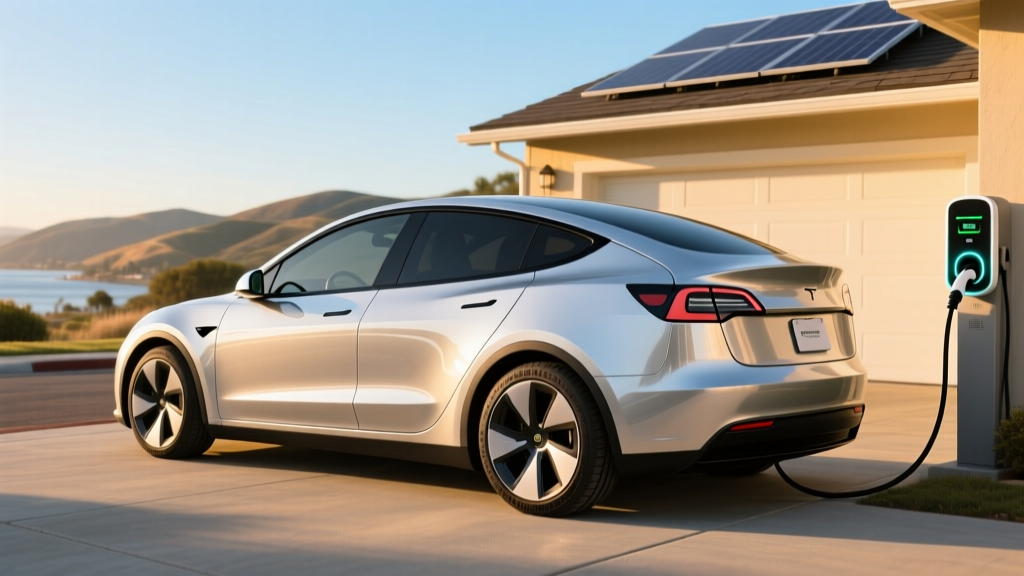
For home charging, Tesla's Wall Connector at 48 amps delivers 11.5 kW, adding roughly 34 miles of range per hour. A full overnight charge (8 hours) replenishes about 270 miles — more than enough for most daily needs. Installation cost for a dedicated 60-amp circuit typically runs $800-$2,000 depending on panel proximity and whether your home's electrical panel needs an upgrade to 200 amps. Always consult a licensed electrician for final specs.
Tesla now includes a CCS adapter (or offers one at low cost) enabling access to Electrify America, EVgo, and other networks — expanding road-trip flexibility beyond Superchargers, though third-party reliability remains inconsistent compared to Tesla's own network.
The Interior of Tesla Model X: Cabin Layout, Materials, and Tech
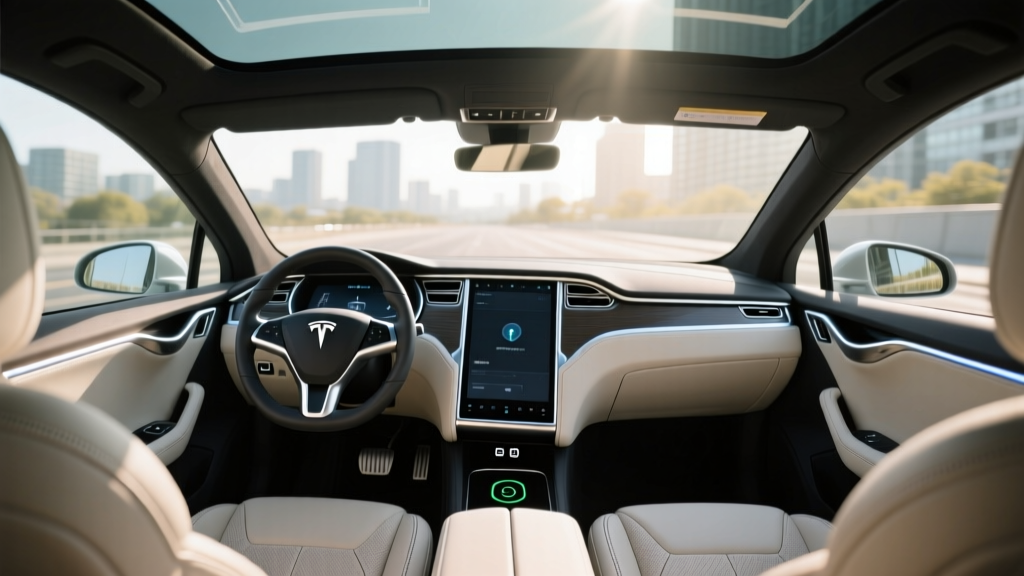
The defining feature of the Model X interior is its ruthless minimalism. The dashboard is essentially a single horizontal surface interrupted only by the 17-inch center touchscreen (now in a "cinema" orientation that can tilt toward driver or passenger) and a compact yoke-style or traditional round steering wheel. There are no physical buttons for climate, audio, or vehicle settings — everything routes through the screen, including the glovebox release and windshield wiper controls.
Seating Configurations
The Model X offers three layouts:
- Five-seat (2+3): Standard second-row bench. Maximizes cargo flexibility but sacrifices the second-row premium experience.
- Six-seat (2+2+2): Individual captain's chairs in the second row with a center walk-through to the third row. The most popular configuration for families — each second-row seat is individually powered and heated.
- Seven-seat (2+3+2): Bench second row with a small third row. Usable for children on short trips, but tight for adults.
Second-Row Experience and Falcon-Wing Doors
This is where the Model X interior earns its reputation. The falcon-wing rear doors open upward with dual-hinge articulation, requiring as little as 11 inches of lateral clearance (ultrasonic sensors detect nearby obstacles). In practice, they make loading car seats dramatically easier than conventional doors — you can stand nearly upright beside the second row. The trade-off: opening takes 5-8 seconds (longer than a regular door), the sensors occasionally misread in tight parking structures, and replacement cost for a hinge motor or sensor is substantial out of warranty.
Six-seat captain's chairs offer individual recline, heating, and generous legroom (~40.9 inches second row). The available rear 8-inch touchscreen handles climate controls and entertainment for second-row passengers — a welcome addition for family road trips.
Third Row and Cargo
Third-row legroom measures approximately 32.7 inches — adequate for children or short adult trips but not competitive with the Rivian R1S or ICE alternatives like the Kia Telluride for genuine three-row comfort. With all rows in use, cargo space behind the third row is roughly 15 cubic feet (enough for a few grocery bags or two carry-ons). Fold the third row and you get approximately 44 cubic feet; fold both second and third rows for a max of about 85 cubic feet. The front trunk (frunk) adds roughly 6.5 cubic feet — useful for charging cables and a small duffel.
Infotainment and Driver Assistance
The 17-inch touchscreen runs Tesla's proprietary OS with exceptional responsiveness. Wireless Apple CarPlay and Android Auto are not supported — Tesla insists on its native interface. Gaming capability (the infotainment can run AAA titles while parked) and a 22-speaker audio system are standout features. Over-the-air updates continuously add features.
Autopilot comes standard with adaptive cruise control and lane-centering. Full Self-Driving (Supervised) is a $8,000 option (or $99/month subscription) that adds automated lane changes, traffic light recognition, and city street navigation. Important: FSD is an SAE Level 2 driver-assistance system — the driver must remain fully engaged and supervising at all times. It is not autonomous driving.
Performance: Dual-Motor Efficiency or Tri-Motor Excess
The Long Range AWD's 670 horsepower and 3.8-second 0-60 time are already supercar-rivaling by any historical standard. Dual-motor all-wheel drive provides confident traction in rain and light snow, with torque vectoring that feels natural rather than intrusive.
Plaid trim's tri-motor setup (one front, two rear) produces 1,020 horsepower and a 2.5-second 0-60 time. It's a party trick more than a practical necessity, and the 24-mile range penalty plus $15,000 price premium make it hard to justify unless you genuinely plan to track-day your family SUV. The Plaid also uses slightly more energy per mile (35 kWh/100 mi vs 33), which adds up on electricity costs over ownership.
Ride quality has improved significantly with the adaptive air suspension, which now offers a more compliant default setting while still allowing you to lower the vehicle at highway speeds for aerodynamic efficiency. Road noise at 70+ mph remains noticeable — a common complaint versus the BMW iX's superior cabin insulation.
Pricing, Trims, and Federal Tax Credit Eligibility
| Trim | Base MSRP | Typical As-Tested | Federal §30D Credit |
|---|---|---|---|
| Long Range AWD | $77,990 | $82,000-$88,000 | Not eligible (MSRP cap exceeded) |
| Plaid | $92,990 | $98,000-$108,000 | Not eligible (MSRP cap exceeded) |
Destination charges add approximately $1,390. Common options that push pricing higher include FSD ($8,000), premium interior colors ($2,000), 22-inch wheels ($4,500), and six- or seven-seat configurations ($6,500). A realistically equipped Long Range with six seats, FSD, and a premium color lands in the $95,000-$100,000 range before any state incentives.
State-level incentives vary significantly — some states offer $2,000-$5,000 in additional rebates or HOV lane access. Check your state's energy office or DMV for current programs.
Pros and Cons
- Class-leading Supercharger network access
- Falcon-wing doors make car-seat loading unmatched
- 335-mile EPA range covers most road trips with one stop
- Strong performance even in base Long Range trim
- Continuous OTA updates add features post-purchase
- Generous 8-yr/150,000-mi battery warranty
- Exceeds $80K MSRP cap for federal tax credit in most configurations
- Third row is tight for adults on longer drives
- No Apple CarPlay or Android Auto
- Falcon-wing doors add complexity, repair cost, and opening delay
- Noticeable road noise at highway speeds vs. rivals
- Yoke steering wheel controversial; limits hand placement
- Panel gaps and interior trim consistency still lag German competitors
Who Should Buy the Model X — and Who Should Look Elsewhere
- You need three rows and prioritize second-row access for car seats or child passengers
- Supercharger network reliability is a top priority for frequent road trips
- You value OTA feature updates and Tesla's software ecosystem
- 335-mile range and 250 kW charging cover your typical routes
- You need a genuinely adult-friendly third row (look at Rivian R1S or a PHEV like the Volvo XC90 Recharge)
- Federal tax credit eligibility is important to your budget (the R1S, Hyundai Ioniq 9, and others may qualify)
- You prefer physical controls and traditional luxury execution (BMW iX, Mercedes EQS SUV)
- Cabin quietness at highway speed is a top priority
Frequently Asked Questions
What is the real-world range of the Tesla Model X?
The EPA rates the Long Range at 335 miles and the Plaid at 311 miles. In real-world highway driving at 70-75 mph, expect 270-290 miles in mild weather and 230-260 miles in cold conditions (below 32°F). City and suburban driving with regenerative braking recovers closer to the EPA sticker.
How fast does the Model X charge at home and on the road?
On a Tesla V3 Supercharger (250 kW peak DC), the Model X charges from 10-80% in approximately 32 minutes. At home on a 48-amp Level 2 Wall Connector (11.5 kW), it adds about 34 miles per hour, fully recharging overnight in roughly 9-10 hours from empty.
Does the Tesla Model X qualify for the federal EV tax credit?
Rarely. Under current IRS §30D rules, new EV SUVs must have an MSRP at or below $80,000 to qualify. The Model X Long Range starts at $77,990, but destination fees and common options push most builds over the cap. Buyer income limits and battery sourcing rules further restrict eligibility. Confirm with a tax professional before relying on the credit.
Is the Model X worth buying versus the Rivian R1S or BMW iX?
The Model X wins on Supercharger access, falcon-wing practicality for families with young children, and software features. The Rivian R1S offers a more usable third row, better off-road capability, and potential tax credit eligibility. The BMW iX delivers superior cabin materials and quietness but only seats five. Your use case — car-seat loading vs. adult third-row passengers vs. luxury refinement — should drive the decision.
What are the biggest drawbacks of the Model X interior?
Primary complaints include the lack of Apple CarPlay/Android Auto, the controversial yoke steering wheel (traditional round wheel is available at no extra charge), road noise at speed, and the falcon-wing doors' added mechanical complexity and repair cost. Third-row space is also limited compared to dedicated three-row competitors.
How long is the battery warranty?
Tesla covers the Model X battery and drive unit for 8 years or 150,000 miles (whichever comes first), with a guaranteed minimum 70% capacity retention over that period. NMC batteries in the Model X typically degrade 10-15% over the first 100,000 miles based on fleet data, though individual results vary with charging habits and climate exposure.