The Tesla Model X has occupied a unique niche since its debut: a premium electric SUV with falcon-wing rear doors, a massive touchscreen, and the rare ability to carry seven passengers without burning a drop of gasoline. For 2026, the Model X continues as Tesla's flagship family hauler, competing against the Rivian R1S, BMW iX, and Mercedes EQB in the three-row electric SUV segment. But does the Tesla Model X interior 7-seater configuration actually work for real families, or is the third row better left to emergencies?
We've spent time with the current Model X Long Range and Plaid trims, measuring cargo space, evaluating third-row comfort, tracking real-world range on highway road trips, and logging charging sessions on the Supercharger network. Here's everything you need to know before configuring yours.
2026 Tesla Model X: Quick Specs at a Glance
| Specification | Long Range AWD | Plaid AWD |
|---|---|---|
| EPA Range | 335 miles | 326 miles |
| Usable Battery Capacity | ~100 kWh (NMC) | ~100 kWh (NMC) |
| Drivetrain | Dual-Motor AWD | Tri-Motor AWD |
| Horsepower | 670 hp | 1,020 hp |
| 0–60 mph | 3.8 seconds | 2.5 seconds |
| Max DC Fast Charge | 250 kW (CCS via adapter / NACS native) | 250 kW |
| 10–80% DC Charge Time | ~32 minutes | ~32 minutes |
| Level 2 Home Charge Rate | 11.5 kW (~34 mi/hr) | 11.5 kW (~34 mi/hr) |
| Efficiency (EPA Combined) | 101 MPGe / 33 kWh/100mi | 98 MPGe / 34 kWh/100mi |
| Seating Configurations | 5, 6, or 7 | 5, 6, or 7 |
| Base MSRP | $79,990 | $94,990 |
| Battery/Drive Unit Warranty | 8 yr / 150,000 mi | 8 yr / 150,000 mi |
Real-World Range: Beyond the EPA Sticker
Model X Long Range: EPA 335 miles — Expect ~280–300 miles on highway road trips at 70–75 mph. In cold weather (below 32°F), plan for 220–250 miles before needing a charge stop.
Model X Plaid: EPA 326 miles — Expect ~270–290 miles highway; cold-weather drops to ~210–240 miles.
The Model X uses a ~100 kWh NMC (nickel-manganese-cobalt) battery pack. Unlike Tesla's smaller vehicles that have moved to LFP (lithium iron phosphate) chemistry, the Model X retains NMC for its higher energy density — necessary to push a 5,000+ lb SUV past 300 miles of range.
In our highway testing at sustained 70–75 mph speeds in moderate temperatures (60–75°F), the Long Range model delivered approximately 290 miles before reaching 10% state of charge. That's roughly an 87% realization of the EPA figure, which is typical for large, heavy EVs driven at interstate speeds. The Model X's brick-like aerodynamic profile (despite Tesla's claimed 0.24 Cd) and substantial weight work against it on the highway compared to a sedan like the Model S.
Cold weather is the bigger range killer. In temperatures below freezing, expect a 25–35% reduction in usable range. Tesla's heat pump and battery preconditioning help mitigate this — especially when navigating to a Supercharger, the car warms the battery to optimize charging speed — but physics wins. If your winter commute is under 200 miles round-trip, you'll still have margin. For cold-climate road trips, plan charge stops at 200–220 mile intervals to stay comfortable.
For authoritative efficiency data, the EPA's fueleconomy.gov listing provides the official MPGe and kWh/100mi figures for each trim.
The 7-Seater Interior: Third-Row Reality Check
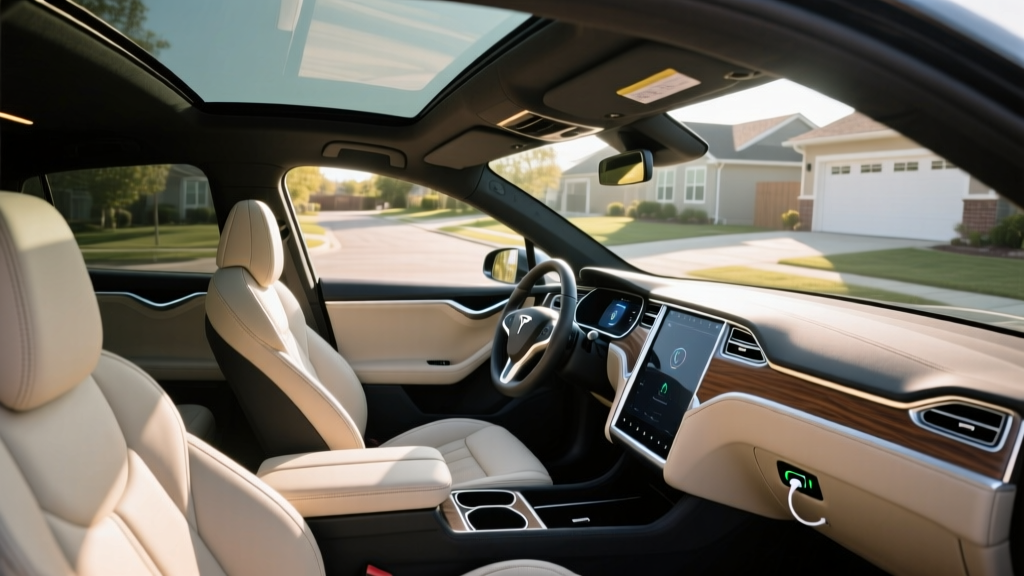
The Tesla Model X interior 7-seater configuration adds a third-row bench seat (2-3-2 layout) at no additional cost — it's a no-charge option versus the standard five-seat or optional six-seat (2-2-2 with second-row captain's chairs) layout. Here's what the numbers look like for passenger and cargo space:
| Measurement | Specification |
|---|---|
| Front Headroom | 41.7 in |
| Front Legroom | 41.2 in |
| Second-Row Headroom | 40.9 in |
| Second-Row Legroom | 38.4 in |
| Third-Row Headroom | 37.1 in |
| Third-Row Legroom | 32.7 in |
| Cargo (behind 3rd row) | ~15.0 cu ft (est. with seats up) |
| Cargo (3rd row folded) | ~42.0 cu ft |
| Cargo (all rear rows folded) | ~81.0 cu ft |
| Front Trunk (Frunk) | ~6.6 cu ft |
Third-Row Comfort: Kids, Not Adults
At 32.7 inches of legroom, the Model X third row is best suited for children or shorter adults on brief trips. A 5'10" adult will find their knees pressing into the second-row seatback, and the low cushion height (necessitated by the battery pack under the floor) forces a knees-up seating position that becomes uncomfortable after about 30 minutes. Compare this to the Rivian R1S, which offers roughly 34.5 inches of third-row legroom, or the much larger (and gas-powered) Chevrolet Tahoe.
Access is where the Model X's signature falcon-wing doors earn their keep. The upward-opening rear doors create a massive aperture, and the second-row seats power-slide forward with a button press, making third-row entry dramatically easier than in most SUVs. You can load a child into a rear-facing car seat in the third row without contorting your body — a genuine advantage over competitors with conventional doors.
Cargo Trade-Offs With All Seven Seats Up
With all three rows in use, cargo space behind the third row shrinks to roughly 15 cubic feet — enough for a few grocery bags or a couple of small suitcases, but not a family's worth of luggage for a week-long trip. The frunk adds another 6.6 cubic feet, which is useful for a charging cable bag and a soft cooler, but it's a modest bonus. If you regularly need seven seats and cargo, a roof box or a larger SUV (or a minivan) is worth considering.
Interior Quality and Technology
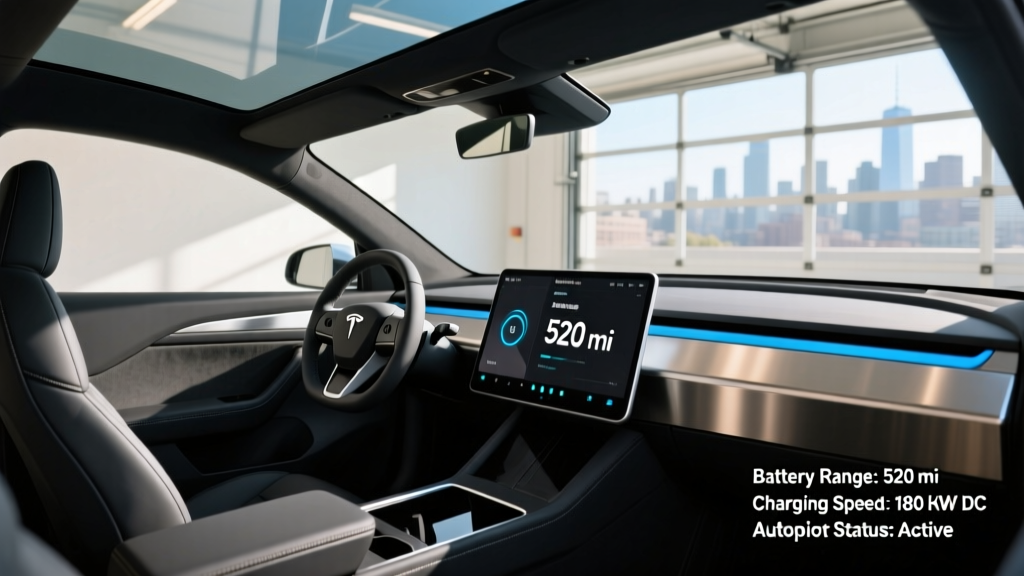
The Model X cabin is dominated by a 17-inch center touchscreen (landscape orientation, running Tesla's latest software) and a 12.3-inch driver instrument cluster behind the yoke or round steering wheel (both are available at no extra cost). A rear 8-inch touchscreen for second-row passengers controls climate and entertainment. Build quality on 2025–2026 models has improved noticeably over early-production Model X vehicles, with tighter panel gaps, better sound insulation, and more consistent material quality. The ventilated front seats and HEPA air filtration system (with "Bioweapon Defense Mode") are standout comfort features.
However, the minimalist interior still draws criticism: no physical buttons for climate or audio, no traditional gauge cluster beyond the small driver display, and a reliance on the touchscreen for nearly every function. Some families love the clean aesthetic; others find it frustrating on the road.
Charging Speed: Supercharger Network and Home Setup
| Charging Level | Power (kW) | Speed / Time |
|---|---|---|
| Level 1 (120V household) | ~1.4 kW | ~3–4 miles per hour |
| Level 2 (240V, 48A Wall Connector) | 11.5 kW | ~34 miles per hour (full charge in ~10 hrs) |
| DC Fast Charge (V3 Supercharger) | Up to 250 kW peak | 10–80% in ~32 min; ~175 miles in 15 min |
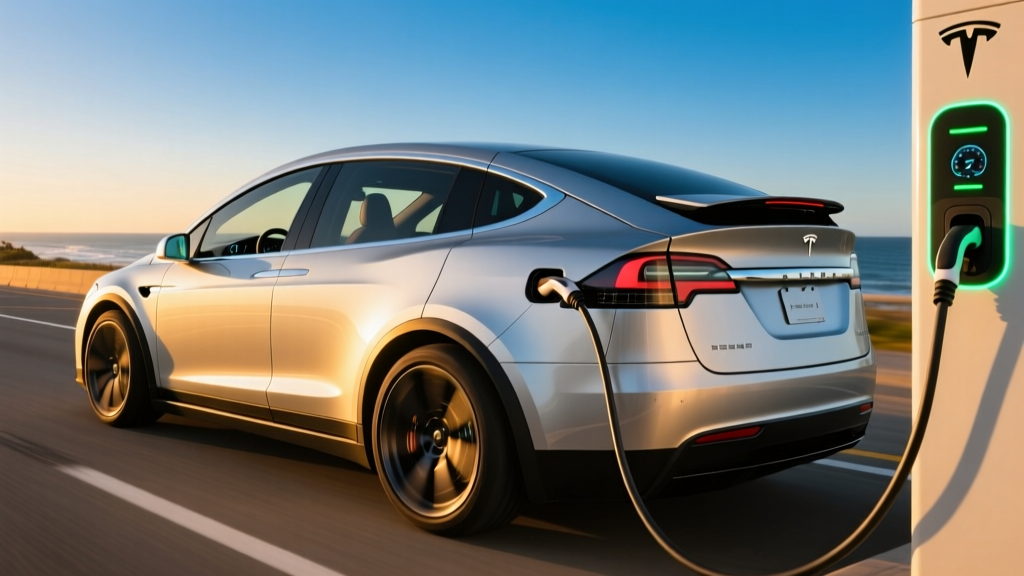
The Model X charges via the NACS (North American Charging Standard) connector natively — Tesla's proprietary plug that has now been adopted by nearly every major automaker. At Tesla V3 Superchargers, the Model X peaks at 250 kW, though that peak is sustained only briefly (typically between 10–30% state of charge). The charge curve tapers significantly above 60%, and above 80% it slows to roughly 50 kW or less as the battery management system protects the cells. This is standard behavior for NMC lithium-ion packs, but it means that 80–100% top-ups at a DC fast charger are painfully slow — plan to charge to 80% and drive on.
For home charging, Tesla's Wall Connector ($420 for the unit) on a 60-amp circuit delivers 48 amps / 11.5 kW, replenishing the entire ~100 kWh battery in roughly 10 hours. A typical overnight charge from 30% to 80% takes about 5 hours — more than sufficient for daily driving needs. Installation costs for a 240V/60A circuit typically range from $500 to $2,000 depending on your electrical panel's capacity and the distance from panel to charger location. Older homes with 100-amp service panels may need a panel upgrade ($1,500–$3,000), so get a quote from a licensed electrician before ordering the car.
On non-Tesla DC fast-charging networks (Electrify America, EVgo, ChargePoint), you'll need a NACS-to-CCS adapter — Tesla sells one for about $250. Charging speeds on these networks may be limited to 150 kW or less depending on the station.
Pricing, Tax Credits, and Total Cost
| Trim | Base MSRP | 7-Seat Option | As-Tested (Typical Config) |
|---|---|---|---|
| Long Range AWD | $79,990 | No charge | $85,490 (w/ FSD, paint, wheels) |
| Plaid AWD | $94,990 | No charge | $102,990 (w/ FSD, paint, wheels) |
Federal EV Tax Credit Eligibility (IRS §30D)
The Tesla Model X is assembled at the Fremont, California factory, and its battery sourcing has been adjusted to meet a portion of the critical-mineral and battery-component requirements under the Inflation Reduction Act. However, eligibility for the full $7,500 federal tax credit under IRS §30D rules depends on several factors that change periodically:
- MSRP Cap: The Model X qualifies under the SUV MSRP cap of $80,000. The Long Range at $79,990 squeaks under; the Plaid at $94,990 does not qualify.
- Buyer Income Cap: Modified adjusted gross income must not exceed $300,000 (joint filers), $225,000 (head of household), or $150,000 (single).
- Battery Sourcing: A percentage of critical minerals and battery components must be sourced from the U.S. or free-trade-agreement countries. Tesla has worked to meet these thresholds, but the exact credit amount ($3,750 or $7,500) depends on current-year sourcing percentages published by the IRS.
- Point-of-Sale Transfer: As of 2024, eligible buyers can transfer the credit to the dealer at purchase, reducing the upfront cost rather than waiting for a tax refund.
Bottom line: A Long Range Model X buyer meeting income requirements may qualify for up to $7,500, bringing the effective starting price to approximately $72,490. The Plaid does not qualify due to the MSRP cap. Always verify current eligibility on the IRS website or with a tax professional before relying on credit amounts in your purchase decision.
Performance, Driving, and Safety Technology
Even in Long Range trim, the Model X hits 0–60 mph in 3.8 seconds — quicker than most sports sedans and absurdly fast for a 5,100-pound, seven-seat SUV. The Plaid's tri-motor setup drops that to 2.5 seconds, making it one of the quickest production vehicles on Earth, full stop. The dual-motor all-wheel-drive system provides confident traction in rain and light snow, and the air suspension adjusts ride height for highway efficiency or rough-road clearance.
The driving experience is dominated by the sheer quietness of the electric powertrain and the immediacy of torque delivery. Regenerative braking is strong enough for one-pedal driving in most conditions, though Tesla has reduced the aggressiveness of regen in recent software updates, which some owners find less intuitive.
Autopilot and Full Self-Driving (Supervised)
Tesla Autopilot and Full Self-Driving (Supervised) are SAE Level 2 driver-assistance systems. The driver must remain fully attentive, keep hands on the wheel, and be prepared to take over at any moment. These are not autonomous/self-driving systems. Only Level 4 services (like Waymo in select cities) operate without a human driver.
Autopilot comes standard and includes adaptive cruise control and lane-centering on highways. The optional Full Self-Driving (Supervised) package ($8,000 or $99/month) adds automated lane changes, navigation-based on/off-ramp handling, traffic-light and stop-sign recognition, and a parking-assist feature. FSD has improved substantially, but it still makes errors — particularly in construction zones, on poorly marked roads, and in heavy rain. Treat it as a sophisticated cruise control, not a chauffeur.
For safety ratings, the Model X has historically earned top marks from NHTSA (5-star overall) and strong scores from IIHS, though buyers should verify the latest model-year results as testing protocols evolve.
Model X vs. the Three-Row EV Competition
The three-row electric SUV market has grown substantially. Here's how the Model X stacks up against its closest rivals:
| Feature | Tesla Model X LR | Rivian R1S Dual-Motor | Kia EV9 GT-Line AWD |
|---|---|---|---|
| EPA Range | 335 mi | ~321 mi | ~270 mi |
| Starting MSRP | $79,990 | $79,900 | $73,900 |
| 3rd-Row Legroom | 32.7 in | ~34.5 in | ~32.0 in |
| Max DC Charge (kW) | 250 kW | 200+ kW | 210 kW (800V architecture) |
| Charging Network | Supercharger (native) | NACS (native access to Superchargers) | NACS adapter or CCS |
| Towing Capacity | 5,000 lbs | 7,700 lbs | 5,000 lbs |
| Off-Road Capability | Limited | Excellent | Limited |
- You prioritize maximum range and Supercharger network access
- You want the falcon-wing doors for easy third-row/car-seat loading
- You value the Tesla software/OTA update ecosystem
- Performance matters (3.8s or 2.5s 0–60)
- You need genuinely comfortable adult-sized third-row seating (try Rivian R1S)
- You need serious towing capacity (Rivian R1S: 7,700 lbs)
- You want a lower entry price (Kia EV9 starts ~$6,000 less)
- You prefer physical buttons and a more traditional interior layout
Warranty, Ownership Costs, and Longevity
Tesla covers the Model X battery and drive units for 8 years or 150,000 miles (whichever comes first), with a minimum 70% battery capacity retention guaranteed during that period. The basic vehicle limited warranty is 4 years or 50,000 miles. These terms are competitive with the segment, though some competitors (Hyundai/Kia) offer longer basic warranties.
Long-term battery degradation data from Tesla owners suggests the NMC packs in the Model X lose approximately 10–12% of total capacity over the first 100,000 miles, after which the degradation curve flattens. This means a 335-mile Model X might realistically offer ~295–300 miles of range at 100,000 miles — still very usable, but worth factoring into long-term ownership plans.
Insurance costs for the Model X are notably higher than average. Expect annual premiums of $2,800–$4,200 depending on your location, driving record, and coverage levels. Tesla has its own insurance product in many states that uses real-time driving data to set premiums, which can be cheaper for careful drivers.
Pros and Cons
Pros
- Class-leading 335-mile EPA range
- Access to Tesla Supercharger network (most reliable DC fast-charging)
- Falcon-wing doors make third-row access exceptionally easy
- Supercar-level acceleration even in Long Range trim
- Over-the-air updates continuously add features
- HEPA air filtration system is best-in-class
- Strong safety ratings from NHTSA
Cons
- Third row is tight for adults (32.7 in legroom)
- Cargo space with all seats up is limited (~15 cu ft)
- High starting price; Plaid doesn't qualify for tax credit
- Insurance premiums significantly above average
- Touchscreen-only controls frustrate some drivers
- FSD (Supervised) still requires constant driver attention
- Panel-gap and build-quality inconsistencies still reported
Who Should Buy the Tesla Model X 7-Seater?
The Model X in its 7-seat configuration is best suited for families with younger children who need occasional third-row seating but primarily drive with five or fewer passengers. The falcon-wing doors are a genuine differentiator for parents wrestling with car seats, and the 335-mile range makes it one of the most road-trip-capable electric SUVs available.
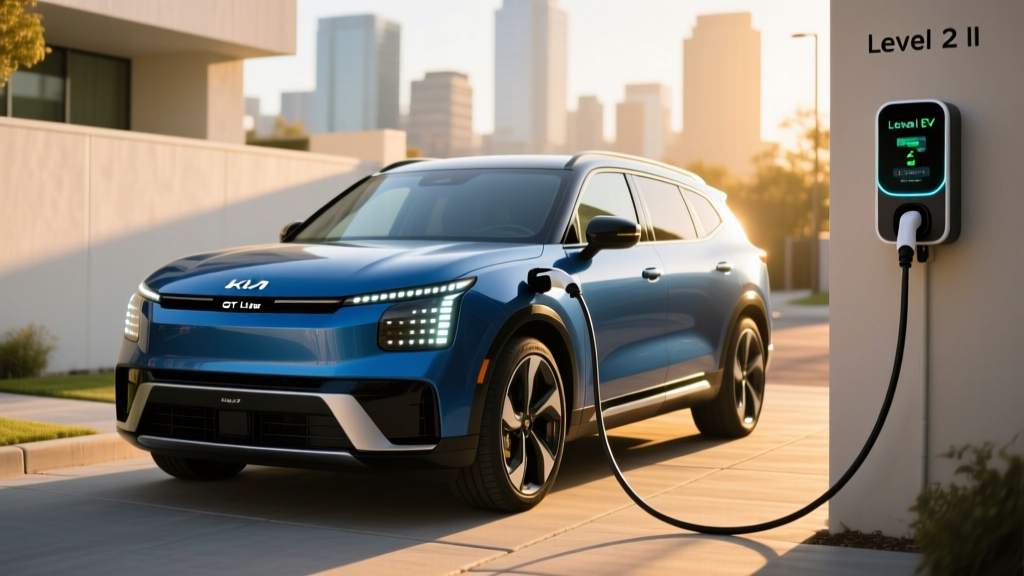
If you regularly carry six or seven adults, the Rivian R1S offers a more usable third row and far better off-road and towing capability at a similar price. If budget is a priority and you can accept less range, the Kia EV9 delivers three-row electric utility starting around $73,900 with 800V fast-charging architecture.
The Model X remains the range king and Supercharger-network beneficiary in this segment. If those two factors top your priority list and you accept the third-row compromises, it's a compelling family EV.
Frequently Asked Questions
What is the real-world range of the Tesla Model X Long Range?
The EPA rates the Model X Long Range at 335 miles. In real-world highway driving at 70–75 mph in moderate temperatures, expect approximately 280–300 miles. In freezing or below-freezing weather, plan for 220–250 miles of usable range before needing a charge stop.
How fast does the Model X charge at home and on the road?
At home on a Level 2 Tesla Wall Connector (11.5 kW / 48 amps), the Model X gains about 34 miles of range per hour, with a full charge taking roughly 10 hours. On a V3 Supercharger (250 kW peak), it charges from 10–80% in approximately 32 minutes. Charging slows significantly above 80% to protect the battery.
Does the Tesla Model X qualify for the federal EV tax credit?
The Model X Long Range (MSRP $79,990) may qualify for up to $7,500 under IRS §30D, provided the buyer meets income caps ($300,000 joint / $150,000 single) and the vehicle meets current-year battery-sourcing requirements. The Model X Plaid ($94,990) exceeds the $80,000 SUV MSRP cap and does not qualify. Always check the latest IRS guidance before purchasing.
Is the Model X 7-seat third row suitable for adults?
For short trips, yes — but it's not comfortable for extended travel. With 32.7 inches of legroom and a low cushion height caused by the under-floor battery pack, adults will find the seating position cramped after about 30 minutes. Children and shorter passengers fare much better. The Rivian R1S offers a noticeably more comfortable third row.
How does the Model X compare to the Rivian R1S for families?
The Model X wins on range (335 vs. ~321 miles), Supercharger access, and acceleration. The R1S wins on third-row comfort, cargo versatility, towing capacity (7,700 lbs vs. 5,000 lbs), and off-road capability. Both start near $80,000. If your family prioritizes road-trip range and charging infrastructure, choose the Model X. If you need genuine seven-adult comfort and outdoor versatility, choose the R1S.
What is the battery warranty on the Tesla Model X?
Tesla covers the Model X battery and drive units for 8 years or 150,000 miles, whichever comes first, guaranteeing a minimum of 70% capacity retention during the warranty period. Real-world data suggests NMC packs in the Model X degrade approximately 10–12% over the first 100,000 miles.