The Tesla Model X has always been the polarizing flagship of the EV world — a three-row SUV with falcon-wing doors, a yoke (if you dare), and performance that embarrasses sports cars. For 2026, Tesla has refreshed the interior with new materials, a rear entertainment screen, and updated ambient lighting, while keeping the powertrain largely carryover. But with the Rivian R1S, BMW iX, and Mercedes EQS SUV all competing fiercely, is the Model X still worth its premium price?
We spent time with the 2026 Model X to give you a thorough look at what it's like to live with this EV — from the cabin ergonomics to the real-world charging curve. Here's everything you need to know before you configure one.
2026 Tesla Model X: Core Specifications at a Glance
| Spec | Long Range (Dual Motor) | Plaid (Tri-Motor) |
|---|---|---|
| EPA Range | 326 miles | 311 miles |
| Battery (usable) | ~100 kWh, NMC | ~100 kWh, NMC |
| Drivetrain | Dual-Motor AWD | Tri-Motor AWD |
| Horsepower | 670 hp | 1,020 hp |
| 0–60 mph | 3.8 seconds | 2.5 seconds |
| Max DC Fast Charge | 250 kW | 250 kW |
| 10–80% DC Charge | ~30 minutes | ~30 minutes |
| Level 2 Charge Rate | 11.5 kW (~34 mi/hr) | 11.5 kW (~34 mi/hr) |
| MPGe (combined) | 98 MPGe | 95 MPGe |
| kWh/100 mi | 34 kWh | 35 kWh |
| Cargo (behind 3rd row) | 15.8 cu ft | 15.8 cu ft |
| Cargo (max, seats folded) | 88.1 cu ft | 88.1 cu ft |
| Seating | 5, 6, or 7 passengers | 5 or 6 passengers |
| Base MSRP | $79,990 | $94,990 |
| Battery/Drive Warranty | 8 yr / 150,000 mi | 8 yr / 150,000 mi |
Inside the 2026 Model X: Cabin, Tech, and Ergonomics
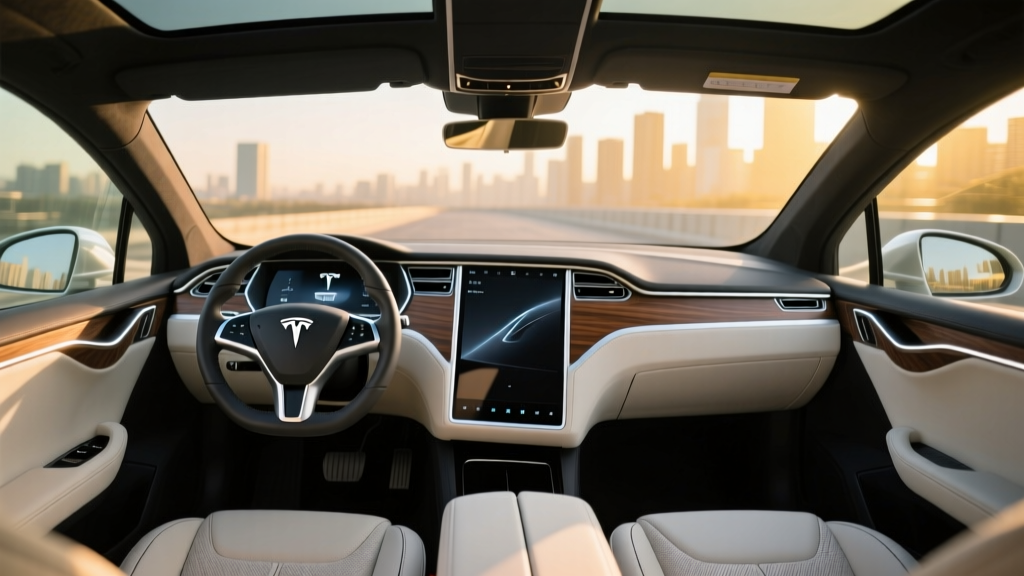
The phrase "Model X inside" usually prompts two questions: Is it actually luxurious for the price, and does the tech hold up? For 2026, Tesla has addressed some longstanding complaints. The dashboard now features softer-touch materials with available open-pore wood or carbon-fiber trim, replacing the older piano-black surfaces that attracted fingerprints and micro-scratches. A new ambient lighting strip runs across the dash and into the doors, controllable via the 17-inch center touchscreen.
The front row retains the signature minimalist layout: a single landscape-oriented 17-inch display handles virtually all vehicle controls, navigation, media, and climate. The driver gets a 12.3-inch instrument cluster behind the yoke (a conventional round steering wheel is now a no-cost option again — a welcome change for those who found the yoke impractical at low speeds or on tight turns).
Second-row passengers benefit from the biggest 2026 interior update: a dedicated 8-inch rear entertainment screen mounted on the back of the center console, supporting streaming apps and climate controls. In the six-seat configuration, second-row captain's chairs offer individual armrests and reasonable lateral support. The seven-seat layout uses a 60/40 split bench in the second row, which sacrifices some comfort for capacity.
The third row remains best suited for children or short trips. Legroom in the third row measures approximately 26.5 inches — tight for adults on anything longer than a grocery run. Headroom is adequate thanks to the Model X's tall roofline, but ingress and egress require flexibility, even with the falcon-wing doors opening upward to expose a wide aperture.
Build quality has improved incrementally over earlier Fremont-built Model X vehicles, though panel-gap consistency still trails the BMW iX and Mercedes EQS SUV. Wind noise at highway speeds is well-controlled, and the cabin's thermal management — aided by a standard heat pump — keeps the interior comfortable without devastating range in cold weather.
Real-World Range: What the EPA Number Doesn't Tell You
Real-World Expectation: On mixed highway/city driving at moderate temperatures (60–75°F), expect approximately 275–295 miles from the Long Range and 260–280 miles from the Plaid. At sustained 75+ mph highway speeds, range drops to roughly 245–265 miles. In sub-freezing temperatures (below 32°F), plan for a 20–30% reduction — yielding as little as 225–250 miles in the Long Range on a cold winter road trip. The Model X's large frontal area and ~5,100 lb curb weight work against highway efficiency.
The 100 kWh NMC (nickel manganese cobalt) battery pack is carryover from the 2024 refresh. Tesla does not publish usable vs. gross capacity figures, but independent testing suggests approximately 95–98 kWh usable, with a top-and-bottom buffer to protect long-term cell health. NMC chemistry offers higher energy density than LFP (lithium iron phosphate), which is critical for fitting enough range into a heavy three-row SUV — but it also means Tesla recommends daily charging to 80% for longevity, reserving 100% for trips.
Efficiency measured in kWh per 100 miles tells the real story: at 34 kWh/100 mi for the Long Range, the Model X is notably less efficient than a Model Y (roughly 28 kWh/100 mi) or a BMW iX xDrive50 (roughly 30 kWh/100 mi). You're paying an energy penalty for the size, weight, and aerodynamic drag of a large SUV with falcon-wing doors. According to fueleconomy.gov, the 98 MPGe combined rating places it mid-pack among luxury electric SUVs.
Charging Speed: DC Fast, Level 2, and the Supercharger Advantage
| Charge Level | Power | Speed (approx.) | Use Case |
|---|---|---|---|
| Level 1 (120V) | ~1.4 kW | ~3–4 mi/hr | Emergency / overnight trickle |
| Level 2 (240V, 48A) | 11.5 kW | ~34 mi/hr | Daily home charging |
| DC Fast (V3 Supercharger) | 250 kW peak | 10–80% in ~30 min | Road trips |
| DC Fast (V4 Supercharger) | 250 kW (current Model X cap) | 10–80% in ~30 min | Road trips |
The Model X peaks at 250 kW on Tesla's V3 and V4 Superchargers. That's competitive but no longer class-leading — the Hyundai Ioniq 9 and Lucid Gravity accept 350 kW on compatible chargers. The real-world charging curve matters more than the peak number: the Model X sustains roughly 200–250 kW from 10% to about 40% state of charge, then progressively tapers. From 40–80%, you'll see 100–150 kW, and above 80% the rate drops sharply to protect the battery. A typical 10–80% session takes about 30 minutes; plan on 40–45 minutes if you need to push to 90% or higher.
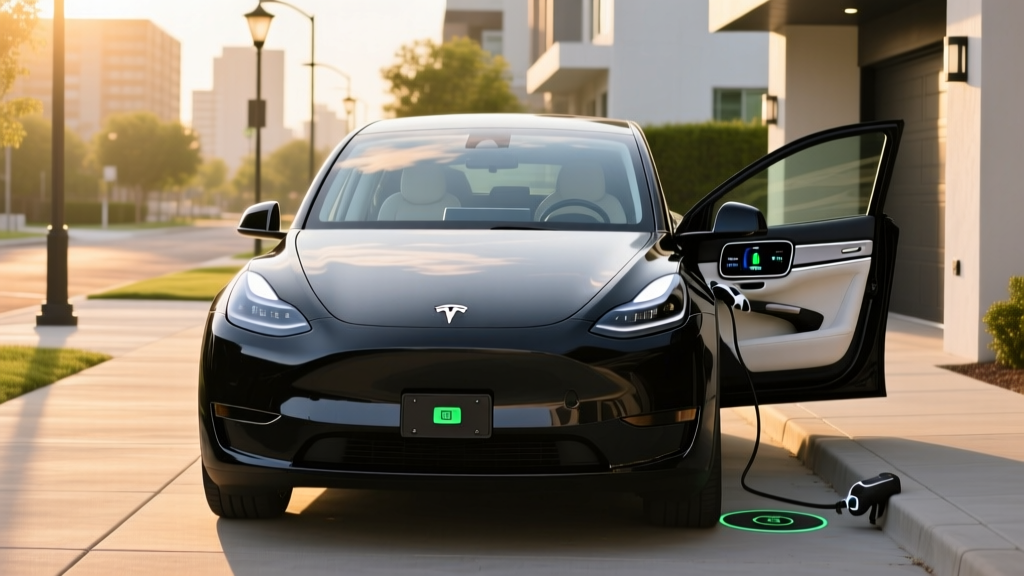
At home on a Level 2 Tesla Wall Connector (hardwired, 60A circuit delivering 48A to the vehicle), the Model X adds roughly 34 miles of range per hour. A full 10–100% charge overnight takes approximately 9–10 hours — perfectly manageable if you plug in every evening. If your home electrical panel requires an upgrade to 200A to support a 60A circuit, budget $1,500–$3,000 for the electrician work on top of the $450–$500 Wall Connector unit.
The Tesla Supercharger network remains the strongest public charging ecosystem in the US, with over 6,000 stations and 65,000+ stalls nationally. While the Model X now ships with a NACS (North American Charging Standard) port natively — no adapter needed — it can also use CCS1 stations via adapter, though reliability and payment friction on non-Tesla networks remain a common owner complaint.
Performance and Driving Dynamics
The Model X Long Range delivers 670 horsepower from its dual-motor all-wheel-drive powertrain, reaching 60 mph in 3.8 seconds. That's quicker than most V8-powered performance SUVs and more than adequate for highway merging, passing, and daily driving. The Plaid variant's tri-motor setup (one front, two rear) produces 1,020 hp and a 2.5-second 0–60 time — a party trick that never stops being entertaining, if rarely practical.
Ride quality is firm but well-damped, with adaptive air suspension that adjusts ride height based on speed and terrain. The Model X can raise itself for rough driveways or lower for highway efficiency. Steering is precise and weight-adjustable through the touchscreen, though it lacks the tactile feedback of the BMW iX or Porsche Cayenne EV.
Regenerative braking offers two modes (standard and low), with the standard mode enabling near one-pedal driving in most city scenarios. The friction brakes are rarely needed in daily use, which extends pad and rotor life considerably.
Towing: The Model X is rated for up to 5,000 pounds when properly equipped with the factory tow hitch. Expect a 35–45% range reduction when towing a loaded trailer — a significant hit that makes long-distance towing impractical without careful Supercharger planning.
Autopilot, FSD, and Driver Assistance
Tesla Autopilot and Full Self-Driving (Supervised) are Level 2 driver-assistance systems. The driver must remain attentive, keep hands on the wheel (or apply periodic torque), and be prepared to take over at any moment. These systems do not make the Model X self-driving. Only Level 4 services like Waymo operate without a human driver in geofenced areas.
Every 2026 Model X includes Tesla's basic Autopilot: Traffic-Aware Cruise Control and Autosteer (lane centering) on highways. The optional Full Self-Driving (Supervised) package — currently $8,000 or $99/month — adds automatic lane changes, Navigate on Autopilot (highway on/off-ramp capability), traffic-light and stop-sign recognition, and Autopark. Tesla's FSD continues to improve through over-the-air updates, but it still requires active supervision and can behave unpredictably in construction zones, unmapped areas, or complex intersections.
Standard safety features include automatic emergency braking, blind-spot monitoring, lane-departure warning, and a 360-degree camera system. The Model X earned a 5-star overall rating from NHTSA, though IIHS testing should be checked for the latest model-year evaluation, as criteria update annually.
Pricing, Tax Credits, and Ownership Costs
| Trim | Base MSRP | As-Tested (typical) | §30D Credit Eligible? |
|---|---|---|---|
| Long Range | $79,990 | $85,000–$92,000 | No (exceeds $80K SUV cap) |
| Plaid | $94,990 | $100,000–$115,000 | No (exceeds $80K SUV cap) |
The 2026 Tesla Model X does not qualify for the federal §30D new clean vehicle tax credit. Under current IRS rules, SUVs must have an MSRP at or below $80,000 to be eligible. The Long Range starts at $79,990, but once destination charges and any options are added, it exceeds the cap. The Plaid is well above it. Additionally, the §30D credit has buyer income limits ($150,000 single / $300,000 joint modified AGI) and battery critical-mineral and component sourcing requirements that shift annually.
Some buyers may qualify for state-level incentives (California, Colorado, and others offer rebates or tax credits that stack independently of federal rules), but these vary by jurisdiction and are subject to funding availability. Always check your state energy office or a tax professional for current eligibility.
Ownership economics: Tesla's 8-year/150,000-mile battery and drive unit warranty is among the best in the industry, covering degradation below 70% of original capacity. Insurance premiums for the Model X are notably high — expect $3,000–$5,000 annually depending on your location, driving record, and coverage level, driven by expensive repair costs and high vehicle value. Depreciation has historically been steep on the Model X; third-year resale values tend to lag behind the Porsche Cayenne EV and BMW iX.
Pros and Cons
Pros
- Class-leading Supercharger network access with native NACS
- Falcon-wing doors ease third-row access in tight parking spaces
- Brutal acceleration, especially in Plaid trim
- Generous cargo capacity (88.1 cu ft max) and front trunk (frunk)
- Standard heat pump for cold-weather efficiency
- Continuous OTA software updates add features post-purchase
- 8-year/150,000-mile battery warranty with 70% retention guarantee
Cons
- No federal §30D tax credit (MSRP exceeds $80K cap)
- 250 kW peak DC charging is outpaced by newer rivals at 350 kW
- Third-row space is cramped for adults
- Efficiency lags competitors (34–35 kWh/100 mi)
- High insurance premiums ($3,000–$5,000/yr)
- Panel-gap and build-quality inconsistencies persist
- Steep depreciation curve compared to legacy luxury brands
- FSD (Supervised) remains Level 2 — not autonomous
Who Should Buy the 2026 Tesla Model X?
- You need three rows and prioritize Supercharger network reliability for road trips
- You want sports-car acceleration in a family SUV
- Falcon-wing doors genuinely help your use case (tight garages, car-seat loading)
- You're already in the Tesla ecosystem (Powerwall, Solar, other Teslas)
- Federal tax credit eligibility is a dealbreaker (consider the Rivian R1S or BMW iX, which may qualify depending on trim and sourcing)
- You prioritize interior luxury and build quality over tech — the BMW iX and Mercedes EQS SUV win here
- You need adult-friendly third-row space for regular use — the Rivian R1S and Kia EV9 offer more room
- Fastest possible DC charging matters — the Lucid Gravity and upcoming 800V platforms charge considerably faster
Frequently Asked Questions
What is the real-world range of the 2026 Tesla Model X?
The EPA rates the Long Range at 326 miles and the Plaid at 311 miles. In real-world mixed driving, expect 275–295 miles (Long Range) or 260–280 miles (Plaid). Sustained highway speeds above 75 mph reduce that to roughly 245–265 miles, and sub-freezing temperatures can knock off an additional 20–30%.
How fast does the Model X charge at home and on road trips?
At home on a Level 2 Tesla Wall Connector (11.5 kW), the Model X gains about 34 miles of range per hour, fully charging overnight in ~9–10 hours. On a V3 or V4 Supercharger at 250 kW peak, a 10–80% session takes approximately 30 minutes. Charging slows significantly above 80% to protect battery health.
Does the 2026 Model X qualify for the $7,500 federal EV tax credit?
No. Under current IRS §30D rules, SUVs must have an MSRP at or below $80,000. The Model X Long Range starts at $79,990, but destination fees and options push it over the cap, and the Plaid starts at $94,990. State incentives may still apply — check your local program.
Is the Model X worth buying versus the Rivian R1S or BMW iX?
It depends on your priorities. The Model X wins on Supercharger access, acceleration (especially Plaid), and software features. The Rivian R1S offers more third-row space, better off-road capability, and potential tax-credit eligibility on lower trims. The BMW iX delivers superior interior quality and a quieter cabin, though it has only two rows. Test-drive all three before deciding.
What are the biggest drawbacks of owning a Model X?
The main complaints from owners center on high insurance costs, steep depreciation, build-quality inconsistencies (panel gaps, occasional rattles), relatively slow DC charging versus newer competitors, and the lack of a federal tax credit. The third row is also best reserved for children.
How long will the Model X battery last?
Tesla covers the battery and drive unit for 8 years or 150,000 miles, whichever comes first, guaranteeing at least 70% capacity retention. Based on fleet data from earlier Model S/X vehicles, most NMC packs retain 85–90% capacity after 100,000 miles with proper charging habits (daily limit of 80%, avoiding prolonged storage at 100% or near 0%). Replacement cost, if needed out of warranty, ranges from $15,000–$22,000 depending on the service center.