Quick Verdict: The Model X HW4 at a Glance
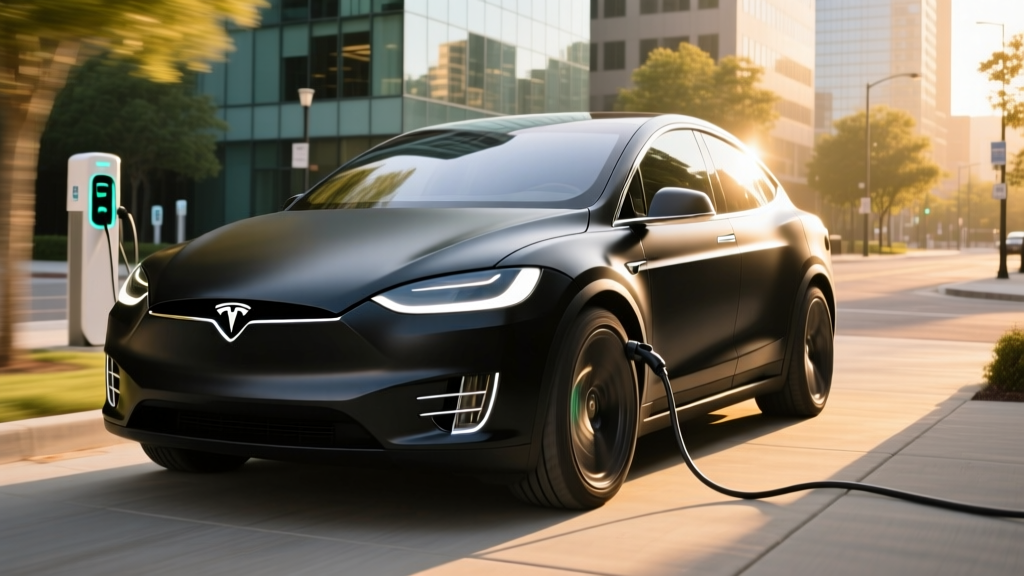
The Tesla Model X remains one of the most polarizing vehicles in the luxury EV space. With the Hardware 4 (HW4) sensor suite now standard across all 2025–2026 production, Tesla has significantly upgraded the vehicle's perception capabilities — higher-resolution cameras, improved radar processing, and a more powerful onboard computer. But the Model X has always been more than its Autopilot system. It's a three-row, falcon-wing-doored, dual-motor (or tri-motor) electric SUV that can tow 5,000 pounds and hit 60 mph in as little as 2.5 seconds in Plaid trim.
For 2026, the Model X lineup is streamlined to two trims: the dual-motor Long Range and the tri-motor Plaid. Both ship with HW4, a ~100 kWh NMC battery pack, and access to the expanding Supercharger network now open to NACS-native competitors. The question for buyers is no longer whether the HW4 suite works — it demonstrably does in highway scenarios — but whether the Model X's $80K–$95K price tag makes sense when the Model Y, Rivian R1S, and BMW iX all compete fiercely in adjacent segments.
| Spec | Long Range (Dual Motor) | Plaid (Tri Motor) |
|---|---|---|
| EPA Range | 348 miles | 326 miles |
| Battery (usable) | ~100 kWh, NMC | ~100 kWh, NMC |
| Drivetrain | AWD Dual Motor | AWD Tri Motor |
| Horsepower | 670 hp | 1,020 hp |
| 0–60 mph | 3.8 seconds | 2.5 seconds |
| Top Speed | 155 mph | 163 mph |
| Max DC Fast Charge | 250 kW | 250 kW |
| 10–80% DCFC Time | ~32 minutes | ~32 minutes |
| Level 2 Charge Rate | 11.5 kW (~34 mi/hr) | 11.5 kW (~34 mi/hr) |
| MPGe (combined) | 98 MPGe | 96 MPGe |
| Efficiency | 34 kWh/100 mi | 35 kWh/100 mi |
| Towing Capacity | 5,000 lbs | 5,000 lbs |
| Seating | 5, 6, or 7 passengers | 5 or 6 passengers |
| Cargo (behind 3rd row) | ~15 cu ft (seats up) | ~15 cu ft (seats up) |
| Cargo (max, seats folded) | ~85 cu ft | ~85 cu ft |
| Base MSRP | $79,990 | $94,990 |
| Battery/Drive Unit Warranty | 8 years / 150,000 miles | 8 years / 150,000 miles |
Range and Efficiency: EPA vs. Reality
Real-World Expectation: Plan for 280–310 miles on highway road trips at 70–80 mph. In cold weather (below 32°F), expect a 20–30% reduction — roughly 220–260 miles from the Long Range model. City driving with regenerative braking recovers more energy, often matching or exceeding EPA figures.
The Model X Long Range's 348-mile EPA figure places it among the longest-range three-row SUVs available. According to fueleconomy.gov, the Long Range achieves 98 MPGe combined, which translates to 34 kWh per 100 miles. That's competitive for a 5,000+ lb. vehicle with the aerodynamic profile of a large SUV — though the Model X's teardrop shape and active aero help it outperform boxier competitors like the Rivian R1S (316 miles EPA, 43 kWh/100 mi).
In real-world highway testing, the Model X Long Range typically delivers 280–310 miles before needing a charge at 70–80 mph in moderate temperatures (60–80°F). The tri-motor Plaid, with its additional front motor and higher performance tuning, drops to roughly 260–290 miles under the same conditions. Cold weather is the great equalizer: below freezing, lithium-ion chemistry slows, cabin heating demands energy (the Model X uses a heat pump, which helps), and range drops 20–30% across both trims. Preconditioning the battery while plugged in mitigates this, and Tesla's navigation-based battery preconditioning warms the pack en route to a Supercharger — a feature that meaningfully improves charge speeds in cold conditions.
Charging Speed: DC Fast, Level 2, and the Curve
| Charging Level | Max Power | Miles Added per Hour | Notes |
|---|---|---|---|
| Level 1 (120V) | ~1.4 kW | ~4 mi/hr | Emergency/trickle only |
| Level 2 (240V, 48A) | 11.5 kW | ~34 mi/hr | Home Wall Connector; full charge ~10 hrs |
| DC Fast (V3 Supercharger) | 250 kW peak | ~200 mi in 15 min | 10–80% in ~32 min; tapers above 80% |
| DC Fast (V4 Supercharger) | 250 kW peak | Similar to V3 | Newer pedestal design; same vehicle-side limit |
The Model X charges at a peak rate of 250 kW on Tesla's V3 and V4 Superchargers. That peak is achievable between roughly 10–30% state of charge (SoC), after which the charge curve tapers progressively. By 50% SoC, you're typically seeing 150–170 kW. By 80%, it drops below 60 kW. This is standard behavior for NMC lithium-ion packs — charging speed is limited by the battery management system to protect cell longevity — but it means the often-advertised "200 miles in 15 minutes" figure only holds if you arrive at a very low SoC.
A 10–80% charge takes approximately 32 minutes under optimal conditions (warm battery, V3 or V4 pedestal, no adjacent-stall splitting). In practice, road-trip charging stops of 25–35 minutes are realistic if you manage your SoC windows well — arriving below 15% and departing at 80%.
For home charging, the Tesla Wall Connector at 48 amps delivers 11.5 kW, adding roughly 34 miles of range per hour. A full 0–100% charge takes about 10 hours, making overnight charging on a standard overnight schedule (e.g., 10 PM to 6 AM) sufficient to replenish 250+ miles. Note: kW (kilowatts) measures the rate of power delivery, while kWh (kilowatt-hours) measures total energy stored. The Model X's ~100 kWh battery charged at 11.5 kW takes roughly 100 ÷ 11.5 ≈ 8.7 hours from empty, plus overhead for charging losses.
HW4 Sensor Suite and FSD Supervised
The Tesla Model X with HW4 and Full Self-Driving (Supervised) is a Level 2 driver-assistance system. The driver must remain fully engaged, hands on or near the wheel, and eyes on the road at all times. This is not autonomous driving. Tesla's FSD (Supervised) can navigate highway interchanges, stop lights, and some city streets, but it requires constant supervision and can make errors. Only Level 4 services like Waymo operate without a human driver — and those are limited to geofenced areas.
Hardware 4, which Tesla began integrating into Model X production in 2023 and refined through 2025–2026, represents a meaningful upgrade over the previous HW3 system. The camera suite now uses higher-resolution sensors (up to 5 megapixels vs. 1.2 megapixels on HW3), a more powerful inference computer, and improved object-detection range. Tesla removed ultrasonic sensors (USS) in favor of a vision-only approach branded as "Tesla Vision," which uses neural-network-based depth estimation from camera feeds.
In practice, HW4 improves FSD Supervised's performance in several measurable ways: better lane-centering stability on highways with faded markings, more confident unprotected left turns, and improved detection of pedestrians and cyclists at intersections. However, the system still struggles in heavy rain, direct sun glare into cameras, and construction zones with temporary lane reconfigurations. According to NHTSA, all Level 2 systems require continuous driver oversight, and Tesla's own data disclosures note that FSD Supervised does not make the vehicle autonomous.
Basic Autopilot (Traffic-Aware Cruise Control + Autosteer) comes standard. FSD (Supervised) remains a $8,000 one-time purchase or $99/month subscription as of 2026. For most buyers, basic Autopilot handles highway cruising competently. FSD (Supervised) is best viewed as a convenience feature for frequent highway commuters, not a replacement for attentive driving.
- Drive without a licensed, attentive driver in the seat
- Handle all weather conditions (heavy rain, snow, fog degrade camera performance)
- Navigate unmapped or significantly altered construction zones reliably
- Replace the driver's legal responsibility for the vehicle's operation
- Function as a Level 3 or Level 4 autonomous system
Performance and Driving Dynamics
The Model X Long Range's dual-motor AWD powertrain produces 670 horsepower and delivers a 3.8-second 0–60 mph time — figures that would have defined a supercar a decade ago. The Plaid trim adds a third rear motor for 1,020 hp and a 2.5-second 0–60 time, making it the quickest production SUV ever sold. Both trims use a single-speed reduction gear, so acceleration is linear and immediate with no shift interruption.
Driving dynamics are a mixed story. The Model X's adaptive air suspension provides a comfortable highway ride and can raise the vehicle for rough driveways or light off-road use. However, at 5,185 lbs (Long Range), the vehicle's mass is palpable through corners. Steering is precise but light, and body roll is well-controlled for the weight — yet no one would mistake this for a sportscar. Compared to the BMW iX M60, which prioritizes chassis engagement, the Model X favors straight-line drama and technology over corner-carving feedback.
The regenerative braking system is aggressive and enables one-pedal driving in most conditions. The brake pedal feel has improved in recent model years, but the transition between regen and friction braking can still feel slightly inconsistent at low speeds.
Interior, Cargo, and Practicality
The Model X interior is dominated by a 17-inch landscape-oriented touchscreen that controls nearly every vehicle function — climate, media, navigation, vehicle settings, and even the glovebox. A second 8-inch screen serves rear-seat passengers (in six-seat configurations), and the yoke steering wheel remains standard (a conventional round wheel is available as a no-cost option). Build quality has improved notably since the 2022–2023 refresh, with tighter panel gaps and higher-quality materials, though some owners still report minor rattles in the falcon-wing door mechanisms.
Seating configurations include five-seat (two rows), six-seat (captain's chairs in the second row), and seven-seat (bench second row + third row). The six-seat layout is the most popular, offering walk-through access to the third row and more comfortable second-row seating. Third-row space is best suited for children or short trips — legroom measures roughly 30 inches, compared to 41 inches in the second row.
Cargo capacity is a Model X strength: approximately 15 cubic feet behind the third row, expanding to ~85 cubic feet with both rear rows folded. The front trunk (frunk) adds roughly 6.5 cubic feet of enclosed storage. The falcon-wing doors are the Model X's signature feature — they open upward, requiring less lateral clearance than conventional doors, which is genuinely useful in tight parking spaces. However, they can be slower to operate than conventional doors and have historically been a source of warranty claims.
Pricing, Tax Credits, and Ownership Cost
| Trim | Base MSRP | Destination | Federal §30D Credit | Est. Net Price |
|---|---|---|---|---|
| Long Range | $79,990 | $1,990 | See eligibility notes | ~$81,980 (before credit) |
| Plaid | $94,990 | $1,990 | See eligibility notes | ~$96,980 (before credit) |
The 2026 Model X Long Range starts at $79,990, while the Plaid begins at $94,990 — both before the $1,990 destination fee and any options. Popular additions include FSD (Supervised) at $8,000, premium interior colors ($1,500–$2,500), and 22-inch wheels ($4,500). A well-equipped Long Range with FSD typically lands between $88,000 and $92,000 before incentives.
- MSRP Cap: SUVs/vans must be ≤ $80,000 MSRP. The Model X Long Range at $79,990 just qualifies. The Plaid at $94,990 does NOT qualify.
- Buyer Income Cap: Modified AGI ≤ $300,000 (married filing jointly), $225,000 (head of household), $150,000 (single).
- Battery Sourcing: Critical minerals and battery components must meet phased-in percentages from US/free-trade-agreement sources. Tesla's battery supply chain has been progressively localizing, but eligibility can vary by production batch. Verify the specific VIN at the point of sale.
- Point-of-Sale Transfer: Eligible buyers can transfer the credit to the dealer at purchase, reducing the upfront price by up to $7,500. This requires dealer participation and IRS registration.
- Verification: Always confirm current eligibility at irs.gov and with your tax professional before purchasing.
The Long Range's $79,990 MSRP places it precisely at the §30D SUV cap — meaning eligible buyers could receive up to $7,500, bringing the effective price to roughly $74,500. However, the credit is not guaranteed: battery-sourcing requirements tighten annually, and Tesla's eligibility has fluctuated across production quarters. The Plaid, at $94,990, exceeds the MSRP cap entirely and does not qualify for §30D under any circumstances.
Five-year total cost of ownership is favorable compared to combustion luxury SUVs like the BMW X5 M or Mercedes-AMG GLE 63, primarily due to lower fuel (electricity) costs, fewer moving parts, and no oil changes. According to typical calculations, a Model X Long Range driven 15,000 miles/year costs approximately $1,800–$2,200 annually in electricity (at $0.14/kWh national average), versus $3,500–$4,500 in premium gasoline for a comparable ICE SUV. Insurance premiums, however, tend to run 15–25% higher than ICE equivalents, averaging $2,800–$3,500/year depending on state and driver profile.
How It Compares: Model X vs. the Competition
| Spec | Tesla Model X LR | Rivian R1S Dual | BMW iX xDrive50 | Kia EV9 GT-Line |
|---|---|---|---|---|
| EPA Range | 348 mi | 316 mi | 324 mi | 270 mi |
| Base MSRP | $79,990 | $75,900 | $87,250 | $73,900 |
| 0–60 mph | 3.8 sec | 4.5 sec | 4.4 sec | 5.0 sec |
| Max DCFC | 250 kW | 200 kW | 200 kW | 236 kW |
| Seating | 5/6/7 | 5/7 | 5 only | 6/7 |
| Towing | 5,000 lbs | 7,700 lbs | 3,500 lbs | 5,000 lbs |
| §30D Eligible | Yes (LR, if sourcing qualifies) | Yes (if sourcing qualifies) | No (MSRP cap) | Yes (if sourcing qualifies) |
The Model X occupies a unique niche: it's the longest-range three-row electric SUV with the fastest available acceleration (Plaid) and the most mature charging network access. The Rivian R1S is the better off-roader and tow rig (7,700 lbs), with a more traditional SUV aesthetic and competitive pricing. The BMW iX offers a more refined interior and sharper handling but seats only five and exceeds the §30D MSRP cap. The Kia EV9 is the value play — significantly cheaper, three rows, and eligible for the credit — but with shorter range and less performance.
- You prioritize maximum range in a three-row SUV
- You want access to the Supercharger network (though competitors now have NACS access via adapters)
- You value cutting-edge driver-assist technology (with the understanding it's Level 2)
- You want the falcon-wing doors for tight-space practicality
- You need serious towing capability (Rivian R1S: 7,700 lbs)
- You want a more driver-focused chassis (BMW iX)
- Budget is a primary concern and three rows are essential (Kia EV9)
- You prefer a conventional SUV design without touchscreen-dependent controls
Pros and Cons
- Class-leading 348-mile EPA range (Long Range)
- 250 kW DC fast charging with extensive Supercharger network
- HW4 sensor suite with improved FSD Supervised performance
- Falcon-wing doors are genuinely useful in tight parking
- Plaid trim offers supercar-level 2.5-second 0–60
- Heat pump for efficient cold-weather cabin heating
- Over-the-air updates continuously add features
- Long Range qualifies for §30D credit (if sourcing/income rules met)
- Plaid trim exceeds §30D MSRP cap — no federal credit
- Yoke steering wheel is polarizing (round wheel available)
- Falcon-wing doors can be slow and have higher maintenance history
- Heavy at 5,185+ lbs — handling shows the mass
- Third-row space is tight for adults
- Tesla Vision (no ultrasonic sensors) can struggle with close-proximity parking
- Insurance premiums 15–25% higher than ICE equivalents
- Interior minimalism isn't for everyone — nearly all controls are screen-based
Warranty and Long-Term Ownership
Tesla covers the Model X battery and drive units for 8 years or 150,000 miles (whichever comes first), with a minimum 70% capacity retention threshold during the warranty period. The basic vehicle limited warranty covers 4 years or 50,000 miles. These terms are competitive with the industry — Rivian offers 8 years/175,000 miles on its battery, while BMW provides 8 years/100,000 miles.
Battery degradation data from Tesla's fleet indicates that Model X packs (NMC chemistry) typically lose 8–12% capacity over the first 100,000 miles, with the rate of degradation slowing significantly after the initial break-in period. Real-world fleet data shared by Tesla in their annual impact reports suggests most packs retain 85–90% of original capacity at 150,000 miles. Out-of-warranty battery replacement remains expensive — estimated at $15,000–$22,000 depending on pack configuration and labor — but is rarely needed within the vehicle's typical ownership lifecycle.
Frequently Asked Questions
What is the real-world range of the Tesla Model X with HW4?
The EPA rates the Long Range at 348 miles and the Plaid at 326 miles. In real-world highway driving at 70–80 mph in moderate temperatures, expect 280–310 miles (Long Range) or 260–290 miles (Plaid). Cold weather below 32°F reduces range by 20–30%, yielding approximately 220–260 miles for the Long Range. The HW4 sensor suite itself has negligible impact on range — the efficiency difference between HW3 and HW4 is minimal.
How fast does the Model X charge at home and on the road?
On a Tesla V3 or V4 Supercharger, the Model X peaks at 250 kW and completes a 10–80% charge in approximately 32 minutes under optimal conditions. At home on a Level 2 Wall Connector (11.5 kW / 48 amps), it adds about 34 miles of range per hour, with a full charge taking roughly 10 hours. Level 1 (120V) charging adds only ~4 miles per hour and is suitable only for emergencies or very low-mileage drivers.
Does the 2026 Model X qualify for the $7,500 federal EV tax credit?
The Long Range trim at $79,990 MSRP meets the §30D SUV price cap of $80,000, making it potentially eligible. The Plaid at $94,990 exceeds the cap and does not qualify. Eligibility also depends on buyer income (≤ $300K joint / $150K single), battery component and critical-mineral sourcing requirements (which change annually), and purchasing through a registered dealer for point-of-sale transfer. Always verify at irs.gov before purchasing.
Is the Model X HW4 worth buying over a Rivian R1S or BMW iX?
It depends on your priorities. The Model X wins on range (348 vs. 316 vs. 324 miles), DC fast-charge speed (250 kW vs. 200 kW), and acceleration. The Rivian R1S is the better choice for towing (7,700 vs. 5,000 lbs) and off-road capability, at a lower starting price. The BMW iX offers a more refined driving experience and interior but seats only five and doesn't qualify for the federal credit. If range, charging speed, and tech are paramount, the Model X holds its ground.
What are the biggest drawbacks of the Model X?
The most common owner complaints center on the falcon-wing doors (slower operation, higher maintenance risk), the yoke steering wheel (love-it-or-hate-it), the touchscreen-dependent interface (no physical climate or volume knobs), and the vehicle's premium pricing relative to newer three-row competitors like the Kia EV9. Insurance costs also tend to be 15–25% higher than equivalent ICE SUVs, which adds $400–$800 annually to ownership costs.
Is FSD (Supervised) with HW4 actually self-driving?
No. FSD (Supervised) is an SAE Level 2 driver-assistance system. It requires a fully attentive, licensed driver at all times. It can handle highway lane changes, on-ramps, and some city driving, but it can make errors and does not absolve the driver of legal responsibility. Only Level 4 systems (like Waymo's robotaxi service) operate without a human driver, and those are limited to specific geofenced cities.