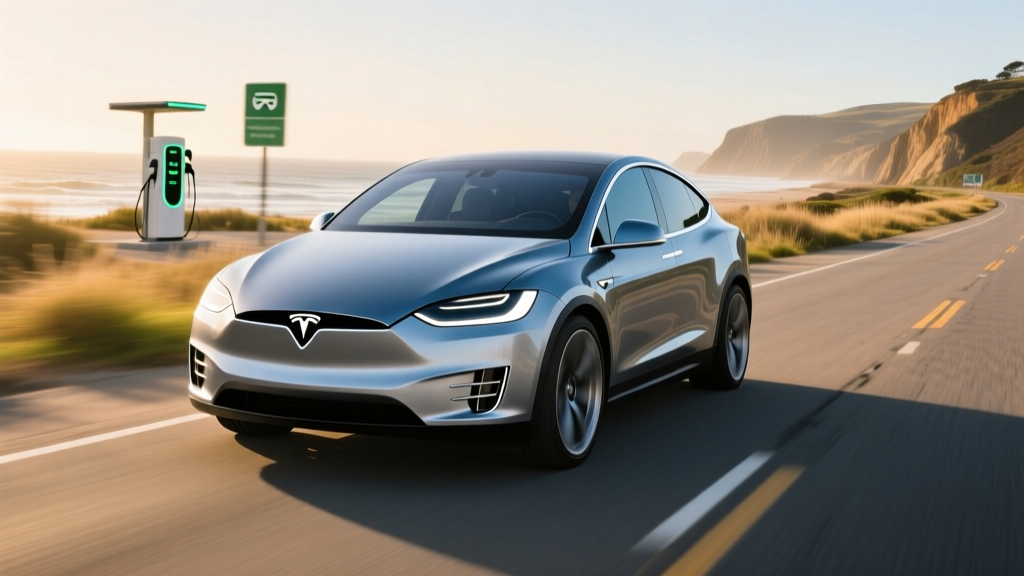
Quick Verdict: Still the Performance SUV Benchmark
The Tesla Model X remains one of the most powerful production SUVs on the market, and the 2026 lineup continues to push boundaries. If you've been searching for the horsepower of Tesla Model X variants, the answer depends on which trim you choose: the dual-motor Long Range delivers 670 horsepower, while the tri-motor Plaid rockets to 1,020 horsepower. But raw power is only part of the story — this review covers real-world range, charging reality, ownership economics, and whether the Model X still justifies its premium price tag against rising competition.
| Spec | Long Range (AWD) | Plaid (AWD) |
|---|---|---|
| Horsepower | 670 hp | 1,020 hp |
| 0–60 mph | 3.8 seconds | 2.5 seconds |
| EPA Range | 335 miles | 326 miles |
| Battery (usable) | ~95 kWh (NMC) | ~95 kWh (NMC) |
| Max DC Fast Charge | 250 kW | 250 kW |
| 10–80% DC Charge | ~30 minutes | ~30 minutes |
| Level 2 Home Charge | 11.5 kW (~34 mi/hr) | 11.5 kW (~34 mi/hr) |
| MPGe (combined) | 101 MPGe | 98 MPGe |
| Base MSRP | $79,990 | $94,990 |
| Drivetrain | Dual-Motor AWD | Tri-Motor AWD |
| Towing Capacity | 5,000 lbs | 5,000 lbs |
Horsepower Breakdown: Long Range vs. Plaid
The 2026 Model X Long Range pairs a front and rear permanent-magnet motor for a combined 670 horsepower and an estimated 710 lb-ft of torque. That's enough to hustle this ~5,100-pound SUV to 60 mph in 3.8 seconds — quicker than most sports sedans from a decade ago.
Step up to the Plaid, and Tesla adds a third rear motor, pushing output to 1,020 horsepower and roughly 1,050 lb-ft of torque. The result is a 2.5-second 0–60 time that puts the Model X Plaid in hypercar territory, despite offering three rows of seating and falcon-wing rear doors. Tesla achieves this through its carbon-sleeved rotors, which allow the motors to sustain high RPMs without overspeeding — a critical engineering detail that separates Plaid from lesser tri-motor setups.
In real-world driving, the difference between 670 hp and 1,020 hp is dramatic in short bursts but less relevant at sustained highway speeds where aerodynamic drag dominates. For most buyers, the Long Range's power is more than adequate, and the Plaid's advantage shines primarily in spirited driving or track scenarios.
Real-World Range: What the EPA Number Doesn't Tell You
EPA Estimated Range: 335 miles (Long Range) / 326 miles (Plaid)
Real-World Expectation: Plan for ~270–295 miles on highway road trips at 70–75 mph. In cold weather (below 32°F), expect a 20–30% reduction, dropping usable range to ~210–250 miles depending on cabin heating demands and driving style.
The Model X's ~95 kWh usable battery uses NMC (nickel-manganese-cobalt) chemistry, which offers high energy density but is more sensitive to extreme temperatures than LFP. Tesla's heat pump and battery thermal management system mitigate cold-weather losses better than many competitors, but physics still applies — a 200-mile highway leg in January through the Rockies will require a charge stop where a summer trip might not.
Efficiency sits at roughly 101 MPGe combined (Long Range), which translates to about 33–35 kWh per 100 miles. That's competitive for a vehicle this size and weight, though smaller crossovers like the Hyundai Ioniq 5 achieve significantly better efficiency figures.
For authoritative range and efficiency data, the EPA's fueleconomy.gov EV side-by-side tool remains the best reference for comparing official figures across models.
Charging Speed: DC Fast, Home, and the Supercharger Advantage
The Model X charges at a peak rate of 250 kW on V3 Tesla Superchargers, adding up to ~175 miles of range in 15 minutes under ideal conditions. However, peak rate is not sustained rate — the charge curve tapers significantly above 60% state of charge, which is why a full 10–80% session takes roughly 30 minutes rather than the ~20 minutes peak-rate math might suggest.
| Charging Level | Power | Miles of Range Added Per Hour | Notes |
|---|---|---|---|
| Level 1 (120V) | ~1.4 kW | ~3–4 mi/hr | Emergency/top-off only |
| Level 2 (240V, 48A) | 11.5 kW | ~34 mi/hr | Full charge in ~9 hours |
| DC Fast (V3 Supercharger) | Up to 250 kW | ~700+ mi/hr (peak) | 10–80% in ~30 min |
| DC Fast (CCS adapter) | Up to ~150–170 kW | Varies by station | Non-Tesla networks |
At home, a Tesla Wall Connector on a 60-amp circuit delivers 11.5 kW (48 amps), adding roughly 34 miles of range per hour. A full overnight charge from 20% to 100% takes about 9 hours. Most owners charge to 80–90% daily and reserve 100% for road trips, which helps preserve long-term battery health with NMC chemistry.
Tesla now includes a CCS adapter with new vehicles, and the Supercharger network has opened to non-Tesla EVs at many locations. However, Model X owners still benefit from native Supercharger integration — plug-and-charge authentication, real-time stall availability in the nav, and automatic battery preconditioning when you navigate to a charger.
Pricing, Tax Credits, and Ownership Cost
The 2026 Tesla Model X Long Range starts at $79,990 (including destination), while the Plaid begins at $94,990. Options like six-seat interiors, 22-inch wheels, and Full Self-Driving (Supervised) capability can push the as-tested price well above $100,000.
| Item | Long Range | Plaid |
|---|---|---|
| Base MSRP | $79,990 | $94,990 |
| Common Options (est.) | +$5,000–$12,000 | +$5,000–$12,000 |
| Federal §30D Credit | Up to $7,500 (eligibility varies — see below) | |
| Effective Price (est.) | ~$72,490–$86,990 | ~$87,490–$101,990 |
Federal tax credit eligibility is not automatic. Under IRS §30D rules, the Model X must meet several requirements:
- MSRP Cap: SUVs/vans must be at or below $80,000. The Long Range base MSRP qualifies; the Plaid does not. However, optional equipment can push the Long Range above the cap depending on configuration.
- Buyer Income Cap: Adjusted gross income must not exceed $300,000 (joint filers), $225,000 (head of household), or $150,000 (single).
- Battery Sourcing: Critical minerals and battery components must meet phased-in domestic/content requirements. Tesla has made progress on North American sourcing, but exact eligibility shifts as supply chains evolve.
- Point-of-Sale Transfer: Qualified buyers can apply the credit as an instant rebate at purchase rather than waiting for tax filing.
Always verify current eligibility on the IRS Clean Vehicle Tax Credits page before purchasing, as rules and qualified-vehicle lists are updated periodically.
Interior, Cargo, and Family Practicality
The Model X offers seating for up to seven in a 2-3-2 configuration, though the optional six-seat layout (2-2-2) with second-row captain's chairs is more comfortable for adults. Third-row space is tight — best suited for children or short trips. Legroom measures 41.2 inches in the front, 38.4 inches in the second row, and 32.7 inches in the third row.
Cargo volume is a standout: 88.1 cubic feet behind the front seats (with second and third rows folded), 43.9 cubic feet behind the second row, and a 6.5 cubic-foot front trunk (frunk). The falcon-wing rear doors open upward, making it easier to load children into car seats in tight parking spaces — a genuine usability advantage over conventional SUV doors.
The 17-inch center touchscreen runs Tesla's latest software with gaming-grade processing power, wireless Apple CarPlay and Android Auto support, and over-the-air updates. The 22-speaker audio system is among the best in any vehicle at this price point.
Driver Assistance and Safety
Every Model X comes with Tesla's Autopilot suite, which includes adaptive cruise control, lane-keeping assist, automatic emergency braking, and blind-spot monitoring. This is a SAE Level 2 driver-assistance system — you must keep your hands on the wheel and remain fully engaged at all times.
Full Self-Driving (Supervised) capability is available as a $8,000 option (or $99/month subscription). Despite the name, FSD Supervised is still SAE Level 2 and requires active driver oversight. It handles city streets, stoplights, and highway lane changes with increasing competence, but it is not autonomous driving. Only Level 4 services like Waymo operate without a human driver in defined geofenced areas.
The Model X earned a 5-Star overall safety rating from NHTSA, with top marks in frontal, side, and rollover crash tests. The low center of gravity from the floor-mounted battery pack contributes to excellent rollover resistance.
Warranty and Long-Term Ownership
Tesla covers the Model X with:
- Basic Vehicle Warranty: 4 years / 50,000 miles
- Battery & Drive Unit Warranty: 8 years / 150,000 miles (Long Range) with a minimum 70% capacity retention guarantee
- Plaid Battery & Drive Unit: 8 years / 150,000 miles, same 70% threshold
The 150,000-mile battery warranty is competitive among luxury EVs. NMC chemistry in the Model X typically degrades 10–15% over the first 100,000 miles based on fleet data, meaning most owners will retain 85–90% of original capacity well within the warranty period. Avoiding frequent 100% charges and DC fast-charging only when needed will further extend battery life.
Who Should Buy the Model X — And Who Shouldn't
Choose the Model X Long Range if:
- You need three rows of seating and falcon-wing doors for family logistics
- You want 300+ miles of range with Supercharger network access
- You value strong performance (670 hp, 3.8s 0–60) without paying Plaid premium
- You tow occasionally (5,000-lb capacity)
Choose the Model X Plaid if:
- You want hypercar acceleration in a family SUV and budget is flexible
- You'll use the performance on track days or spirited canyon drives
- The $15,000 premium over Long Range is acceptable for 350 extra horsepower
Look elsewhere if:
- You want a more affordable three-row EV (consider the Kia EV9 or Rivian R1S)
- You prioritize build-quality consistency — Tesla panel gaps and service-center wait times remain common owner complaints
- You need Level 4 autonomy (no consumer vehicle offers this today)
Pros
- Class-leading horsepower and acceleration, especially Plaid
- 335-mile EPA range (Long Range) is excellent for a large SUV
- Access to Tesla Supercharger network — still the most reliable DC fast-charging ecosystem
- Falcon-wing doors genuinely improve car-seat loading
- Strong over-the-air update cadence keeps software current
- 5,000-lb towing capacity
Cons
- Plaid exceeds the $80,000 MSRP cap for the federal tax credit
- Third row is cramped for adults on longer trips
- Build quality inconsistency (panel gaps, interior trim alignment)
- Service center availability varies significantly by region
- 250 kW peak DC charge rate is no longer class-leading vs. 800V competitors (Hyundai/Kia at 350 kW)
- FSD (Supervised) remains Level 2 despite its name and $8,000 price tag
Frequently Asked Questions
What is the real-world range of the Tesla Model X?
The EPA rates the Long Range at 335 miles and the Plaid at 326 miles. In real-world highway driving at 70–75 mph, expect 270–295 miles. Cold weather (below freezing) can reduce range by 20–30%, bringing it to roughly 210–250 miles depending on conditions and cabin heating use.
How fast does the Model X charge at home and on the road?
On a home Level 2 charger (11.5 kW / 48A), the Model X adds about 34 miles of range per hour, with a full charge taking ~9 hours. On a V3 Tesla Supercharger, it peaks at 250 kW and charges from 10–80% in approximately 30 minutes. Using a CCS adapter at non-Tesla stations, expect slightly slower peak rates (~150–170 kW) depending on the station.
How much does the Model X cost after tax credits?
The Long Range starts at $79,990 and may qualify for up to $7,500 in federal tax credits under IRS §30D, bringing the effective price to roughly $72,490 before options. The Plaid starts at $94,990 and exceeds the $80,000 MSRP cap for SUVs, so it does not qualify for the federal credit. State and local incentives may apply separately — check your jurisdiction's official resources.
Does the Tesla Model X qualify for the federal EV tax credit?
The Long Range base model can qualify if the buyer meets income caps ($300K joint / $150K single), the configured MSRP stays at or below $80,000, and battery sourcing requirements are met. The Plaid does not qualify due to its MSRP exceeding the cap. Always verify current eligibility on IRS.gov before purchasing.
Is the Model X worth buying vs. competitors?
The Model X excels in performance, range, and Supercharger access, but faces strong competition. The Rivian R1S offers better off-road capability and build quality at a similar price. The Kia EV9 provides three rows at a significantly lower starting price (~$55,000) but with less range and power. The BMW iX is more refined inside but seats only five. If horsepower, falcon-wing doors, and Supercharger convenience are your top priorities, the Model X remains compelling.
What is the horsepower of the Tesla Model X across all trims?
The 2026 Model X Long Range produces 670 horsepower from its dual-motor AWD setup. The Model X Plaid produces 1,020 horsepower from its tri-motor AWD configuration. There is no single-motor or RWD variant currently offered.
What battery chemistry does the Model X use?
The Model X uses NMC (nickel-manganese-cobalt) lithium-ion cells with approximately 95 kWh of usable capacity. NMC offers high energy density, which is essential for achieving 300+ miles of range in a heavy SUV. For daily use, Tesla recommends charging to 80–90% and reserving 100% for trips to maximize long-term battery health.