The Tesla Model X Hitch: What Buyers Actually Need to Know
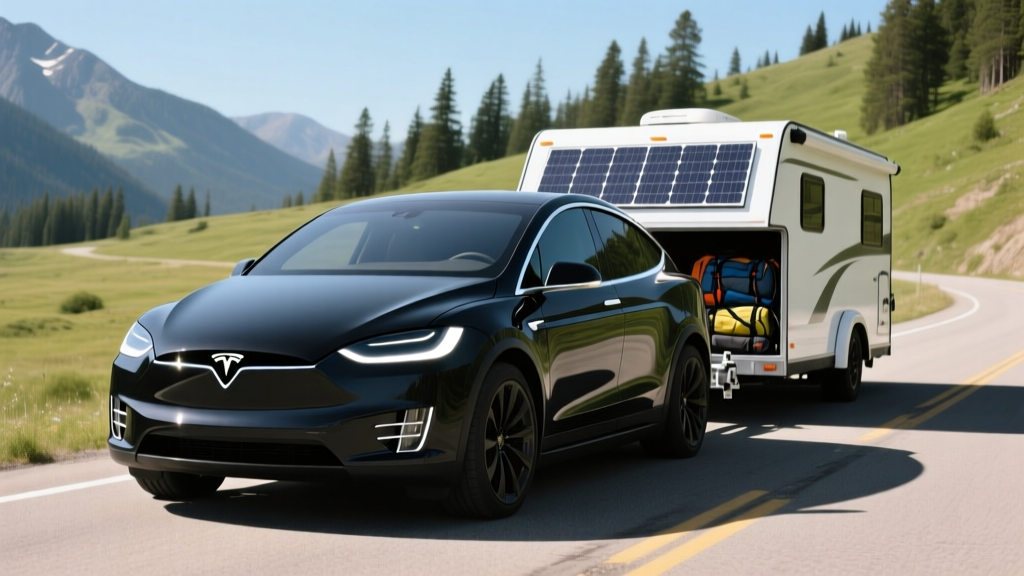
If you're researching the Tesla Model X hitch, you're likely weighing whether this three-row electric SUV can double as a capable tow rig — for a boat trailer, a camper, or a utility hauler — without sacrificing the range and charging convenience that drew you to an EV in the first place. The short answer: the Model X offers a factory tow hitch option rated at 5,000 pounds, which is competitive for the electric SUV segment. But towing an EV is a fundamentally different experience than towing with a gas truck, and the range penalty is substantial.
This review covers the Model X's hitch hardware, towing capacity, real-world range impact when pulling a trailer, charging logistics on the road, and whether the math works for your use case. We'll also break down the full vehicle specs — battery, efficiency, pricing, and tax credit eligibility — so you can make a complete purchase decision.
Hitch Hardware, Towing Capacity, and What It Can Pull
The Tesla Model X comes available with a factory-installed tow hitch featuring a 2-inch receiver. Here are the critical numbers:
- Max towing capacity: 5,000 lbs (all trims, when properly equipped)
- Hitch type: Class III, 2-inch receiver
- Tongue weight limit: 500 lbs
- Trailer brake controller: Not factory-integrated; aftermarket controller required for trailers over ~1,500 lbs
- Tow mode: Software-enabled; adjusts throttle response, regen braking, and stability control
The 5,000-lb rating means the Model X can handle a small enclosed utility trailer, a pair of jet skis, a lightweight teardrop camper (typically 2,000–3,500 lbs), or a small aluminum boat on a trailer. It cannot legally tow most large travel trailers, fifth wheels, or heavy car-haulers. If you need 7,500+ lbs of capacity, you'll need to look at the Rivian R1S or a body-on-frame electric truck like the Ford F-150 Lightning or Rivian R1T.
One practical note: the Model X's falcon-wing rear doors require clearance to open fully. When a trailer is hitched, the doors may not open completely depending on the trailer's height and hitch geometry. Tesla's software allows you to limit door opening height, but it's a real ergonomic constraint worth testing with your specific trailer before committing.
Range, Battery, and the Real-World Towing Penalty
The Model X is offered in two main trims for the current model year: the Long Range and the Plaid. Both share the same battery pack.
| Spec | Long Range | Plaid |
|---|---|---|
| EPA Range | 335 miles | 326 miles |
| Battery (usable) | ~95 kWh, NMC | ~95 kWh, NMC |
| Drivetrain | Dual-Motor AWD | Tri-Motor AWD |
| Horsepower | 670 hp | 1,020 hp |
| 0–60 mph | 3.8 sec | 2.5 sec |
| Top Speed | 155 mph | 163 mph |
| MPGe (combined) | 103 MPGe | 98 MPGe |
| Efficiency | 33 kWh/100 mi | 34 kWh/100 mi |
| Cargo (behind 3rd row) | 37.1 cu ft | 37.1 cu ft |
| Cargo (max, seats folded) | 85.1 cu ft | 85.1 cu ft |
| Seating | 5, 6, or 7 passengers | 5 or 6 passengers |
| Towing Capacity | 5,000 lbs | 5,000 lbs |
Source: EPA / fueleconomy.gov
EPA sticker: 335 miles (Long Range) / 326 miles (Plaid)
Real-world highway (no trailer): Expect ~270–290 miles at 70–75 mph in moderate temperatures. The Model X's large frontal area and weight work against highway efficiency.
Cold weather (below 32°F): Plan for 20–30% range reduction, yielding ~210–240 miles. The NMC chemistry and heat pump help, but cold still hits hard.
While towing: This is where the physics are unforgiving. Towing a 3,000–4,000 lb trailer typically cuts range by 40–55%. That means a Long Range Model X rated at 335 miles EPA may deliver only 150–190 miles of real-world range while towing a mid-weight camper. Heavier trailers or mountainous terrain push this even lower. Plan charging stops accordingly.
The Model X uses an NMC (nickel manganese cobalt) battery pack — the standard chemistry for Tesla's long-range and performance vehicles. NMC offers high energy density, which is why the Model X achieves over 330 miles in a 5,000+ lb vehicle, but it also means you should follow Tesla's recommendation to charge to 80% for daily use and only go to 100% when you need full range for a trip. Unlike LFP (lithium iron phosphate) packs, NMC degrades faster when regularly held at 100% SoC.
Charging Speed: Home, DC Fast, and Towing Logistics
Charging is where the Model X excels in normal use but becomes a logistical challenge when towing. Here's the full breakdown:
| Level | Power | Speed | Notes |
|---|---|---|---|
| Level 1 (120V) | ~1.4 kW | ~3–4 mi/hr | Emergency/trickle only |
| Level 2 (240V, 48A) | 11.5 kW | ~30–34 mi/hr | Home Wall Connector; ~10 hr for full charge |
| DC Fast Charge | 250 kW peak | 10–80% in ~30 min | Peak rate sustained only to ~50% SoC, then tapers |
The 250 kW peak DC fast-charge rate on V3 Superchargers is strong, but the charge curve tells the real story. The Model X holds near peak rate from roughly 10% to 50% SoC, then tapers progressively. A 10–80% session takes approximately 30 minutes, while 10–90% pushes past 45 minutes. This taper matters enormously when towing, because you'll need to charge more frequently and to higher SoCs to maintain adequate range.
When towing, expect to stop every 120–170 miles (depending on trailer weight and terrain). Each stop may require charging to 80–90% to ensure you reach the next station with a buffer — and charging from 80% to 90% is significantly slower than the 10–80% curve suggests. Budget 40–55 minutes per charging stop on a towing trip, not the 25–30 minutes you'd see in solo driving.
The Tesla Supercharger network remains the most reliable DC fast-charging ecosystem in the U.S., which is a genuine advantage for towing. However, some Supercharger stalls have tight turning radii or are designed for pull-through only at select locations. Plan your route using Tesla's built-in navigation, which factors in towing energy consumption when Tow Mode is active.
Pricing, Trim Levels, and Federal Tax Credit Eligibility
| Trim | Base MSRP | Hitch Add-On | Est. As-Tested* |
|---|---|---|---|
| Long Range | $79,990 | ~$1,000–$1,500 | $85,000–$95,000+ |
| Plaid | $94,990 | ~$1,000–$1,500 | $100,000–$110,000+ |
*As-tested pricing varies with options (wheels, interior color, FSD, etc.). Destination charges additional.
The Tesla Model X is eligible for up to $7,500 under the IRS §30D Clean Vehicle Credit, but eligibility depends on several buyer-specific and vehicle-specific factors:
- MSRP cap: The Model X qualifies as an SUV (MSRP cap: $80,000). The Long Range base MSRP of $79,990 clears this threshold, but adding options that push the sticker above $80,000 may disqualify the vehicle. The Plaid at $94,990 does NOT qualify under the MSRP cap.
- Buyer income cap: AGI must not exceed $300,000 (joint), $225,000 (head of household), or $150,000 (single).
- Battery sourcing: Critical minerals and battery component requirements apply and phase in more strictly each year. Verify current-year compliance on IRS.gov.
- Point-of-sale transfer: You can transfer the credit to the dealer at purchase to reduce your out-of-pocket cost, rather than waiting to claim it on your tax return.
Bottom line: A Long Range Model X configured at or below $80,000 MSRP may qualify for the full $7,500 credit if you meet income and sourcing requirements. Consult a tax professional and verify on IRS.gov before purchasing. The Plaid trim does not qualify.
Driving Experience, Tech, and Daily Practicality
The Model X remains one of the most technologically dense vehicles on the road. Key features include:
- 17-inch touchscreen with a 9.4-inch rear-seat display; gaming-capable hardware (up to 10 teraflops)
- Autopilot standard (SAE Level 2 — driver must remain engaged at all times); Full Self-Driving (Supervised) available as a $8,000 add-on or subscription
- Falcon-wing rear doors — dramatic, but also practical for loading car seats in tight spaces (they need ~12 inches of lateral clearance)
- HEPA air filtration with Bioweapon Defense Mode — genuinely useful for wildfire smoke or urban pollution
- Panoramic windshield extending over the front seats — expansive but can cause cabin heat in summer; the tint helps but isn't a full solution
- Over-the-air updates continue to add features post-purchase
Tesla Autopilot and FSD (Supervised) are SAE Level 2 driver-assistance systems. They provide steering, acceleration, and braking assistance, but the driver must remain attentive and ready to take over at any moment. These are not self-driving systems. Level 4 driverless operation (no human needed) is currently limited to commercial robotaxi services like Waymo in specific geofenced areas.
On the road, the Model X Long Range delivers composed highway manners with strong passing power (670 hp is never insufficient). The air suspension provides a comfortable ride and offers adjustable height — useful for hitching a trailer or clearing rough driveways. The Plaid's 1,020 hp is absurd in a family SUV and makes zero practical difference when towing; the Long Range is the rational choice for anyone prioritizing range and value.
Interior quality has improved in recent refreshes, with ventilated front seats, a yoke-or-round steering wheel choice, and updated materials. However, the Model X still draws criticism for panel-gap inconsistency and a ride quality that's firmer than some luxury three-row competitors like the BMW iX or Rivian R1S.
Towing vs. the Competition: Model X, Rivian R1S, and BMW iX
| Vehicle | Max Tow | EPA Range | Battery | Base MSRP |
|---|---|---|---|---|
| Tesla Model X LR | 5,000 lbs | 335 mi | ~95 kWh NMC | $79,990 |
| Rivian R1S (Dual Max) | 7,700 lbs | 352 mi | 149 kWh NMC | $79,900 |
| BMW iX xDrive50 | 3,500 lbs | 324 mi | 105.2 kWh NMC | $87,250 |
Source: fueleconomy.gov, manufacturer specifications.
If towing is your primary reason for choosing the Model X, the Rivian R1S is the stronger tow rig — 7,700 lbs of capacity and a larger battery pack that partially offsets the towing range penalty. The Model X counters with faster DC charging (250 kW vs. Rivian's ~220 kW), access to the Supercharger network (though Rivian now has NACS access too), and a lower starting price for the Long Range trim.
The BMW iX offers a more refined luxury interior and a quieter cabin, but its 3,500-lb tow rating is the weakest of the three. For light trailer duty (bike rack, small utility trailer), any of these work. For campers or boats in the 4,000–5,000 lb range, the Model X is viable but the Rivian R1S gives you more margin.
Pros and Cons at a Glance
- 5,000-lb tow rating covers light-to-mid trailers
- 335-mi EPA range (Long Range) is segment-leading
- 250 kW DC fast charging with Supercharger access
- Standard AWD with strong all-weather capability
- Three-row seating for up to 7 passengers
- Continuous OTA updates add post-purchase value
- Long Range may qualify for $7,500 federal credit
- Towing cuts range by 40–55% — plan for frequent stops
- No integrated trailer brake controller (aftermarket needed)
- Falcon-wing doors can interfere with hitched trailers
- Plaid trim exceeds $80K MSRP cap — no federal credit
- Higher price than many three-row SUV alternatives
- Insurance costs above segment average
- FSD is expensive and still Level 2 (not autonomous)
Warranty Coverage
Tesla's warranty for the Model X is straightforward:
- Basic vehicle: 4 years / 50,000 miles
- Battery & drive unit: 8 years / 150,000 miles (whichever comes first), with a minimum 70% capacity retention threshold over the warranty period
- Tow hitch: Covered under the basic vehicle warranty when factory-installed
The 8-year/150,000-mile battery warranty is competitive and aligns with federal requirements for advanced-technology components. Tesla's NMC packs have demonstrated relatively low degradation in real-world fleet data — typically 10–15% loss over 150,000 miles — but towing places additional thermal stress on the pack. Regularly towing near the 5,000-lb limit in hot climates may accelerate degradation, though this has not been widely reported as a systemic issue.
Who Should Buy the Model X with a Hitch?
Choose the Model X with hitch if:
- You need a three-row EV that occasionally tows a light trailer (under 4,000 lbs) — a boat, jet skis, or small camper
- You prioritize range, Supercharger network access, and tech features over maximum towing capacity
- Your towing trips are regional (under 200 miles one-way) or you're willing to plan longer charging stops
- You want the federal tax credit and can configure a Long Range at or below $80,000 MSRP
Look elsewhere if:
- You regularly tow over 4,500 lbs — the Rivian R1S (7,700 lbs) or Ford F-150 Lightning (7,700–10,000 lbs) is a better fit
- You need to tow long distances in cold weather — range drops compound severely
- You want a luxury-first interior — the BMW iX or Mercedes EQS SUV delivers more refinement (with less tow capacity)
- You need a sub-$60,000 budget — no three-row EV with a hitch exists in that range new
Frequently Asked Questions
What is the real-world range of the Tesla Model X?
The EPA rates the Long Range at 335 miles and the Plaid at 326 miles. In real-world highway driving at 70–75 mph, expect 270–290 miles in moderate temperatures. Cold weather (below 32°F) drops this to 210–240 miles. When towing a 3,000–4,000 lb trailer, expect only 150–190 miles of usable range.
How fast does the Model X charge at home and on the road?
At home on a Level 2 Tesla Wall Connector (48A, 11.5 kW), the Model X adds roughly 30–34 miles of range per hour, fully recharging overnight in about 10 hours. On a V3 Supercharger at 250 kW peak, a 10–80% session takes approximately 30 minutes, with the charge rate tapering significantly above 50% SoC.
Does the Tesla Model X qualify for the federal EV tax credit?
The Long Range trim can qualify for up to $7,500 under IRS §30D, provided the configured MSRP stays at or below $80,000 (the SUV cap), your AGI is within limits ($300K joint / $150K single), and the battery meets current-year critical-mineral and component sourcing requirements. The Plaid trim at $94,990 exceeds the MSRP cap and does not qualify. Always verify on IRS.gov and consult a tax professional.
How much does the Model X cost after tax credits?
A Long Range Model X at exactly $79,990 MSRP, with the full $7,500 credit applied at point of sale, brings the effective price to approximately $72,490 before destination, taxes, and registration. Options like FSD ($8,000), premium paint, or larger wheels push the MSRP above $80,000 and may eliminate credit eligibility.
Is the Model X worth buying vs. the Rivian R1S for towing?
For occasional light towing (under 4,000 lbs) combined with daily family use, the Model X offers superior range, faster charging, and a more mature software ecosystem. For frequent or heavy towing (4,500–7,700 lbs), the Rivian R1S is the better choice — its 7,700-lb rating and 149 kWh Max Pack provide more capability and range buffer under load.
Can I install an aftermarket hitch on the Model X?
Tesla strongly recommends the factory hitch, which is integrated with the vehicle's software (Tow Mode) and covered under warranty. Aftermarket hitches exist but may void related warranty claims, interfere with the rear diffuser or sensors, and lack Tow Mode integration. For a vehicle at this price point, the factory option is the prudent choice.
Does towing affect the Model X battery warranty?
Towing within the rated 5,000-lb capacity does not void the 8-year/150,000-mile battery warranty. However, damage caused by exceeding the tow rating or using an improper hitch setup would not be covered. The warranty guarantees at least 70% capacity retention — normal towing-related thermal cycling is considered within expected use.