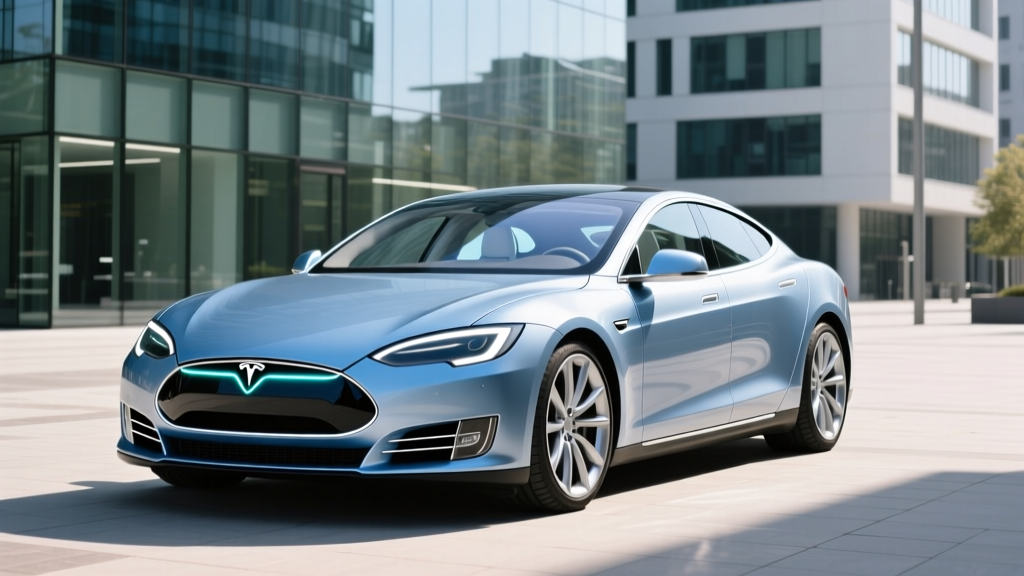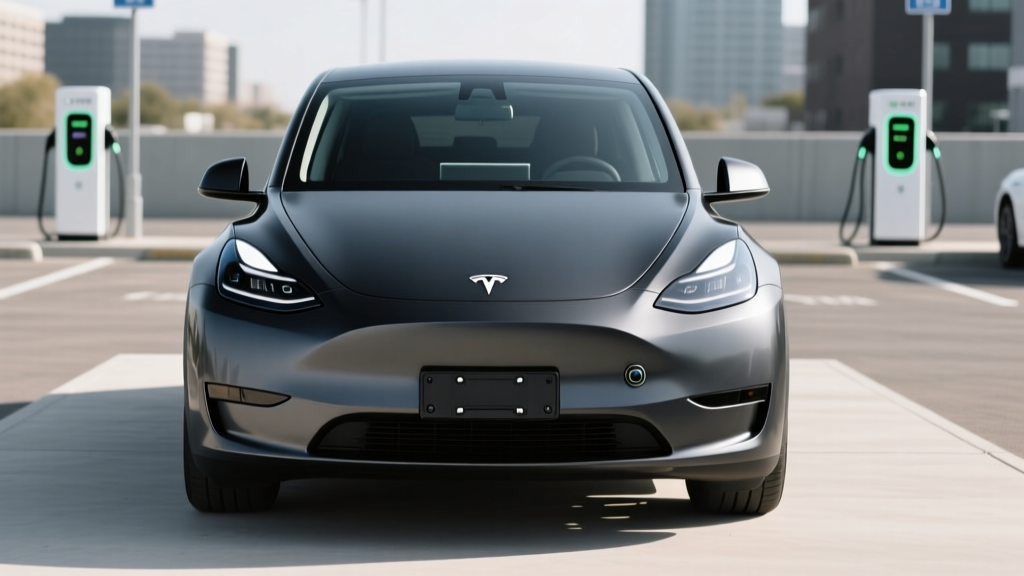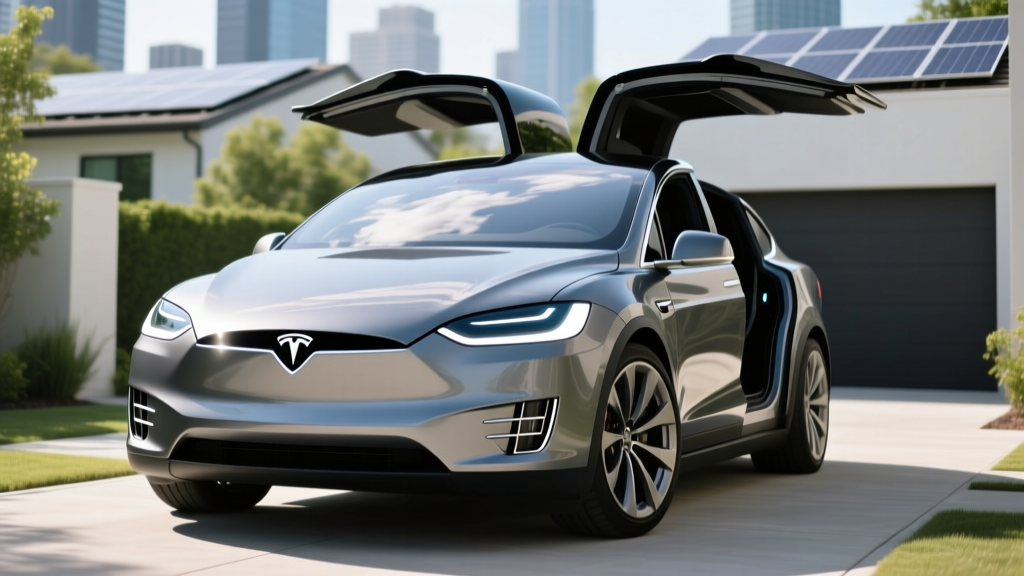
The Tesla Model X occupies a unique position in the three-row electric SUV segment: it's one of the few vehicles offering falcon-wing rear doors, a 5,000-pound towing capacity, and access to the Supercharger network — all while seating up to seven. But for buyers researching payload limits, towing configurations, or commercial registration thresholds, the Tesla Model X GVWR (Gross Vehicle Weight Rating) is a critical spec that often gets buried. This review breaks down the GVWR alongside every number that matters for a six-figure EV purchase in 2026.
Tesla Model X GVWR and Weight Specifications
The GVWR defines the maximum allowable total weight of the vehicle including passengers, cargo, and accessories. For the 2026 Tesla Model X, the GVWR varies by configuration:
| Specification | Long Range AWD | Plaid |
|---|---|---|
| Curb Weight | 5,185 lbs | 5,390 lbs |
| GVWR | 6,768 lbs | 6,768 lbs |
| Payload Capacity | ~1,583 lbs | ~1,378 lbs |
| Max Towing Capacity | 5,000 lbs | 5,000 lbs |
| Drivetrain | Dual-Motor AWD | Tri-Motor AWD |
The GVWR of 6,768 lbs keeps the Model X under the 8,500-lb threshold that affects certain commercial tax treatments and state registration categories. For fleet buyers or those registering under commercial plates, this is a relevant data point. The payload capacity — the weight available for passengers and cargo after subtracting curb weight — is generous at roughly 1,583 lbs on the Long Range, enough for seven passengers plus gear. When towing the maximum 5,000 lbs, Tesla's software limits acceleration and top speed to protect the drivetrain, and expect range to drop by 30-50% depending on trailer aerodynamics and terrain.
EPA Range, Battery, and Real-World Efficiency
| Spec | Long Range AWD | Plaid |
|---|---|---|
| Battery Capacity (usable) | ~100 kWh | ~100 kWh |
| Battery Chemistry | NMC (Nickel Manganese Cobalt) | NMC |
| EPA Range | 335 mi | 311 mi |
| EPA Efficiency (MPGe) | 102 MPGe combined | 98 MPGe combined |
| Energy Consumption | 33 kWh/100 mi | 34 kWh/100 mi |
| Real-World Highway Range | ~270-295 mi | ~250-275 mi |
The Model X uses an NMC lithium-ion pack — the higher energy-density chemistry suited to a heavy, performance-oriented SUV. NMC offers excellent range-per-kWh but degrades slightly faster than LFP over many charge cycles if habitually charged to 100%. Tesla recommends daily charging to 80-90% for NMC batteries, reserving 100% for road trips. According to fueleconomy.gov, the Long Range achieves 102 MPGe combined, competitive with the BMW iX xDrive50 (87 MPGe) but behind the lighter, smaller Rivian R1S Dual-Motor.
The Model X's efficiency is hampered by its weight (over 5,100 lbs), its large frontal area, and those distinctive falcon-wing doors which add structural mass. At 33-34 kWh per 100 miles, it's among the less efficient large EVs, meaning charging costs per mile run slightly higher than competitors.
Charging Speed: DC Fast and Home Level 2
| Charging Level | Power / Rate | Time / Miles Added |
|---|---|---|
| Level 1 (120V household) | ~1.4 kW | ~3-4 mi/hr |
| Level 2 (240V home Wall Connector) | 11.5 kW (48A) | ~34 mi/hr |
| DC Fast Charge (V3 Supercharger) | Peak 250 kW | 10-80% in ~32 min |
| DC Fast Charge (V4 Supercharger) | Peak 250 kW | 10-80% in ~32 min |
| NACS Connector | Native (Tesla standard) | No adapter needed at Superchargers |
The Model X charges at a peak rate of 250 kW on Tesla V3 and V4 Superchargers. However, that peak rate is only sustained between roughly 10-30% state of charge. The charging curve tapers significantly: by 60% SoC, the rate drops to approximately 120 kW, and above 80%, it falls below 60 kW. This is why Tesla quotes the 10-80% time rather than 0-100%. The full 32-minute 10-80% session adds roughly 225 miles of range.
At home, the Tesla Wall Connector delivers up to 11.5 kW on a 60-amp circuit (48 amps continuous), adding about 34 miles of range per hour. An overnight charge from 20% to 80% takes roughly 6-7 hours — adequate for daily use. Home charging installation typically costs $800-$2,500 depending on panel capacity and conduit runs. Homes with 100-amp electrical panels may require a $1,500-$3,000 panel upgrade to support a 60-amp dedicated circuit.
The Model X uses the native NACS connector, which as of 2026 has become the dominant North American standard. Ford, Rivian, GM, and Volvo/Polestar EVs now access Superchargers with NACS adapters or native ports, narrowing one of Tesla's historical advantages.
Performance: 0-60, Horsepower, and Drivetrain
| Spec | Long Range AWD | Plaid |
|---|---|---|
| 0-60 mph | 3.8 seconds | 2.5 seconds |
| Horsepower | 670 hp | 1,020 hp |
| Top Speed | 155 mph | 163 mph |
| Drivetrain | Dual-Motor AWD | Tri-Motor AWD |
| Adaptive Air Suspension | Standard | Standard |
The Long Range's 3.8-second 0-60 time is already supercar-rivaling for a 5,185-lb three-row SUV. The Plaid's 2.5-second sprint with 1,020 hp from its tri-motor setup is genuinely absurd — it will out-accelerate a Lamborghini Huracán off the line. In practice, the Plaid's tri-motor torque vectoring provides exceptional traction in rain and snow, and the carbon-sleeved rotors allow sustained high-speed pulls without motor derating.
Both trims include adaptive air suspension with automatic ride-height adjustment. The system lowers the vehicle at highway speeds for improved aerodynamics and raises it for rough roads or steep driveways. Towing mode automatically adjusts suspension damping and regen behavior to account for trailer load.
Pricing, Trims, and Federal Tax Credit Eligibility
| Trim | Base MSRP | As-Tested (typical options) | §30D Federal Credit |
|---|---|---|---|
| Long Range AWD (6-seat) | $79,990 | $85,000-$92,000 | Not eligible (MSRP cap exceeded) |
| Plaid (6-seat) | $94,990 | $100,000-$110,000 | Not eligible (MSRP cap exceeded) |
For 2026, the Model X is available in two trims with 5-, 6-, or 7-seat configurations. The 6-seat layout (standard) replaces the second-row bench with individual captain's chairs and a center console, improving comfort but reducing maximum passenger count. The 7-seat option adds a second-row bench at no extra charge but eliminates the center console.
Common options that affect pricing include premium paint colors ($1,500-$2,500), 22-inch Turbine wheels ($5,500), and Full Self-Driving (Supervised) capability ($8,000 one-time or $99/month subscription). A realistically equipped Long Range with metallic paint and FSD lands around $90,000-$93,000 before any state-level incentives.
Interior Space, Cargo, and Technology
| Dimension | Measurement |
|---|---|
| Cargo (behind 3rd row) | ~15 cu ft |
| Cargo (3rd row folded) | ~40 cu ft |
| Cargo (all rear rows folded) | ~85 cu ft |
| Front Frunk | ~7 cu ft |
| 1st-Row Legroom | 41.1 in |
| 2nd-Row Legroom | 39.9 in |
| 3rd-Row Legroom | 33.4 in |
The Model X's falcon-wing rear doors are its most polarizing feature. They open vertically, providing excellent access to second- and third-row seats in tight parking spaces — genuinely useful for loading children into car seats. However, they add weight, complexity, and have historically been a source of sensor and seal issues. In 2026, the latest-generation door actuators are more reliable, but they remain a unique maintenance consideration.
Third-row legroom at 33.4 inches is tight for adults on long trips but adequate for children. The Rivian R1S offers slightly more third-row space, while the BMW iX doesn't offer a third row at all. Cargo volume behind the third row is modest at 15 cu ft — enough for a few grocery bags or two carry-ons. Fold the third row and you get a practical 40 cu ft; fold everything for 85 cu ft plus the 7-cu-ft front trunk.
The 17-inch center touchscreen runs Tesla's latest software with a tilting mechanism that angles toward the driver or passenger. Rear passengers get their own 8-inch touchscreen for climate and entertainment. The yoke steering wheel is standard (a conventional round wheel is available as a no-cost option). The 22-speaker audio system with active noise cancellation is among the best in any vehicle at this price point.
Tesla's Autopilot comes standard and includes adaptive cruise control, lane-keeping, and automatic emergency braking. Full Self-Driving (Supervised) is an optional upgrade that adds automatic lane changes, intersection handling, and parking assist. Important: FSD is an SAE Level 2 driver-assistance system — the driver must remain fully attentive with hands on the wheel at all times. It is not autonomous driving.
Warranty and Long-Term Ownership
| Component | Coverage |
|---|---|
| Basic Vehicle | 4 years / 50,000 miles |
| Battery & Drive Unit | 8 years / 150,000 miles |
| Battery Retention Guarantee | Minimum 70% capacity over warranty period |
Tesla's 8-year/150,000-mile battery and drive unit warranty is competitive and covers the most expensive components. The 70% capacity retention threshold means Tesla will repair or replace the battery if it degrades below that level within the warranty period. Based on fleet data from Tesla's Impact Reports, the average Model X battery retains approximately 88-90% capacity at 100,000 miles, suggesting most owners will not approach the warranty threshold.
Out-of-warranty battery replacement for the Model X is estimated at $15,000-$22,000 depending on pack configuration and labor. This is a significant long-term cost risk for second owners or high-mileage drivers.
Pros and Cons
✓ Pros
- 335-mile EPA range (Long Range) is class-leading for a 3-row EV SUV
- Supercharger network access — still the most reliable DC fast-charging ecosystem
- Falcon-wing doors provide exceptional rear-seat access in tight spaces
- 5,000-lb towing capacity with integrated trailer brake controller
- Plaid's 2.5-sec 0-60 is unmatched in the segment
- Over-the-air updates continuously add features
✗ Cons
- Does not qualify for $7,500 federal tax credit (MSRP cap)
- 3rd-row legroom is tight for adults (33.4 in)
- Falcon-wing doors add weight, complexity, and potential repair costs
- Efficiency at 33 kWh/100 mi trails lighter competitors
- Build quality inconsistency remains a concern vs. legacy luxury brands
- Insurance premiums run 15-25% higher than comparable gas SUVs
Who Should Buy the Tesla Model X?
Choose the Model X if: You need three rows, want Supercharger access for frequent road trips, require 5,000-lb towing, and value performance that defies the vehicle's weight. The falcon-wing doors are genuinely practical for families with small children.
Consider alternatives if: You want the $7,500 federal tax credit (look at the Rivian R1S or BMW iX), you rarely use the third row (the Model Y or BMW iX offer better efficiency), or you prioritize panel-gap quality and dealer service infrastructure (BMW, Mercedes EQS SUV).
The Model X competes most directly with the Rivian R1S (more rugged, off-road capable, eligible for the tax credit, but shorter range), the BMW iX (no third row but superior build quality and efficiency), and the Mercedes EQS SUV (more luxurious but significantly more expensive and less efficient). Against this field, the Model X wins on range, Supercharger convenience, and raw performance — but loses on tax-credit eligibility, third-row space, and build consistency.
Frequently Asked Questions
What is the Tesla Model X GVWR?
The 2026 Tesla Model X has a GVWR of 6,768 lbs for both the Long Range and Plaid trims. This is the maximum total weight the vehicle is rated to carry, including the vehicle itself, passengers, cargo, and any accessories. The curb weight is 5,185 lbs (Long Range) to 5,390 lbs (Plaid), leaving 1,378-1,583 lbs of payload capacity.
What is the real-world range of the Tesla Model X?
The EPA rates the Long Range at 335 miles and the Plaid at 311 miles. In real-world highway driving at 70-75 mph, expect 270-295 miles (Long Range) and 250-275 miles (Plaid). Cold weather below freezing can reduce range an additional 20-30%, and towing a trailer can cut range by 30-50%.
How fast does the Model X charge at home and on the road?
At home on a Level 2 Tesla Wall Connector (11.5 kW / 48A), the Model X gains about 34 miles of range per hour, with a 20-80% charge taking roughly 6-7 hours. On a V3 or V4 Supercharger, peak DC fast-charging hits 250 kW, with a 10-80% session taking approximately 32 minutes. The charge rate tapers significantly above 60% SoC.
Does the Tesla Model X qualify for the federal EV tax credit?
In most configurations, no. The §30D credit imposes an $80,000 MSRP cap for SUVs. The Model X Long Range starts at $79,990, but adding paint, wheels, or other options pushes the MSRP above the limit. Even at base MSRP, buyers must meet income caps ($300,000 joint / $150,000 single) and the vehicle must satisfy battery-sourcing requirements. Verify eligibility at irs.gov before purchasing.
Is the Model X worth buying over the Rivian R1S or BMW iX?
The Model X wins on EPA range (335 mi vs. the R1S's ~321 mi and iX's ~307 mi), Supercharger access, and outright performance. The Rivian R1S offers better off-road capability, qualifies for the federal tax credit, and has a more practical interior layout. The BMW iX excels in build quality, ride refinement, and efficiency but lacks a third row. Your choice depends on priorities: range and charging infrastructure (Model X), adventure and tax credits (R1S), or luxury and quality (iX).
What's the towing capacity and how does it affect range?
The Model X is rated to tow 5,000 lbs with a factory-installed tow hitch and integrated trailer brake controller. When towing, expect range to decrease by 30-50% depending on trailer weight, aerodynamics, speed, and terrain. A 5,000-lb enclosed cargo trailer at highway speeds can reduce effective range to 170-220 miles, requiring careful route planning around Supercharger stops.