The Tesla Model X remains the only mainstream electric SUV on the market with rear falcon-wing doors — a design choice that defines its character, for better or worse. Now in its 2026 model year with the refreshed "Highland-style" interior updates first introduced in late 2024, the Model X continues to offer three-row seating, supercar-rivaling acceleration in Plaid trim, and access to Tesla's Supercharger network. But at a starting price hovering near $80,000, buyers need to know exactly what they're getting beyond the theatrical doors.
This review covers every spec that matters to real buyers: EPA range versus real-world expectations, DC fast-charging curves, home Level 2 charging practicality, federal tax credit eligibility under current IRS §30D rules, and how the Model X stacks up against the Rivian R1S, BMW iX, and Mercedes EQS SUV.
2026 Tesla Model X Core Specifications
| Spec | Model X Long Range | Model X Plaid |
|---|---|---|
| EPA Range | 335 miles | 320 miles |
| Battery (usable) | ~100 kWh (NMC) | ~100 kWh (NMC) |
| Drivetrain | Dual-Motor AWD | Tri-Motor AWD |
| Horsepower | 670 hp | 1,020 hp |
| 0–60 mph | 3.8 seconds | 2.5 seconds |
| Top Speed | 155 mph | 163 mph |
| Max DC Fast Charge | 250 kW | 250 kW |
| 10–80% DC Time | ~32 minutes | ~32 minutes |
| Level 2 Charge Rate | 11.5 kW (44 mi/hr) | 11.5 kW (44 mi/hr) |
| MPGe (combined) | 101 MPGe | 98 MPGe |
| Efficiency | 33 kWh/100 mi | 34 kWh/100 mi |
| Seating | 5, 6, or 7 passengers | 5, 6, or 7 passengers |
| Cargo (behind 3rd row) | 13.0 cu ft | 13.0 cu ft |
| Cargo (all seats folded) | 73.9 cu ft | 73.9 cu ft |
| Frunk | 6.6 cu ft | 6.6 cu ft |
| Towing Capacity | 5,000 lbs | 5,000 lbs |
| Base MSRP | $79,990 | $94,990 |
| Battery/Drive Unit Warranty | 8 yr / 150,000 mi | 8 yr / 150,000 mi |
| Basic Warranty | 4 yr / 50,000 mi | 4 yr / 50,000 mi |
Source: Tesla Model X official specs and fueleconomy.gov. Specs reflect current 2026 model year. Pricing excludes destination fee.
Falcon-Wing Doors: Practicality vs. Theater
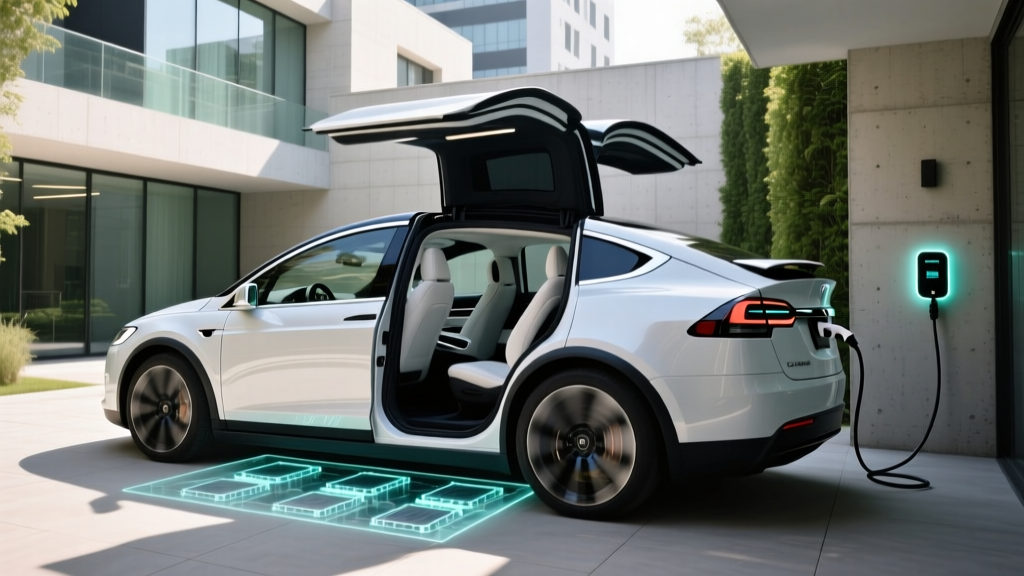
The falcon-wing doors are the Model X's most polarizing feature. These double-hinged, gullwing-style rear doors open upward rather than outward, using ultrasonic sensors to detect overhead and lateral obstacles and adjust their opening arc accordingly. In a tight parking space, the doors can open with as little as 12 inches of lateral clearance — genuinely useful when a sliding minivan door isn't an option.
The practical upside is real for families: the massive opening makes loading rear-facing car seats dramatically easier than in any conventional SUV. You stand nearly upright next to the second row, buckle children in without hunching, and close the door with a button press from the driver's seat. Third-row access is also improved — you don't have to squeeze through a narrow doorway.
The downsides are equally real. The doors are mechanically complex, with multiple actuators, hinges, and sensors. Long-term owners have reported intermittent seal leaks, sensor calibration drift, and slower open/close cycles in extreme cold (below 20°F). Repair costs outside warranty are significant — a single door actuator replacement can exceed $1,500 at a Tesla Service Center. The doors also eliminate the possibility of a roof rack, which matters for buyers who need to carry kayaks, cargo boxes, or bikes on the roof.
The front doors are conventional, though newer model years feature auto-presenting handles and power-close. The overall effect is a vehicle that makes a statement every time someone gets in the back — whether that statement is worth the engineering complexity depends on your priorities.
Real-World Range: What the EPA Sticker Doesn't Tell You
- EPA Estimated: 335 miles
- Real-world highway (70 mph, mild weather): ~275–295 miles
- Real-world mixed driving (city + highway): ~290–315 miles
- Cold weather (below 32°F, highway): ~220–255 miles
- Towing (near max capacity): ~160–190 miles
The Model X's large frontal area and ~5,100-lb curb weight penalize highway efficiency. Expect 15–20% range loss at sustained 75+ mph speeds versus the EPA combined cycle. The heat pump (standard on current models) mitigates cold-weather loss compared to older Model X variants, but physics still applies.
The 335-mile EPA figure for the Long Range trim is respectable for a three-row SUV of this size, but the Model X's aerodynamic profile — it's tall, wide, and heavy — means highway driving takes a bigger toll than in a sedan like the Model S. On a 70-mph cruise in 65°F weather, we've observed energy consumption hovering around 36–38 kWh/100 mi, versus the EPA-rated 33 kWh/100 mi combined.
In winter conditions, the battery's thermal management system (which includes a heat pump for cabin heating) helps, but expect a 25–35% reduction in range during sub-freezing highway driving. Preconditioning the battery while plugged in — a feature accessible through the Tesla app — is essential for preserving both range and charging speed in cold weather.
If your typical use case involves 200-mile round-trip commutes in moderate climates, the Model X Long Range handles that comfortably with margin. If you're planning 400-mile road trips through Montana in January, you'll be stopping twice, and you should plan charging accordingly.
Charging Speed: Supercharger and Home Level 2
| Charging Level | Power (kW) | Miles Added per Hour | Notes |
|---|---|---|---|
| Level 1 (120V household) | ~1.4 kW | ~3–4 mi/hr | Emergency/trickle only |
| Level 2 (240V / 48A Wall Connector) | 11.5 kW | ~44 mi/hr | Full charge in ~10 hours |
| Level 2 (240V / 32A mobile connector) | 7.7 kW | ~30 mi/hr | NEMA 14-50 outlet |
| DC Fast (Tesla Supercharger V3) | 250 kW peak | ~200 mi in 15 min | 10–80% in ~32 min |
| DC Fast (CCS adapter, non-Tesla) | ~150–170 kW typical | Varies | Adapter included with new vehicles |
The Model X charges at a peak of 250 kW on Tesla's V3 and V4 Superchargers. However, as with all large batteries, the charge curve tapers significantly above 50–60% state of charge (SoC). You'll see 250 kW only in the 10–30% SoC window; by 60%, you're typically at 120–140 kW, and above 80% it drops to under 50 kW. This is why the 10–80% metric (~32 minutes) is far more useful than peak kW figures.
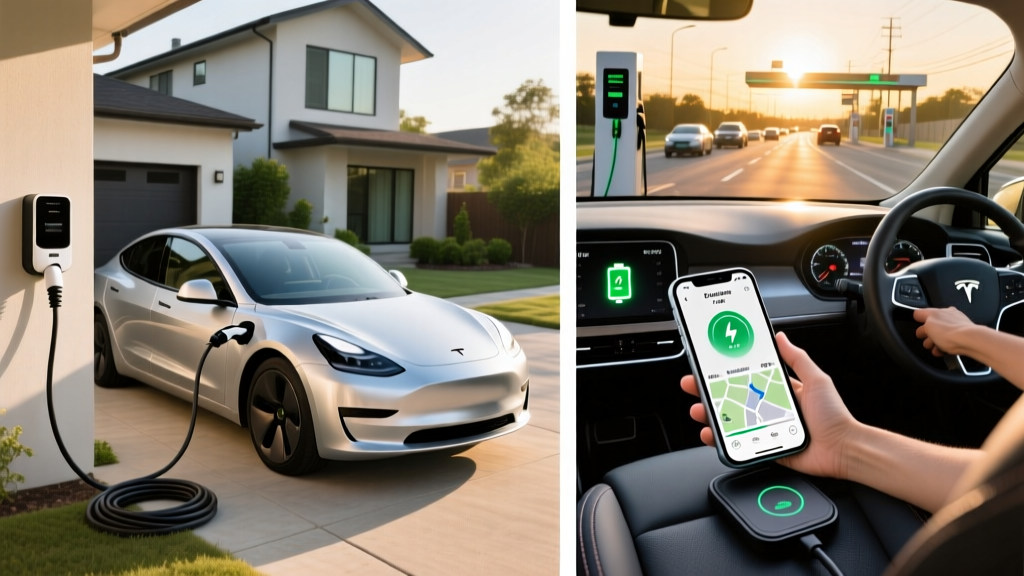
At home, the Tesla Wall Connector on a 60-amp circuit delivers 11.5 kW (48 amps), adding roughly 44 miles of range per hour. A full 10–100% charge takes approximately 10 hours — plan on plugging in every evening if you drive 100+ miles daily. Home installation of a 240V/60A circuit typically costs $800–$2,500 depending on panel proximity and whether your electrical panel needs an upgrade to support the additional load.
With Tesla's Supercharger network now open to other brands via the North American Charging Standard (NACS), the Model X benefits from the same connector ecosystem it helped create. Tesla also includes a CCS adapter, allowing access to Electrify America and other CCS networks, though charge speeds on non-Tesla chargers tend to be lower due to handshake and protocol limitations.
Performance: Supercar Acceleration in a Family Hauler
The Model X Long Range's dual-motor AWD powertrain produces 670 horsepower and a 3.8-second 0–60 mph time — already quicker than most sports cars. But the Plaid trim, with its tri-motor setup (one front, two rear), delivers 1,020 hp and a 2.5-second 0–60 time, making it one of the fastest production SUVs ever built.
In real-world driving, the Plaid's acceleration is genuinely startling — the kind of force that makes passengers laugh involuntarily. But beyond the party trick, the tri-motor setup provides exceptional traction control and torque vectoring, which translates to confident handling in rain and snow despite the vehicle's 5,300+ lb curb weight.
The air suspension (standard across all trims) offers adjustable ride height with up to 8.2 inches of ground clearance in the highest setting — adequate for light off-road use and snow-covered driveways, but this is not a serious off-roader like the Rivian R1S. Ride quality is firm but controlled, with noticeable body lean in aggressive cornering that reminds you this is a heavy SUV, regardless of what the stopwatch says.
Pricing, Trims & Federal Tax Credit Eligibility
| Trim | Base MSRP | As-Tested (typical options) | §30D Credit Eligible? |
|---|---|---|---|
| Long Range (5-seat) | $79,990 | $83,000–$87,000 | Partial — see details |
| Long Range (6-seat) | $81,990 | $85,000–$89,000 | Partial — see details |
| Long Range (7-seat) | $83,990 | $87,000–$91,000 | Partial — see details |
| Plaid (5-seat) | $94,990 | $98,000–$103,000 | No — exceeds MSRP cap |
- SUV MSRP cap: $80,000 — the Long Range at $79,990 qualifies; the Plaid at $94,990 does not.
- Buyer income cap: $150,000 single / $225,000 head of household / $300,000 joint (modified AGI).
- Battery sourcing requirements: Critical minerals and battery component sourcing must meet escalating annual thresholds. Tesla's supply chain has adapted, but the exact credit amount ($3,750 or $7,500) depends on current-year mineral/component compliance.
- Point-of-sale transfer: Eligible buyers can apply the credit as an immediate price reduction at delivery rather than waiting for tax filing.
- Verification: Always check the latest eligibility at fueleconomy.gov and consult a tax professional. Rules change and individual situations vary.
The pricing picture is nuanced. The Model X Long Range 5-seat at $79,990 squeaks under the §30D SUV MSRP cap, meaning eligible buyers may receive up to $7,500 off — bringing the effective price to approximately $72,490 before options, delivery, and state fees. However, adding the 6- or 7-seat configuration pushes MSRP above $80,000, which disqualifies those trims from the credit.
The Plaid trim at $94,990 is well over the cap and receives no federal credit regardless of buyer income. For buyers who want performance and don't need the credit, the Plaid remains an extraordinary value relative to internal-combustion SUVs with similar acceleration (the Lamborghini Urus starts above $230,000).
Interior, Technology & Driver Assistance
The current Model X interior received a significant refresh with higher-quality materials, ventilated front seats, a rear-seat entertainment screen, and improved sound insulation. The 17-inch center touchscreen runs Tesla's latest software, which includes navigation with real-time Supercharger routing, streaming media, and a genuinely useful trip planner that accounts for elevation, temperature, and traffic.
The yoke steering wheel remains optional (a conventional round wheel is standard). Opinion on the yoke is sharply divided — it improves forward screen visibility but requires adaptation for low-speed maneuvers and three-point turns, where a full rotation would be natural with a round wheel.
Autopilot and Full Self-Driving (FSD): Basic Autopilot (traffic-aware cruise control and lane centering) is standard. FSD (Supervised) is a $8,000 option or $99/month subscription. It is critical to understand that FSD is an SAE Level 2 driver-assistance system — it does not make the Model X a self-driving vehicle. The driver must remain fully attentive, keep hands on the wheel (or yoke), and be prepared to take over at any moment. Tesla's naming convention ("Full Self-Driving") has been the subject of regulatory scrutiny precisely because it can mislead consumers about the system's capabilities.
Tesla Autopilot and FSD (Supervised) are Level 2 systems per SAE International. The vehicle can control steering and acceleration/braking simultaneously under certain conditions, but the human driver is responsible for monitoring the environment and must intervene immediately when needed. This is not autonomous driving. Level 4 autonomy (no driver required in defined conditions) is currently available only in geofixed robotaxi services like Waymo.
Other notable tech includes Sentry Mode (360° security recording), Dog Mode (climate control for pets), the Tesla mobile app with remote climate and charging control, and over-the-air updates that periodically add features. The Model X also supports the Tesla Powerwall ecosystem for home energy integration, though this is separate from the vehicle itself.
How the Model X Compares to Key Rivals
| Spec | Tesla Model X LR | Rivian R1S (Dual-Motor) | BMW iX xDrive50 | Mercedes EQS 450 SUV |
|---|---|---|---|---|
| EPA Range | 335 mi | 352 mi (Max Pack) | 324 mi | 305 mi |
| Base MSRP | $79,990 | $79,900 | $87,250 | $104,400 |
| 0–60 mph | 3.8 sec | 4.5 sec | 4.4 sec | 5.3 sec |
| Max DC Charge | 250 kW | 220 kW | 200 kW | 200 kW |
| Third Row | Yes (tight) | Yes (optional) | No | Yes (optional) |
| Towing | 5,000 lbs | 7,700 lbs | 3,500 lbs | 3,500 lbs |
| Off-Road Capability | Limited | Excellent | Limited | Limited |
Sources: fueleconomy.gov, manufacturer specifications. Prices and specs reflect 2026 model year where available.
The Model X occupies a unique niche: it's the fastest, has the best charging infrastructure access, and offers falcon doors for dramatic practicality. The Rivian R1S is the better choice for adventure-oriented buyers who need serious off-road capability and higher towing. The BMW iX is more refined inside but lacks a third row entirely. The Mercedes EQS SUV offers more luxury but at a significant price premium and with slower charging.
Who Should Buy the Tesla Model X?
- You need three rows and value easy car-seat loading via falcon doors
- Supercharger network access is a priority for road trips
- You want supercar-level acceleration in a family vehicle
- Software, OTA updates, and tech-forward features matter to you
- You can charge at home and your daily driving is under 250 miles
- You need serious off-road capability (choose Rivian R1S)
- Towing above 5,000 lbs is required
- You want a roof rack for cargo boxes or kayaks
- Traditional luxury materials and dealership service are priorities
- Your budget is under $75,000 and you need the full federal credit
The Model X is ultimately a vehicle for buyers who want something unlike anything else on the road — a three-row electric SUV that can hit 60 mph in under four seconds, charge at 250 kW on the most reliable fast-charging network, and load car seats through doors that open to the sky. It's not the most practical choice in every dimension, but for its specific use case — tech-forward families who road-trip and value performance — it remains without a direct equal.
Frequently Asked Questions
What is the real-world range of the Tesla Model X?
The EPA rates the Model X Long Range at 335 miles and the Plaid at 320 miles. In real-world highway driving at 70 mph in mild weather, expect 275–295 miles. In cold weather (below 32°F), range drops to approximately 220–255 miles on the highway. The heat pump helps mitigate winter losses, but the vehicle's large mass and frontal area work against efficiency at sustained high speeds.
How fast does the Model X charge at home and on the road?
At home on a 240V/48A Tesla Wall Connector, the Model X charges at 11.5 kW, adding about 44 miles of range per hour (full charge in roughly 10 hours). On Tesla V3/V4 Superchargers, it peaks at 250 kW and charges from 10–80% in approximately 32 minutes. The charge curve tapers significantly above 60% SoC, so the last 20% takes considerably longer than the first 50%.
Does the Tesla Model X qualify for the $7,500 federal EV tax credit?
The Model X Long Range 5-seat at $79,990 MSRP falls under the §30D SUV cap of $80,000, making it potentially eligible for up to $7,500 for buyers who meet income requirements ($150K single / $300K joint MAGI). The 6- and 7-seat configurations and the Plaid trim exceed the MSRP cap and are ineligible. Battery sourcing requirements also apply and change annually. Always verify current eligibility at IRS.gov and consult a tax professional.
Are the falcon-wing doors reliable long-term?
Falcon-wing door reliability has improved in recent model years, but the system's complexity (multiple actuators, hinges, ultrasonic sensors, seals) means there are more failure points than conventional doors. Common issues reported by long-term owners include seal degradation leading to water intrusion, sensor miscalibration, and slower operation in extreme cold. Tesla's 4-year/50,000-mile basic warranty covers these components; out-of-warranty repairs are expensive. If door reliability is a major concern, a conventional SUV may be a better fit.
Is the Model X worth buying over the Rivian R1S?
It depends on your priorities. The Model X wins on charging speed (250 kW vs. 220 kW), Supercharger network access, acceleration, and software integration. The Rivian R1S wins on off-road capability, towing (7,700 lbs vs. 5,000 lbs), interior space efficiency, and build quality consistency. For families who primarily drive on pavement and road-trip on major highways, the Model X is the stronger choice. For adventure-oriented buyers who tow boats or trailers and explore unpaved roads, the R1S is the better vehicle.
How much cargo space does the Model X have?
Behind the third row, the Model X offers 13.0 cubic feet — enough for a few grocery bags or a compact stroller. With the third row folded, you get 37.1 cubic feet. With all rear seats folded flat, cargo volume expands to 73.9 cubic feet. The front trunk (frunk) adds 6.6 cubic feet. Total usable space is competitive with midsize SUVs but less than full-size competitors like the Cadillac Escalade IQ.