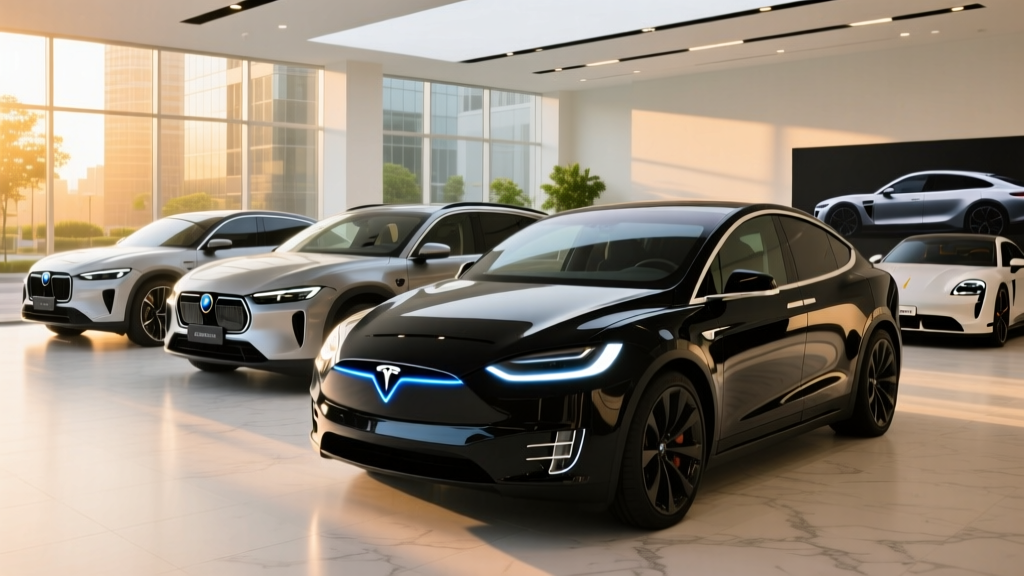
Is the Tesla Model X Discontinued in 2026?
If you've been searching for clarity on whether the Tesla Model X is discontinued, the short answer is: not yet, but its future is uncertain. As of early 2026, Tesla still lists the Model X on its U.S. configurator and continues to accept orders. However, production volumes have shrunk dramatically, delivery wait times have stretched, and multiple industry reports point to an eventual phase-out as Tesla reallocates Fremont factory capacity toward next-generation platforms.
For buyers, this creates a tricky decision: do you invest $80,000+ in a flagship SUV that may be nearing the end of its production run, or do you pivot to a competitor with a clearer long-term roadmap? This review breaks down every spec that matters — range, charging, pricing, tax credits, and real-world ownership — so you can decide with data, not guesswork.
2026 Tesla Model X: Core Specifications at a Glance
| Spec | Model X Long Range | Model X Plaid |
|---|---|---|
| EPA Range | 335 miles | 311 miles |
| Battery (usable) | ~100 kWh (NMC) | ~100 kWh (NMC) |
| Drivetrain | Dual-Motor AWD | Tri-Motor AWD |
| Horsepower | 670 hp | 1,020 hp |
| 0–60 mph | 3.8 sec | 2.5 sec |
| Max DC Fast Charge | 250 kW | 250 kW |
| 10–80% DCFC Time | ~32 min | ~32 min |
| Level 2 Charge Rate | 11.5 kW (~34 mi/hr) | 11.5 kW (~34 mi/hr) |
| MPGe (combined) | 102 MPGe | 98 MPGe |
| Efficiency | 33 kWh/100 mi | 35 kWh/100 mi |
| Base MSRP | $79,990 | $94,990 |
| Seating | 5, 6, or 7 passengers | 5, 6, or 7 passengers |
| Cargo (behind 3rd row) | ~15 cu ft (5-seat: 37 cu ft) | ~15 cu ft (5-seat: 37 cu ft) |
| Cargo (max, seats folded) | ~72 cu ft | ~72 cu ft |
| Towing Capacity | 3,500 lbs | 3,500 lbs |
| Battery Warranty | 8 yr / 150,000 mi | 8 yr / 150,000 mi |
Source: fueleconomy.gov and Tesla's official configurator (accessed Q1 2026). Specs subject to change; verify at time of purchase.
Real-World Range: What the EPA Sticker Doesn't Tell You
EPA Estimated: 335 miles (Long Range) / 311 miles (Plaid)
Real-World Expectation: 260–290 miles on highway road trips at 70–75 mph; 200–240 miles in freezing temperatures (below 30°F) with cabin heat.
The Model X's ~100 kWh NMC (nickel manganese cobalt) battery pack is one of the largest in any production EV, and that capacity gives it a strong EPA number. But the Model X is also a heavy, tall, aerodynamically challenged vehicle — it pushes roughly 5,100 lbs down the road with the frontal area of a small building.
In our experience and consistent with third-party testing, highway efficiency drops to roughly 36–38 kWh/100 mi at sustained 75 mph speeds, which translates to about 260–280 miles before you need to stop. In cold weather, the combination of battery resistance and cabin heating can push consumption above 42 kWh/100 mi, cutting effective range to 200–240 miles. The heat pump (standard on current Model X) helps mitigate this compared to older resistive-heater models, but physics wins out in sub-freezing conditions.
For daily commuting around town with regenerative braking doing the heavy lifting, you'll see numbers much closer to the EPA sticker — sometimes exceeding it in mild weather with light acceleration.
Charging Speed: Supercharger Network vs. Home Level 2
| Charging Level | Power | Speed (miles added) | Notes |
|---|---|---|---|
| Level 1 (120V) | ~1.4 kW | ~3 mi/hr | Emergency/trickle only |
| Level 2 (240V, 48A) | 11.5 kW | ~34 mi/hr | Full charge in ~10 hr |
| DC Fast (Supercharger V3) | 250 kW peak | ~175 mi in 15 min | 10–80% in ~32 min |
The Model X peaks at 250 kW on a V3 Supercharger, but — and this is critical for road-trippers — it does not sustain that rate. The charge curve tapers significantly above 50% State of Charge (SoC), and by 80%, you're pulling under 60 kW. The 10–80% time of roughly 32 minutes is respectable but trails newer 800V-architecture rivals like the Hyundai Ioniq 9 and Kia EV9, which can hit 10–80% in 18–20 minutes on 350 kW chargers.
At home on a Wall Connector (48 amps, 11.5 kW), expect roughly 34 miles of range per hour of charging. A full overnight session easily replenishes a day's driving. Note: the Model X uses the NACS (Tesla) connector natively, which is now the dominant standard in North America. No adapter needed for Superchargers.
One practical note on the charge curve: if you're road-tripping and plan strategically, charging from 10–50% is extremely fast (roughly 15 minutes). It's the 50–80% top-off that drags. Smart road-trippers charge to 50–60% and drive on, stopping more frequently but for shorter durations.
Pricing, Trims, and Federal Tax Credit Eligibility
| Trim | Base MSRP | Destination | Federal Credit (§30D) | Effective Price* |
|---|---|---|---|---|
| Long Range | $79,990 | $1,990 | $0 | $81,980 |
| Plaid | $94,990 | $1,990 | $0 | $96,980 |
*Effective price before state/local incentives, dealer fees, or optional packages. As-tested models with FSD ($8,000), premium interior, or 22" wheels can exceed $110,000.
Here's the tax credit reality: the Tesla Model X does not qualify for the $7,500 federal EV tax credit under IRS §30D. The reason is the MSRP cap. Current §30D rules limit the credit to SUVs with a base MSRP of $80,000 or less. The Long Range trim at $79,990 appears to sneak under — but once destination charges ($1,990) are included, the vehicle exceeds the threshold. Additionally, the buyer income caps (AGI ≤ $300,000 joint / $150,000 single) and critical-mineral battery-sourcing requirements further constrain eligibility for vehicles in this price class.
Always verify current eligibility on the IRS Clean Vehicle Credits page before purchasing, as rules can shift with regulatory updates.
Performance, Tech, and the Ownership Experience
The Model X Plaid's 2.5-second 0–60 mph time remains one of the fastest of any production SUV, period. Even the Long Range's 3.8 seconds is quicker than most sports cars from a decade ago. Tesla's dual- and tri-motor powertrains deliver instant torque with seamless AWD traction — there is no turbo lag, no gear hunt, just relentless acceleration.
Standout tech features include:
- Falcon Wing rear doors — dramatic, useful in tight parking spaces with overhead clearance sensors, but mechanically complex and historically prone to seal/alignment issues
- 17" center touchscreen with gaming-grade processor, Netflix/YouTube streaming while parked
- Autopilot (standard) and optional Full Self-Driving (Supervised) — note that this is SAE Level 2 driver assistance, not autonomous driving; you must remain attentive and keep hands on the wheel
- HEPA air filtration with "Bioweapon Defense Mode" — genuinely one of the best cabin air filtration systems in any vehicle
- Over-the-air updates that regularly add features and refine performance
Notable drawbacks:
- Panel gaps and interior build quality remain inconsistent vs. German luxury rivals
- Falcon Wing doors add weight, complexity, and potential long-term maintenance cost
- No Apple CarPlay or Android Auto — Tesla's proprietary infotainment only
- Ride quality on 22" wheels is firm; 20" wheels are the comfort pick
- Third-row space is tight for adults — best suited for children
⚠️ SAE Automation Level: Tesla Autopilot and FSD (Supervised) are classified as SAE Level 2 — partial driving automation. The driver must continuously supervise the system, maintain hands on the steering wheel, and be prepared to take over instantly. This is not "self-driving." Only Level 4 systems (e.g., Waymo robotaxis in designated service areas) operate without a human driver.
How Does the Model X Compare to 2026 Rivals?
The luxury electric SUV space has matured considerably. Here's how the Model X stacks up against its key competitors:
- Kia EV9 (GT-Line AWD): 270 mi range, ~$73,000, 10–80% in 20 min (800V), qualifies for partial §30D credit. More practical interior, far cheaper, but 130 hp less and no falcon doors.
- BMW iX xDrive50: 324 mi range, ~$87,200, superior interior materials and ride comfort, 10–80% in ~31 min. No falcon doors, no 7-seat option.
- Mercedes EQS SUV 580: 305 mi range, ~$105,000, exceptional luxury and quietness, 3-row seating. Heavier, less efficient, and even pricier.
- Rivian R1S (Dual-Motor): 352 mi range (Max Pack), ~$79,900, genuine off-road capability, 3 rows. Less Supercharger-equivalent charging infrastructure, but growing.
The Model X's unique combination of Supercharger network access, performance, and 7-seat capability still has no perfect rival. But the gap has closed significantly, and competitors offer better build quality, faster charging architectures, or lower pricing.
Warranty and Long-Term Battery Outlook
Tesla covers the Model X battery and drive unit for 8 years or 150,000 miles (whichever comes first), with a guaranteed minimum 70% capacity retention over that period. The basic vehicle warranty is 4 years / 50,000 miles.
The NMC chemistry in the Model X is energy-dense but historically degrades slightly faster than LFP (lithium iron phosphate) packs. Real-world fleet data suggests most Model X batteries retain 85–92% capacity at 100,000 miles under normal use. Avoid routinely charging to 100% (Tesla's own recommendation is daily charging to 80–90% for NMC packs) and use preconditioning before DC fast charging to minimize stress.
Full battery replacement out of warranty, should it ever be needed, currently runs $18,000–$25,000 depending on the pack — a figure worth factoring into long-term ownership cost projections if you plan to keep the vehicle past the warranty window.
Should You Buy the Model X Before It's Discontinued?
✅ Pros
- Supercharger network — still the most reliable DC fast-charging ecosystem
- Class-leading performance (Plaid especially)
- 7-seat capability in an EV SUV
- Falcon Wing doors are practical in tight spaces
- Strong OTA update track record
- HEPA cabin filtration is best-in-class
❌ Cons
- No federal tax credit due to MSRP cap
- Charging speed trails 800V competitors
- Build quality inconsistency
- Falcon Wing door complexity/maintenance risk
- Tight third row for adults
- Uncertain long-term production/support future
- No Apple CarPlay/Android Auto
Buy the Model X if: You need 7 seats, want Supercharger access for frequent road trips, value extreme performance, and can absorb the premium pricing without a federal credit. The Long Range at ~$82K out-the-door is the value pick.
Look elsewhere if: Budget sensitivity matters, you want the fastest charging speeds, you prioritize luxury interior build, or the production-uncertainty risk concerns you for long-term parts and service support. The Rivian R1S or Kia EV9 are compelling alternatives at lower price points.
Frequently Asked Questions
Is the Tesla Model X being discontinued in 2026?
Tesla has not issued an official discontinuation notice as of Q1 2026. However, production volumes have decreased and industry analysts expect a phase-out within the next 12–24 months as Tesla transitions factory capacity. The Model X remains orderable and deliverable today.
What is the real-world range of the Tesla Model X?
The EPA rates the Long Range at 335 miles and the Plaid at 311 miles. In real-world highway driving at 70–75 mph, expect 260–290 miles. In freezing temperatures, range can drop to 200–240 miles due to increased battery resistance and cabin heating demand.
Does the Tesla Model X qualify for the $7,500 federal EV tax credit?
No. The Model X exceeds the §30D MSRP cap for SUVs ($80,000 including destination). It also may not meet critical-mineral sourcing requirements. Always verify on IRS.gov before purchasing.
How fast does the Model X charge at home and on the road?
At home on a Level 2 Wall Connector (11.5 kW), you'll add ~34 miles of range per hour, with a full charge taking about 10 hours. On a V3 Supercharger (250 kW peak), 10–80% takes approximately 32 minutes, though the charge curve tapers significantly above 50% SoC.
Is the Model X worth buying over the Rivian R1S or BMW iX?
It depends on your priorities. The Model X wins on Supercharger access, raw acceleration, and the falcon-wing novelty. The R1S offers better off-road capability, more range with the Max Pack, and a lower starting price. The BMW iX delivers a far superior interior and ride quality. Test-drive all three before deciding.
What is the battery warranty on the Tesla Model X?
Tesla warrants the battery and drive unit for 8 years or 150,000 miles (whichever comes first) with a minimum 70% capacity retention guarantee. Out-of-warranty battery replacement runs approximately $18,000–$25,000.