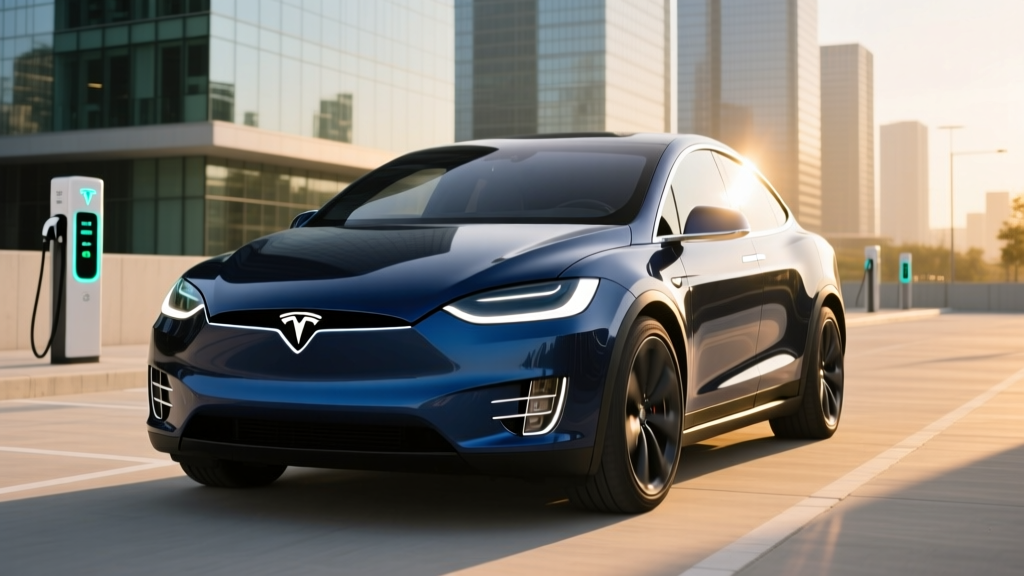
If you've been browsing Tesla's website or reading EV forums lately, you may have noticed something unsettling: the Model X — Tesla's flagship three-row electric SUV — seems to be fading from the spotlight. No major refresh announcements, limited marketing, and a narrowing trim lineup have led many shoppers to ask: is the Tesla Model X discontinued?
The short answer as of early 2026: No, the Tesla Model X is not discontinued. It remains available for order in the U.S. in two trims — Long Range AWD and Plaid — though Tesla has quietly streamlined the configurator and reduced production volume compared to the Model Y and Cybertruck. That makes the Model X a niche play: a premium, high-performance electric family hauler with falcon-wing doors, up to 335 miles of EPA range, and a starting price that now exceeds $80,000.
Below, we break down everything current buyers need to know — from real-world range and charging speeds to tax credit eligibility and whether the Model X still makes sense against newer three-row rivals like the Rivian R1S, Kia EV9, and Hyundai Ioniq 9.
2026 Tesla Model X: Key Specs at a Glance
| Specification | Long Range AWD | Plaid |
|---|---|---|
| Base MSRP | $81,630 | $96,630 |
| EPA Range | 335 miles | 311 miles |
| Usable Battery Capacity | ~100 kWh (NMC) | ~100 kWh (NMC) |
| Drivetrain | Dual-Motor AWD | Tri-Motor AWD |
| Horsepower | 670 hp | 1,020 hp |
| 0–60 mph | 3.8 seconds | 2.5 seconds |
| Max DC Fast Charge | 250 kW | 250 kW |
| 10–80% DC Charge Time | ~30 minutes | ~32 minutes |
| Level 2 Charge Rate | 11.5 kW (~34 mi/hr) | 11.5 kW (~34 mi/hr) |
| MPGe (Combined) | 102 MPGe | 98 MPGe |
| Efficiency | 33 kWh/100 mi | 34 kWh/100 mi |
| Seating | 5, 6, or 7 passengers | 5, 6, or 7 passengers |
| Cargo (behind 3rd row) | ~15 cu ft | ~15 cu ft |
| Cargo (max, seats folded) | ~88 cu ft | ~88 cu ft |
| Towing Capacity | 5,000 lbs | 5,000 lbs |
| Battery Warranty | 8 yr / 150,000 mi | 8 yr / 150,000 mi |
| Powertrain Warranty | 8 yr / 150,000 mi | 8 yr / 150,000 mi |
Source: Tesla Model X Configurator, fueleconomy.gov
Real-World Range: What the EPA Sticker Doesn't Tell You
EPA Estimate: 335 miles (Long Range) / 311 miles (Plaid)
Real-World Highway (70–75 mph): Expect ~260–285 miles
Cold Weather (below 32°F): Expect ~210–250 miles
Mixed Commute (city + suburban): ~290–320 miles achievable
The Model X Long Range's 335-mile EPA rating sounds impressive on paper, but the physics of a 5,100-pound SUV with the aerodynamic profile of a bread loaf work against it at highway speeds. In real-world highway testing at 70–75 mph, the Model X typically delivers between 260 and 285 miles before you'll want to find a charger — a 15–22% reduction from the EPA figure.
Cold weather compounds the loss. The Model X uses a heat pump for cabin and battery thermal management, which helps, but lithium-ion chemistry inherently loses efficiency below freezing. Expect a 25–35% range reduction in sustained sub-32°F conditions, bringing usable range down to roughly 210–250 miles. If you live in the Upper Midwest or Northeast, this matters for road-trip planning.
The Plaid trim's tri-motor setup and performance-oriented tuning drop the EPA rating to 311 miles, and real-world highway numbers scale down proportionally to roughly 240–265 miles. The extra two motors add weight and parasitic drag that the 100 kWh battery pack can't fully offset.
Bottom line: For a 300-mile road trip, the Long Range can do it in one charge under ideal conditions. For anything longer — or in winter — plan one Supercharger stop. The 250 kW peak charge rate makes that stop relatively brief.
Charging Speed: Supercharger Network Advantage
| Charging Level | Power / Connector | Speed | Notes |
|---|---|---|---|
| Level 1 (120V) | ~1.4 kW / NACS | ~3–4 mi/hr | Emergency/trickle only |
| Level 2 (240V Home) | 11.5 kW / NACS (Wall Connector) | ~34 mi/hr | Full overnight charge in ~9–10 hours |
| DC Fast (Supercharger V3) | 250 kW peak / NACS | 10–80% in ~30 min | Peak rate sustained to ~50% SoC, then tapers |
| DC Fast (CCS Adapter) | Up to 250 kW / CCS1 (via adapter) | Varies by station | Tesla sells a CCS adapter; works on EA, EVgo, etc. |
The Model X charges at a peak rate of 250 kW on Tesla's V3 Superchargers using the native NACS (North American Charging Standard) connector. In practice, the 100 kWh NMC battery sustains peak charge rates up to roughly 50% state of charge (SoC), then tapers progressively. The 10–80% charge takes approximately 30 minutes — competitive with most large-battery EVs but slower than the 800V architectures found in the Hyundai Ioniq 5 or Kia EV6, which can hit 10–80% in 18 minutes.
At home, the Tesla Wall Connector delivers up to 11.5 kW on a 60-amp circuit (48 amps continuous), adding roughly 34 miles of range per hour of charging. A full 0–100% charge takes about 9–10 hours — fine for overnight replenishment. If your home electrical panel supports only a 40-amp circuit (32 amps continuous), expect roughly 7.7 kW and about 23 miles per hour.
One notable advantage: Tesla's Supercharger network remains the most reliable and extensive DC fast-charging network in the U.S., with over 25,000 stalls nationwide. The Model X also supports CCS charging via Tesla's official CCS adapter (~$175), giving you access to Electrify America, EVgo, and other networks for road trips through less Tesla-dense corridors.
Performance: The Plaid Is Absurdly Quick
The Model X Long Range's dual-motor AWD powertrain produces 670 horsepower and rockets to 60 mph in 3.8 seconds — already faster than most sports sedans. But the Plaid trim, with its three electric motors (one front, two rear), generates a staggering 1,020 horsepower and hits 60 mph in 2.5 seconds. That makes it one of the quickest production SUVs ever built, trailing only the Rimac Nevera-class hypercars in raw acceleration.
All that power comes with trade-offs. The Plaid's tri-motor setup adds roughly 200 pounds over the Long Range, contributing to its lower EPA range (311 vs. 335 miles) and slightly lower efficiency (34 vs. 33 kWh/100 mi). The Plaid also commands a $15,000 premium.
Both trims feature adaptive air suspension, which lowers the vehicle at highway speeds for improved aerodynamics and raises it for rough roads or light off-pavement use. Towing capacity is rated at 5,000 pounds for both trims — adequate for a small boat or utility trailer but less than the Rivian R1S (7,700 lbs) or Ford F-150 Lightning (10,000 lbs).
Pricing, Trims, and Federal Tax Credit Eligibility
| Trim | Base MSRP | Destination | Est. Total | Federal §30D Credit |
|---|---|---|---|---|
| Long Range AWD | $81,630 | $1,390 | $83,020 | Not eligible (exceeds MSRP cap) |
| Plaid | $96,630 | $1,390 | $98,020 | Not eligible (exceeds MSRP cap) |
Here's where the news gets less favorable for budget-conscious buyers: neither Model X trim qualifies for the $7,500 federal EV tax credit under IRS §30D rules. The reason is straightforward — the §30D credit imposes an MSRP cap of $80,000 for SUVs, and the Model X starts at $81,630 before destination charges. Even the base Long Range trim clears the cap.
Additionally, the §30D credit has buyer income limits ($300,000 joint / $150,000 single modified AGI) and battery component/critical mineral sourcing requirements that change annually. But for the Model X, the MSRP cap alone disqualifies it regardless of your income. See the full eligibility rules at IRS.gov.
- ✅ Vehicle class: SUV — MSRP cap is $80,000
- ❌ Model X MSRP: $81,630+ — exceeds cap
- ✅ Buyer income limits: $300K joint / $150K single MAGI
- ⚠️ Battery sourcing: Must meet critical mineral + component requirements
- ✅ Point-of-sale transfer available for eligible vehicles (not applicable here)
State and local incentives may still apply. Check AFDC's state incentive database for your area.
Some states offer their own EV rebates or tax credits that don't impose the same MSRP caps — California's Clean Vehicle Rebate Project (CVRP), for instance, has its own income and price thresholds. Check your state's program separately.
Interior, Tech, and Standout Features
The Model X's interior is dominated by a 17-inch center touchscreen (landscape orientation, running Tesla's proprietary infotainment OS) and a 12.3-inch digital instrument cluster. The second-generation "yoke" steering wheel remains optional, though the conventional round wheel is standard and generally preferred by most reviewers for everyday driving.
Standout features include:
- Falcon Wing rear doors: Double-hinged gullwing doors that open upward, making third-row access easier in tight parking spaces. They're equipped with ultrasonic sensors to avoid overhead obstacles.
- Panoramic windshield: One of the largest glass panels on any production vehicle, stretching from the hood to the B-pillar.
- HEPA air filtration (Bioweapon Defense Mode): Hospital-grade cabin filtration that Tesla has validated against particulate matter and allergens.
- Rear-seat entertainment screen: An 8-inch display for rear passengers with gaming and streaming capability.
- Over-the-air updates: Continuous software improvements, feature additions, and performance tweaks delivered wirelessly.
Notable drawbacks:
- Interior material quality doesn't match the $80K+ price tag — hard plastics and panel-gap inconsistencies persist.
- The yoke steering wheel is impractical for low-speed maneuvering and three-point turns.
- Third-row legroom (32.7 inches) is tight for adults on longer trips.
- No Apple CarPlay or Android Auto — Tesla's ecosystem is closed.
- Falcon wing doors can be slow to open/close and are expensive to repair if damaged.
Driver Assistance: Autopilot and FSD (Supervised)
Tesla Autopilot and Full Self-Driving (Supervised) are SAE Level 2 driver-assistance systems. The driver must remain fully engaged, hands on the wheel (or applying torque with the yoke), and eyes on the road at all times. These systems do not make the vehicle self-driving. Level 4 autonomous capability (no driver needed) is only available in limited robotaxi services like Waymo.
Tesla's Autopilot (standard) includes adaptive cruise control, lane-centering, and automatic emergency braking. Full Self-Driving (Supervised) — a $8,000 add-on or $99/month subscription — adds automatic lane changes, traffic light/stop sign recognition, and Navigate on Autopilot for highway interchanges. FSD's real-world performance has improved substantially through neural-network-based "end-to-end" software updates, but it still requires constant driver supervision and occasionally makes unpredictable decisions in construction zones or complex intersections.
How the Model X Compares to Key Rivals
| Model | EPA Range | Starting MSRP | Max DC Charge | §30D Eligible? |
|---|---|---|---|---|
| Tesla Model X LR | 335 mi | $81,630 | 250 kW | No (MSRP cap) |
| Rivian R1S (Dual-Motor) | ~340 mi | $79,900 | 220 kW | Varies by trim/battery |
| Kia EV9 (GT-Line AWD) | 270 mi | $63,900 | 210 kW | Yes (select trims) |
| Hyundai Ioniq 9 (Long Range) | ~300 mi (est.) | $59,900 (est.) | 350 kW | Yes (select trims) |
The Model X's core challenge in 2026 is value. The Rivian R1S matches or beats it on range, offers superior off-road capability and build quality, and can qualify for the tax credit on certain trims. The Kia EV9 and Hyundai Ioniq 9 deliver three-row practicality at $20,000–$25,000 less, with the Ioniq 9's 800V architecture enabling dramatically faster DC charging (350 kW peak, 10–80% in ~18 minutes).
Where the Model X still wins: Supercharger network access (the most reliable in the U.S.), raw Plaid performance, and the falcon wing doors' practicality in tight urban parking. If you frequently road-trip and value charging infrastructure above all else, the Tesla ecosystem still has an edge.
- Class-leading Supercharger network access
- Plaid: 1,020 hp / 2.5-sec 0–60
- Falcon wing doors ease 3rd-row access
- 335-mi EPA range (Long Range)
- Continuous OTA software updates
- HEPA cabin filtration
- $81,630+ starting price — no federal tax credit
- Interior quality below price-point expectations
- 250 kW max charge rate trails 800V rivals
- 3rd-row legroom tight for adults
- No Apple CarPlay / Android Auto
- Falcon wing doors costly to repair
- Model may be phased out in future years
Is the Tesla Model X Discontinued — And Should You Buy One?
To directly answer the question driving this article: the Tesla Model X is not discontinued as of 2026, but its future is uncertain. Tesla has not announced a next-generation Model X, and the company's public roadmap focuses on more affordable vehicles and the Cybertruck ramp-up. The current Model X — which received its last major refresh in 2021 — is aging relative to newer competitors.
Choose the Tesla Model X if:
- You prioritize Supercharger network reliability for frequent road trips
- You want Plaid-level performance (2.5-sec 0–60) in a three-row SUV
- Falcon wing doors solve a real parking/access problem for you
- You're already in the Tesla ecosystem and value OTA updates
Look elsewhere if:
- The $7,500 federal tax credit matters to your budget (check the Rivian R1S or Kia EV9)
- You want the fastest DC charging speeds (Hyundai Ioniq 9 at 350 kW)
- Premium interior materials are a priority (Rivian R1S, BMW iX)
- You want a vehicle with a longer confirmed production future
If you're set on a Model X, the Long Range AWD at $81,630 is the rational pick — it delivers the best range, strong performance, and a lower cost of entry. The Plaid is a thrill machine but costs $15,000 more with less range and diminishing practical returns.
Frequently Asked Questions
Is the Tesla Model X being discontinued in 2026?
No. As of early 2026, the Model X remains available for order in Long Range and Plaid trims. However, Tesla has not announced a next-generation replacement, and production volumes have decreased. The model's long-term future beyond 2026–2027 is uncertain.
What is the real-world range of the Tesla Model X?
The EPA rates the Long Range at 335 miles and the Plaid at 311 miles. In real-world highway driving at 70–75 mph, expect 260–285 miles (Long Range) or 240–265 miles (Plaid). In cold weather below freezing, range can drop to 210–250 miles due to battery chemistry limitations and increased cabin heating demands.
How fast does the Model X charge at home and on the road?
At home on a Level 2 Tesla Wall Connector (11.5 kW), the Model X adds about 34 miles of range per hour, reaching a full charge in 9–10 hours. On a V3 Supercharger, it peaks at 250 kW DC and charges from 10–80% in approximately 30 minutes. The charge rate tapers significantly above 80% SoC to protect battery health.
Does the Tesla Model X qualify for the $7,500 federal EV tax credit?
No. Under IRS §30D rules, SUVs must have an MSRP at or below $80,000 to qualify. The Model X starts at $81,630, exceeding the cap. Neither trim is eligible for the federal credit regardless of buyer income. State incentives may still apply — check your local program.
Is the Model X worth buying over the Rivian R1S or Kia EV9?
It depends on your priorities. The Model X wins on Supercharger access and raw Plaid performance. The Rivian R1S offers better build quality, off-road capability, and potential tax credit eligibility. The Kia EV9 delivers three-row practicality at $20,000+ less. If charging infrastructure reliability is your top concern, the Model X still has an edge; if value and interior quality matter more, look at the R1S or EV9.
What battery does the Model X use, and how long is the warranty?
The Model X uses an NMC (nickel manganese cobalt) lithium-ion battery pack with approximately 100 kWh of usable capacity. Tesla warranties the battery and drive unit for 8 years or 150,000 miles (whichever comes first), with a guarantee that the battery will retain at least 70% of its original capacity during that period. NMC chemistry offers higher energy density than LFP but is more sensitive to sustained high state-of-charge — Tesla recommends daily charging to 80–90% for longevity.