The Tesla Model X remains one of the few three-row electric SUVs that can tow a trailer, seat up to seven, and hit 60 mph in under four seconds. But its footprint, price, and real-world range tell a more nuanced story than the spec sheet alone. This guide covers every critical dimension, charging figure, and ownership cost you need before signing a purchase agreement in 2026.
Tesla Model X Dimensions: Exterior, Interior & Cargo
Before evaluating range or tech, buyers searching for Tesla Model X dimensions usually need to know whether it fits their garage, their family, and their cargo. Here are the exact measurements for the current-generation Model X:
| Measurement | Value |
|---|---|
| Overall Length | 199.1 in (5,057 mm) |
| Overall Width (w/ mirrors) | 86.4 in (2,195 mm) |
| Overall Width (mirrors folded) | 78.7 in (1,999 mm) |
| Height | 66.9 in (1,699 mm) |
| Wheelbase | 116.7 in (2,965 mm) |
| Ground Clearance | 8.2 in (208 mm) |
| Front Headroom | 41.7 in |
| Front Legroom | 41.2 in |
| Second-Row Headroom | 40.9 in |
| Second-Row Legroom | 41.9 in |
| Third-Row Headroom | 37.1 in |
| Third-Row Legroom | 32.7 in |
| Cargo (behind 3rd row) | 15.8 cu ft |
| Cargo (3rd row folded) | 42.1 cu ft |
| Cargo (2nd & 3rd folded) | 77.5 cu ft |
| Front Trunk (Frunk) | 6.5 cu ft |
| Curb Weight | 5,185 lbs (Long Range) / 5,390 lbs (Plaid) |
Compared to the Rivian R1S, the Model X is roughly 6 inches longer overall but rides on a shorter wheelbase, which translates to slightly less third-row legroom. The Falcon Wing rear doors require about 12 inches of vertical clearance above the roofline to fully open — a consideration for low-ceiling garages (standard 7-foot garage ceilings generally clear, but measure carefully).
Battery, Range & Real-World Efficiency
EPA Estimated: 335 miles (Long Range AWD) / 326 miles (Plaid)
Real-World Highway: Expect 270–295 miles at 70–75 mph sustained
Cold-Weather (below 30°F): Expect 220–260 miles depending on cabin heating and terrain
Efficiency: 102 MPGe combined / 33 kWh per 100 miles (Long Range)
The Model X Long Range uses a ~100 kWh (usable) battery pack with NMC (nickel manganese cobalt) chemistry. Tesla does not publish exact cell-level chemistry details for each model year, but teardown analysis and supply-chain data confirm NMC for the Long Range and Plaid variants. NMC offers higher energy density than LFP, which is necessary in a vehicle this heavy, but it also means you should avoid routinely charging to 100% for daily use — Tesla recommends 80% daily and 100% only for trips.
The Model X's efficiency of 33 kWh/100mi is respectable for a 5,200-lb SUV, but it trails the lighter BMW iX xDrive50 (which achieves ~35 kWh/100mi with a smaller cabin). On a real-world 300-mile highway loop at 72 mph with climate control active, expect to arrive with roughly 10–15% remaining in moderate temperatures. In sub-freezing conditions, battery preconditioning helps, but the combination of cabin heat, battery warming, and denser air typically shaves 20–30% off the EPA figure.
Charging Speed: DC Fast, Level 2 & Home Setup
| Charging Method | Max Power | Rate / Time |
|---|---|---|
| DC Fast Charge (Supercharger V4) | 250 kW peak | 10–80% in ~32 minutes |
| DC Fast Charge (Supercharger V3) | 250 kW peak | 10–80% in ~35 minutes |
| Level 2 (Tesla Wall Connector, 48A) | 11.5 kW | ~34 miles of range per hour |
| Level 2 (NEMA 14-50 outlet, 40A) | 9.6 kW | ~28 miles of range per hour |
| Level 1 (120V standard outlet) | 1.4 kW | ~3–4 miles of range per hour |
The Model X charges at a peak of 250 kW on Tesla's Supercharger network. However, like all large-battery EVs, the charge curve tapers significantly above 60% state of charge. You'll see 250 kW only between roughly 10–30% SoC, then a step down to ~150 kW, and below 50 kW past 80%. This is why the 10–80% time is ~32 minutes rather than the ~20 minutes that sustained peak power would suggest.
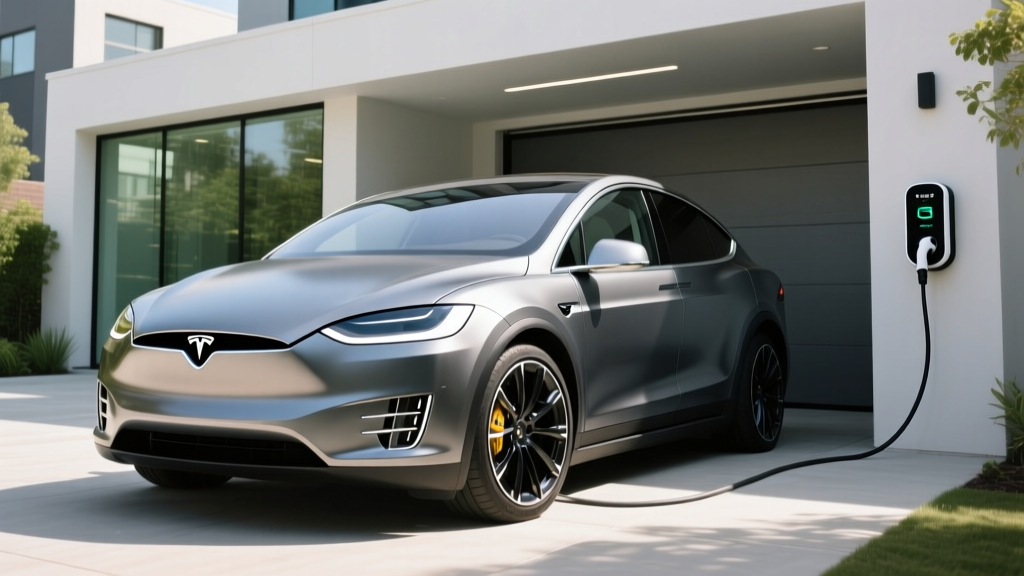
At home, the Tesla Wall Connector at 48 amps on a 60-amp circuit is the optimal setup, adding roughly 34 miles per hour of charging. For a vehicle with a 100 kWh battery, a full charge from 10% to 80% takes approximately 7–8 hours on Level 2 — easily achievable overnight. If your electrical panel is older (100A service), you may need a panel upgrade to 200A before installing a dedicated 60A circuit. Budget $1,500–$3,000 for a licensed electrician to handle the install, depending on your panel distance and local permit costs.
The Model X uses the NACS (North American Charging Standard) connector natively. With Tesla opening its Supercharger network to other EVs, Model X owners benefit from the most reliable and expansive DC fast-charging network in the U.S., with over 6,000 stations as of early 2026, according to Tesla's Supercharger page.
Performance: 0-60, Horsepower & Drivetrain
| Spec | Long Range AWD | Plaid |
|---|---|---|
| Drivetrain | Dual-Motor AWD | Tri-Motor AWD |
| Horsepower | 670 hp | 1,020 hp |
| 0–60 mph | 3.8 seconds | 2.5 seconds |
| Top Speed | 155 mph | 163 mph |
| Towing Capacity | 5,000 lbs | 5,000 lbs |
Even the "base" Long Range model delivers 670 hp and a 3.8-second 0–60 time — figures that would embarrass most performance SUVs from five years ago. The Plaid's tri-motor setup and 1,020 hp make it one of the quickest production SUVs ever made, though the $20,000+ premium over Long Range is difficult to justify purely on performance unless you regularly attend track events.
Both trims feature adaptive air suspension with automatic height adjustment. The system lowers the vehicle at highway speeds for efficiency and raises it for rough roads or steep driveways. Towing is rated at 5,000 lbs for both trims — adequate for a small camper or boat trailer, but below the Rivian R1S's 7,700-lb rating.
Pricing, Trims & Federal Tax Credit Eligibility
| Trim | Base MSRP | Federal §30D Credit | Effective Price |
|---|---|---|---|
| Long Range (6-seat) | $79,990 | Not Eligible (MSRP > $80K cap for SUVs) | $79,990 |
| Long Range (7-seat) | $81,990 | Not Eligible | $81,990 |
| Plaid (6-seat) | $94,990 | Not Eligible | $94,990 |
Under current IRS §30D rules, new electric SUVs must have an MSRP at or below $80,000 to qualify for the federal tax credit. The Model X Long Range 6-seat starts at $79,990, but destination fees and mandatory options push the delivered price above the threshold. Additionally, buyer income caps apply ($300K joint / $150K single modified AGI), and the battery must meet critical-mineral and component sourcing requirements as defined by the IRS. As of 2026, the Model X does not qualify for the $7,500 federal tax credit due to MSRP cap violations.
For the latest eligibility details, consult the IRS clean vehicle credit page. Some states offer separate rebates or tax incentives that may partially offset the cost — check your state's energy office or fueleconomy.gov for state-level programs.
Interior Tech, Driver Assistance & Standout Features
The Model X interior centers on a 17-inch touchscreen running Tesla's latest software, which includes navigation with real-time Supercharger routing, streaming entertainment, and a full app ecosystem. The second row features an optional 8-inch touchscreen for rear passengers. A 22-speaker audio system, ventilated front seats, and a panoramic windshield (the largest in any production SUV) are standard.
Tesla's Autopilot and Full Self-Driving (Supervised) are Level 2 driver-assistance systems under SAE classification. The driver must remain fully engaged, keep hands on the wheel, and monitor the road at all times. These systems do not make the Model X self-driving. Only Level 4 services like Waymo operate without driver supervision in geofenced areas.
The Model X comes standard with Tesla's Basic Autopilot (adaptive cruise control, lane centering, automatic emergency braking). Full Self-Driving (Supervised) is an $8,000 option that adds automated lane changes, navigation-based routing, and traffic light/stop sign recognition. While impressive in highway scenarios, FSD (Supervised) still requires constant driver oversight and can struggle in construction zones, unmapped areas, and adverse weather.
The Falcon Wing rear doors remain the Model X's most distinctive feature. They open upward with ultrasonic sensors to avoid obstacles, making child-seat installation and third-row access dramatically easier than in conventional SUVs. However, they are slower to open/close than traditional doors (about 6–8 seconds) and add mechanical complexity that has historically been a reliability concern, though Tesla reports improved actuator durability in recent model years.
Pros, Cons & Who Should Buy
- 335-mile EPA range (Long Range) — class-leading for a 3-row EV SUV
- Access to Tesla Supercharger network (most reliable U.S. DC fast-charging)
- Falcon Wing doors ease child-seat and 3rd-row access
- Tri-motor Plaid offers supercar-level acceleration
- Over-the-air updates continuously add features
- 5,000-lb towing with integrated trailer brake controller
- Does not qualify for $7,500 federal tax credit (MSRP cap)
- Third-row legroom (32.7 in) is tight for adults on long trips
- Falcon Wing doors slower and more complex than conventional
- 250 kW peak charge rate trails Hyundai/Kia 800V platforms (~350 kW)
- No Apple CarPlay or Android Auto
- Insurance premiums run 20–40% higher than comparable ICE SUVs
- Families needing 3 rows + EV: If you need seating for 6–7, want Supercharger access for road trips, and can charge at home, the Model X Long Range is one of the few options in this segment.
- Tech-forward buyers: Tesla's software, OTA updates, and Autopilot integration appeal to those who want a connected, continuously improving vehicle.
- Performance-oriented SUV buyers: The Plaid variant fills a niche for those who want 1,000+ hp in a family hauler.
Consider alternatives if: You need adult-friendly third rows (look at the Rivian R1S or Kia EV9), you want the $7,500 tax credit, or you need 350+ kW DC charging speeds for frequent road-trip charging.
Warranty & Battery Longevity
Tesla covers the Model X with the following warranty terms:
- Basic Vehicle: 4 years / 50,000 miles
- Battery & Drive Unit: 8 years / 150,000 miles (Long Range & Plaid)
- Battery Capacity Retention: Tesla warrants at least 70% capacity retention over the warranty period
Based on Tesla's fleet data and third-party analysis from sources like Tesla's Impact Report, Model X battery packs typically retain 85–90% capacity after 100,000 miles. NMC chemistry degrades slightly faster than LFP in the first 20,000 miles but stabilizes afterward. For maximum longevity, charge to 80% for daily use, avoid leaving the vehicle at 100% or below 10% for extended periods, and use preconditioning before DC fast charging in cold weather.
Frequently Asked Questions
What is the real-world range of the Tesla Model X?
The EPA rates the Long Range at 335 miles, but real-world highway driving at 70–75 mph typically yields 270–295 miles in moderate temperatures. In cold weather (below 30°F), expect 220–260 miles. The Plaid variant sees slightly lower real-world figures due to its tri-motor powertrain and higher performance tuning.
How fast does the Model X charge at home and on the road?
On a Tesla Supercharger, the Model X peaks at 250 kW, achieving a 10–80% charge in approximately 32 minutes. At home with a Tesla Wall Connector (48A/11.5 kW), it adds about 34 miles of range per hour, meaning a full overnight charge from 20% to 80% takes roughly 6–7 hours.
Does the Tesla Model X qualify for the federal EV tax credit?
No. Under current IRS §30D rules, new electric SUVs must have an MSRP at or below $80,000. The Model X Long Range starts at $79,990, but destination charges and required options push it above the cap. The Plaid starts well above at $94,990. State-level incentives may still apply — check your local regulations.
Is the Tesla Model X worth buying vs. the Rivian R1S or Kia EV9?
The Model X wins on range (335 mi vs. R1S's ~321 mi), Supercharger access, and performance. The Rivian R1S offers a more usable third row, higher towing capacity (7,700 lbs), and better off-road capability. The Kia EV9 is significantly cheaper (starting ~$54,900), qualifies for the federal tax credit, and offers comparable three-row practicality, though with less range (~304 mi) and no Supercharger access. Your decision should hinge on budget, third-row needs, and charging-network preference.
What are the Tesla Model X dimensions for garage fit?
The Model X is 199.1 inches long, 86.4 inches wide with mirrors (78.7 inches folded), and 66.9 inches tall. It fits in a standard two-car garage, but the Falcon Wing doors require approximately 12 inches of vertical clearance above the roof to open fully. Standard 7-foot (84-inch) garage ceilings are sufficient, but measure carefully if you have overhead storage or a low-clearance door.
How reliable are the Falcon Wing doors?
Early Model X production (2016–2019) experienced notable Falcon Wing actuator and sensor issues. Tesla has revised the mechanism multiple times, and 2024–2026 models show significantly improved reliability based on owner surveys and service data. However, the doors remain more mechanically complex than conventional hinges, and out-of-warranty repairs can be costly.