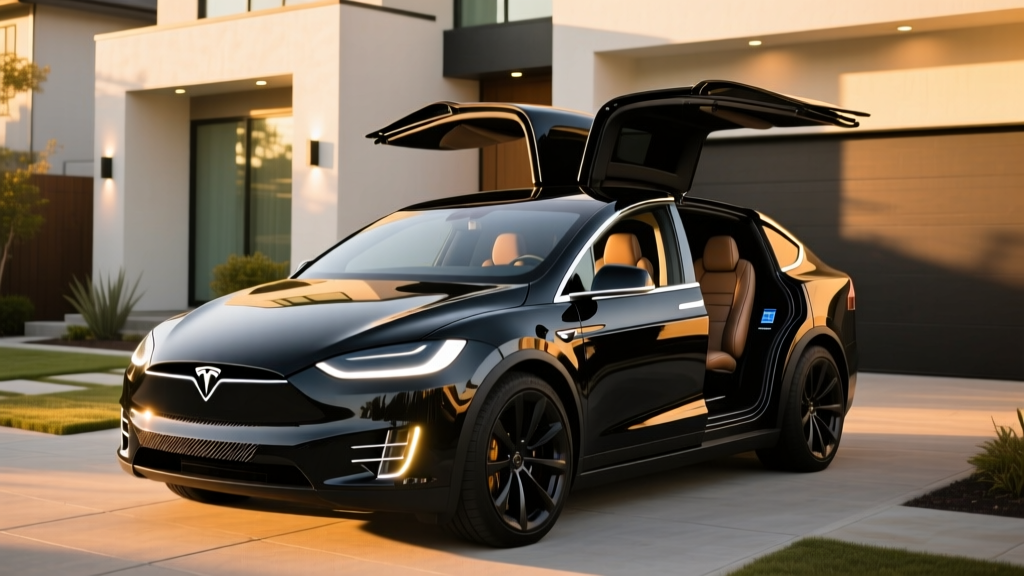
If you have been watching Tesla's flagship SUV depreciate and wondering when the math finally works in your favor, the certified pre-owned (CPO) market is where the Model X starts to make financial sense. A two-to-three-year-old Model X with CPO backing trades at 30–45% below its original MSRP while retaining the 348-mile EPA range, Supercharger network access, and falcon-wing drama that define the platform. But buying a used luxury EV demands sharper scrutiny than buying new. Battery health, warranty transferability, charging hardware revisions, and tax-credit eligibility all shift the value equation.
This guide breaks down exactly what you are getting with a Tesla Model X certified pre-owned purchase in 2026 — the real numbers on range, charging curves, ownership costs, and the specific pitfalls that separate a great deal from an expensive mistake.
What Does Tesla's Certified Pre-Owned Program Actually Cover?
Tesla's CPO program is administered directly by the manufacturer, not a third-party dealer network. Every Model X listed as CPO has passed a multi-point inspection covering battery health, drivetrain function, suspension, HVAC, and body condition. The key differentiator versus buying from a private party or independent lot is the warranty:
- Basic Vehicle Limited Warranty: Extended to 1 year or 12,500 miles beyond the original 4-year/50,000-mile warranty (or from the CPO purchase date if the original has expired).
- Battery & Drive Unit Warranty: The original 8-year/150,000-mile warranty (Long Range) transfers fully. Tesla guarantees minimum 70% capacity retention over that period.
- Return Policy: 7-day return window, no questions asked.
- No Accident Guarantee: Tesla states CPO vehicles have no prior salvage or major damage history.
One nuance: Tesla does not publish a standardized battery State of Health (SoH) report with CPO listings. You will see a "battery health" indicator in the vehicle settings, but it is not the granular degradation curve a third-party diagnostic tool would provide. Before finalizing any Model X CPO purchase, request a pre-delivery screenshot of the battery health percentage and compare it against the mileage-to-degradation benchmarks we outline below.
Model X Specs: Range, Battery, Charging, and Performance
| Specification | Model X Long Range (2023–2026) | Model X Plaid (2023–2026) |
|---|---|---|
| EPA Range | 348 miles | 326 miles |
| Real-World Highway (70 mph) | ~280–310 miles | ~260–290 miles |
| Cold-Weather Range (20°F) | ~245–275 miles | ~230–255 miles |
| Battery Usable Capacity | ~100 kWh (NMC) | ~100 kWh (NMC) |
| Battery Chemistry | NMC (Nickel Manganese Cobalt) | NMC (Nickel Manganese Cobalt) |
| Max DC Fast Charge | 250 kW peak | 250 kW peak |
| 10–80% DC Fast Charge | ~32 minutes | ~32 minutes |
| Level 2 Home Charge (48A) | 11.5 kW (~34 mi/hr) | 11.5 kW (~34 mi/hr) |
| 0–60 mph | 3.8 seconds | 2.5 seconds |
| Horsepower | 670 hp | 1,020 hp |
| Drivetrain | Dual-Motor AWD | Tri-Motor AWD |
| MPGe (Combined) | 102 MPGe | 98 MPGe |
| Efficiency | 33 kWh/100 mi | 34 kWh/100 mi |
| Cargo (Behind 3rd Row) | 37.1 cu ft | 37.1 cu ft |
| Cargo (Max, Seats Folded) | 83.1 cu ft | 83.1 cu ft |
| Towing Capacity | 5,000 lbs | 5,000 lbs |
Charging the Model X: What CPO Buyers Need to Know
The 2023–2026 Model X uses the North American Charging Standard (NACS) connector natively — no adapter required at Tesla Superchargers. This is significant for CPO buyers: earlier Model X vehicles (pre-2022) used a proprietary Tesla connector that is functionally identical but may cause confusion at non-Tesla chargers. The current NACS port opens full access to the expanding open Supercharger network that now serves Ford, Rivian, GM, and other brands.
| Charging Level | Power | Miles Added Per Hour | Use Case |
|---|---|---|---|
| Level 1 (120V, 12A) | ~1.4 kW | ~3–4 mi/hr | Emergency / overnight trickle |
| Level 2 (240V, 48A Wall Connector) | 11.5 kW | ~34 mi/hr | Daily home charging |
| Level 2 (240V, 32A Mobile Connector) | 7.7 kW | ~22 mi/hr | Portable / travel charging |
| DC Fast Charge (V3 Supercharger) | 250 kW peak | ~175 mi in 15 min | Road trips |
| DC Fast Charge (CCS adapter, non-Tesla) | Up to 150–250 kW | Varies by station | Electrify America, etc. |
Charging curve reality: The Model X peaks at 250 kW only between approximately 10–25% State of Charge (SoC). From 25–50%, the rate tapers to roughly 150–175 kW. Above 80%, it drops sharply to under 50 kW. This is why Tesla and all experienced EV owners recommend charging to 80% on road trips and skipping the long wait for 100%. The 10–80% time of approximately 32 minutes assumes a preconditioned battery — if you arrive at a Supercharger cold (without the car's navigation routing you there in advance to precondition), add 5–10 minutes.
Home charging setup: A Tesla Wall Connector on a 60-amp circuit delivers the full 48A/11.5 kW rate. Expect to pay $500–$700 for the Wall Connector unit and $800–$2,500 for electrician installation depending on panel capacity and run length. If your home has a 100-amp main panel, you may need a $1,500–$3,000 panel upgrade to support a dedicated 60-amp circuit alongside existing loads.
Pricing: What a Model X CPO Actually Costs in 2026
New Model X pricing has fluctuated significantly, but the 2026 MSRP baseline provides the reference point for CPO depreciation:
| Trim | New MSRP (2026) | CPO Typical Price (2023–2024 Model) | Depreciation Savings |
|---|---|---|---|
| Long Range (5-seat) | $79,990 | $48,000–$58,000 | $22,000–$32,000 |
| Long Range (6-seat) | $84,990 | $51,000–$62,000 | $23,000–$34,000 |
| Long Range (7-seat) | $84,990 | $52,000–$63,000 | $22,000–$33,000 |
| Plaid | $94,990 | $60,000–$74,000 | $21,000–$35,000 |
CPO prices vary by mileage, condition, color, wheel size (20" vs. 22"), and whether Full Self-Driving (FSD) capability was purchased and transfers with the vehicle. A Model X with FSD purchased by the original owner typically commands a $2,000–$4,000 premium on the CPO market, though the actual value of FSD Supervised (a Level 2 system requiring constant driver engagement) is debatable.
Federal Tax Credit Eligibility for Used Model X
Here is where CPO buyers need to pay close attention. The IRS §25E Used Clean Vehicle Credit offers up to $4,000 (or 30% of the sale price, whichever is lower) for qualifying used EVs. Key requirements:
- Sale price cap: The used vehicle must sell for $25,000 or less to qualify. Most Model X CPO units exceed this threshold, making them ineligible for the used-EV credit.
- Buyer income limits: Modified AGI cannot exceed $75,000 (single), $112,500 (head of household), or $150,000 (joint).
- Dealer sale required: Must be purchased from a licensed dealer (Tesla's CPO sales qualify).
- Model year requirement: Vehicle must be at least two model years old.
- First-time transfer: The credit can only be claimed once per vehicle VIN after its original sale.
Bottom line: Because most Model X CPO listings fall in the $48,000–$74,000 range — well above the $25,000 price cap — the federal used-EV tax credit will not apply. The new-vehicle §30D credit (up to $7,500) is also unavailable on CPO purchases. Your savings come entirely from depreciation, not from incentives. Always verify current rules at irs.gov and consult a tax professional before assuming credit eligibility.
Real-World Ownership: Efficiency, Tech, and Daily Usability
The Model X remains one of the most technologically dense SUVs on the road. The 17-inch landscape touchscreen controls nearly every vehicle function, including glovebox release and mirror adjustment — a design choice that divides owners. The secondary 8-inch rear touchscreen handles climate and entertainment for second-row passengers. The yoke steering wheel (standard on Plaid, optional on Long Range) remains controversial; many CPO buyers specifically seek traditional round-wheel examples.
Driver assistance: Basic Autopilot (adaptive cruise + lane centering) is standard. Enhanced Autopilot ($6,000 original option) adds auto lane-change, autopark, and Summon. FSD Supervised ($8,000–$12,000 depending on purchase year) adds traffic-light recognition and city-street navigation. All of these are SAE Level 2 systems — you must keep your hands on the wheel and eyes on the road at all times. Tesla's camera-only vision system performs well in clear conditions but can struggle in heavy rain, construction zones, and faded lane markings.
Efficiency in practice: At 33 kWh/100 miles (Long Range), the Model X is less efficient than the smaller Model Y (28 kWh/100 mi) but competitive for a 5,000+ lb three-row SUV. At the national average electricity rate of $0.17/kWh, fueling costs roughly $5.61 per 100 miles — compared to approximately $12.50 per 100 miles for a gas SUV averaging 22 MPG at $3.50/gallon.
Cargo and passenger space: With 37.1 cu ft behind the third row and 83.1 cu ft with all rear seats folded, the Model X offers legitimate family utility. The front trunk (frunk) adds 6.6 cu ft. Second-row legroom is 40.9 inches; third-row legroom is 32.7 inches — adequate for children but tight for adults on long trips. The falcon-wing rear doors require less lateral clearance than conventional doors (useful in tight parking spots) but are mechanically complex and have been a source of warranty claims on earlier model years.
Model X CPO vs. Key Competitors: Is It Worth It?
| Vehicle | CPO Price Range | EPA Range | 10–80% Charge | Third Row | Towing |
|---|---|---|---|---|---|
| Tesla Model X LR | $48K–$63K | 348 mi | ~32 min | Yes (opt.) | 5,000 lbs |
| Rivian R1S (Dual-Motor) | $52K–$68K | 321 mi | ~35 min | Yes | 7,700 lbs |
| Kia EV9 GT-Line AWD | $42K–$52K | 270 mi | ~24 min | Yes | 4,500 lbs |
| BMW iX xDrive50 | $48K–$58K | 324 mi | ~31 min | No | 3,500 lbs |
- You want maximum range in a three-row electric SUV (348 miles leads the class)
- Supercharger network access is a priority for road trips
- You value over-the-air updates that continuously add features
- Performance matters — 670 hp in the Long Range is extraordinary for the price
- You need serious towing capacity (Rivian R1S tows 7,700 lbs)
- You prefer physical buttons and a more traditional interior layout (BMW iX, Kia EV9)
- Third-row adult comfort is a priority (Model X third row is tight)
- You want the fastest DC charging in the segment (EV9's 800V architecture charges 10–80% in ~24 min)
The Biggest Pros and Cons of Going CPO
- 30–45% depreciation savings vs. new, often $25K+ off MSRP
- Class-leading 348-mile EPA range for a three-row SUV
- Full Supercharger network access with native NACS connector
- Transferred 8-year/150,000-mile battery warranty
- OTA software updates continue indefinitely
- 670–1,020 hp depending on trim — supercar acceleration in a family hauler
- Strong resale liquidity — Model X holds demand in the used EV market
- No federal tax credit (CPO price exceeds $25K used-EV cap)
- Falcon-wing doors are mechanically complex and costly out of warranty
- Touchscreen-dependent controls frustrate some drivers
- Insurance premiums run 15–30% higher than comparable gas SUVs
- Third-row space is tight for adults compared to Rivian R1S or Kia EV9
- NMC battery requires 20–80% daily charging discipline for longevity
- FSD transfer is not guaranteed — verify before purchasing
Battery Health and Long-Term Degradation: What to Expect
The Model X uses NMC (nickel manganese cobalt) chemistry, which offers high energy density but requires more careful charging habits than LFP (lithium iron phosphate) batteries found in some Model 3/Y Standard Range vehicles. Tesla recommends:
- Daily charge limit: 80% for NMC batteries (set in the vehicle's charge settings)
- 100% charges: Reserve for road trips; avoid leaving the car at 100% for extended periods
- Avoid prolonged low SoC: Don't let the battery sit below 10% for more than a few days
Based on fleet data aggregated by sources like fueleconomy.gov and independent EV analysis, Model X batteries typically show 5–8% degradation at 50,000 miles and 8–12% at 100,000 miles. A CPO example with 30,000–45,000 miles should retain approximately 93–96% of original capacity — translating to roughly 325–335 miles of usable range in the Long Range trim.
The 8-year/150,000-mile battery warranty guarantees minimum 70% capacity retention. If a CPO Model X shows less than 70% capacity within that window, Tesla will repair or replace the battery at no cost. This warranty transfers automatically to CPO buyers.
Who Should Buy a Model X Certified Pre-Owned?
The Model X CPO is best suited for:
- Families who road-trip: 348-mile range, 5-seat or 7-seat configurations, Supercharger access, and 5,000-lb towing make it a genuine replacement for a large gas SUV on long trips.
- Tech-forward buyers: If you want continuous OTA improvements, the best infotainment system in EVs, and don't mind touchscreen-only controls.
- Performance-minded parents: 3.8-second 0–60 in a 5,000-lb SUV with room for three car seats is a niche the Model X owns.
- Buyers who missed the new-EV credit window: You won't get a tax credit on CPO, but the depreciation savings often exceed what the credit would have provided.
It is less ideal for buyers who prioritize physical controls, need maximum third-row comfort, want the lowest possible insurance costs, or need heavy towing (look at the Rivian R1S instead).
Frequently Asked Questions
What is the real-world range of a certified pre-owned Tesla Model X?
The Long Range trim carries a 348-mile EPA rating. In real-world highway driving at 70 mph, expect 280–310 miles. In cold weather (20°F), range drops to approximately 245–275 miles. Plaid variants lose roughly 20–30 miles across all scenarios due to higher power output and wider tires.
How fast does the Model X charge at home and on the road?
At home on a 48A Level 2 Wall Connector, the Model X adds approximately 34 miles of range per hour (11.5 kW). A full overnight charge from 20% takes about 7–8 hours. On a V3 Supercharger, it peaks at 250 kW and charges from 10–80% in approximately 32 minutes with a preconditioned battery.
Does a Model X certified pre-owned qualify for any federal tax credit?
Generally, no. The IRS §25E used-EV credit requires a sale price of $25,000 or less, and most Model X CPO listings fall between $48,000 and $74,000. The new-vehicle §30D credit (up to $7,500) is also unavailable on used purchases. Check IRS guidelines for the latest rules and consult a tax professional.
Is the Tesla Model X CPO worth it versus a Rivian R1S or Kia EV9?
The Model X wins on range (348 vs. 270–321 miles for competitors) and Supercharger network access. The Rivian R1S wins on towing (7,700 lbs), off-road capability, and third-row space. The Kia EV9 wins on value, charging speed (800V architecture), and conventional interior ergonomics. Your priority determines the winner.
Does Full Self-Driving transfer with a CPO Model X?
Not always. Tesla has periodically changed its FSD transfer policy. Some CPO listings include FSD if the original owner purchased it; others have it removed and offered as a new subscription or purchase. Always confirm FSD status on the specific VIN before completing your purchase.
What are the biggest risks of buying a used Model X?
The primary risks are falcon-wing door mechanism repairs (complex and expensive out of warranty), touchscreen replacement if it fails, and suspension wear on heavier trims. The battery and drive unit are well-covered under the 8-year/150,000-mile warranty. Purchase through Tesla's CPO program rather than a private party to ensure warranty protection and inspection standards.