The Tesla Model X 90D: A Used Luxury EV Worth Considering?
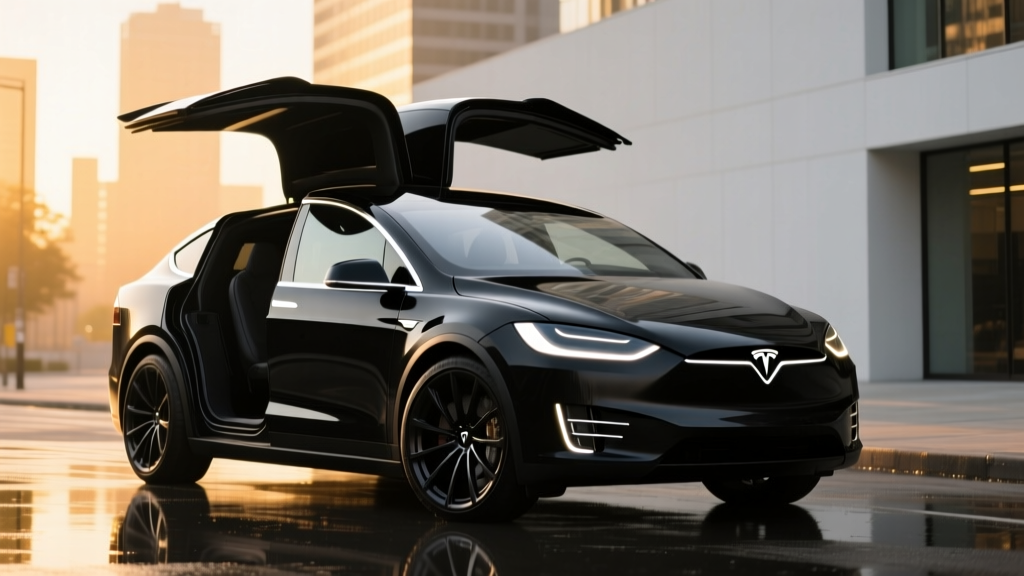
If you're browsing the used EV market in 2026, the Tesla Model X 90D sits in a fascinating sweet spot: a three-row electric SUV with genuine long-distance capability, falcon-wing doors that still turn heads, and a price that has finally depreciated into reach for many families. Produced primarily between 2016 and 2017, the 90D variant paired a 90 kWh battery pack with Tesla's dual-motor all-wheel-drive system, delivering an EPA-estimated 257 miles of range — a figure that still holds up for daily driving and moderate road trips today.
But buying a decade-old luxury EV requires clear-eyed analysis, not nostalgia. Battery degradation, charging-speed limitations by modern standards, and maintenance realities all factor into whether a used Model X 90D is a smart purchase or a money pit. This review breaks down every number that matters.
| Specification | Value |
|---|---|
| EPA Range | 257 miles |
| Battery Capacity | 90 kWh (usable ~83.5 kWh), NMC chemistry |
| Drivetrain | Dual-motor AWD |
| Horsepower | ~417 hp (combined) |
| 0-60 mph | 4.8 seconds |
| Max DC Fast Charge | ~120 kW (Supercharger V2) |
| Level 2 Charge Rate | 11.5 kW (48A) |
| EPA Efficiency | 92 MPGe combined (37 kWh/100 mi) |
| Cargo (behind 3rd row) | 21.8 cu ft |
| Cargo (max, seats folded) | 88.1 cu ft |
| Battery Warranty (original) | 8 years / unlimited miles |
| Original MSRP | ~$115,000+ (as typically configured) |
| Used Market (2026) | ~$22,000 – $35,000 depending on miles & condition |
Range and Efficiency: Real-World Expectations
The EPA rated the Model X 90D at 257 miles when new, with a combined efficiency of 92 MPGe (approximately 37 kWh per 100 miles). That was competitive in 2016-2017, though today's best EV SUVs push past 300 miles with greater efficiency. The real question for a used buyer is what that number means in 2026 after years of battery cycling.
Real-World Expectation (2026 Used Example):
• City / moderate driving (70°F): ~210-235 miles (with typical 8-12% degradation)
• Highway (75 mph, 70°F): ~185-210 miles — the Model X's tall, wide frontal area hurts at speed
• Cold weather (30°F, highway): ~145-175 miles — expect 30-40% range loss without preconditioning
Note: Actual range depends heavily on individual battery State of Health (SoH). Always request a battery health report before purchasing.
The 90 kWh pack uses NMC (nickel manganese cobalt) chemistry, which offers high energy density but is more susceptible to calendar degradation than the LFP chemistry Tesla now uses in standard-range vehicles. Typical degradation for a 2016-2017 NMC pack at 80,000-120,000 miles falls between 8% and 15%, though examples with frequent Supercharging history may show more. Tesla's battery management system includes a buffer (roughly 6.5 kWh reserved above 0% displayed), which helps protect longevity but means usable capacity was always around 83-84 kWh from the start.
For context, the EPA's fueleconomy.gov listing confirms the 257-mile combined rating and 92 MPGe figure. Efficiency drops noticeably at sustained highway speeds — a trait shared by most large SUVs, electric or not, but amplified here by the Model X's 5,000+ lb curb weight and aerodynamic profile.
Charging Speeds: DC Fast, Level 2, and Level 1
The Model X 90D predates Tesla's V3 and V4 Supercharger architecture, meaning its peak DC charging rate is limited to approximately 120 kW on V2 Superchargers. That's a meaningful difference from the 250 kW peak of current Model X variants.
| Charging Level | Power | Speed | Notes |
|---|---|---|---|
| Level 1 (120V outlet) | ~1.4 kW | ~3-4 miles/hour | Emergency/trickle only; 50+ hours for a full charge |
| Level 2 (240V, 48A) | 11.5 kW | ~30-34 miles/hour | Full charge in ~8-9 hours; ideal for overnight home charging |
| DC Fast (V2 Supercharger) | Peak ~120 kW | 10-80% in ~40-45 minutes | Charging curve tapers significantly above 60% SoC |
| DC Fast (CCS adapter) | ~100-120 kW | Similar to V2 Supercharger | Requires Tesla CCS adapter; speeds depend on station output |
Understanding the charge curve: The 90D's battery peaks near 120 kW only when the State of Charge is low (around 10-25%) and the pack is properly preconditioned — either by navigating to a Supercharger in the car's nav system or by driving for 20-30 minutes at highway speeds. Above 50% SoC, the rate drops to roughly 60-80 kW, and above 80% it slows dramatically to protect battery health. A realistic 10-80% session takes 40-45 minutes, which means planning longer stops on road trips than you would in a newer EV with 250+ kW capability.
At home, a Level 2 wall connector delivering 48 amps (11.5 kW) is the practical standard. Expect roughly 30-34 miles of range added per hour of charging — enough to replenish a full day's driving overnight. If your home electrical panel supports a 60-amp circuit, installation typically runs $500-$1,500 for the electrician work plus the $400-$475 wall connector unit, though panel upgrades can add $1,500-$3,000 in older homes. Always consult a licensed electrician for a site-specific quote.
Performance, Drivetrain, and Driving Dynamics
The 90D's dual-motor AWD setup produces approximately 417 horsepower and rockets the 5,000+ pound SUV from 0-60 mph in 4.8 seconds. That's genuinely quick for a three-row family hauler, and the instant torque delivery makes highway merging and passing effortless. The low center of gravity (battery pack mounted under the floor) keeps body roll surprisingly controlled through corners, though the Model X's weight is always noticeable during aggressive direction changes.
Ride quality on the standard adaptive air suspension is generally comfortable, with adjustable ride height useful for clearing steep driveways or light off-road situations. However, air suspension failures are a known issue on 2016-2017 Model X examples — replacement struts cost $1,500-$2,500 per corner, so verify suspension health during any pre-purchase inspection.
Regenerative braking in the 90D offers a single setting (unlike the adjustable regen in newer Teslas), and it's strong enough to enable one-pedal driving in most city conditions. The friction brakes are rarely used in daily driving, which means rotors and pads often last well past 80,000 miles — but they may need attention from corrosion if the vehicle has been driven gently for years without hard brake applications.
Interior, Cargo, and Technology
The Model X 90D seats up to seven passengers in a three-row configuration (six-passenger captain's chairs were also available). Interior materials from this era are a mixed bag: the minimalist dashboard and massive 17-inch touchscreen feel premium, but some early Model X examples suffered from panel-gap inconsistencies, rattles, and premature wear on seat bolsters. The panoramic windshield extends back over the front seats, creating an airy cabin that still impresses.
Cargo dimensions:
- Behind third row: 21.8 cu ft (tight for a vehicle this size; the rear trunk well is shallow)
- Behind second row (third row folded): 44.0 cu ft
- Maximum (all rear seats folded): 88.1 cu ft
- Front trunk (frunk): 6.6 cu ft — useful for charging cables and groceries
The falcon-wing rear doors are the Model X's signature feature. They open upward with dual hinges and sensors that detect overhead obstructions, making third-row access dramatically easier than in conventional SUVs — especially when loading children into car seats. However, the complex hinge and sensor mechanisms have been a reliability concern, and repairs can be costly out of warranty.
Technology and driver assistance: The 90D came equipped with Tesla's Autopilot hardware suite (HW2 or HW2.5 depending on build date), which supports Adaptive Cruise Control, Autosteer (lane-keeping), and automatic emergency braking. This is a SAE Level 2 driver-assistance system — it requires continuous driver attention and hands on the wheel at all times. It is not self-driving. Full Self-Driving (FSD) capability was available as a paid option, but Tesla's FSD (Supervised) remains a Level 2 system as of 2026 despite the name. Over-the-air updates continue to add features, though older hardware may not support the latest software capabilities indefinitely.
Pricing, Tax Credits, and Ownership Costs
The Model X 90D originally stickered around $115,000 to $135,000+ depending on options ( Ludicrous Speed Upgrade, Premium Interior, FSD package, etc.). In the 2026 used market, well-maintained examples with 60,000-100,000 miles typically sell for $22,000 to $35,000, making it one of the most affordable ways into a three-row electric SUV with Supercharger access.
| Factor | Details |
|---|---|
| Used Market Price | $22,000 – $35,000 (varies by mileage, condition, options) |
| Federal Used EV Tax Credit (§25E) | Up to $4,000 (30% of sale price, max $4,000) for vehicles under $25,000 sold by a dealer; income caps apply |
| Federal New EV Credit (§30D) | Not applicable — this is a discontinued model and no longer eligible as a new purchase |
| Estimated Annual Insurance | $2,200 – $3,500 (varies by state, driving record, coverage) |
| Estimated Annual Electricity Cost | ~$600 – $900 (at 12,000 mi/yr, $0.14/kWh average) |
| Estimated Annual Maintenance | $400 – $800 (tires, cabin filter, wiper fluid; no oil changes) |
Does it qualify for a federal tax credit? The new-vehicle §30D credit does not apply since the Model X 90D is no longer manufactured. However, the §25E Used Clean Vehicle Credit may provide up to $4,000 (30% of the sale price, capped at $4,000) if you purchase from a licensed dealer for under $25,000 and your modified adjusted gross income falls within IRS limits ($75,000 single / $112,500 head of household / $150,000 joint filers). Per IRS guidelines, the vehicle must be at least two model years old, and you can only claim this credit once every three years. Always verify eligibility with a tax professional before relying on credit estimates.
Battery warranty status: Tesla's original battery warranty on the 90D was 8 years with unlimited miles, covering defects and capacity retention below a specified threshold (typically 70%). For a 2016 model, that warranty expired in 2024. For a 2017 model, coverage extends through 2025. This means most 90D examples on the used market in 2026 are out of battery warranty, making a pre-purchase battery health check essential. A full battery replacement, if needed, costs approximately $14,000-$20,000 at a Tesla service center.
Pros, Cons, and the Verdict
- Spacious three-row seating with easy falcon-wing access to the third row
- Strong dual-motor AWD performance (0-60 in 4.8 seconds)
- Access to the Tesla Supercharger network (with NACS connector native)
- Continued over-the-air software updates
- Low running costs vs. comparable used gas SUVs (no fuel, minimal maintenance)
- Depreciation has made it significantly more affordable than new
- Frunk + rear cargo provide flexible storage
- Most examples are now out of battery and powertrain warranty
- DC fast charging limited to ~120 kW (slower road-trip stops than modern EVs)
- Air suspension and falcon-wing door reliability concerns; costly repairs
- Real-world highway range falls well below the 257-mile EPA sticker
- Interior build quality inconsistent for this model year
- No longer qualifies for the §30D new-vehicle tax credit
- Insurance costs remain elevated vs. mainstream EVs
Who Should Buy the Tesla Model X 90D?
- You need three rows of seating and want an EV under $35,000
- Your daily commute is under 150 miles round-trip (well within real-world range)
- You value Supercharger network access for occasional road trips
- You can budget $2,000-$5,000 for potential out-of-warranty repairs in the first few years
- You want quick acceleration and AWD for mountain or snow-belt driving
- You regularly drive 300+ miles in a day and want minimal charging stops
- You need a vehicle still under full factory warranty for peace of mind
- You want the latest DC fast-charging speeds (250+ kW) for efficient road-tripping
- You're uncomfortable with the financial risk of out-of-warranty luxury EV ownership
Key competitors to consider: The used Tesla Model Y (2020+, ~$25,000-$35,000) offers two rows but far better efficiency and newer tech. The Ford Mustang Mach-E (2021+, ~$22,000-$32,000) provides competitive range and CCS fast-charging. For three rows, the used Kia EV9 (2024+, ~$45,000+) is significantly more expensive but comes with remaining warranty and 236 kW DC charging. The Model X 90D's unique advantage remains its combination of three rows, Supercharger access, and sub-$35K pricing — a niche with surprisingly few alternatives in 2026.
Frequently Asked Questions
What is the real-world range of a used Tesla Model X 90D?
Expect roughly 210-235 miles in moderate city driving and 185-210 miles on the highway at 70 mph in fair weather, assuming 8-12% battery degradation. In cold weather (below freezing), highway range can drop to 145-175 miles. Always check the specific vehicle's battery State of Health before purchasing.
How fast does the Model X 90D charge?
On a Tesla V2 Supercharger, it peaks at approximately 120 kW, achieving a 10-80% charge in about 40-45 minutes. At home on a Level 2 (240V, 48A) connection, it charges at 11.5 kW, adding roughly 30-34 miles of range per hour. It cannot use V3/V4 Superchargers at their full 250+ kW rate due to its older battery architecture.
Does the Model X 90D qualify for any federal EV tax credit?
The §30D new-vehicle credit does not apply since this model is discontinued. However, if you buy from a licensed dealer for under $25,000 and meet IRS income caps, you may qualify for the §25E Used Clean Vehicle Credit of up to $4,000. Consult a tax professional and review current IRS rules before purchasing.
Is the Tesla Model X 90D worth buying vs. newer used EVs?
It depends on your priorities. If three-row seating, Supercharger access, and strong AWD performance are essential and your budget is under $35,000, the 90D is one of few options. But if you can accept two rows, a newer Model Y or Mach-E will offer better efficiency, faster charging, and remaining factory warranty. Budget for potential air suspension or door-mechanism repairs.
What are the biggest reliability concerns with the 90D?
The most commonly reported issues include air suspension strut failure ($1,500-$2,500 per corner), falcon-wing door sensor and hinge malfunctions, and MCU (media control unit) screen delamination on earlier builds. Battery degradation is generally manageable (8-15% at this age), but a full pack replacement runs $14,000-$20,000 if needed. A pre-purchase inspection at a Tesla service center or qualified EV shop is strongly recommended.
What battery chemistry does the Model X 90D use?
The 90D uses NMC (nickel manganese cobalt) lithium-ion cells. NMC offers high energy density, which was essential for achieving 257 miles in a heavy SUV with 2016-era technology, but it degrades faster than the LFP (lithium iron phosphate) chemistry Tesla now uses in standard-range models. Avoid regularly charging to 100% for daily use; Tesla recommends 80-90% for NMC packs to maximize longevity.
How much does it cost to maintain a Model X 90D?
Routine maintenance is minimal compared to gas SUVs: cabin air filter replacement ($50-$100 annually), tire rotation and replacement (expect $1,200-$2,000 for a set of EV-rated tires every 30,000-40,000 miles), wiper fluid, and brake fluid checks. There are no oil changes, spark plugs, or transmission fluid services. The risk is out-of-warranty component failure — budget $2,000-$5,000 over the first few years for unexpected repairs.