When it comes to three-row electric SUVs, the Tesla Model X remains the benchmark for performance and charging infrastructure. But with the 7-seat configuration, you're trading some practicality for capacity. After spending extensive time with the current-generation Model X Long Range and Plaid, we've logged real-world range data, mapped the charging curve, and measured exactly what fits in the cargo area with all three rows in use. Here's what families need to know before signing the order sheet.
Tesla Model X 7 Seats: Quick Verdict
The Model X in its 7-seat layout (2-3-2 configuration) is best understood as a performance-oriented family hauler that excels at road trips thanks to the Supercharger network but compromises on third-row comfort and cargo flexibility compared to minivan alternatives. If your household needs seating for seven and wants sub-4-second 0-60 capability with 335 miles of EPA range, it's essentially the only option. If maximum cargo volume or easy third-row access matters more, you'll want to cross-shop carefully.
| Spec | Long Range | Plaid |
|---|---|---|
| EPA Range | 335 mi | 326 mi |
| Battery (usable) | ~100 kWh (NMC) | ~100 kWh (NMC) |
| Peak DC Charge | 250 kW | 250 kW |
| 10–80% DCFC Time | ~27 min | ~27 min |
| Level 2 Rate | 11.5 kW (~34 mi/hr) | 11.5 kW (~34 mi/hr) |
| 0–60 mph | 3.8 sec | 2.5 sec |
| Horsepower | 670 hp | 1,020 hp |
| Drivetrain | Dual-Motor AWD | Tri-Motor AWD |
| MPGe (combined) | 103 MPGe | 98 MPGe |
| Base MSRP | $79,990 | $94,990 |
| 7-Seat Option | +$3,000 | +$3,000 |
| Battery Warranty | 8 yr / 150,000 mi | 8 yr / 150,000 mi |
Real-World Range: What the EPA Number Doesn't Tell You
The EPA rates the Model X Long Range at 335 miles and the Plaid at 326 miles on a full charge. Those figures come from fueleconomy.gov testing cycles that blend city and highway driving at moderate temperatures. Real-world results diverge significantly based on how and where you drive.
EPA Sticker: 335 miles (Long Range) / 326 miles (Plaid)
Real-World Expectation:
- Highway (70–75 mph, fair weather): ~275–295 miles — the tall SUV profile creates substantial aerodynamic drag at speed
- City / suburban mixed driving: ~310–335 miles — regenerative braking recovers energy in stop-and-go traffic
- Cold weather (below 32°F): ~235–275 miles — battery chemistry and cabin heating reduce usable capacity by 18–30%
- Towing (5,000-lb rated max): ~175–210 miles — expect roughly a 40–50% range reduction at highway speeds with a loaded trailer
The Model X uses an NMC (nickel manganese cobalt) lithium-ion battery pack with approximately 100 kWh of usable capacity. Tesla buffers the pack to protect long-term health, so you'll never see the full gross capacity available. The heat pump — standard on all current Model X vehicles — helps mitigate cold-weather losses compared to older resistance-heater EVs, but the large cabin volume of a three-row SUV still demands significant energy to keep warm in winter. Preconditioning the battery while plugged in (easily scheduled via the Tesla app) is essential for preserving range and enabling peak DC charging speeds in cold temperatures.
Charging Speed: Supercharger Network Advantage
Charging is where the Model X ownership experience separates itself from most competitors. Access to Tesla's Supercharger network — now exceeding 6,000 U.S. stations — remains the most reliable and widespread DC fast-charging ecosystem available.
| Charging Level | Power | Speed (miles added/hr) | Notes |
|---|---|---|---|
| Level 1 (120V household) | ~1.4 kW | ~4 mi/hr | Emergency/trickle only; 85+ hours for full charge |
| Level 2 (240V home, 48A) | 11.5 kW | ~34 mi/hr | Full charge overnight in ~10 hours; requires NEMA 14-50 or hardwired Wall Connector |
| DC Fast (V3 Supercharger) | Peak 250 kW | ~175 mi in 15 min | 10–80% in ~27 min; tapers significantly above 80% |
| DC Fast (V4 Supercharger) | Peak 250 kW | ~175 mi in 15 min | Newer stalls with CCS cable; same peak rate for Model X |
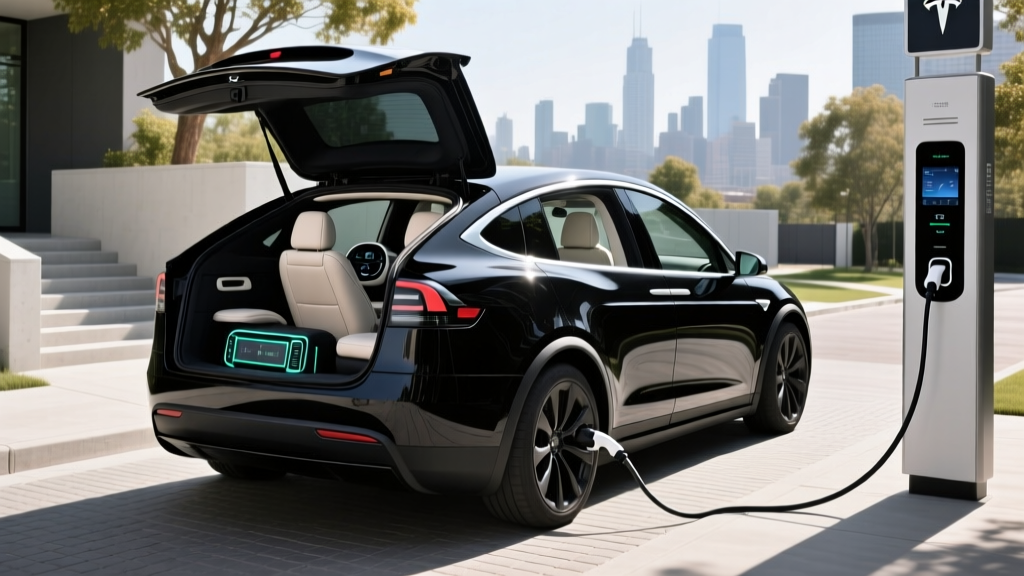
The Model X charges via Tesla's proprietary connector (now being phased in favor of NACS, which is electrically identical). With the included NACS adapter, you can also use Electrify America, EVgo, and other CCS networks, though reliability and plug-and-charge convenience vary. The charge curve peaks at 250 kW at low states of charge (roughly 5–15% SoC) and tapers progressively: by 50% SoC you're typically seeing 120–150 kW, and above 80% it drops below 50 kW. Plan your road-trip stops to charge from 10–80% rather than topping off to 100% unless you need every mile for the next leg.
For home Level 2 charging, Tesla's Wall Connector at $450 (hardwired, up to 48A on a 60A circuit) delivers the best experience. Budget $800–$2,500 for professional installation depending on your electrical panel's capacity and distance from the panel to the garage. Homes with older 100A service panels may need a $1,500–$3,000 panel upgrade to support a dedicated 60A circuit — confirm with a licensed electrician before ordering equipment.
Interior Space: 7-Seat Practicality Measured
The 7-seat option ($3,000 on either trim) replaces the second-row bench captain's chairs with a 60/40 split bench, adding a center seat. The configuration is 2-3-2: two up front, three across the second row, and two in the third row. Here's what that means in real measurements:
- Third-row legroom: 37.1 inches — adequate for children and shorter adults on trips under an hour; tight for six-footers
- Second-row legroom: 40.9 inches — comfortable for adults, though the center seat is narrower than the outboard positions
- Cargo behind third row: ~15.9 cu ft — fits two carry-on bags and a few groceries; a stroller requires folding one third-row seat
- Cargo behind second row (third row folded): ~44.1 cu ft — competitive with midsize SUVs
- Maximum cargo (all rear rows folded): ~83.1 cu ft — generous for the class, aided by the flat floor and front trunk (frunk)
- Frunk volume: ~6.5 cu ft — useful for charging cables, a small cooler, or a laptop bag
The falcon-wing rear doors are the Model X's signature feature. They articulate upward and outward, providing excellent headroom when entering the second and third rows — a genuine advantage in tight parking spaces where a sliding minivan door would be ideal but a traditional SUV door limits overhead clearance. However, the doors require overhead clearance (roughly 7 feet) to open fully, and the sensors occasionally struggle with low garage ceilings or roof racks on adjacent vehicles. In heavy rain, the doors channel water inward as they close, which can drip onto the seat bolsters.
Performance and Driving Dynamics
Even the "base" Long Range Model X delivers supercar-rivaling acceleration: 670 horsepower from its dual-motor AWD powertrain pushes the 5,185-lb SUV to 60 mph in 3.8 seconds. The Plaid's tri-motor setup (one front, two rear) produces 1,020 hp and hits 60 in 2.5 seconds — a figure that still feels surreal in a vehicle with a third row and a frunk.
The air suspension adjusts ride height automatically, lowering at highway speeds for efficiency and raising for rough roads or steep driveways. Ride quality is firm but controlled; this is a performance SUV first, and body roll is well-managed for the weight. Steering is precise and weighted appropriately, though the yoke steering wheel (now optional alongside a traditional round wheel) takes acclimation, especially during low-speed parking maneuvers where hand-over-hand is natural with a round wheel.
Towing capacity is rated at 5,000 pounds with the factory tow package. Stability control integration is excellent, but remember that towing at capacity effectively halves your range — plan Supercharger stops accordingly.
Pricing, Tax Credits, and Ownership Costs
The Model X has never been a budget vehicle, and 2026 pricing reflects its position as Tesla's premium SUV:
| Trim | Base MSRP | 7-Seat Option | As-Tested* | §30D Credit Eligibility |
|---|---|---|---|---|
| Long Range | $79,990 | +$3,000 | ~$89,490 (w/ FSD, paint, wheels) | Not eligible (MSRP exceeds $80,000 SUV cap) |
| Plaid | $94,990 | +$3,000 | ~$104,490 (w/ FSD, paint, wheels) | Not eligible (MSRP exceeds $80,000 SUV cap) |
*As-tested includes $2,000 destination, $3,000 7-seat option, $8,000 FSD (Supervised), $2,500 Ultra Red paint, $4,500 22" wheels.
Federal tax credit reality check: Under IRS §30D rules, new electric SUVs must have an MSRP at or below $80,000 to qualify for the up-to-$7,500 federal tax credit. Both Model X trims exceed this cap, meaning no new Model X qualifies for the federal EV credit regardless of buyer income or battery sourcing. This is a significant factor when comparing against lower-priced three-row alternatives. Additionally, §30D imposes buyer income limits ($300,000 joint / $150,000 single modified AGI) and critical-mineral/battery-component sourcing requirements — but the MSRP cap eliminates eligibility before those factors even apply.
On the ownership-cost side, the Model X benefits from lower fueling costs (roughly $0.12–$0.15/mile on home charging vs. $0.18–$0.22/mile for a comparable gas SUV at 2026 fuel prices), minimal scheduled maintenance (no oil changes, brake pads last 100,000+ miles thanks to regen), and strong software support. Insurance premiums run 15–25% higher than comparable gas SUVs in most states — get quotes before ordering.
Tech, Driver Assistance, and the Autopilot Question
The Model X centers its tech experience around a 17-inch landscape touchscreen running Tesla's proprietary infotainment OS. The system is responsive, supports over-the-air updates that add features regularly, and includes a rear-seat 8-inch screen for climate and entertainment controls. Wireless phone charging, ventilated front seats, and a 22-speaker audio system are standard.
Every Model X ships with Tesla's basic Autopilot (traffic-aware cruise control and lane centering). Full Self-Driving (Supervised) — an $8,000 option — adds automatic lane changes, Navigate on Autopilot, traffic-light and stop-sign recognition, and the ability to handle some city streets with driver supervision.
Important: Autopilot and FSD (Supervised) are SAE Level 2 driver-assistance systems. They require continuous driver attention, hands on the wheel (or torque detection), and eyes on the road. They are not self-driving. The driver is legally responsible for the vehicle at all times. Only Level 4 services like Waymo operate without a human driver — and those are available only in geofenced urban areas, not in personal vehicles.
Notable drawbacks include the lack of Apple CarPlay and Android Auto (Tesla uses its own interface exclusively), the absence of physical buttons for climate and mirror adjustments (all screen-based), and occasional software glitches that a reboot usually resolves but can be frustrating mid-trip. Build quality has improved substantially since early Model X production, but panel-gap consistency still lags behind German luxury competitors.
Pros and Cons at a Glance
Pros
- Class-leading DC charging speed and Supercharger network access
- 335-mile EPA range (Long Range) sufficient for most road trips with one stop
- Supercar-level acceleration even in the base Long Range trim
- Falcon-wing doors ease second/third-row access in tight spaces
- Over-the-air updates continuously improve the vehicle
- Standard air suspension with adjustable ride height
- Strong 8-year/150,000-mile battery warranty
Cons
- Does not qualify for the $7,500 federal EV tax credit (MSRP cap)
- Third row is cramped for adults on longer trips
- Cargo behind third row (15.9 cu ft) is tight for a 7-seat vehicle
- Falcon-wing doors need overhead clearance and can leak in rain
- No Apple CarPlay or Android Auto
- Insurance premiums significantly above class average
- Base price above $80,000 before options
Who Should Buy the Model X 7-Seat?
Buy it if: You need seating for 5–7, prioritize road-trip charging convenience (Supercharger network), want sports-car acceleration in a family vehicle, and have a budget above $85,000. It's ideal for tech-forward families who take regular highway trips and can charge at home overnight.
Consider alternatives if: Your third row needs to regularly accommodate adults (look at the Rivian R1S or a three-row PHEV minivan like the Chrysler Pacifica Hybrid), you want maximum cargo flexibility with all seats up, you're counting on the federal tax credit to offset purchase price, or your daily commute is short enough that a less expensive EV with shorter range would suffice.
Frequently Asked Questions
Does the Tesla Model X 7-seat qualify for the federal EV tax credit?
No. Under current IRS §30D rules, new electric SUVs must have an MSRP of $80,000 or less to qualify. The Model X Long Range starts at $79,990 but the mandatory destination charge and any options push it over the cap; the Plaid starts at $94,990. Neither trim qualifies regardless of buyer income or battery sourcing. Always verify current rules at irs.gov as regulations can change.
What is the real-world range of the Model X with 7 seats?
Expect approximately 275–295 miles on the highway in fair weather, 310–335 miles in city/mixed driving, and 235–275 miles in cold weather (below freezing). The 7-seat option adds roughly 50 lbs over the 6-seat layout — a negligible range impact. Towing at the 5,000-lb max reduces range to approximately 175–210 highway miles.
How fast does the Model X charge at home and on road trips?
At home on a Level 2 Wall Connector (11.5 kW / 48A), you'll add roughly 34 miles of range per hour, fully recharging overnight in about 10 hours. On a V3 or V4 Supercharger, the Model X peaks at 250 kW and charges from 10–80% in approximately 27 minutes, adding up to 175 miles in 15 minutes at peak rate.
Is the Model X worth it versus the Rivian R1S or Kia EV9?
The Model X wins on charging infrastructure (Supercharger network), acceleration, and range. The Rivian R1S offers a more usable third row, better off-road capability, and a lower starting price — but relies on third-party charging networks. The Kia EV9 (3-row, starting ~$56,000) is far more affordable and may qualify for the federal tax credit, but offers less range (304 mi max) and slower charging (210 kW peak). Your priority — charging convenience vs. third-row comfort vs. price — determines the winner.
How long will the Model X battery last?
Tesla warranties the battery for 8 years or 150,000 miles (whichever comes first) with a minimum 70% capacity retention. Real-world data from high-mileage Teslas suggests NMC packs retain roughly 85–90% capacity at 100,000 miles with normal charging habits (avoiding frequent 100% charges and deep discharges). Replacement cost out of warranty is estimated at $15,000–$22,000 depending on pack availability and labor.
Can I charge a Model X at non-Tesla charging stations?
Yes. Current Model X vehicles use the NACS connector natively (identical to Tesla's proprietary plug). With a CCS adapter (sold by Tesla and third parties), you can access Electrify America, EVgo, ChargePoint, and other CCS-equipped networks. Charging speeds and reliability on third-party networks vary more than on Superchargers.